Kirjailija
Richard Kearney
Kirjat ja teokset yhdessä paikassa: 35 kirjaa, julkaisuja vuosilta 1988–2024, suosituimpiin kuuluu Revisionen Des Heiligen: Streitgesprache Zur Gottesfrage. Vertaile teosten hintoja ja tarkista saatavuus suomalaisista kirjakaupoista.
35 kirjaa
Kirjojen julkaisuvuodet: 1988–2024.
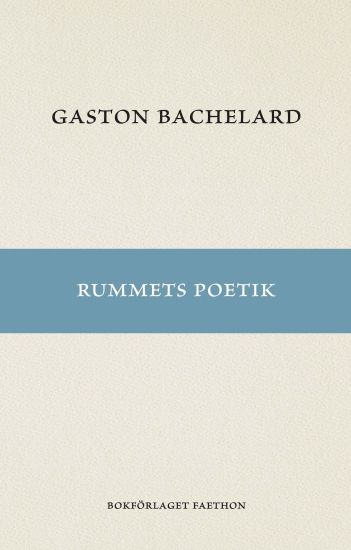
Rummets poetik (1957) kan läsas som en fortsättning på Bachelards undersökningar av de fyra elementen. Här inbjuds läsaren att undersöka världen utifrån en rad litterära bilder. Hur bebor man världen genom fantasin och hur utröner man rummets poetiska spatialitet är frågor som ställs. Svaren öppnar för nya filosofiska perspektiv, både på vår omvärld och hur vi förhåller oss till den. Boken har ett nyskrivet förord av Monika Kostera. Gaston Bachelard (1884 1962) var en fransk filosof och professor vid Sorbonne. I sitt omfattande författarskap om vetenskapsfilosofi och den historiska epistemologin var han en föregångare till senare franska filosofer som Louis Althusser, Michel Foucault och Jacques Derrida. Hans vetenskapsfilosofi koncentrerar sig kring det som kan benämnas som »epistemologiska brott«, ett identifierande av vetenskapernas diskontinuerliga framväxt. Vid sidan av detta filosofiska arbete ägnade han flera studier åt litteratur och undersökte bland annat hur de fyra elementen inverkar på människans fantasi och liv.
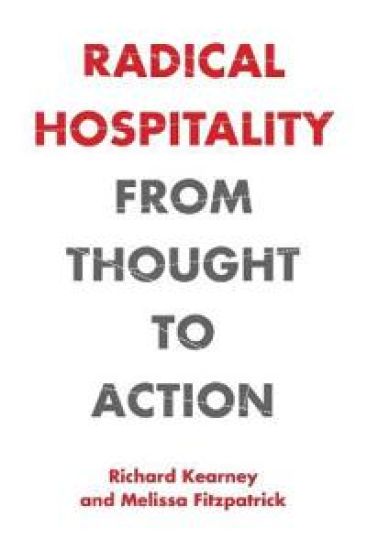
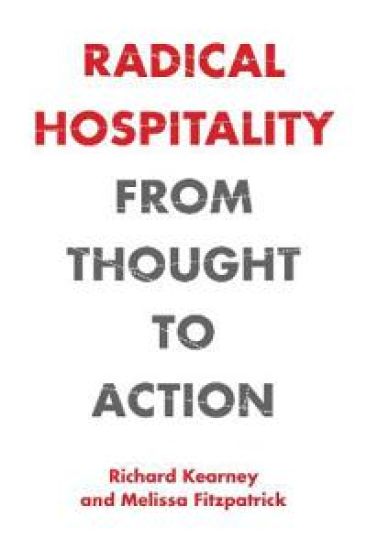
Radical Hospitality addresses a timely and challenging subject for contemporary philosophy: the ethical responsibility of opening borders, psychic and physical, to the stranger. Kearney and Fitzpatrick show how radical hospitality happens by opening oneself in narrative exchange to someone or something other than ourselves—by crossing borders, whether literal or figurative. Against the fears, dogmas, and demands for certainty and security that push us toward hostility, we also desire to wager with the unknown, leap into the unanticipated, and celebrate the new, a desire this book seeks to recognize and cultivate. The book contends that hospitality means chancing one's hand, one's arm, one's very self, thereby opening a vital space for new voices to be heard, shedding old skins, and welcoming new understandings. Radical Hospitality engages with urgent moral conversations concerning identity, nationality, immigration, commemoration, and justice, moving between theory and praxis and on to the formative life of the classroom. Building on key critical debates on the question of hospitality ranging from phenomenology, hermeneutics and deconstruction to neo-Kantian moral critique and Anglo-American virtue ethics, the book explores novel possibilities for an ethics of hospitality in our contemporary world of border anxiety, refugee crises, and ecological catastrophe.
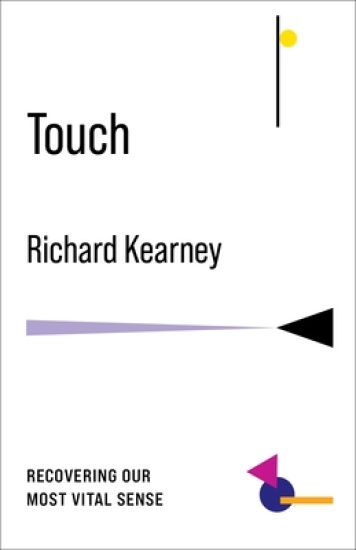
Our existence is increasingly lived at a distance. As we move from flesh to image, we are in danger of losing touch with each other and ourselves. How can we combine the physical with the virtual, our embodied experience with our global connectivity? How can we come back to our senses? Richard Kearney offers a timely call for the cultivation of the basic human need to touch and be touched. He argues that touch is our most primordial sense, foundational to our individual and common selves. Kearney explores the role of touch, from ancient wisdom traditions to modern therapies. He demonstrates that a fundamental aspect of touch is interdependence, its inherently reciprocal nature, which offers a crucial corrective to our fixation with control. Making the case for the complementarity of touch and technology, this book is a passionate plea to recover a tangible sense of community and the joys of life with others.
Richard Kearney hat zentrale religiose Fragen zum Glauben und zu Glaubenszweifeln, zu Theismus, Atheismus, Agnostizismus und Humanismus mit bedeutenden Gesprachspartner diskutiert. Der Band bietet wichtige Impulse aus den Diskussionen etwa mit Catherine Keller, Charles Taylor, Julia Kristeva, Gianni Vattimo, Jean-Luc Marion, John Caputo und David Tracy.
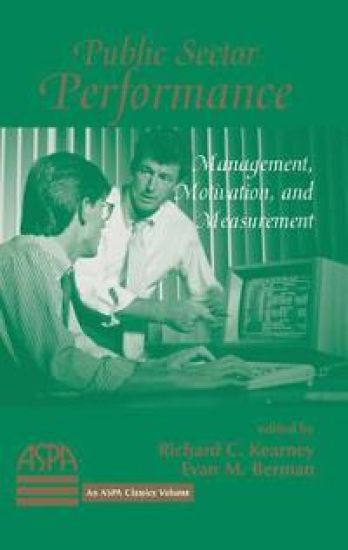
Confronted with rising citizen discontent, the Reinventing Government movement, and new technological challenges, public organizations everywhere are seeking means of improving their performance. Their quest is not new, rather, the concern with improving the performance of government organizations has existed since the Scientific Management Movemen
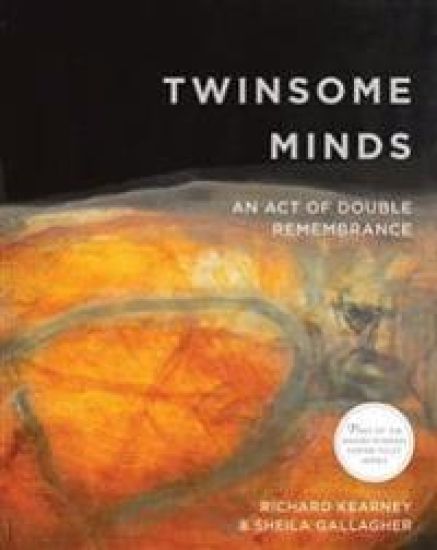
How do we give a future to the past? How do we perform acts of double remembrance which honor both sides of the story-- spoken and unspoken, acknowledged and forgotten? One hundred years after the Easter Rising, Twinsome Minds explores the complexities of commemoration against the backdrops of the famine and 1916. Using word and image artist Sheila Gallagher and philosopher Richard Kearney retrieve some neglected micro-narratives of Irish historical trauma to illustrate how memory occurs at the cross section of story and history. In an inventive combination of archival imagery, historical records and narrative imagination, they mine the past for potential futures in a process of healing and recovery. Ireland's Great Hunger Museum at Quinnipiac University publishes Famine Folios, a unique resource for students, scholars and researchers, as well as general readers, covering many aspects of the Famine in Ireland from 1845-1852 - the worst demographic catastrophe of nineteenth-century Europe. The essays are interdisciplinary in nature, and make available new research in Famine studies by internationally established scholars in history, art history, cultural theory, philosophy, media history, political economy, literature and music.
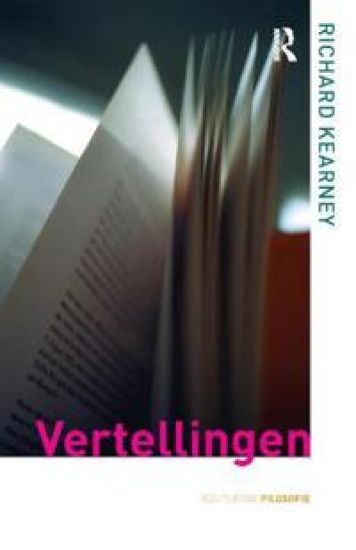
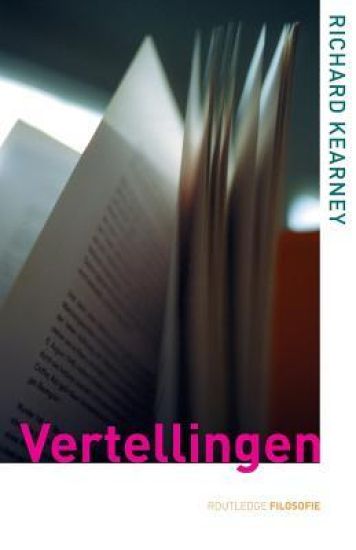
Verhalen bieden ons bijzonder veelzijdige en duurzame inzichten in de menselijke conditie en hebben al sinds Aristoteles de aandacht van de filosofie getrokken. Het leidmotief van Vertellingen is dat dit digitale en naar verluidt 'postmoderne' tijdperk niet de ondergang van het verhaal aankondigt, maar juist zelf een bron van nieuwe verhalen vormt. Richard Kearney, filosoof en schrijver, ontrafelt in een heldere en meeslepende stijl waarom verhalen deze uitwerking op ons hebben en betoogt dat het onvertelde leven niet waard is om geleefd te worden. Vertellingen is onmisbaar, voor iedereen die helder wil nadenken over de rol van verhalen in ons leven en onze cultuur.
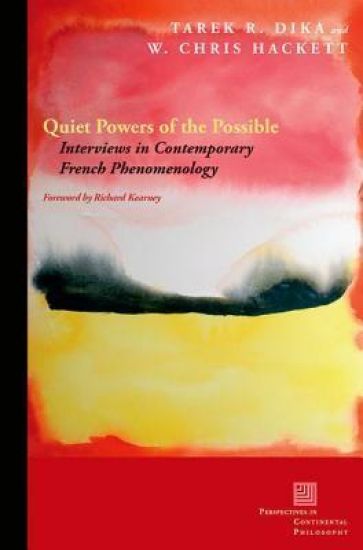
Quiet Powers of the Possible
Tarek R. Dika; W. Chris Hackett; Richard Kearney
Fordham University Press
2016
pokkari
Quiet Powers of the Possible offers an excellent introduction to contemporary French phenomenology through a series of interviews with its most prominent figures. Guided by rigorous questions that push into the most important aspects of the latest phenomenological research, the book gives readers a comprehensive sense of each thinker's intellectual history, motivations, and philosophical commitments. The book introduces readers to debates that have not previously been accessible to the English-speaking world, such as the growing interest in the phenomenological concept of life in its affective and even vital dimensions, the emerging dialogue with the analytic philosophy of mind and language, and reassessments of the so-called theological turn. The diversity of approaches collected here has its origin in a deeper debate about the conceptual and historical foundations of phenomenology itself. In this way the book offers the most accessible and wide-ranging introduction to French phenomenology to have appeared in the English-speaking world to date.
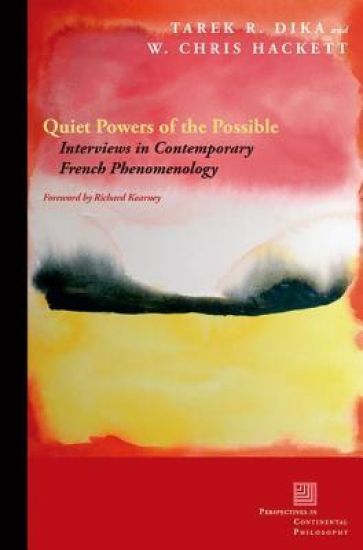
Quiet Powers of the Possible
Tarek R. Dika; W. Chris Hackett; Richard Kearney
Fordham University Press
2016
sidottu
Quiet Powers of the Possible offers an excellent introduction to contemporary French phenomenology through a series of interviews with its most prominent figures. Guided by rigorous questions that push into the most important aspects of the latest phenomenological research, the book gives readers a comprehensive sense of each thinker's intellectual history, motivations, and philosophical commitments. The book introduces readers to debates that have not previously been accessible to the English-speaking world, such as the growing interest in the phenomenological concept of life in its affective and even vital dimensions, the emerging dialogue with the analytic philosophy of mind and language, and reassessments of the so-called theological turn. The diversity of approaches collected here has its origin in a deeper debate about the conceptual and historical foundations of phenomenology itself. In this way the book offers the most accessible and wide-ranging introduction to French phenomenology to have appeared in the English-speaking world to date.
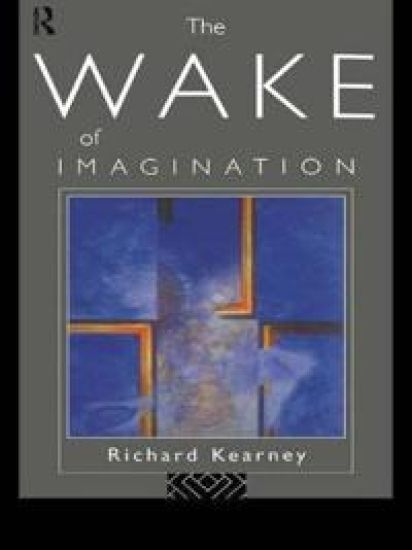
With his remarkable range of vision, the author takes us on a voyage of discovery that leads from Eden to Fellini, from paradise to parody - plotting the various models of the imagination as: Hebraic, Greek, medieval, Romantic, existential and post-modern.
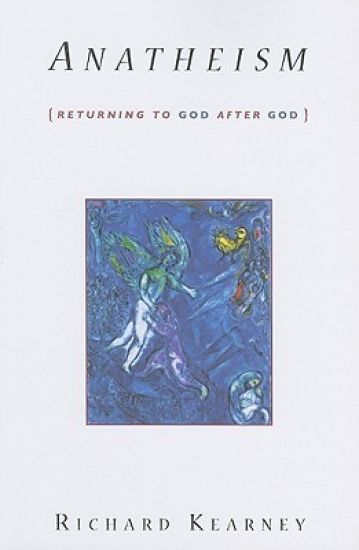
Has the passing of the old God paved the way for a new kind of religious project, a more responsible way to seek, sound, and love the things we call divine? Has the suspension of dogmatic certainties and presumptions opened a space in which we can encounter religious wonder anew? Situated at the split between theism and atheism, we now have the opportunity to respond in deeper, freer ways to things we cannot fathom or prove. Distinguished philosopher Richard Kearney calls this condition ana-theos, or God after God-a moment of creative "not knowing" that signifies a break with former sureties and invites us to forge new meanings from the most ancient of wisdoms. Anatheism refers to an inaugural event that lies at the heart of every great religion, a wager between hospitality and hostility to the stranger, the other--the sense of something "more." By analyzing the roots of our own anatheistic moment, Kearney shows not only how a return to God is possible for those who seek it but also how a more liberating faith can be born. Kearney begins by locating a turn toward sacred secularity in contemporary philosophy, focusing on Maurice Merleau-Ponty and Paul Ricoeur. He then marks "epiphanies" in the modernist masterpieces of James Joyce, Marcel Proust, and Virginia Woolf. Kearney concludes with a discussion of the role of theism and atheism in conflict and peace, confronting the distinction between sacramental and sacrificial belief or the God who gives life and the God who takes it away. Accepting that we can never be sure about God, he argues, is the only way to rediscover a hidden holiness in life and to reclaim an everyday divinity.
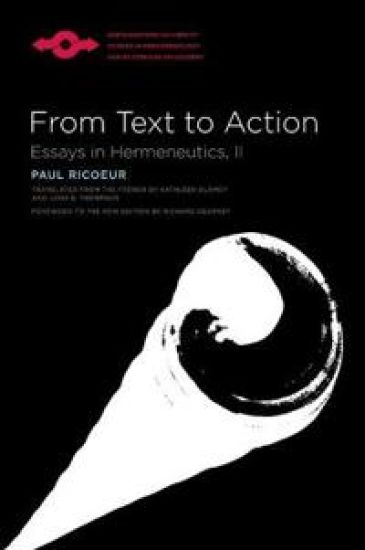
With his writings on phenomenology, psychoanalysis, Marxism, ideology, and religion, Paul Ricoeur has single-handedly redefined and revitalized the hermeneutic tradition. From Text to Action is an essential companion to the now classic The Conflict of Interpretations. Here, Ricoeur continues and extends his project of constructing a general theory of interpretation, positioning his work in relation to its own philosophical background: Hegel, Husserl, Gadamer, and Weber. He also responds to contemporary figures like K. O. Apel and Jürgen Habermas, connecting his own theorization of ideology to their version of ideology critique.
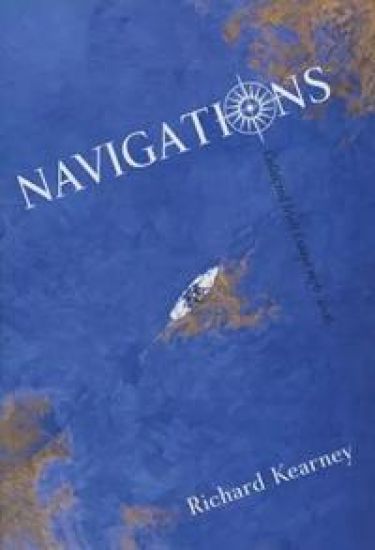
This new selected edition of Kearney’s writings on Ireland supplants his seminal text, The Irish Mind: Exploring Intellectual Traditions (a revised Introduction appears here), and extends Transitions: Narratives in Modern Irish Culture to which eight pieces are added comprising 50 per cent new material, and giving unique access to the state and status of Irish culture in the twenty-first century. Twentieth-century Ireland witnessed a crisis of culture. Experienced largely as a conflict between traditional aspiration and modern realism; transitions, however resisted, are inevitable. Navigations encompasses the notion of the intellectual circumnavigation of early medieval and ancient Irish scholars and exchanges, and the shallows and deeps of competing arguments that make up these texts.
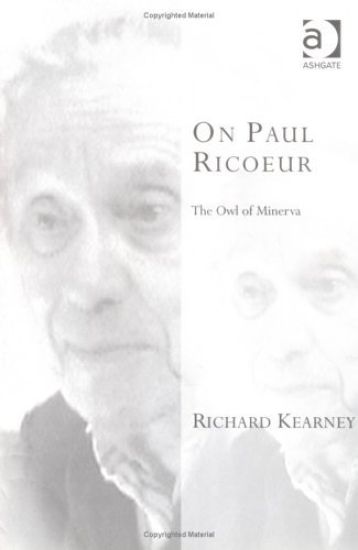
Paul Ricoeur is one of the giants of contemporary continental philosophy and one of the most enduring and wide-ranging thinkers in the twentieth century, publishing major works ranging from existentialism and phenomenology to psychoanalysis, politics, religion and the theory of language. Richard Kearney offers a critical engagement with the work of Ricoeur, beginning with a general introduction to his hermeneutic philosophy. Part one explores some of the main themes in Ricouer's thought under six headings: phenomenology and hermeneutics; language and imagination; myth and tradition; ideology and utopia; evil and alterity; poetics and ethics. The second part comprises five dialogical exchanges which Kearney has conducted with Ricoeur over the last three decades (1977-2003), charting and explaining his intellectual itinerary. This book is aimed at a broad student readership as well as the general intelligent reader interested in knowing more about one of the most enduring major figures in contemporary continental philosophy.
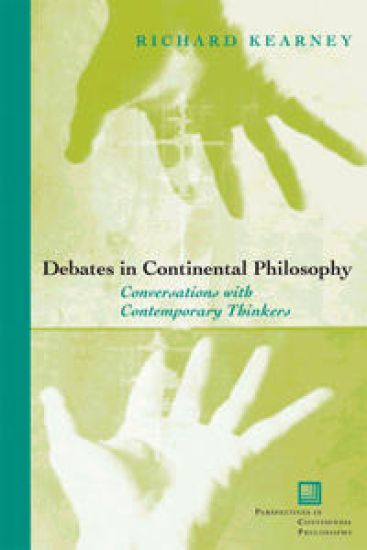
This important book brings together in one volume a collection of illuminating encounters with some of the most important philosophers of our age-by one of its most incisive and innovative critics. For more than twenty years, Richard Kearney has been in conversation with leading philosophers, literary theorists, anthropologists, and religious scholars. His gift is eliciting memorably clear statements about their work from thinkers whose writings can often be challenging in their complexity. Here, he brings together twenty-one originally published extraordinary conversations-his 1984 collection Dialogues: The Phenomenological Heritage, his 1992 Visions of Europe: Conversations on the Legacy and Future of Europe, and his 1995 States of Mind: Dialogues with Contemporary Thinkers. Featured interviewees include Stanislas Breton, Umberto Eco, Hans-Georg Gadamer, Herbert Marcus, George Steiner, Julia Kristeva, Emmanuel Levinas, and Jean-Francois Lyotard. To this classic core, he adds recent interviews, previously unpublished, with Paul Ricoeur, Jean-Luc Marion, Jacques Derrida, and George DumŽzil, as well as six colloquies about his own work. Wide-ranging and accessible, these interviews provide a fascinating guide to the ideas, concerns, and personalities of thinkers who have shaped modern intellectual life. This book will be an essential point of entry for students, teachers, scholars, and anyone seeking to understand contemporary culture.
Verhalen bieden ons bijzonder veelzijdige en duurzame inzichten in de menselijke conditie en hebben al sinds Aristoteles de aandacht van de filosofie getrokken. Het leidmotief van Vertellingen is dat dit digitale en naar verluidt 'postmoderne' tijdperk niet de ondergang van het verhaal aankondigt, maar juist zelf een bron van nieuwe verhalen vormt. Richard Kearney, filosoof en schrijver, ontrafelt in een heldere en meeslepende stijl waarom verhalen deze uitwerking op ons hebben en betoogt dat het onvertelde leven niet waard is om geleefd te worden. Vertellingen is onmisbaar, voor iedereen die helder wil nadenken over de rol van verhalen in ons leven en onze cultuur.