

Kirjailija
Richard King
Kirjat ja teokset yhdessä paikassa: 70 kirjaa, julkaisuja vuosilta 1995–2026, suosituimpiin kuuluu Narrative of a Journey to the Shores of the Artic Ocean; Volume I. Vertaile teosten hintoja ja tarkista saatavuus suomalaisista kirjakaupoista.
70 kirjaa
Kirjojen julkaisuvuodet: 1995–2026.


From Feng Shui to holistic medicine, from aromatherapy candles to yoga weekends, spirituality is big business. It promises to soothe away the angst of modern living and to offer an antidote to shallow materialism. Selling Spirituality is a short, sharp, attack on this fallacy. It shows how spirituality has in fact become a powerful commodity in the global marketplace - a cultural addiction that reflects orthodox politics, curbs self-expression and colonizes Eastern beliefs. Exposing how spirituality has today come to embody the privatization of religion in the modern West, Jeremy Carrette and Richard King reveal the people and brands who profit from this corporate hijack, and explore how spirituality can be reclaimed as a means of resistance to capitalism and its deceptions.

From Feng Shui to holistic medicine, from aromatherapy candles to yoga weekends, spirituality is big business. It promises to soothe away the angst of modern living and to offer an antidote to shallow materialism. Selling Spirituality is a short, sharp, attack on this fallacy. It shows how spirituality has in fact become a powerful commodity in the global marketplace - a cultural addiction that reflects orthodox politics, curbs self-expression and colonizes Eastern beliefs. Exposing how spirituality has today come to embody the privatization of religion in the modern West, Jeremy Carrette and Richard King reveal the people and brands who profit from this corporate hijack, and explore how spirituality can be reclaimed as a means of resistance to capitalism and its deceptions.

Gutteridge and Megrah's Law of Bankers' Commercial Credits
Richard King
Europa Publications Ltd
2001
sidottu
Presents a systematic study of the law of bankers' commercial credits. Bringing together materials which are to be found scattered throughout the various series of English law reports, this title presents a systematic study of the law relating to commercial credits as applied today. It also contains a detailed exposition of the ICC's Uniform Customs and Practice for Documentary Credits. Contents* Provides information on the mechanism, operation and types of credits* Analyses in detail the contractual relationships arising out of issue of credits; the law and practice in relation to transfer of credits; jurisdiction and conflict of laws, etc.* Details the ICC's Uniform Rules for Bank-to-Bank Reimbursements under Documentary Credits and the ICC's International Standby Practices, ISP98* Assesses the impact of the Rome Convention and the Brussels and Lugano Conventions in relation to applicable law and jurisdiction.
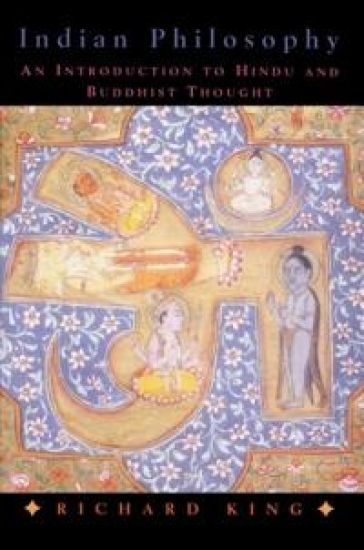
What is Indian Philosophy? Why has India been excluded from the history of philosophy? Richard King provides an introduction to the main schools of Hindu and Buddhist thought, emphasising the living history of interaction and debate between the various traditions. The book outlines the broad spectrum of Indian philosophical schools and questions prevailing assumptions about the 'mythical' ahistorical and 'theological' nature of Indian thought. Central philosophical questions are addressed: what really exists? How do we know what we know? Can we trust our perceptions of reality? What are we and where do we come from? Early chapters discuss the nature of philosophy in general, examning the shifting usage of the term throughout history. The author argues that a single definition or characterisation of the subject matter is impossible and that histories of philosophy remain tied to an ethnocentric and colonial perspective so long as they ignore the possibility of philosophical thought 'East of the Suez'. This highlights the need for a post-colonial and global approach to philosophy. Key features * Thematic approach rather than separate chapters on various schools * Emphasis on history of interaction/debate between the various trends * Introductory and concluding chapters on exclusion of 'India' from history of philosophy
Orientalism and Religion offers us a timely discussion of the implications of contemporary post-colonial theory for the study of religion. Richard King examines the way in which notions such as mysticism, religion, Hinduism and Buddhism are taken for granted. He shows us how religion needs to be reinterpreted along the lines of cultural studies. Drawing on a variety of post-structuralist and post-colonial thinkers, such as Foucault, Gadamer, Said, and Spivak, King provides us with a challenging series of reflections on the nature of Religious Studies and Indology.
Orientalism and Religion offers us a timely discussion of the implications of contemporary post-colonial theory for the study of religion. Richard King examines the way in which notions such as mysticism, religion, Hinduism and Buddhism are taken for granted. He shows us how religion needs to be reinterpreted along the lines of cultural studies. Drawing on a variety of post-structuralist and post-colonial thinkers, such as Foucault, Gadamer, Said, and Spivak, King provides us with a challenging series of reflections on the nature of Religious Studies and Indology.
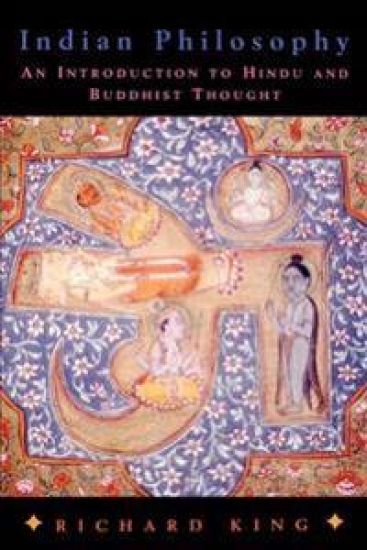
This book provides an introduction to the main schools of Indian philosophy within both the Hindu and Buddhist traditions. Richard King analyzes the schools' different doctrines and compares their approaches to specific philosophical topics - ontology, epistemology, perception, consciousness, and creation and causality. While King's main focus is on the ideas as professed by the major schools of thought, he also takes into account the important contributions made by individual thinkers. Among these are Bhartrhari, who helped introduce linguistic analysis into Indian philosophy; Nagarjuna, the reputed founder of the Mahayana or "Middle Way" school; and Asanga, the believed founder of the Yogacara or "Practice of Yoga" school. This is the first introduction to Indian philosophy written for a western audience to assess Indian thought in its own context and to examine its relationship with the West. King discusses the nature of philosophy in general, examining the shifting usage of the term throughout history. He examines western perceptions of Indian philosophy, exploring the reasons why it has not made substantial inroads into western intellectual discourse. King argues that western scholars will remain tied to a Eurocentric perspective as long as they continue to ignore the possibility of philosophical thought "East of the Suez." This, he argues, highlights the need for a post-colonial and global approach to philosophy. Written in a clear and accessible style, the book can be used for courses in religion, theology, and philosophy.
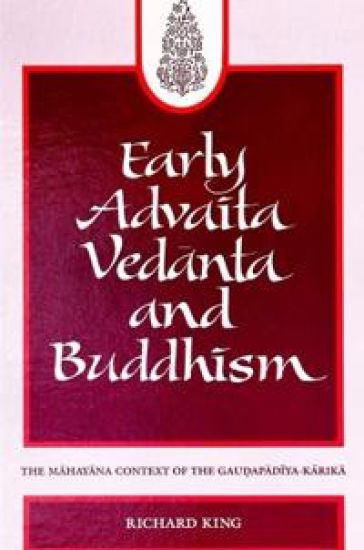
This book provides an in-depth analysis of the doctrines of early Advaita and Buddhism that has important implications for the question of the relationship between Hindu and Buddhist thought. The author examines the central doctrines of the Gaudapadiya-karikain a series of chapters that discuss early Advaita in relation to the Abhidharma, Madhyamaka, and Yogacara schools of Buddhism. The question of the doctrinal diversity of Indian Buddhism is also discussed through an analysis of the concept of 'Buddha-Nature' and its relationship with Vedantic thought.