Kirjojen hintavertailu – 12 903 725 kirjaa ja 27 kauppaa

Kirjailija

Richard Ned Lebow

Kirjat ja teokset yhdessä paikassa: 39 kirjaa, julkaisuja vuosilta 1984–2027, suosituimpiin kuuluu Justice and International Order. Vertaile teosten hintoja ja tarkista saatavuus suomalaisista kirjakaupoista.

39 kirjaa

Kirjojen julkaisuvuodet: 1984–2027.

Justice and International Order

Justice and International Order

Richard Ned Lebow; Feng Zhang

OXFORD UNIVERSITY PRESS INC
2022
nidottu
A comparative exploration of Western and Chinese understandings of justice and their possible use to reframe Sino-American relations and international governance. The concept of justice is central to politics: it justifies the ordering of society and the distribution of rewards. In Justice and International Order, Richard Ned Lebow and Feng Zhang compare and contrast Western and Chinese conceptions of justice. They argue that justice can almost invariably be reduced to the principles of fairness and equality, although they are developed and expressed differently in the two cultures. Lebow and Zhang show that there has been a noticeable shift in both in favoring equality over fairness in the modern era. They analyze the growing conflict between China and the West in the light of these conceptions of justice and show how they might be deployed to ameliorate it. The authors also offer a critique of what passes for global order and explore ways in which fairness and equality, and trade-offs between them, offer pathways to better and more peaceful worlds.

Taming Sino-American Rivalry

Taming Sino-American Rivalry

Richard Ned Lebow; Feng Zhang

Oxford University Press Inc
2020
nidottu
Competition between America and China has intensified since 2009, creating even greater risks of conflict. Why is this so and what can be done about it? In Taming Sino-American Rivalry, Feng Zhang and Richard Ned Lebow reject the prevailing idea that competition between a dominant and a rising power must necessarily lead to conflict. Rather, they identify the mistakes that both countries have made and explain the causes and consequences of their missteps. Drawing on international relations theory and lessons from history, they develop a comprehensive approach to conflict management and resolution that balances deterrence, reassurance, and diplomacy. A challenge to the prevailing pessimism, Taming Sino-American Rivalry is essential reading for anyone interested in understanding the world's most important bilateral relationship.
Taming Sino-American Rivalry

Taming Sino-American Rivalry

Richard Ned Lebow; Feng Zhang

Oxford University Press Inc
2020
sidottu
Competition between America and China has intensified since 2009, creating even greater risks of conflict. Why is this so and what can be done about it? In Taming Sino-American Rivalry, Feng Zhang and Richard Ned Lebow reject the prevailing idea that competition between a dominant and a rising power must necessarily lead to conflict. Rather, they identify the mistakes that both countries have made and explain the causes and consequences of their missteps. Drawing on international relations theory and lessons from history, they develop a comprehensive approach to conflict management and resolution that balances deterrence, reassurance, and diplomacy. A challenge to the prevailing pessimism, Taming Sino-American Rivalry is essential reading for anyone interested in understanding the world's most important bilateral relationship.
Wars and Pandemics

Wars and Pandemics

Richard Ned Lebow; Zhang Feng

Oxford University Press Inc
2027
Sidottu
History, Analogies, Lessons: Wars and Pandemics develops a set of propositions about why policy elites learn some kinds of lessons and not others, why some lessons become deeply embedded, how they influence thinking more generally when they do, and why and how they lose traction. Lebow and Zhang evaluate their propositions in two foreign policy and two public health cases: the Munich lesson for the US and the Korean lesson for China, and the COVID pandemic for China and the West. The book examines the similarities and differences of foreign policy and public health learning, the problems of updating, revising, and rejecting lessons, and the reasons why and the ways in which lessons can become politicized, as the latter did during COVID. It makes a series of policy recommendations for the public health community and draws out the theoretical implications of the authors' findings for the study of international relations.
Why Nations Still Fight

Why Nations Still Fight

Richard Ned Lebow

Cambridge University Press
2026
pokkari
Drawing on an original data set of interventions and wars from 1945 to the current day, as well as numerous short case studies, Richard Ned Lebow offers a novel account of their origins and outcomes – one that emphasises miscalculation, failure to conduct meaningful risk assessments, and cultural and political arrogance. In a successive work to Why Nations Fight (2010), he explains why initiators routinely lose militarily and politically when they resort to force, as well as accounting for why the great powers, in particular, have not learned from their failures. Lebow offers both type- and region-specific forecasts for the future likelihood of interventions and wars. His account reveals the inapplicability of theories nested in the realist and rationalist paradigms to the study of war. He argues what is needed instead is an “irrationalist” theory, and he takes the initial steps in this direction.
Why Nations Still Fight

Why Nations Still Fight

Richard Ned Lebow

Cambridge University Press
2026
sidottu

Halvin toimitettuna 125,60 €

Drawing on an original data set of interventions and wars from 1945 to the current day, as well as numerous short case studies, Richard Ned Lebow offers a novel account of their origins and outcomes – one that emphasises miscalculation, failure to conduct meaningful risk assessments, and cultural and political arrogance. In a successive work to Why Nations Fight (2010), he explains why initiators routinely lose militarily and politically when they resort to force, as well as accounting for why the great powers, in particular, have not learned from their failures. Lebow offers both type- and region-specific forecasts for the future likelihood of interventions and wars. His account reveals the inapplicability of theories nested in the realist and rationalist paradigms to the study of war. He argues what is needed instead is an “irrationalist” theory, and he takes the initial steps in this direction.
Justice and International Order

Justice and International Order

Richard Ned Lebow; Feng Zhang

OXFORD UNIVERSITY PRESS INC
2023
sidottu
A comparative exploration of Western and Chinese understandings of justice and their possible use to reframe Sino-American relations and international governance. The concept of justice is central to politics: it justifies the ordering of society and the distribution of rewards. In Justice and International Order, Richard Ned Lebow and Feng Zhang compare and contrast Western and Chinese conceptions of justice. They argue that justice can almost invariably be reduced to the principles of fairness and equality, although they are developed and expressed differently in the two cultures. Lebow and Zhang show that there has been a noticeable shift in both in favoring equality over fairness in the modern era. They analyze the growing conflict between China and the West in the light of these conceptions of justice and show how they might be deployed to ameliorate it. The authors also offer a critique of what passes for global order and explore ways in which fairness and equality, and trade-offs between them, offer pathways to better and more peaceful worlds.

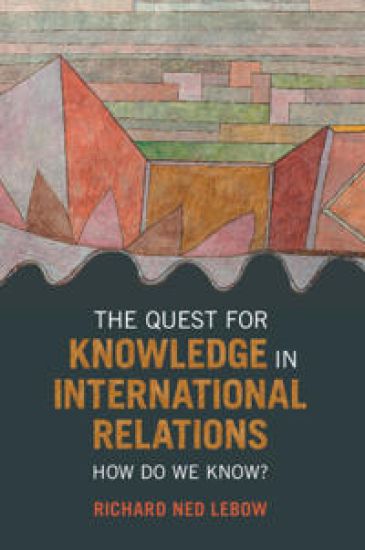
The Quest for Knowledge in International Relations

The Quest for Knowledge in International Relations

Richard Ned Lebow

Cambridge University Press
2022
pokkari
What do we mean by theory in international relations? What kinds of knowledge do theories seek? How do they stipulate it is found? How should we evaluate any resulting knowledge claims? What do answers to these questions tell us about the theory project in IR, and in the social sciences more generally? Lebow explores these questions in a critical evaluation of the positivist and interpretivist epistemologies. He identifies tensions and problems specific to each epistemology, and some shared by both, and suggests possible responses. By exploring the relationship between the foundations of theories and the empirical assumptions they encode, Lebow's analysis enables readers to examine in greater depth the different approaches to theory and their related research strategies. This book will be of interest to students and scholars of international relations theory and philosophy of social science.
The Quest for Knowledge in International Relations

The Quest for Knowledge in International Relations

Richard Ned Lebow

Cambridge University Press
2022
sidottu
What do we mean by theory in international relations? What kinds of knowledge do theories seek? How do they stipulate it is found? How should we evaluate any resulting knowledge claims? What do answers to these questions tell us about the theory project in IR, and in the social sciences more generally? Lebow explores these questions in a critical evaluation of the positivist and interpretivist epistemologies. He identifies tensions and problems specific to each epistemology, and some shared by both, and suggests possible responses. By exploring the relationship between the foundations of theories and the empirical assumptions they encode, Lebow's analysis enables readers to examine in greater depth the different approaches to theory and their related research strategies. This book will be of interest to students and scholars of international relations theory and philosophy of social science.
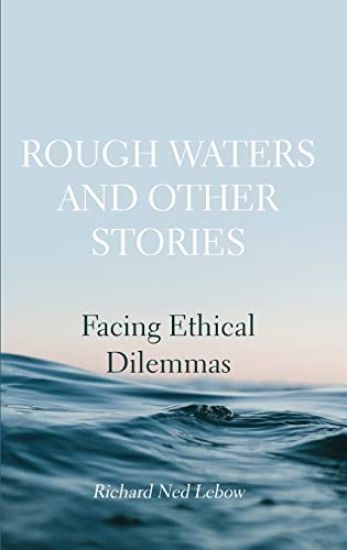
Rough Waters and Other Stories

Rough Waters and Other Stories

Richard Ned Lebow

Ethics International Press Ltd
2022
sidottu
Rough Waters and Other Stories is a collection of original stories addressing different ethical questions and dilemmas. An introduction makes connections among the stories, puts them in personal and political perspective, and anchors them in a tragic understanding of life and ethics. The characters in Rough Waters and Other Stories some based on real historical people - must make or finesse ethical choices, some of them straight-forward, others tragic in nature. Tragic choices involve trade-offs between seemingly irreconcilable but important goals. Alternatively, they entail committing ourselves to decisions or policies whose outcomes are uncertain. We are desperate to avoid tragic choices and prone to convince ourselves often in the face of good evidence that we can satisfy all of our desires or needs instead of making difficult choices between or among them. We also tend to convince ourselves that our decisions or policies well succeed in proportion to the degree that we feel compelled to commit to them. A standard trope of Greek tragedy think here of Oedipus is that our choices sometimes lead directly to the outcomes we are trying desperately to avoid.
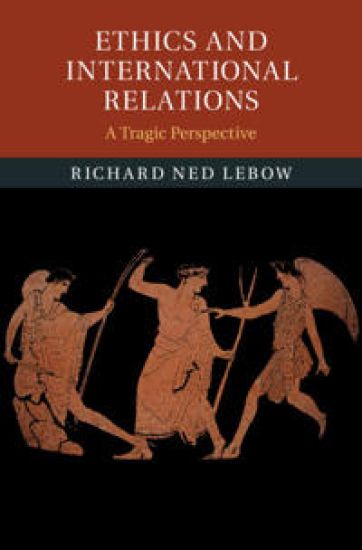
Ethics and International Relations

Ethics and International Relations

Richard Ned Lebow

Cambridge University Press
2020
sidottu
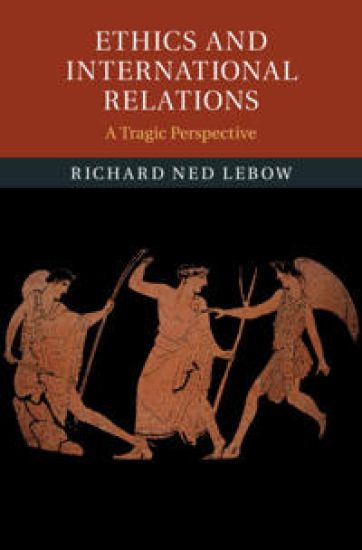
Lebow demonstrates that foreign policies consistent with generally accepted ethical norms are more likely to succeed, and those at odds with them to fail. Constructing original data sets and analyzing multiple case studies, Lebow makes an empirical case for ethics in international relations. His approach looks to create a productive dialogue between those who ask primarily 'ought' questions and those who pose 'is' questions. The former want to establish appropriate criteria for the behaviour of state and non-state actors and the discourses that lead to their policy decisions, whereas scholars who pose 'is' questions are concerned with how political actors behave and the principles and assumptions that might explain their behaviour. Lebow bridges the gap between 'is' and 'ought' questions by making an instrumental argument in favour of ethical foreign policy. He examines policymaking as well as policy, offering ethical guidelines for policymaking that are likely to result in more successful policies.
Ethics and International Relations

Ethics and International Relations

Richard Ned Lebow

Cambridge University Press
2020
pokkari
Lebow demonstrates that foreign policies consistent with generally accepted ethical norms are more likely to succeed, and those at odds with them to fail. Constructing original data sets and analyzing multiple case studies, Lebow makes an empirical case for ethics in international relations. His approach looks to create a productive dialogue between those who ask primarily 'ought' questions and those who pose 'is' questions. The former want to establish appropriate criteria for the behaviour of state and non-state actors and the discourses that lead to their policy decisions, whereas scholars who pose 'is' questions are concerned with how political actors behave and the principles and assumptions that might explain their behaviour. Lebow bridges the gap between 'is' and 'ought' questions by making an instrumental argument in favour of ethical foreign policy. He examines policymaking as well as policy, offering ethical guidelines for policymaking that are likely to result in more successful policies.
Between Peace and War

Between Peace and War

Richard Ned Lebow

Springer Nature Switzerland AG
2020
nidottu

Halvin toimitettuna 39,30 €

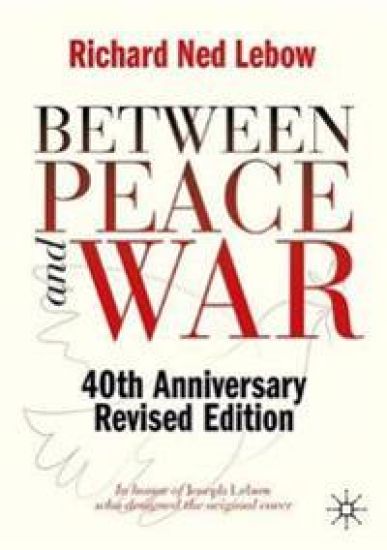
This is an updated edition of the now-classic original of the same title. It has three new substantial chapters: a prologue, a chapter on new evidence on World War I, and an epilogue. The updated edition contains the now-famous typology of international crisis, the original critique of deterrence, the emphasis on agency, and the turn to political psychology to explain sharp departures from rational policy-making. The new chapters update and reevaluate these arguments and approach a critical hindsight assessment in light of post-Cold War developments.
Reason and Cause

Reason and Cause

Richard Ned Lebow

Cambridge University Press
2020
sidottu
Philosophy and social science assume that reason and cause are objective and universally applicable concepts. Through close readings of ancient and modern philosophy, history and literature, Richard Ned Lebow demonstrates that these concepts are actually specific to time and place. He traces their parallel evolution by focusing on classical Athens, the Enlightenment through Victorian England, and the early twentieth century. This important book shows how and why understandings of reason and cause have developed and evolved, in response to what kind of stimuli, and what this says about the relationship between social science and the social world in which it is conducted. Lebow argues that authors reflecting on their own social context use specific constructions of these categories as central arguments about the human condition. This highly original study will make an immediate impact across a number of fields with its rigorous research and the development of an innovative historicised epistemology.
National Identities and International Relations

National Identities and International Relations

Richard Ned Lebow

Cambridge University Press
2019
pokkari
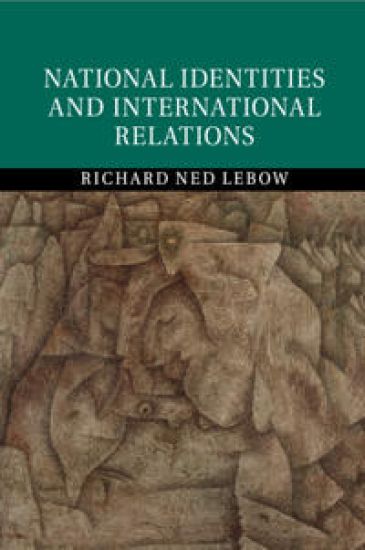
Identity is the master variable for many constructivist scholars of international politics. In this comparative study, Richard Ned Lebow shows that states do not have identities any more than people do. Leaders, peoples, and foreign actors seek to impose national identifications consistent with their political projects and psychological needs. These identifications are multiple, fluid and rise in importance as a function of priming and context. Leaders are at least as likely to invoke national identifications as rationalizations for policies pursued for other reasons as they are to be influenced by them. National identifications are nevertheless important because they invariably stress the alleged uniqueness of a people and its country, and are a principal means of seeking status and building self-esteem. Lebow tracks the relative appeal of these principles, the ways in which they are constructed, how they influence national identifications, and how they in turn affect regional and international practices.
A Democratic Foreign Policy

A Democratic Foreign Policy

Richard Ned Lebow

Springer Nature Switzerland AG
2019
nidottu
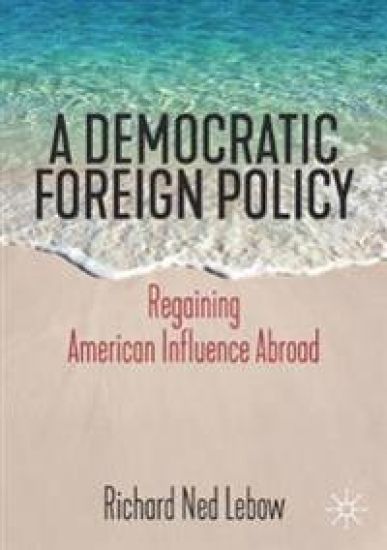
In 2020, America will elect a president, deciding not just the trajectory of its national politics but the future of American foreign policy. Will the Alt-Right, nationalist, and mercantilist approaches to international trade that characterized Donald Trump’s rise to power maintain its hold? Or will the “national security establishment” ultimately prevail, continuing the illusion of the indispensable nation? In A Democratic Foreign Policy, renowned IR scholar Ned Lebow draws upon decades of research and government experience to reject both options and set forth an alternative vision of American foreign policy, one based on a tragic understanding of life and politics. Lebow challenges the assumptions of establishment voices on both sides of the aisle, and offers a probing rethinking of America’s role in the world to disrupt the inertia of a bipartisan ideology that has dominated foreign policymaking since the days of Truman. Emphasizing the importance of America’s core values for shaping domestic and foreign policies, A Democratic Foreign Policy provides a vision and blueprint for a new congress and president to reorient America’s relationship with the world
The Rise and Fall of Political Orders

The Rise and Fall of Political Orders

Richard Ned Lebow

Cambridge University Press
2018
pokkari
Drawing on political theory, comparative politics, international relations, psychology and classics, Ned Lebow offers insights into why social and political orders form, how they evolve, and why and how they decline. Following The Tragic Vision of Politics and A Cultural Theory of International Relations, this book thus completes Lebow's trilogy with an original theory of political order. He identifies long- and short-term threats to political order that are associated respectively with shifts in the relative appeal of principles of justice and lack of self-restraint by elites. Two chapters explore the consequences of late-modernity for democracy in the United States, and another chapter, co-authored with Martin Dimitrov, the consequences for authoritarianism in China. The Rise and Fall of Political Orders forges new links between political theory and political science via the explicit connection it makes between normative goals and empirical research.
The Rise and Fall of Political Orders

The Rise and Fall of Political Orders

Richard Ned Lebow

Cambridge University Press
2018
sidottu
Drawing on political theory, comparative politics, international relations, psychology and classics, Ned Lebow offers insights into why social and political orders form, how they evolve, and why and how they decline. Following The Tragic Vision of Politics and A Cultural Theory of International Relations, this book thus completes Lebow's trilogy with an original theory of political order. He identifies long- and short-term threats to political order that are associated respectively with shifts in the relative appeal of principles of justice and lack of self-restraint by elites. Two chapters explore the consequences of late-modernity for democracy in the United States, and another chapter, co-authored with Martin Dimitrov, the consequences for authoritarianism in China. The Rise and Fall of Political Orders forges new links between political theory and political science via the explicit connection it makes between normative goals and empirical research.
The Politics and Business of Self-Interest from Tocqueville to Trump

The Politics and Business of Self-Interest from Tocqueville to Trump

Richard Ned Lebow

Springer International Publishing AG
2018
nidottu
Self-interest is an important human motive and this book explores its evolution in the United States and its consequences for politics, business, and personal relationships. In the postwar era American understandings of self-interest have moved away from Alexis de Tocqueville’s concept of “self-interest well-understood” – in which people recognize that their interests are served by the success of the community of which they are part – towards “individualism” – by which he meant narrow framing that often leads people to pursue their interests at the expense of the community. The book documents this evolution through qualitative and quantitative content analysis of presidential speeches, television sitcoms and popular music, before exploring its negative consequences for democracy.