Kirjailija
Richard Price
Kirjat ja teokset yhdessä paikassa: 190 kirjaa, julkaisuja vuosilta 1974–2026, suosituimpiin kuuluu Theodore of Sykeon. Vertaile teosten hintoja ja tarkista saatavuus suomalaisista kirjakaupoista.
190 kirjaa
Kirjojen julkaisuvuodet: 1974–2026.
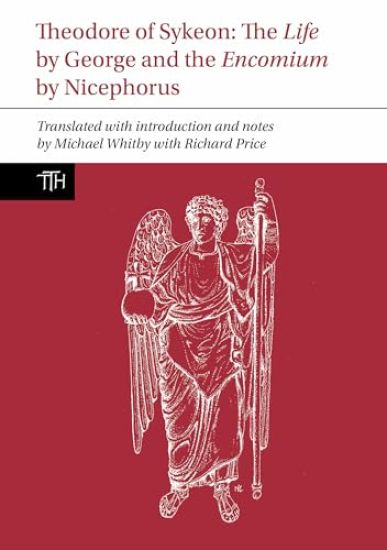
Theodore of Sykeon is one of the archetypal holy men of the late Roman world, a person whose intense ascetic regime earned him fame in the villages and cities of his Galatian homeland, where he was called upon to work a variety of miracles – cures for various ailments, prevention of natural disasters, and the exorcism of unclean spirits both from individuals and groups. His reputation for holiness led to appointment as bishop of Anastasiopolis, a responsibility he did not enjoy since its administrative commitments compromised his ascetic regime and conflicted with his sense of social justice. The location of his village on the main highway across Anatolia ensured that his fame was soon translated into contacts with travelling dignitaries, and this brought him to the attention of successive emperors and patriarchs of Constantinople. He made three trips to the Holy Land and visited the capital three times, where he met the emperors Maurice, Phocas, and Heraclius as well as the patriarchs Cyriacus, Thomas, and Sergius. Theodore’s disciple George, a future leader of the Sykeon monasteries, began composing this Life shortly after Theodore’s death in 613. Soon thereafter, his body was removed to Constantinople as a talisman, an event celebrated by Nicholas the Treasurer.
Documents of the Early ‘Arian’ Controversy and the Council of Nicaea
David M. Gwynn; Richard Price; Michael Whitby; Philip Michael Forness
LIVERPOOL UNIVERSITY PRESS
2025
sidottu
Halvin toimitettuna 193,20 €
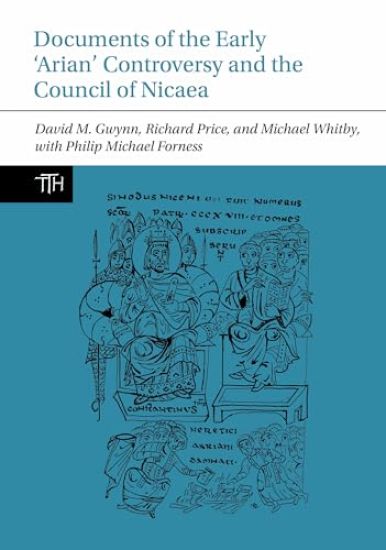
The Council of Nicaea in 325 was a momentous event in the history of both the Christian Church and the Later Roman empire. Summoned by the Christian emperor Constantine, Nicaea came to be remembered as the first ecumenical council which composed the original Nicene Creed still used in modified form in most Christian churches today. The assembled bishops gathered to debate the theological questions raised when the Alexandrian presbyter Arius clashed with his bishop Alexander regarding the precise divinity of the Son of God and the Son’s relationship with the Father. Through the surviving documents from the years surrounding Nicaea we can explore the doctrinal and ecclesiastical tensions which fuelled the so-called ‘Arian’ Controversy which divided Christians across the fourth century and beyond. At the same time, the Council of Nicaea also debated the celebration of Easter and issues of Church discipline, while coming to terms with Christianity’s new prestige symbolised by the presence at the council of emperor Constantine. The documents translated here are of great individual value but presenting them as a collection with introductions and commentary allows a closer re-examination of their significance and disputed chronology and the importance of Nicaea in a crucial formative period for the Christian Roman empire.
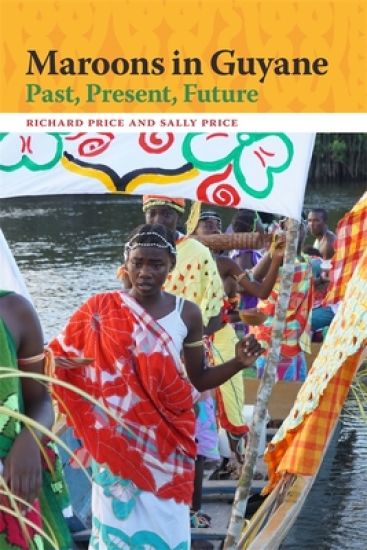
For more than four centuries, communities of maroons (men and women who escaped slavery) dotted the fringes of plantation America, from Brazil through the Caribbean to the United States. Today their descendants still form semi-independent enclaves—in Jamaica, Brazil, Colombia, Belize, Suriname, Guyane, and elsewhere—remaining proud of their maroon origins and, in some cases, faithful to unique cultural traditions forged during the earliest days of Afro-American history. In 1986, expelled by the military regime of Suriname, anthropologists Richard and Sally Price turned to neighboring Guyane (French Guiana), where thousands of Maroons were taking refuge from the Suriname civil war. Over the next fifteen years, their conversations with local people convinced them of the need to replace the pervasive stereotypes about Maroons in Guyane with accurate information. In 2003, Les Marrons became a local best seller. In 2020, after a series of further visits, the Prices wrote a new edition taking into account the many rapid changes. Available for the first time in English, Maroons in Guyane reviews the history of Maroon peoples in Guyane, explains how these groups differ from one another, and analyzes their current situations in the bustling, multicultural world of this far-flung outpost of the French Republic. A gallery of the magnificent arts of the Maroons completes the volume.
Dans la moiteur d'une ville tropicale, un Fran ais excentrique met en vente une extraordinaire collection d'art primitif. Les deux anthropologues appel s par un mus e pour expertiser les pi ces se retrouvent rapidement pris dans un univers o les fronti res de l'authenticit et de la duperie se fondent dans la touffeur ambiante. Bol ro tropical est une oeuvre de divertissement que l'on lira autant pour sa stimulation intellectuelle que pour son suspense irr sistible. Le livre reprend le r cit publi par Harvard University Press sous le titre d'Enigma Variations, qui a connu un important succ s aux Etats-Unis. Un objet unique et prodigieux, un roman policier en histoire de l'art r alis avec beaucoup d'intuition, d'intelligence et de sensibilit . Tout comme l'art sur lequel il nous apprend tant, Bol ro tropical est une oeuvre hybride qui ne cesse de vous pousser la lire comme un r cit authentique bien qu'elle soit officiellement pr sent e comme une fiction. ... Pour le lecteur, d m ler l'un de l'autre fait partie du charme singulier de l'ouvrage des Price -un roman fond sur les exp riences anthropologiques des auteurs. -Wall Street Journal Les livres de Richard et Sally Price ont t r compens s par de nombreux prix. Anciens professeurs d'universit , ils partagent aujourd'hui leur temps entre Paris et la Martinique. Bol ro tropical est disponible sur amazon.fr
When Richard and Sally Price stepped out of the canoe to begin their fieldwork with the Saamaka Maroons of Suriname in 1966, they were met with a mixture of curiosity, suspicion, ambivalence, hostility, and fascination. With their gradual acceptance into the community they undertook the work that would shape their careers and influence the study of African American societies throughout the hemisphere for decades to come. In Saamaka Dreaming they look back on the experience, reflecting on a discipline and a society that are considerably different today. Drawing on thousands of pages of field notes, as well as recordings, file cards, photos, and sketches, the Prices retell and comment on the most intensive fieldwork of their careers, evoke the joys and hardships of building relationships and trust, and outline their personal adaptation to this unfamiliar universe. The book is at once a moving human story, a portrait of a remarkable society, and a thought-provoking revelation about the development of anthropology over the past half-century.
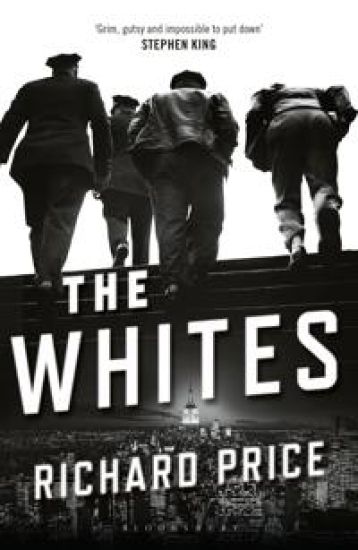
By the co-writer of the HBO miniseries The Night Of "A masterpiece, to stand with such earlier Price classics as Clockers and Lush Life . . . The Whites has] a compelling plot, yet the real joy of the book lies page by page, line by line, in its brilliant characterizations, rich detail, endless surprises, crackling dialogue, and] absurdist humor." --The Washington Post Back in the 1990s, when Billy Graves worked in the South Bronx as part of an anti-crime unit known as the Wild Geese, he made headlines by accidentally shooting a ten-year-old boy while stopping an angel-dusted berserker in the street. Branded as a cowboy, Billy spent years in one dead-end posting after another. Now in his early forties, he is a sergeant in Manhattan Night Watch, a team of detectives that responds to all felonies from Wall Street to Harlem between one a.m. and eight a.m. Billy's work is mostly routine, but when Night Watch is called to the four a.m. fatal slashing of a man in Penn Station, his investigation moves beyond the usual handoff to the day shift. And when he discovers that the victim was once a suspect in an unsolved murder--a brutal case with connections to the former members of the Wild Geese--the bad old days are back in Billy's life with a vengeance.
NEW YORK TIMES BESTSELLERFINALIST FOR THE L. A. TIMES BOOK PRIZE 2015 IN THE MYSTERY/THRILLER CATEGORYEvery cop has a personal ‘White’: a criminal who got away with murder – or worse – and was able to slip back into life, leaving the victim’s family still seeking justice, the cop plagued by guilt. Back in the 1990s, Billy Graves was one of the Wild Geese: a tight-knit crew of young mavericks, fresh to police work and hungry for justice, looking out for each other and their ‘family’ of neighbourhood locals. But then Billy made some bad headlines by accidentally shooting a ten-year-old boy while bringing down an angel-dusted berserker in the street. Branded a loose cannon, he spent years in one dead-end posting after another. Now he has settled into his role as sergeant in the Night Watch, content simply to do his job and go home to his family. But when he is called to the 4 a.m. stabbing of a man in Penn Station, Billy discovers the victim is the ‘White’ of one of his oldest friends, a former member of the Wild Geese, who is now retired. As the past comes crashing into the present, the Wild Geese seemingly rise from the dead, and the bad old run-and-gun days of the 90s are back with a vengeance.
Anthropological iconoclasts Richard and Sally Price have spent the last two decades not only creating an unparalleled oeuvre of scholarship in several areas of anthropology but also unabashedly calling foul on any untenable or patronizing concepts of "us" and "them," "primitive" and "modern," that cross their path. For this pamphlet, they crack the yellowing diaries kept by Melville and Frances Herskovits on their famous 1920s expedition deep into the South American jungle, exposing—with their trademark combination of deadpan wit and theoretical rigor—the origins of the field that has come to be known as African diaspora studies.
Noted writers on art, culture, and the tropical Americas, Richard and Sally Price have crafted a mystery at the intersections of art and anthropology. Drawing readers into their quest for a solution, they build an unusual partnership between text and pictures, daringly expanding the possibilities of academic discourse. Enigma Variations--in the tradition of The Recognitions and The Crying of Lot 49--is an entertainment as readable for its intellectual power as for its irresistible drama.
" . . . engrossing, nuanced, productively and honestly critical in the best sense of the term." —Richard Bauman After recounting their experiences as cultural mediators between African American Maroons from the Suriname rain forest and U. S. festival-goers on the Washington Mall, the authors reflect on how folklorists, anthropologists, and museum curators represent others, as well as themselves.
A postmodern romp through the rain forest, Equatoria is both travelogue and cultural critique. On the right-hand pages, the Prices chronicle their 1990 artifact-collecting expedition up the rivers of French Guiana, and on the left, stage an accompanying sideshow that enlists the help of Jonathan Swift, Joseph Conrad, Gabriel Garcia-Marquez, Alex Haley, James Clifford, Eric Hobsbawn, Germaine Greer, and even the noted anthropologist James Goodfellow. Charged with acquiring objects for a new museum, the Prices kept a log of their day-to-day adventures and misadventures, constantly confronting their ambivalence about the act of collecting, the very possibility of exhibiting cultures and the future of anthropology. Probing the nature of museums, collecting, and power relations between "us" and "them," the Prices raise many troubling questions.
"Whatever has gotten into the Prices?" asks the apocryphal Professor Goodfellow in the opening lines of Two Evenings in Saramaka. "After all those books on history and ethnography," he muses, "why are they now turning to children's stories and nonsense songs—mere folklore?" In this innovative work, Richard and Sally Price explore the fully adult world of Saramaka "folktale-land," where animals speak, the social order is inverted, customs have been only partially worked out, and the weak and clever triumph over the strong and arrogant. Joining the Saramaka of the Suriname rain forest for two tale-telling wakes, we witness mischievous Anasi the spider matching wits with lecherous devils, the scrawny little kid rescuing his nubile sisters in distress, and the bitchy white princess being tamed by the one-sided boy. As seas dry up, books speak out loud, and elephants assume human form, we are present at a whole sequence of world-shaping happenings such as the invention of sex, the discovery of drums, and the arrival of death among humans. Set in the more general context of tale telling by the descendants of Africans throughout the Americas and of recent scholarship in performance studies, these Saramaka tales are presented as a dramatic script. With the help of nearly forty photographs, readers become familiar not only with the characters in folktale-land, but also with the men and women who so imaginatively bring them to life. And because music complements narration in Saramaka just as it does elsewhere in Afro-America, more than fifty songs are presented here in musical notation. Narrative, song, dance, and social interaction merge in these two evenings of multimedia entertainment, bearing witness to an Afro-American cultural tradition that remains alive and vibrant, constantly renewed but always reflecting its links with the past.
Theodore of Sykeon is one of the archetypal holy men of the late Roman world, a person whose intense ascetic regime earned him fame in the villages and cities of his Galatian homeland, where he was called upon to work a variety of miracles – cures for various ailments, prevention of natural disasters, and the exorcism of unclean spirits both from individuals and groups. His reputation for holiness led to appointment as bishop of Anastasiopolis, a responsibility he did not enjoy since its administrative commitments compromised his ascetic regime and conflicted with his sense of social justice. The location of his village on the main highway across Anatolia ensured that his fame was soon translated into contacts with travelling dignitaries, and this brought him to the attention of successive emperors and patriarchs of Constantinople. He made three trips to the Holy Land and visited the capital three times, where he met the emperors Maurice, Phocas, and Heraclius as well as the patriarchs Cyriacus, Thomas, and Sergius. Theodore’s disciple George, a future leader of the Sykeon monasteries, began composing this Life shortly after Theodore’s death in 613. Soon thereafter, his body was removed to Constantinople as a talisman, an event celebrated by Nicholas the Treasurer.
Regresa Richard Price, la mente detr s de The Wire, con la historia del colapso de un barrio de Nueva York. Price vuelve a demostrar que es el bardo de la vida callejera en Nueva York . Publishers Weekly Es 2008, y un colapso inesperado sacude las calles de Harlem: un edificio de cinco plantas se derrumba, dejando una nube blanca de escombros que lo cubre todo. Mientras los servicios de emergencia y los periodistas irrumpen en escena, el vecindario se sumerge en el caos. Aparecen seis cuerpos sin vida, y hay desaparecidos. Mary Roe, veterana agente del cuerpo de polic a desgastada por su trabajo, se obsesiona por hallar a uno de ellos. Felix Pearl, joven fot grafo reci n llegado a la ciudad, capta el horror del derrumbe y la vida del barrio. Royal Davis, propietario de una funeraria al borde de la quiebra, husmea entre los restos de la tragedia en busca de clientes que le ayuden a sacar su negocio adelante. Y Anthony Carter, tras un par de d as sepultado bajo toneladas de ladrillo, emerge milagrosamente de entre las ruinas para convertirse en un hombre nuevo con una misi n y un poderoso mensaje. Tras casi una d cada de silencio, regresa Richard Price, autor de The Wire y Los impunes, para mostrar, con un coro de personajes inolvidables y su habitual mirada penetrante, las aristas de toda una comunidad; todo ello lo confirma como uno de los grandes maestros literarios de la vida urbana estadounidense. ENGLISH DESCRIPTION Richard Price, the mind behind The Wire, returns with the story of the collapse of a New York neighborhood. "Price proves once again that he is the bard of street life in New York." --Publishers Weekly It's 2008, and an unexpected collapse rocks the streets of Harlem: a five-story building crumbles, leaving a white cloud of debris covering everything. As emergency services and journalists rush to the scene, the neighborhood is plunged into chaos. Six bodies are found, and others are missing. Mary Roe, a veteran police officer worn down by her job, becomes obsessed with finding one of them. Felix Pearl, a young photographer new to the city, captures the horror of the collapse and the life of the neighborhood. Royal Davis, owner of a funeral home on the brink of bankruptcy, rummages through the wreckage of the tragedy in search of "customers" to help him keep his business afloat. And Anthony Carter, after a couple of days buried under tons of bricks, miraculously emerges from the ruins to become a new man with a mission and a powerful message. After almost a decade of silence, Richard Price, author of The Wire and The Unforgiven, returns to show, with a chorus of unforgettable characters and his usual penetrating gaze, the rough edges of an entire community, confirming his status as one of the great literary masters of American urban life.