
Kirjailija
Richard Wagner
Kirjat ja teokset yhdessä paikassa: 655 kirjaa, julkaisuja vuosilta 1928–2026, suosituimpiin kuuluu Siegfried. Vertaile teosten hintoja ja tarkista saatavuus suomalaisista kirjakaupoista.
655 kirjaa
Kirjojen julkaisuvuodet: 1928–2026.





Letters of Richard Wagner
Richard Wagner; Wilhelm Altmann; Mildred Mary Bozman
Tradd Street Press
2026
Nidottu
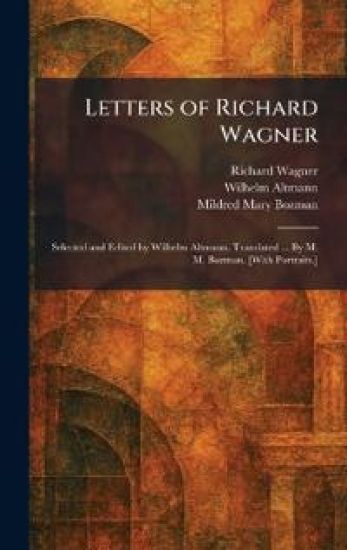
Letters of Richard Wagner
Richard Wagner; Wilhelm Altmann; Mildred Mary Bozman
Tradd Street Press
2026
Kangassidos

The Flying Dutchman
Richard Wagner; J (Trans Troutbeck; Theo (Trans Baker
Tradd Street Press
2026
Nidottu





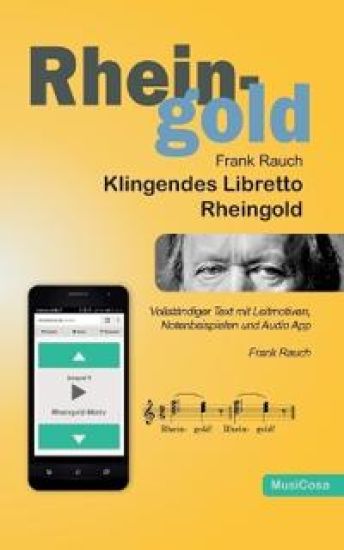

Richard Wagner: Der Ring des Nibelungen. Neuausgabe
Richard Wagner
Liwi Literatur- Und Wissenschaftsverlag
2026
nidottu

This work has been selected by scholars as being culturally important, and is part of the knowledge base of civilization as we know it. This work was reproduced from the original artifact, and remains as true to the original work as possible. Therefore, you will see the original copyright references, library stamps (as most of these works have been housed in our most important libraries around the world), and other notations in the work. This work is in the public domain in the United States of America, and possibly other nations. Within the United States, you may freely copy and distribute this work, as no entity (individual or corporate) has a copyright on the body of the work. As a reproduction of a historical artifact, this work may contain missing or blurred pages, poor pictures, errant marks, etc. Scholars believe, and we concur, that this work is important enough to be preserved, reproduced, and made generally available to the public. We appreciate your support of the preservation process, and thank you for being an important part of keeping this knowledge alive and relevant.

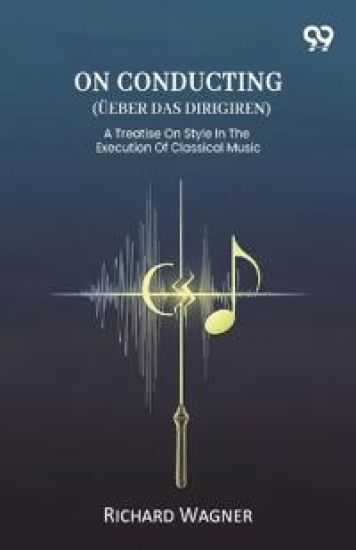
On Conducting (Ueber Das Dirigiren) A Treatise On Style In The Execution Of Classical Music
Richard Wagner
Double 9 Books
2025
pokkari
On conducting (Ueber das Dirigiren): A treatise on style in the execution of classical music offers a detailed examination of the principles and artistry required in orchestral leadership. The work explores the conductor's responsibility not merely as a timekeeper but as an interpreter who brings depth, emotion, and clarity to the performance of classical compositions. Through analytical reflection, it emphasizes the need for precision, stylistic understanding, and respect for the composer's intent. The text critiques mechanical and uninspired methods of conducting, calling for a more expressive and intellectually engaged approach. It underscores the importance of balancing technical mastery with artistic sensitivity, particularly in interpreting the works of great composers such as Beethoven and Mozart. The treatise advocates for reforms in musical education and performance practice, encouraging conductors to cultivate both musical insight and a deep connection with their orchestras. Ultimately, the work stands as a passionate appeal for integrity, individuality, and authenticity in the interpretation of classical music, shaping the foundations of modern conducting philosophy.