Kirjojen hintavertailu – 12 859 819 kirjaa ja 27 kauppaa

Kirjailija

Richard Wagner

Kirjat ja teokset yhdessä paikassa: 655 kirjaa, julkaisuja vuosilta 1928–2026, suosituimpiin kuuluu Siegfried. Vertaile teosten hintoja ja tarkista saatavuus suomalaisista kirjakaupoista.

655 kirjaa

Kirjojen julkaisuvuodet: 1928–2026.

Opera and Drama

Opera and Drama

Richard Wagner

University of Nebraska Press
1995
pokkari
With Richard Wagner, opera reached the apex of German Romanticism. Originally published in 1851, when Wagner was in political exile, Opera and Drama outlines a new, revolutionary type of musical stage work, which would finally materialize as The Ring of the Nibelung. Wagner's music drama, as he called it, aimed at a union of poetry, drama, music, and stagecraft. In a rare book-length study, the composer discusses the enhancement of dramas by operatic treatment and the subjects that make the best dramas. The expected Wagnerian voltage is here: in his thinking about myths such as Oedipus, his theories about operatic goals and musical possibilities, his contempt for musical politics, his exaltation of feeling and fantasy, his reflections about genius, and his recasting of Schopenhauer. This edition includes the full text of volume 2 of William Ashton Ellis's 1893 translation commissioned by the London Wagner Society.
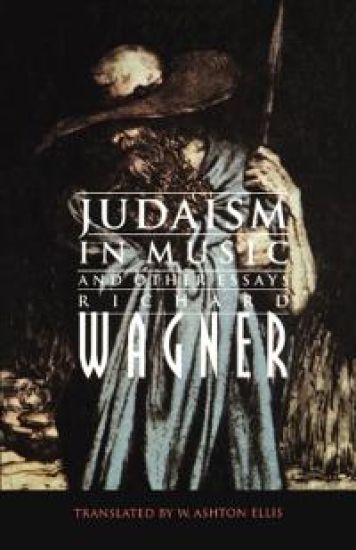
Judaism in Music and Other Essays

Judaism in Music and Other Essays

Richard Wagner

University of Nebraska Press
1995
pokkari
Musical genius, polemicist, explosive personality—that was the nineteenth-century German composer Richard Wagner, who paid as much attention to his reputation as to his genius. Often maddening, and sometimes called mad, Wagner wrote with the same intensity that characterized his music. The letters and essays collected in Judaism in Music and Other Essays were published during the 1850s and 1860s, the period when he was chiefly occupied with the creation of The Ring of the Nibelung. Highlighting this collection is the notorious 1850 article "Judaism in Music," which caused such a firestorm that nearly twenty years later Wagner published an unapologetic appendix. Other prose pieces include "On the Performing of Tannhauser," written while he was in political exile; "On Musical Criticism," an appeal for a more vital approach to art undivorced from life; and "Music of the Future." This volume concludes with letters to friends about the intent and performance of his great operas; estimations of Liszt, Beethoven, Mozart, Gluck, Berlioz, and others; and suggestions for the reform of opera houses in Vienna, Paris, and Zurich. The Bison Book edition includes the full text of volume 3 of William Ashton Ellis's 1894 translation commissioned by the London Wagner Society.

Pilgrimage to Beethoven and Other Essays

Pilgrimage to Beethoven and Other Essays

Richard Wagner

University of Nebraska Press
1994
pokkari
"Saint Beethoven!. . . . He was clad in somewhat untidy houseclothes, with a red woolen scarf wrapped round his waist; long, bushy grey hair hung in disorder from his head, and his gloomy, forbidding expression by no means tended to reassure. . . ." When Wagner published the first collection of his writings he was pleased to admit how well he wrote, even when young. Historians and musicians ever since have agreed that some of his most important and revelatory works were written when he was first establishing his reputation in Paris and Dresden. Pilgrimage to Beethoven and Other Essays provides translations of the first two volumes of his Gesammelte Schriften (1871-1873). These works reveal how committed he was to emphasizing Germanic qualities in his music and define his opposition to the music of France and Italy. In addition to his influential essay on Beethoven's Ninth Symphony, this volume includes two early essays on Germanic myth—"The Wibelungen" and "The Nibelungen-Myth"—his homages to Carl Maria von Weber, and the complete text of his autobiographical A German Musician in Paris, with its famous "Pilgrimage to Beethoven." The volume concludes with his "Plan of Organisation of a German National Theatre" (1849), founded upon Beethoven's moral music. Listeners "inspired by Beethoven's music have been more active and energetic citizens-of-State than those bewitched by Rossini, Bellini, and Donizetti." Throughout these essays, as throughout his life, Wagner knew how to provoke. This edition includes the complete volume 7 of the 1898 translation commissioned by the London Wagner Society.

Religion and Art

Religion and Art

Richard Wagner

University of Nebraska Press
1994
pokkari
"One might say that where Religion becomes artificial, it is reserved for Art to save the spirit of religion." With these words Richard Wagner began "Religion and Art" (1880), one of his most passionate essays. That passion made Wagner himself a central icon in the growing cult of art. Wagner felt that he lived in an age of spiritual crisis. "It can but rouse our apprehension, to see the progress of the art-of-war departing from the springs of moral force, and turning more and more to the mechanical," he wrote. In response to the frightening progress of dynamite and steel, Wagner adopted the role of the Tone Poet Seer, who reveals the inexpressible in concert halls and cleanses souls in waves of symhonic revelation." Religion and Art" is the pivot of the works collected here. Also included are his defining essays "Public and Popularity" and "The Public in Time and Space"; his papers relating to the creation of the Bayreuth School; his complaint against publishers, "On Poetry and Composition" (1879); his article on the first production of Parsifal (1882); and other works that speak his mind about strengthening the spirit through music. These works participated in the duel between Wagner and Nietzsche that ensued after the breakup of their friendship in 1878. Nietzsche publicly called Wagner an incurable romantic, emphasizing how sick he thought both Wagner and his art were. Here Wagner counterattacks with arch innuendo and sarcasm. This edition includes the complete volume 6 of the 1897 translation of Wagner's works commissioned by the London Wagner Society.

"the Art-Work of the Future" and Other Works

"the Art-Work of the Future" and Other Works

Richard Wagner

University of Nebraska Press
1993
pokkari
Poor, frustrated, and angered by the "fashion-mongers and mode-purveyors" of art, Richard Wagner published The Art-Work of the Future in 1849. It marked a turning point in his life: an appraisal of the revolutionary passions of mid-century Europe, his farewell to symphonic music, and his vision of the music to come. Beethoven's Ninth Symphony was unsurpassable, he wrote. Henceforth "The Folk must of necessity be the Artist of the Future," and only artists who were in harmony with the Folk could know what harmony was for. The essay became a touchstone for Wagner, his family, friends, and followers, as he sought to produce works that thoroughly combined music, dance, drama, and national saga. In addition to Wagner's epoch-defining essay, this volume includes his "Autobiographical Sketch," "Art and Climate"; his libretto for an opera, "Wieland the Smith"; and his notorious "Art and Revolution." The concluding piece, "A Communication to My Friends (1851), explains his views on his first successes—The Flying Dutchman, Lohengrin, and Tannhäuser—and defines his agenda for later works. As spokesman for the future, Wagner spoke most of himself. In these works he set forth his ambitions, identified his enemies, and began a campaign for public attention that made him a legend in his own time and in ours.
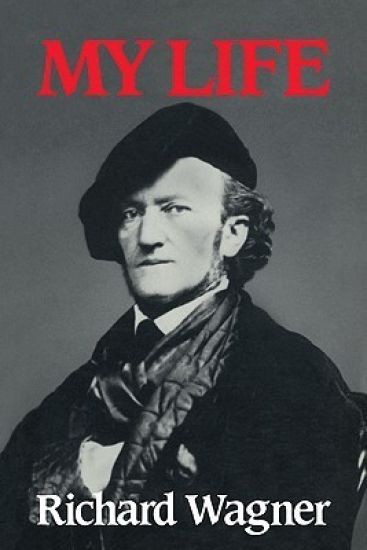
Richard Wagner: My Life

Richard Wagner: My Life

Richard Wagner

Cambridge University Press
1987
pokkari
This reprint is of the first English paperback edition of Richard Wagner's autobiography. This is a primary document of enormous importance for all Wagner enthusiasts, being virtually the sole source of information of the composer's childhood and youth. Written for Wagner's second wife, Cosima, and his patron, King Ludwig II, the autobiography runs from the composer's birth up to the eve of his fifty-first birthday in 1864. Given the intended readership and the circumstances of its composition it is hardly surprising that Wagner should either omit or distort facts from time to time: he does not linger over previous affairs, he portrays his relationship with his first wife, Minna, as a good deal more distant than it really was and he plays down his involvement in the Dresden uprising of 1849. Despite all this, the book presents a panoramic view of Wagner's times and contemporaries and offers a unique perspective on the operas themselves. This translation is of the complete edition published in Munich in 1963 and based on the manuscript in the Wagner Archives in Bayreuth. Wagner's slips of memory are noted, as are references to obscure names and events.
Prelude and Transfiguration from Tristan and Isolde
Music examples and charts illustrate the analyses, and each essay is fully annotated by the editor. in some cases, the results of the original research by the editor or by others working in the field are published here for the first time. Much of the material has never before appeared in English. A score embodying the best available musical text. Historical background—what is known of the circumstances surrounding the origin of the work, including (where relevant) original source material. A detailed analysis of the music, by the editor of the volume or another well-known scholar. Other significant analytic essays and critical comments, exposing the student to a variety of opinions about the music.
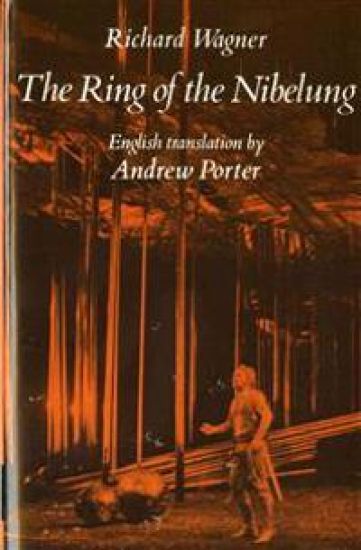
The Ring of the Nibelung

The Ring of the Nibelung

Richard Wagner

W. W. Norton Company
1977
nidottu
Richard Wagner's vast Der Ring des Nibelungen cycle comprises four full-length operas (Das Rheingold, Die Walkure, Siegfried and Gotterdammerung) and is arguably the most extraordinary achievement in the history of opera. His own libretto to the operas, translated by Andrew Porter, is an intricate system of metric patterns, imaginative metaphors and alliteration, combining to produce the music in text.
Die Bestimmung der Dauerfestigkeit der knetbaren, veredelbaren Leichtmetallegierungen

Die Bestimmung der Dauerfestigkeit der knetbaren, veredelbaren Leichtmetallegierungen

Richard Wagner

Springer-Verlag Berlin and Heidelberg GmbH Co. K
1928
nidottu
Dieser Buchtitel ist Teil des Digitalisierungsprojekts Springer Book Archives mit Publikationen, die seit den Anfängen des Verlags von 1842 erschienen sind. Der Verlag stellt mit diesem Archiv Quellen für die historische wie auch die disziplingeschichtliche Forschung zur Verfügung, die jeweils im historischen Kontext betrachtet werden müssen. Dieser Titel erschien in der Zeit vor 1945 und wird daher in seiner zeittypischen politisch-ideologischen Ausrichtung vom Verlag nicht beworben.