Kirjojen hintavertailu – 12 859 819 kirjaa ja 27 kauppaa

Kirjailija

Richard Wagner

Kirjat ja teokset yhdessä paikassa: 655 kirjaa, julkaisuja vuosilta 1928–2026, suosituimpiin kuuluu Siegfried. Vertaile teosten hintoja ja tarkista saatavuus suomalaisista kirjakaupoista.

655 kirjaa

Kirjojen julkaisuvuodet: 1928–2026.

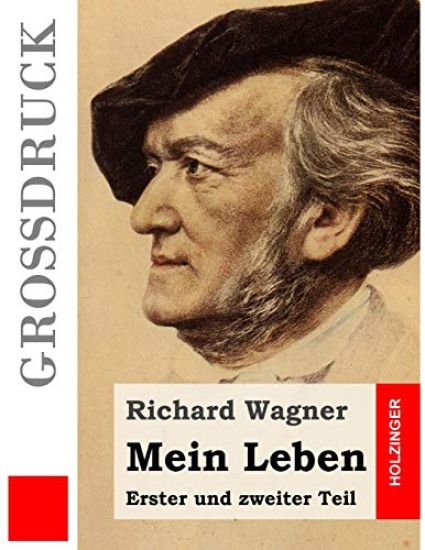
Mein Leben (Großdruck): Erster und zweiter Teil

Mein Leben (Großdruck): Erster und zweiter Teil

Richard Wagner

Createspace Independent Publishing Platform
2015
nidottu
Richard Wagner: Mein Leben. Erster und zweiter Teil Lesefreundlicher Gro druck in 16-pt-Schrift Edition Holzinger. Gro format, 216 x 279 mm Berliner Ausgabe, 2015 Vollst ndiger, durchgesehener Neusatz bearbeitet und eingerichtet von Michael Holzinger Erstdruck als Privatdruck in vier Teilen: Basel, 1870-1880. Erste ffentliche Ausgabe: M nchen (Bruckmann) 1911. Textgrundlage ist die Ausgabe: Wagner, Richard: Mein Leben. Erste authentische Ver ffentlichung, Vollst ndiger Text unter Zugrundelegung der im Richard-Wagner-Archiv Bayreuth aufbewahrten Diktatniederschrift, erg nzt durch Richard Wagners Annalen 1864 bis 1868 und eine Zeittafel f r die Jahre 1869 bis 1883), Vorgelegt und mit einem Nachwort von Martin Gregor-Dellin, M nchen: List, 1963. Herausgeber der Reihe: Michael Holzinger Reihengestaltung: Viktor Harvion Umschlaggestaltung unter Verwendung des Bildes: Richard Wagner (nach dem lbild von Franz von Lenbach) Gesetzt aus Minion Pro, 16 pt.
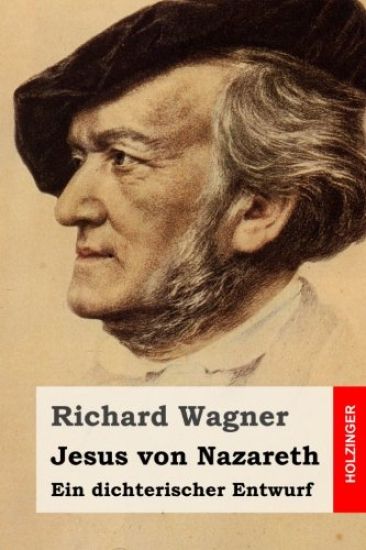
Jesus von Nazareth: Ein dichterischer Entwurf

Jesus von Nazareth: Ein dichterischer Entwurf

Richard Wagner

Createspace Independent Publishing Platform
2015
nidottu
Richard Wagner: Jesus von Nazareth. Ein dichterischer Entwurf Edition Holzinger. Taschenbuch Berliner Ausgabe, 2015 Vollst ndiger, durchgesehener Neusatz bearbeitet und eingerichtet von Michael Holzinger Entstanden 1848. Hier nach: Richard Wagner: S mtliche Schriften und Dichtungen. Band 11, Leipzig: Breitkopf und H rtel, o. J. 1911]. Die Eigent mlichkeit der Orthographie wurde bei der vorliegenden Ausgabe beibehalten. Herausgeber der Reihe: Michael Holzinger Reihengestaltung: Viktor Harvion Umschlaggestaltung unter Verwendung des Bildes: Richard Wagner (nach dem lbild von Franz von Lenbach) Gesetzt aus Minion Pro, 12 pt.
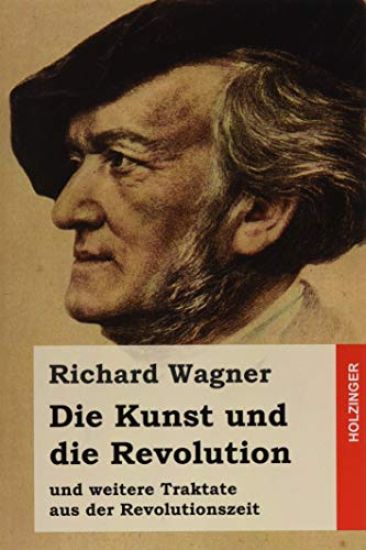
Die Kunst und die Revolution: und weitere Traktate aus der Revolutionszeit

Die Kunst und die Revolution: und weitere Traktate aus der Revolutionszeit

Richard Wagner

Createspace Independent Publishing Platform
2015
nidottu
Richard Wagner: Die Kunst und die Revolution und weitere Traktate aus der Revolutionszeit Edition Holzinger. Taschenbuch Berliner Ausgabe, 2015 Vollst ndiger, durchgesehener Neusatz mit einer Biographie des Autors bearbeitet und eingerichtet von Michael Holzinger Die Kunst und die Revolution: Entstanden 1848 und 1849 in Dresden und Z rich. Hier nach: Richard Wagner: S mtliche Schriften und Dichtungen. Band 3, Leipzig: Breitkopf und H rtel, o. J. 1911]. Die Eigent mlichkeit der Orthographie wurde bei der vorliegenden Ausgabe beibehalten. Aus der Revolutionszeit: Entstanden 1848 und 1849 in Dresden und Z rich. Hier nach: Richard Wagner: S mtliche Schriften und Dichtungen. Band 12, Leipzig: Breitkopf und H rtel, o. J. 1911]. Inhaltsverzeichnis Die Kunst und die Revolution Aus der Revolutionszeit Die Revolution Wie verhalten sich republikanische Bestrebungen dem K nigthume gegen ber? ber Eduard Devrient's Geschichte der deutschen Schauspielkunst Theater-Reform Nochmals Theater-Reform Der Mensch und die bestehende Gesellschaft Biographie Herausgeber der Reihe: Michael Holzinger Reihengestaltung: Viktor Harvion Umschlaggestaltung unter Verwendung des Bildes: Richard Wagner (nach dem lbild von Franz von Lenbach) Gesetzt aus Minion Pro, 11 pt.
Das Rheingold

Das Rheingold

Richard Wagner

Createspace Independent Publishing Platform
2015
nidottu
Title: Das Rheingold, WWV 86A Composer: Richard Wagner Original Publisher: Ricordi The complete opera Das Rheingold by Wagner, arranged for solo piano, as originally published by Ricordi. Performer's Reprints are produced in conjunction with the International Music Score Library Project. These are out of print or historical editions, which we clean, straighten, touch up, and digitally reprint. Due to the age of original documents, you may find occasional blemishes, damage, or skewing of print. While we do extensive cleaning and editing to improve the image quality, some items are not able to be repaired. A portion of each book sold is donated to small performing arts organizations to create jobs for performers and to encourage audience growth.
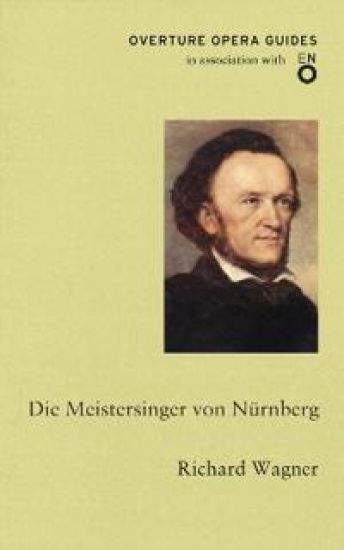
Die Meistersinger von Nurnberg (The Mastersingers of Nuremberg)
Die Meistersinger von Nurnberg is the only comedy among Richard Wagner's mature works. Unusually for Wagner, it is set in a historically specific time and place, sixteenthcentury Nuremberg, and tells of a song contest among the town's guildsmen. It nevertheless explores the same themes of renewal, renunciation and human love as Wagner's other great music dramas. The finely drawn humanity of its principal characters and the brilliance of its musical invention make it one of the most rewarding operas in the repertory. The guide contains articles on the complex historical and political background to the opera, a detailed examination of its musical structure and a survey of its sometimes contentious performance history. Further articles explore some of the work's roots in the poetry of Schiller and the vexed question of the extent to which Wagner's virulent anti-Semitism may be said to be present in the opera. The guide also includes the full libretto with English translation, sixteen pages of illustrations, a musical thematic guide, a discography, a bibliography and DVD and website guides.
Letters to Wesendonck et al.

Letters to Wesendonck et al.

Richard Wagner

Cambridge University Press
2015
pokkari
William Ashton Ellis (1852–1919) abandoned his medical career in order to devote himself to his Wagner studies. Best known for his translations of Wagner's prose works, Ellis also translated Wagner's letters to family and friends. In this 1899 publication, most of the letters are those which Wagner wrote to the wealthy retired silk merchant Otto Wesendonck, who provided Wagner with generous financial support and whose wife, Mathilde, provided the words for the Wesendonck Lieder. Also included here are letters to the German writer Malwida von Meysenbug, who was also a friend of Nietzsche, and to the novelist Eliza Wille, at whose house in Zurich, a meeting place for the cognoscenti, Wagner was a regular guest. She later published her memories of the composer. Despite the stylistic idiosyncrasies of the translations, these letters remain of value because they capture something of the colour of Wagner's prose and personality.