Kirjailija
Richard Wagner
Kirjat ja teokset yhdessä paikassa: 655 kirjaa, julkaisuja vuosilta 1928–2026, suosituimpiin kuuluu Siegfried. Vertaile teosten hintoja ja tarkista saatavuus suomalaisista kirjakaupoista.
655 kirjaa
Kirjojen julkaisuvuodet: 1928–2026.
An easy-to-understand guide to Christian history and theology explores the life and teachings of Jesus in the four gospels, describes sacred books and doctrines, and offers insight into the differences between its major denominations. Original.
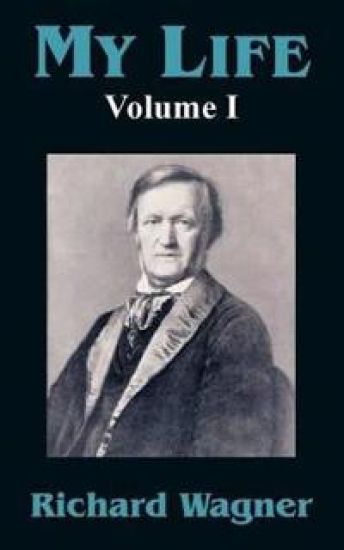
CONTENTSPart I. 1813-1842Childhood and SchooldaysMusical StudiesTravels in Germany (First Marriage)Paris: 1839-42Part II. 1842-1850 (Dresden)'Rienzi''The Flying Dutchman'Liszt, Spontini, Marschner, etc.'Tannha]ser'Franck, Schumann, Semper, Gutzkow, Auerbach'Lohengrin' (Libretto)Ninth SymphonySpohr, Gluck, Hiller, DevrientOfficial Position. Studies in Historical Literature'Rienzi' at BerlinRelations with the Management, Mother's Death, etc. Growing Sympathy with Political Events, BakuninThe May InsurrectionFlight: Weimar, Z]rich, Paris, Bordeaux, Geneva, Z]rich
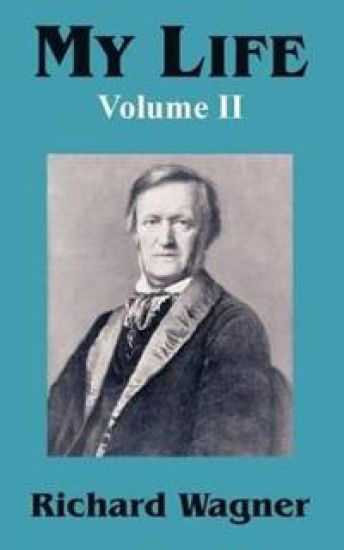
CONTENTSPart III. 1850-1861Z]rich: Karlritter, Hans von B]low, Herwegh, Uhlig, Wesendoncks, etc.'Nibelungen Ring, ' Liszt at Z]rich, Schopenhauer, Composition of the 'Rheingold' and 'Walk]re'London (Philharmonic Concerts)Z]rich, Selisberg, Mornex, Brunnen ('Tristan')Liszt and Princess Wittgenstein (Z]rich, St. Gall)The 'Asyl' ('Tristan')Venice ('Tristan')Lucerne ('Tristan')Paris (Production of 'Tannha]ser')Part IV. 1861-1864Weimar, Reichenhall, ViennaParis (Libretto of the 'Meistersinger')Biebrich ('Meistersinger')Vienna: Rehearsals of the 'Tristan', ConcertsConcerts at St. Petersburg and MoscowResidence at Penzing, Near ViennaFlight: Z]rich, StuttgartMessage from the King
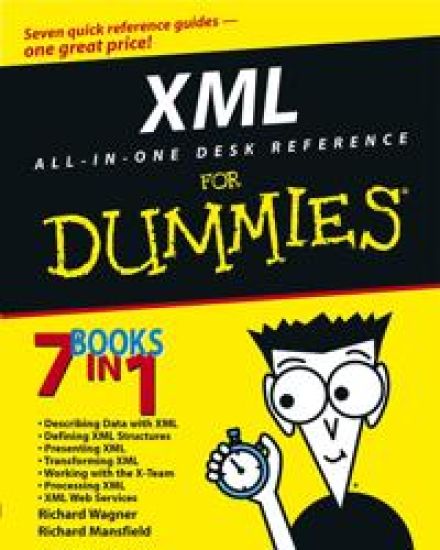
XML All-in-One Desk Reference For Dummies
Richard Wagner; Richard Mansfield
John Wiley Sons Inc
2003
nidottu
* The complete solution! This revolution in product design incorporates 6 books in 1 straightforward desk reference. Provides in depth coverage of the many features and specifications of XML, the data interchange standard of choice. * XML All in One For Dummies is a true desk reference designed to guide readers through the features and specifications of the leading edge XML dialects and help them develop their own custom Web applications all under one cover. * Covers XML basics, using DTD's with XML, XML namespaces, XML schemas, styling XML documents, XML's linking languages, XML tools, using XML in the real world, and more. * The first two editions of XML For Dummies have sold more than 85,000 units. * According to Microsoft's CEO Steve Ballmer "XML will become the universal medium by which Web sites and users of Web sites communicate." * Written by NIIT a global training, IT consulting and software development organization. NIIT trains over 150,000 individuals each year in Information Technology areas. * The For Dummies series a repeat winner, now with more than 100 million books in print.

1. Allgemeines Vorwort zur Reihe ? ISCADOR? und mehr? 2. Vorwort zu ? Krebs - den Lebensfaden wiederfinden? 3. Zur Geschichte der Psychoonkologie 4. Gibt es eine Krebspersönlichkeit? 5. Anthroposophisch erweiterte Onkologie als Therapie für Leib, Seele und Geist 6. Die Selbstregulation nach Professor Grossarth-Maticek 7. Das Integrative Selbstregulationstraining (IST) bei Krebs nach Gerhard von der Lehr 8. Positive Synergie: ISCADOR? und Selbstregulationstraining 9. Psychoonkologisches Praxis-Programm nach Wagner 10. Praktische Übungen zum Praxisprogramm 11. Sexualität und Onkologie 12. Der Eosinophilen-Funktionstest (EFT?) nach Wagner 13. Glossar 14. Literaturverzeichnis 15. Danksagung 16. Verzeichnis anthroposophischer Kliniken, Sanatorien und Beratungsstellen Anhang I: Arbeitsmaterialien zum Kopieren Anhang II: Labor Onkobrain? Anhang III: Kurzfragebogen zur Messung der Selbstregulation nach Professor Grossarth-Maticek Anhang IV: Bezugsquellen Anhang V: Psychoonkologie im Internet


Advice and examples help you find your own prayer style Discover how prayer works and why you need it now more than ever Do you want to pray, but youre not sure how? This friendly guide explains the different kinds of prayer revealing how and why to pray and how to discern Gods answers. Youll see how to overcome hindrances, how to use a journal, and how to pray on your own. Discover what "Thy will be done" means and how to approach prayers that seemingly havent been answered. The Dummies Way *Explanations in plain English *"Get in, get out" information *Icons and other navigational aids *Tear-out cheat sheet *Top ten lists *A dash of humor and fun

Restructuring information in an XML document so that it works in other formats used to be a time-consuming ordeal involving lots of blood, sweat, and tears. Now XSLT (Extensible Stylesheet Language Transformations) makes the process nearly instantaneous. Just provide an example of the kind of information you’d like to see, and XSLT does the rest. With XSLT you can effortlessly transform XML documents into virtually any kind of output, including other XML documents and HTML pages. But mastering XSLT can be tricky, especially if you’ve never worked with XML or HTML; and most books on the subject are written for people who have. Here comes XSLT For Dummies to the rescue! XSLT For Dummies is your ticket to quickly mastering XSLT—no matter what your prior programming experience. Writing in easygoing, plain English, XML pro Richard Wagner provides expert advice, step-by-step guidance, and tons of crystal-clear examples to help you harness the power of XSLT to transform documen ts. In no time you’ll: *Understand how XSLT works with XSL and XPath *Experiment with templates, stylesheets, and expressions *Perform HTML transformations *Master XPath data types and functions *Combine XSLT stylesheets *Explore cool XSLT programming tricks XSLT For Dummies works from the ground up, starting with a practical introduction of the “X-Team”—XML, XSL, XSLT, and X-Path—and instructions on how to write a XSLT stylesheet. From there it quickly moves onward and upward through the whole range of important XSLT topics, including: *Transforming with stylesheets *Understanding and using template rules *Using XPath to locate nodes in XML documents *Combining XSLT stylesheets and adding processing instructions *Debugging XSLT transformations *Ten XSLT processors available online It doesn’t matter whether you’re a babe in the woods who can’t tell a “tag” from an element, or you’re an old pro at creating XML documents, XSLT For Dummies offers you a fun, easy way to explore and take full advantage of Extensible Stylesheet Language Transformations.

The Edition Peters vocal scores of Wagner''s stage works are famed for their reliability, practicality and quality. They are used by the world''s leading singers, directors, repetiteurs and conductors in productions of these works across the world. Tristan und Isolde, an opera that changed music and the arts forever, is presented with a piano reduction by Felix Mottl with German sung text and stage directions.
Wagners "Große romantische Oper", 1845 uraufgeführt und 1845/46 erstmals veröffentlicht, in der Neuedition von Egon Voss mit ausführlichem Vorwort.

Dieses vollstandige Textbuch des "Ring des Nibelungen" enthalt die Leitmotive fur jedes der vier abendfullenden Werke "Das Rheingold", "Die Walkure", "Siegfried" und "Gotterdammerung". Zusatzlich findet der Leser am Seitenrand neben dem Text das jeweils erklingende bzw. die jeweils erklingenden Leitmotive sowie Angaben uber die Zeitdauer ihres Auftretens. So wird es moglich, auch ohne Studium von Partitur oder Klavierauszug alle Leitmotive zu erfassen. WWV 86
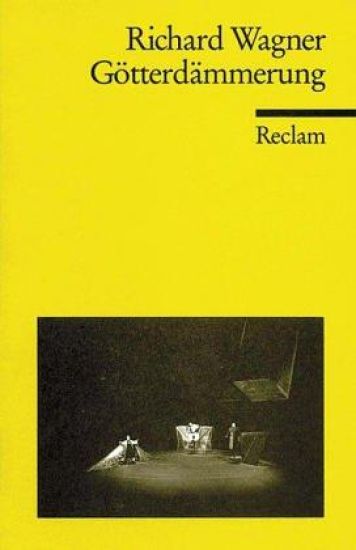
Der Ring des Nibelungen. Dritter Tag: Götterdämmerung
Richard Wagner
Reclam Philipp Jun.
1997
pokkari
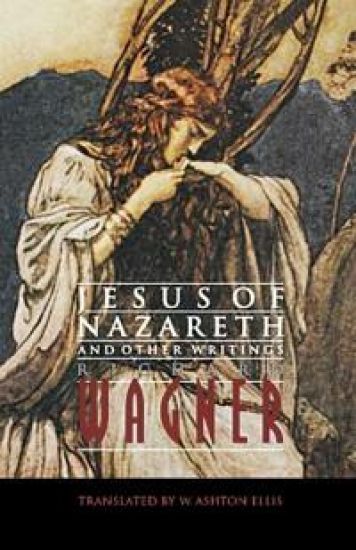
Near the end of his life, Richard Wagner supervised the publication of his collected writings, providing an extensive view of his thoughts about art and politics from his youth to his final period of triumph. After his death, there was still more to be told: his admirers discovered a large number of writings he had forgotten, misplaced, never published, or had chosen to omit from his collected works. This volume, the last of eight volumes now reprinted by the University of Nebraska Press, collects the most illuminating of those works. The title work, "Jesus of Nazareth," was written in 1848 or 1849; its composition coincided with the most widespread revolutionary ferment seen in Europe. It expresses Wagner's own revolutionary ideals, thoroughly justified (or so he thought) by Jesus and the early Church. At the time Wagner considered Jesus as a revolutionary leader whose struggles with authority and traditions were much like his own. The opening work is "Siegfried's Death," a poem written in 1848 that set the tone for his most famous operatic work, the tetralogy Der Ring des Nibelungen. Whole sections of the poem were later incorporated into the fourth Ring opera, Gotterdammerung, but the differences are as revealing as the carryover. The essays that Wagner published in journals but saw fit to exclude from his Gesammelte Schriften might have embarrassed the elderly sage but are key documents to Wagner's activities in his revolutionary period. For example, his ardently prorevolutionary essay, "The Revolution," would have displeased the wealthy patrons of his later years. This edition includes the full text of volume 8 of the translation of Wagner's works published in 1899 for the London Wagner Society.
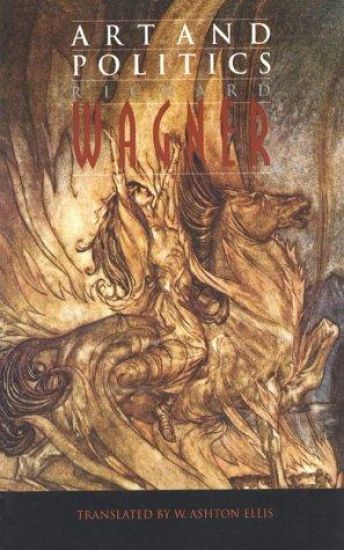
A master of mystery and paradox, Wagner spent his life composing himself while composing music. Written between 1864 and 1878, the essays in Art and Politics converge upon Wagner's desire to define and reform German culture. He was deeply annoyed that Germany seemed to satisfy itself with cheap theater, vulgar songs, and clumsy imitations of French art. In "What Is German?" he declared that German culture must rise above the common ruck. Citing "Music's wonderman" Johann Sebastian Bach as his precursor, Wagner fought to persuade his readers that German culture had a historic destiny, and that destiny was shaped first and foremost by music. As usual, embroiled in the defense of his operas and his person, Wagner recognized that his rescue from attack and poverty could not be expected from "Franco-Judaico-German democracy." He instead fixed his hopes elsewhere: "the embodied voucher" for fundamental law, the Monarch. He found himself at a turning point in his career. In 1864 King Ludwig II of Bavaria befriended Wagner and gave him badly needed financial support. This alliance aroused Wagner's enemies into further fits of jealousy. Yet, amid the public scorn, he worked on the production of Tristan und Isolde, drafted the libretto for Parsifal, and composed sections of Siegfried and Die Meistersinger. In these essays Wagner resumes his considerations of the close ties between religion and art. He calls art "the kindly Life-saviour who does not really and wholly lead us out beyond this life, but, within it, lifts us up above it and shews it as itself a game of play." These essays express his artistic credo and the knowledge of German literature that underpinned his claims for German genius. Following his ideals, he proclaimed his intention to raise the quality of German opera, by himself if necessary. This edition includes the full text of volume 4 of the translation of Wagner's works commissioned in 1895 by the London Wagner Society.
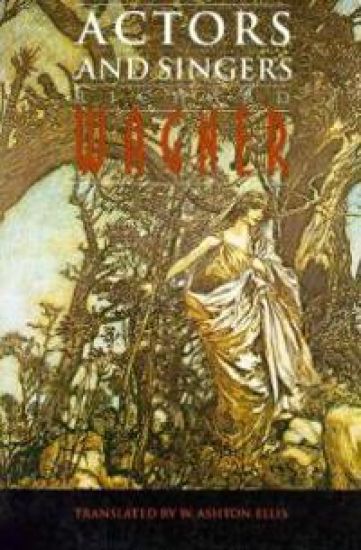
The essays collected in this volume were written between 1870 and 1873, years that brought a transformation in Germany. After Prussia’s spectacular defeat of France, the coalescing of German states into a unified Germany, and Bismarck’s declaration of the German Empire, Richard Wagner suddenly felt like a prophet whose predictions had come true before his eyes. At last the German culture he longed to enliven had a German state as grand as his own ambition. In the same period Wagner was deeply inspired by the works of Shakespeare, an influence that runs throughout this volume. The title essay, “Actors and Singers,” is one of Wagner’s most deliberate and philosophical writings. He wrote, “Art ceases, strictly speaking, to be Art from the moment it presents itself as Art to our reflecting consciousness.” He described how the unconsciousness of art, and thus art’s power, connected natural genius to cultivated traditions. German genius, however, still lacked its own traditions. Wagner aimed to provide them. Also included are Wagner’s famous essay, “Beethoven”; his first publications concerning the nascent Bayreuth Festival Playhouse; his visionary “The Destiny of Opera”; and his letter to Friedrich Nietzsche responding to the publication of The Birth of Tragedy. This edition includes the full text of volume 5 of the translation of Wagner’s works published in 1896 for the London Wagner Society.