Kirjojen hintavertailu – 12 859 818 kirjaa ja 27 kauppaa

Kirjailija

Robert Darnton

Kirjat ja teokset yhdessä paikassa: 32 kirjaa, julkaisuja vuosilta 1985–2026, suosituimpiin kuuluu The Kiss of Lamourette. Vertaile teosten hintoja ja tarkista saatavuus suomalaisista kirjakaupoista.

32 kirjaa

Kirjojen julkaisuvuodet: 1985–2026.

The Interpretation of Cultures

The Interpretation of Cultures

Clifford Geertz; Robert Darnton

Basic Books
2017
nidottu

Halvin toimitettuna 30,50 €

In The Interpretation of Cultures, the most original anthropologist of his generation moved far beyond the traditional confines of his discipline to develop an important new concept of culture. This groundbreaking book, winner of the 1974 Sorokin Award of the American Sociological Association, helped define for an entire generation of anthropologists what their field is ultimately about.
The Kiss of Lamourette

The Kiss of Lamourette

Robert Darnton

WW Norton Co
1991
pokkari
At home in the eighteenth and the twentieth centuries, Robert Darnton is a shrewd and entertaining guide to the shifting borderlands of history and culture. These wide-ranging essays appear under various headings: Current Events this section includes the wonderful story of the moment in 1792 when all the delegates in the French Legislative Assembly kissed each other; Media, on television, pounding a newspaper beat, and tips to academics on how to get a book published; The Printed Word, with an essay on the history of books; The Lay of the Land, on aspects of intellectual history; and Good Neighbors, on the relation of history to literature anthropology, and the sociology of knowledge."
Brissot and books

Brissot and books

Robert Darnton

LIVERPOOL UNIVERSITY PRESS
2026
nidottu
This book opens up a new view of cultural history in the age of Enlightenment. By close study of the relations between a French author and a Swiss publisher, it gives an inside view of how French books were produced and distributed in the literary underground.
Revoljutsionnyj temperament. Parizh v 1748-1789 godakh

Revoljutsionnyj temperament. Parizh v 1748-1789 godakh

Robert Darnton

Novoe literaturnoe obozrenie
2026
sidottu
Kak Parizh prishel k 1789 godu? Chto na samom dele dumali i chuvstvovali parizhane v desjatiletija, predshestvovavshie Velikoj frantsuzskoj revoljutsii? Vydajuschijsja istorik R. Darnton v svoej novoj knige predlagaet originalnyj otvet: on issleduet ne stolko politiko-ekonomicheskie prichiny revoljutsii, skolko sozrevanie osobogo "revoljutsionnogo temperamenta" - kollektivnogo umonastroenija, kotoroe sdelalo vozmozhnym vzryv 1789 goda. Darnton pogruzhaet chitatelja v guschu parizhskoj zhizni 1748-1789 godov, proslezhivaja formirovanie novogo obschestvennogo soznanija cherez unikalnuju "multimedijnuju sistemu" Starogo porjadka: kak novosti o vojne, nalogakh, korolevskikh ljubovnitsakh i poletakh na vozdushnom share prevraschalis v pesni, pamflety, slukhi i spletni, rasprostranjajas ot salonov i kofeen do rynkov i masterskikh. Analiziruja tsirkuljatsiju etikh informatsionnykh potokov, avtor rekonstruiruet sotsialnyj opyt gorozhan i objasnjaet, kak esche za sorok let do vzjatija Bastilii v ikh soznanii zakrepilas gotovnost k radikalnym peremenam. Robert Darnton (r. 1939) - istorik, pochetnyj professor Prinstonskogo universiteta, professor i direktor Biblioteki Garvardskogo universiteta, spetsialist po istorii Frantsii XVIII veka, pioner v oblasti istorii knizhnoj kultury. Perevod s anglijskogo Kyrlezhev Aleksandr
The Writer's Lot

The Writer's Lot

Robert Darnton

HARVARD UNIVERSITY PRESS
2025
sidottu

Halvin toimitettuna 26,90 €

A pioneering social history of French writers during the Age of Revolution, from a world-renowned scholar and National Book Critics Circle Award winner. In eighteenth-century France, writers emerged as a new kind of power. They stirred passions, shaped public opinion, and helped topple the Bourbon monarchy. Whether scribbling in dreary garrets or philosophizing in salons, they exerted so much influence that the state kept them under constant surveillance. A few became celebrities, but most were hacks, and none could survive without patrons or second jobs. The Writer’s Lot is the first book to move beyond individual biography to take the measure of “literary France” as a whole. Historian Robert Darnton parses forgotten letters, manuscripts, police reports, private diaries, and newspapers to show how writers made careers and how they fit into the social order—or didn’t. Reassessing long-standing narratives of the French Revolution, Darnton shows that to be a reject was not necessarily to be a Jacobin: the toilers of the Parisian Grub Street sold their words to revolutionary publishers and government ministers alike. And while literary France contributed to the downfall of the ancien régime, it did so through its example more than its ideals: the contradiction inherent in the Republic of Letters—in theory, open to all; in practice, dominated by a well-connected clique—dramatized the oppressiveness of the French social system. Darnton brings his trademark rigor and investigative eye to the character of literary France, from the culture war that pitted the “decadent” Voltaire against the “radical” Rousseau to struggling scribblers, booksellers, censors, printers, and royal spies. Their lives, little understood until now, afford rare insight into the ferment of French society during the Age of Revolution.
The Revolutionary Temper

The Revolutionary Temper

Robert Darnton

Penguin Books Ltd
2025
pokkari

Halvin toimitettuna 23,60 €

A Sunday Times, Times Literary Supplement, and The Times Book of the Year‘Robert Darnton is one of the world’s greatest historians, and this is an exceptional book: a huge social and cultural portrait of Paris in the build-up to the French Revolution’ Dominic Sandbrook, Sunday Times, Books of the Year When a Parisian crowd stormed the Bastille in July 1789, it triggered an event of global consequence: the overthrow of the monarchy and the birth of a new society. Most historians account for the French Revolution by viewing it as the outcome of underlying conditions such as a faltering economy, class conflict or Enlightenment ideology. Without denying any of these, Robert Darnton offers a different explanation: what Parisians themselves, those at the centre of the Revolution, thought was happening at the time and how it guided their actions. To understand the rise of what he calls ‘the revolutionary temper’, Darnton draws on a lifetime’s study of pamphlets, books, underground newsletters, songs and public performances, exploring Paris as an information society not unlike our own. Its news circuits were centred in cafes and market-places, on park benches, and under the Palais-Royal’s Tree of Cracow, a favourite gathering-place for gossips. He shows how the events of forty years – from disastrous treaties, official corruption and royal scandal to thrilling hot-air balloon ascents and a new conception of the nation – all entered the collective consciousness of ordinary Parisians. As news and opinion travelled across this profoundly unequal society, public trust in royal authority eroded, its legitimacy was undermined, and the social order unravelled. Much of Robert Darnton’s work has explained the hidden dynamics of history, never more so than in this exceptional book. It is a riveting narrative, but it adds a new dimension, the perceptions of contemporary Parisians, which allows us to see these momentous decades afresh.

The Revolutionary Temper: Paris, 1748-1789

The Revolutionary Temper: Paris, 1748-1789

Robert Darnton

W. W. Norton Company
2024
nidottu

Halvin toimitettuna 26,00 €

When a Parisian crowd stormed the Bastille in July 1789, it triggered an event of global consequence: the overthrow of the monarchy and the birth of a new society. Most historians account for the French Revolution by viewing it in retrospect as the outcome of underlying conditions such as a faltering economy, social tensions, or the influence of Enlightenment thought. But what did Parisians themselves think they were doing--how did they understand their world? What were the motivations and aspirations that guided their actions? In this dazzling history, Robert Darnton addresses these questions by drawing on decades of close study to conjure a past as vivid as today's news. He explores eighteenth-century Paris as an information society much like our own, its news circuits centered in caf s, on park benches, and under the Palais-Royal's Tree of Cracow. Through pamphlets, gossip, underground newsletters, and public performances, the events of some forty years--from disastrous treaties, official corruption, and royal debauchery to thrilling hot-air balloon ascents and new understandings of the nation--all entered the churning collective consciousness of ordinary Parisians. As public trust in royal authority eroded and new horizons opened for them, Parisians prepared themselves for revolution. Darnton's authority and sure judgment enable readers to confidently navigate the passions and complexities of controversies over court politics, Church doctrine, and the economy. And his compact, luminous prose creates an immersive reading experience. Here is a riveting narrative that succeeds in making the past a living presence.
The Revolutionary Temper

The Revolutionary Temper

Robert Darnton

Allen Lane
2023
sidottu
A Sunday Times, Times Literary Supplement, and The Times Book of the YearA brilliant account of the coming of the French Revolution, and the culminating work of this most distinguished historian ‘Events do not come naked into the world. They come clothed – in attitudes, assumptions, values, memories of the past, anticipations of the future, hopes and fears and many other emotions. To understand events, it is necessary to describe the perceptions that accompany them, for the two are inseparable.’When a Parisian crowd stormed the Bastille in July 1789, it triggered an event of global consequence: the overthrow of the monarchy and the birth of a new society. Most historians account for the French Revolution by viewing it as the outcome of underlying conditions such as a faltering economy, class conflict or Enlightenment ideology. Without denying any of these, Robert Darnton offers a different explanation: what Parisians themselves, those at the centre of the Revolution, thought was happening at the time and how it guided their actions. To understand the rise of what he calls ‘the revolutionary temper’, Darnton draws on a lifetime’s study of pamphlets, books, underground newsletters, songs and public performances, exploring Paris as an information society not unlike our own. Its news circuits were centred in cafes and market-places, on park benches, and under the Palais-Royal’s Tree of Cracow, a favourite gathering-place for gossips. He shows how the events of forty years – from disastrous treaties, official corruption and royal scandal to thrilling hot-air balloon ascents and a new conception of the nation – all entered the collective consciousness of ordinary Parisians. As news and opinion travelled across this profoundly unequal society, public trust in royal authority eroded, its legitimacy was undermined, and the social order unravelled. Much of Robert Darnton’s work has explained the hidden dynamics of history, never more so than in this exceptional book. It is a riveting narrative, but it adds a new dimension, the perceptions of contemporary Parisians, which allows us to see these momentous decades afresh.
The Revolutionary Temper: Paris, 1748-1789

The Revolutionary Temper: Paris, 1748-1789

Robert Darnton

W. W. Norton Company
2023
sidottu
When a Parisian crowd stormed the Bastille in July 1789, it triggered an event of global consequence: the overthrow of the monarchy and the birth of a new society. Most historians account for the French Revolution by viewing it in retrospect as the outcome of underlying conditions such as a faltering economy, social tensions, or the influence of Enlightenment thought. But what did Parisians themselves think they were doing--how did they understand their world? What were the motivations and aspirations that guided their actions? In this dazzling history, Robert Darnton addresses these questions by drawing on decades of close study to conjure a past as vivid as today's news. He explores eighteenth-century Paris as an information society much like our own, its news circuits centered in caf s, on park benches, and under the Palais-Royal's Tree of Cracow. Through pamphlets, gossip, underground newsletters, and public performances, the events of some forty years--from disastrous treaties, official corruption, and royal debauchery to thrilling hot-air balloon ascents and new understandings of the nation--all entered the churning collective consciousness of ordinary Parisians. As public trust in royal authority eroded and new horizons opened for them, Parisians prepared themselves for revolution. Darnton's authority and sure judgment enable readers to confidently navigate the passions and complexities of controversies over court politics, Church doctrine, and the economy. And his compact, luminous prose creates an immersive reading experience. Here is a riveting narrative that succeeds in making the past a living presence.
Tsenzory za rabotoj. Kak gosudarstvo formiruet literaturu

Tsenzory za rabotoj. Kak gosudarstvo formiruet literaturu

Robert Darnton

Novoe literaturnoe obozrenie
2022
sidottu
Kniga professora Garvardskogo universiteta Roberta Darntona "Tsenzory za rabotoj" - eto uvlekatelnoe issledovanie togo, kak v raznykh obstojatelstvakh i v raznye vremena rabotaet tsenzura. V tsentre vnimanija avtora tri dalekikh drug ot druga sjuzheta - rojalistskaja monarkhicheskaja Frantsija XVIII veka, kolonialnaja Indija XIX veka i Vostochnaja Germanija v 1970-1980-kh godakh. Avtor na mnogochislennykh primerakh proslezhivaet, kak imenno rabotala tsenzura, chto sami tsenzory dumali o svoej rabote i kakim obrazom oni vzaimodejstvovali s knizhnym rynkom, v tom chisle i "chernym". V knige mozhno najti koloritnye portrety mnogikh predstavitelej "tenevogo" knizhnogo mira? ot polugramotnykh torgovok parizhskikh knizhnykh rynkov do vladejuschikh desjatkami jazykov bengalskikh bibliotekarej. Robert Darnton pokazyvaet, kakoj vklad tsenzura vnosila ne tolko v kulturnuju, no i v ekonomicheskuju i politicheskuju zhizn obschestva. Tsenzura predpolagala slazhennuju rabotu mnogikh ljudej, spletenija sudeb i interesov kotorykh mogut napominat uvlekatelnyj detektivnyj roman.2-e izdanie, ispravlennoe. Perevodchik: Solntseva Marija
Mesmerizm i konets epokhi Prosveschenija vo Frantsii

Mesmerizm i konets epokhi Prosveschenija vo Frantsii

Robert Darnton

Novoe literaturnoe obozrenie
2021
sidottu
V nachale 1778 goda v Parizh pribyl venskij vrach Frants Anton Mesmer. Obosnovavshis v gorode, on nachal propovedovat, kazalos by, dovolno strannuju teoriju istselenija, kotoraja pochti mgnovenno ovladela soznaniem publiki. Khotja slava Mesmera okazalas skorotechna, ego uchenie sygralo vazhnuju rol v smene obschestvennykh nastroenij, kogda "vek razuma" ustupil mesto epokhe romantizma. V svoej zakhvatyvajuschej rabote garvardskij professor Robert Darnton proslezhivaet svjazi mesmerizma s radikalnoj politicheskoj myslju, ezotericheskimi techenijami i predstavlenijami o nauke vo Frantsii XVIII veka. Vpervye opublikovannaja v 1968 godu, eta kniga stala pervym i do sikh por aktualnym issledovaniem Darntona, postavivshim vopros o kanalakh i mekhanizmakh tsirkuljatsii idej v Evrope Novogo vremeni. Robert Darnton - odin iz krupnejshikh spetsialistov po frantsuzskoj istorii, pochetnyj professor v Garvarde i Prinstone, byvshij direktor Biblioteki Garvardskogo universiteta. Perevodchik: Mikhajlin Nikita, Mikhajlin V.
Velikoe koshache poboische. I drugie epizody iz istorii frantsuzskoj kultury
Odin iz vidnejshikh amerikanskikh istorikov, professor Prinstonskogo universiteta, Robert Darnton pishet o kulture krestjan, remeslennikov, burzhua, chinovnichestva, kulture entsiklopedistov i romantikov. Kakoe by konkretnoe sobytie XVIII veka on ni rassmatrival, bud to istreblenie koshek parizhskimi pechatnikami ili sbor materialov na pisatelej inspektorom politsii, Darnton vskryvaet ego podopleku i znakomit chitatelej ne tolko s bytovymi podrobnostjami, no i s psikhologiej svoikh geroev. Ni v chem ne otstupaja ot faktov i istoricheskoj pravdy, on pishet nastolko uvlekatelno, chto nauchnyj trud prevraschaetsja edva li ne v khudozhestvennoe proizvedenie, polnoe chisto frantsuzskogo izjaschestva.2-e izdanie. Perevodchik: Kullanda S., Dobronitskaja Tatjana Viktorovna
Pirating and Publishing

Pirating and Publishing

Robert Darnton

Oxford University Press Inc
2021
sidottu
In the late-18th century, a group of publishers in what historian Robert Darnton calls the "Fertile Crescent" — countries located along the French border, stretching from Holland to Switzerland — pirated the works of prominent (and often banned) French writers and distributed them in France, where laws governing piracy were in flux and any notion of "copyright" very much in its infancy. Piracy was entirely legal and everyone acknowledged — tacitly or openly — that these pirated editions of works by Rousseau, Voltaire, and Diderot, among other luminaries, supplied a growing readership within France, one whose needs could not be met by the monopolistic and tightly controlled Paris Guild. Darnton's book focuses principally on a publisher in Switzerland, one of the largest and whose archives are the most complete. Through the lens of this concern, he offers a sweeping view of the world of writing, publishing, and especially bookselling in pre-Revolutionary France--a vibrantly detailed inside look at a cut-throat industry that was struggling to keep up with the times and, if possible, make a profit off them. Featuring a fascinating cast of characters — lofty idealists and down-and-dirty opportunists — this new book expands upon on Darnton's celebrated work on book-publishing in France, most recently found in A Literary Tour de France. Pirating and Publishing reveals how and why piracy brought the Enlightenment to every corner of France, feeding the ideas that would explode into revolution.
A Literary Tour de France

A Literary Tour de France

Robert Darnton

Oxford University Press Inc
2018
sidottu
The publishing industry in France in the years before the Revolution was a lively and sometimes rough-and-tumble affair, as publishers and printers scrambled to deal with (and if possible evade) shifting censorship laws and tax regulations, in order to cater to a reading public's appetite for books of all kinds, from the famous Encyclopédie, repository of reason and knowledge, to scandal-mongering libel and pornography. Historian and librarian Robert Darnton uses his exclusive access to a trove of documents -- letters and documents from authors, publishers, printers, paper millers, type founders, ink manufacturers, smugglers, wagon drivers, warehousemen, and accountants -- involving a publishing house in the Swiss town of Neuchatel to bring this world to life. Like other places on the periphery of France, Switzerland was a hotbed of piracy, carefully monitoring the demand for certain kinds of books and finding ways of fulfilling it. Focusing in particular on the diary of Jean-François Favarger, a traveling sales rep for a Swiss firm whose 1778 voyage, on horseback and on foot, around France to visit bookstores and renew accounts forms the spine of this story, Darnton reveals not only how the industry worked and which titles were in greatest demand, but the human scale of its operations. A Literary Tour de France is literally that. Darnton captures the hustle, picaresque comedy, and occasional risk of Favarger's travels in the service of books, and in the process offers an engaging, immersive, and unforgettable narrative of book culture at a critical moment in France's history.
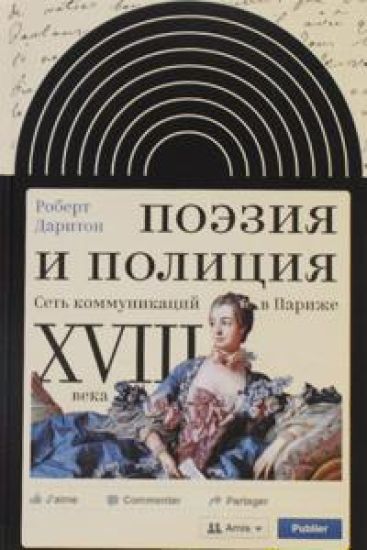
Poezija i politsija. Set kommunikatsij v Parizhe XVIII veka

Poezija i politsija. Set kommunikatsij v Parizhe XVIII veka

Robert Darnton

Novoe literaturnoe obozrenie
2016
sidottu
Kniga professora Garvardskogo universiteta Roberta Darntona "Poezija i politsija" sochetaet v sebe priemy detektivnogo rassledovanija, istoricheskogo izyskanija i teoreticheskoj refleksii. Ee sjuzhet svjazan s vtorichnym rasputyvaniem obstojatelstv odnogo dela, odnazhdy uzhe raskrytogo parizhskoj politsiej. Rech idet o rasprostranenii vesnoj 1749 goda kramolnykh stikhov, napravlennykh protiv korolevskogo dvora i lichno Ljudovika XV. Pytajas vyjti na avtora, politsija otpravila v Bastiliju chetyrnadtsat predstavitelej obrazovannogo soslovija - studentov, molodykh svjaschennikov i advokatov. Rekonstruiruja kulturnyj kontekst, stojaschij za etimi stikhami, Robert Darnton opisyvaet zlobodnevnuju, nizovuju i pridvornuju, poeziju v kachestve vazhnogo politicheskogo media, vo mnogom opredeljavshego to, chto vposledstvii stanet nazyvatsja "obschestvennym mneniem". Pytajas - vsled za frantsuzskimi syschikami XVIII veka - rasputat tsepochku rasprostranenija takogo roda stikhov, amerikanskij istorik vskryvaet rol ustnykh kommunikatsij i...
Buyuk Kedi Katliami

Buyuk Kedi Katliami

Robert Darnton

Koc University Press
2016
nidottu
1730'larin Paris'inde bir matbaanin ciraklari kendi kurduklari mahkemelerde yargiladiklari kedileri olumle cezalandirirlar. Bu hik yeyi tekrar tekrar anlatan ciraklar her seferinde katilarak gulerler. Kedilerin katledilmesinde ciraklari eglendiren ne olmustu? Nasil olmustu da "Kirmizi Baslikli Kiz" masalinin 18. yuzyil versiyonunda cocuk kurda yem olmustu? Montpellierli biri, yasadigi kentin tum etkinliklerini detayli bir sekilde yazarken aklindan neler geciyordu? Bunlar Robert Darnton'un, Aydinlanma cagindaki Avrupa'nin tarihine dair cevapladigi sorulardan bazilari. Ilk olarak 1984'te yayimlanan Buyuk Kedi Katliami, toplumsal tarihyaziminin basucu eserlerinden biri haline geldi; artik kulturel tarih alaninda yazilmis bir klasik olarak aniliyor. Darnton, 18. yuzyilin siradan insanlarinin yasamlarindan cesitli sahneleri inceleyerek bu donemdeki insanlik durumunu, insanlarin olaylari nasil gordugunu ve kurguladigini ele aliyor.
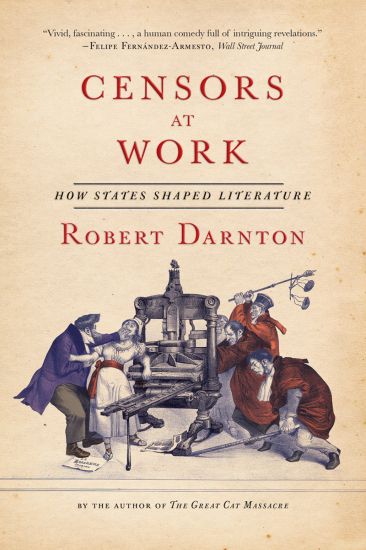
Censors at Work

Censors at Work

Robert Darnton

WW Norton Co
2015
pokkari
With his uncanny ability to spark life in the past, Robert Darnton re-creates three historical worlds in which censorship shaped literary expression in distinctive ways. In eighteenth-century France, censors, authors, and booksellers collaborated in making literature by navigating the intricate culture of royal privilege. Even as the king's censors outlawed works by Voltaire, Rousseau, and other celebrated Enlightenment writers, the head censor himself incubated Diderot's great Encyclopedie by hiding the banned project's papers in his Paris townhouse. Relationships at court trumped principle in the Old Regime. Shaken by the Sepoy uprising in 1857, the British Raj undertook a vast surveillance of every aspect of Indian life, including its literary output. Years later the outrage stirred by the British partition of Bengal led the Raj to put this knowledge to use. Seeking to suppress Indian publications that it deemed seditious, the British held hearings in which literary criticism led to prison sentences. Their efforts to meld imperial power and liberal principle fed a growing Indian opposition. In Communist East Germany, censorship was a component of the party program to engineer society. Behind the unmarked office doors of Ninety Clara-Zetkin Street in East Berlin, censors developed annual plans for literature in negotiation with high party officials and prominent writers. A system so pervasive that it lodged inside the authors' heads as self-censorship, it left visible scars in the nation's literature. By rooting censorship in the particulars of history, Darnton's revealing study enables us to think more clearly about efforts to control expression past and present.
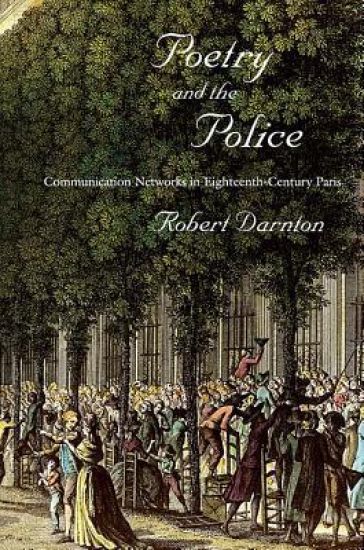
Poetry and the Police

Poetry and the Police

Robert Darnton

The Belknap Press
2012
nidottu
“We are given a vivid sense of how songs were circulated and performed on the streets of Paris…Darnton has opened up another rich vein of research in the eighteenth century.” —Times Literary Supplement In spring 1749, François Bonis, a medical student in Paris, found himself unexpectedly hauled off to the Bastille for distributing an “abominable poem about the king.” So began the Affair of the Fourteen, a police crackdown on ordinary citizens for unauthorized poetry recitals. Why was the official response to these poems so intense? In this captivating book, Robert Darnton follows the poems as they passed through several media: copied on scraps of paper, dictated from one person to another, memorized and declaimed to an audience. But the most effective dispersal occurred through music, when poems were sung to familiar tunes. Lyrics often referred to current events or revealed popular attitudes toward the royal court. The songs provided a running commentary on public affairs, and Darnton brilliantly traces how the lyrics fit into song cycles that carried messages through the streets of Paris during a period of rising discontent. He uncovers a complex communication network, illuminating the way information circulated in a semi-literate society. This lucid and entertaining book reminds us of both the importance of oral exchanges in the history of communication and the power of “viral” networks long before our internet age.
The Corpus of Clandestine Literature in France, 1769-1789
The world of illegal publishing in eighteenth-century France was large and varied, taking in the greatest works of Voltaire, Rousseau, Montesquieu, and Diderot, as well as the scandalous books of grub street writers. Here we have a map of that world, constructed by Robert Darnton based on his many years of research in the field. Darnton shows us the scope of this literary underground with a complete bibliography of the hundreds of books that circulated "under the cloak." He documents their geographical distribution throughout France, and measures the levels of demand for these books. By ranking these levels of demand he compiles a bestseller list of illegal books, with surprising results.
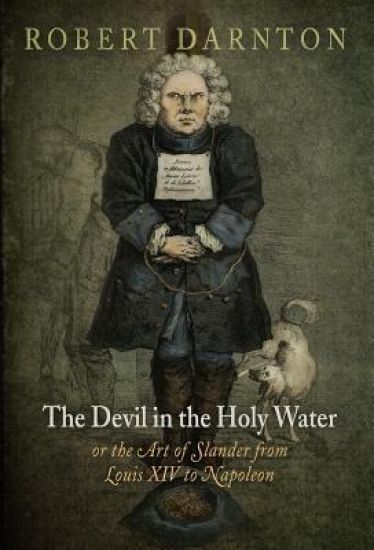
The Devil in the Holy Water, or the Art of Slander from Louis XIV to Napoleon
Slander has always been a nasty business, Robert Darnton notes, but that is no reason to consider it a topic unworthy of inquiry. By destroying reputations, it has often helped to delegitimize regimes and bring down governments. Nowhere has this been more the case than in eighteenth-century France, when a ragtag group of literary libelers flooded the market with works that purported to expose the wicked behavior of the great. Salacious or seditious, outrageous or hilarious, their books and pamphlets claimed to reveal the secret doings of kings and their mistresses, the lewd and extravagant activities of an unpopular foreign-born queen, and the affairs of aristocrats and men-about-town as they consorted with servants, monks, and dancing masters. These libels often mixed scandal with detailed accounts of contemporary history and current politics. And though they are now largely forgotten, many sold as well as or better than some of the most famous works of the Enlightenment. In The Devil in the Holy Water, Darnton-winner of the National Book Critics Circle Award for his Forbidden Best-Sellers of Pre-Revolutionary France and author of his own best-sellers, The Great Cat Massacre and George Washington's False Teeth-offers a startling new perspective on the origins of the French Revolution and the development of a revolutionary political culture in the years after 1789. He opens with an account of the colony of French refugees in London who churned out slanderous attacks on public figures in Versailles and of the secret agents sent over from Paris to squelch them. The libelers were not above extorting money for pretending to destroy the print runs of books they had duped the government agents into believing existed; the agents were not above recognizing the lucrative nature of such activities-and changing sides. As the Revolution gave way to the Terror, Darnton demonstrates, the substance of libels changed while the form remained much the same. With the wit and erudition that has made him one of the world's most eminent historians of eighteenth-century France, he here weaves a tale so full of intrigue that it may seem too extravagant to be true, although all its details can be confirmed in the archives of the French police and diplomatic service. Part detective story, part revolutionary history, The Devil in the Holy Water has much to tell us about the nature of authorship and the book trade, about Grub Street journalism and the shaping of public opinion, and about the important work that scurrilous words have done in many times and places.