
Kirjailija
Robert Hugh Benson
Kirjat ja teokset yhdessä paikassa: 354 kirjaa, julkaisuja vuosilta 2001–2026, suosituimpiin kuuluu None Other Gods. Vertaile teosten hintoja ja tarkista saatavuus suomalaisista kirjakaupoista.
Nimi esiintyy myös muodoissa: Robert-Hugh Benson
354 kirjaa
Kirjojen julkaisuvuodet: 2001–2026.

Come Rack, Come Rope is a gripping historical novel which takes place during Queen Elizabeth I's persecution of English Catholics. Based on the real sufferings of a real Catholic family in particular, and Catholics across the country, Robert Hugh Benson's classic novel is one of tragedy and loss, but also heroism and human and divine love. The novel follows Robin and Margaret, a young couple in love who forgo their affection when Margaret realizes Robin is called to the priesthood. Both play a critical role in caring physically and spiritually for their fellow Catholics during this time of terror. Discover their heroism, love, and sacrifice, and be inspired to live it out in our own frightful times in Come Rack, Come Rope.
Il signore del mondo, pubblicato nel 1907 e scritto dal vescovo cattolico inglese Robert Hugh Benson effettivamente, come da lui stesso affermato nella sua prefazione, per vari aspetti, un libro sconcertante. Anche se il tessuto narrativo non ha lo spessore del capolavoro letterario, innegabile che quest'opera colpisce perch sembra scritta da qualcuno che (dettagli tecnologici a parte) abbia potuto gettare uno sguardo sul nostro mondo globalizzato, e vedere il progressivo arrendersi dell'umanit al disumano progetto totalitarista e materialista che lo sta fagocitando. Le teorie deliranti dell'eugenetica, del gender e della legge del mercato vengono solo sfiorate, ma ben si stagliano sullo sfondo di un mondo che si prostra a un capo mondiale dai poteri sovrumani che compra con l'illusione del benessere materiale la coscienza dei migliori e affascina le masse con la sua ipnotica superiorit , conducendole per mano a sottomettersi al suo potere assoluto e inumano, fino all'inevitabile scontro finale tra i pochi superstiti difensori della cristianit e i preponderanti eserciti del padrone del mondo, seguendo la profezia dell'Anticristo e dell'Apocalisse. Il Santo Padre Papa Francesco ama citare il libro di Benson, suggerendone la lettura.
The Necromancers (1909). By: Robert Hugh Benson: Novel
Robert Hugh Benson
Createspace Independent Publishing Platform
2016
nidottu
THE NECROMANCERS Robert Hugh Benson sets out to expose the dangers of "Spiritism," interest in which had reached epidemic proportions by the early twentieth century. C. C. Martindale, S. J. commented that, "It is in THE NECROMANCERS that he brings all his heavy artillery to bear on his professed enemy. Here again the uncanny enters, but rises to the heroic level, and achieves the horrible; and I will confess that I can think of no book which reaches so high a pitch of horror, unaided by alien elements."......... Robert Hugh Benson (18 November 1871 - 19 October 1914) was an English Anglican priest who in 1903 was received into the Roman Catholic Church in which he was ordained priest in 1904. He wrote the notable novel Lord of the World (1907). Benson was the youngest son of Edward White Benson (Archbishop of Canterbury) and his wife, Mary, and the younger brother of Edward Frederic Benson and A. C. Benson. Benson was educated at Eton College and then studied classics and theology at Trinity College, Cambridge, from 1890 to 1893. In 1895, Benson was ordained a priest in the Church of England by his father, who was the then Archbishop of Canterbury. After his father died suddenly in 1896, Benson was sent on a trip to the Middle East to recover his own health. While there he began to question the status of the Church of England and to consider the claims of the Roman Catholic Church. His own piety began to tend toward the High Church tradition, and he started exploring religious life in various Anglican communities, eventually obtaining permission to join the Community of the Resurrection. Benson made his profession as a member of the community in 1901, at which time he had no thoughts of leaving the Church of England. As he continued his studies and began writing, however, he became more and more uneasy with his own doctrinal position and, on 11 September 1903, he was received into the Catholic Church. He was awarded the Dignitary of Honour of the Order of the Holy Sepulchre. Benson was ordained as a Roman Catholic priest in 1904 and sent to Cambridge. He continued his writing career along with his ministry as a priest. Like both his brothers, Edward Frederic Benson ("Fred") and Arthur Christopher Benson, Robert wrote many ghost and horror stories, collected in The Light Invisible (1903) and A Mirror of Shallott (1907). His novel, Lord of the World (1907), is generally regarded as one of the first modern dystopias (see List of dystopian literature). 1] As a young man, Benson recalled, he had rejected the idea of marriage as "quite inconceivable". Benson was appointed a supernumerary private chamberlain to the Pope in 1911 and, consequently, styled as Monsignor. Benson died in 1914 in Salford, where he had been preaching a mission. He was 42. At his request, he was buried in the orchard of Hare Street House, his house in the Hertfordshire village of Hare Street. A chapel, dedicated to St Hugh, was built over the site. Benson bequeathed the house to the Catholic Church as a county retreat for the Archbishop of Westminster. The Roman Catholic church in the nearby town of Buntingford, which he helped finance, is dedicated to St Richard of Chichester, but also known as the Benson Memorial Church.
Initiation (1914). By: Robert Hugh Benson: (Original Classics)
Robert Hugh Benson
Createspace Independent Publishing Platform
2016
nidottu
Robert Hugh Benson (18 November 1871 - 19 October 1914) was an English Anglican priest who in 1903 was received into the Roman Catholic Church in which he was ordained priest in 1904. He wrote the notable novel Lord of the World (1907). Benson was the youngest son of Edward White Benson (Archbishop of Canterbury) and his wife, Mary, and the younger brother of Edward Frederic Benson and A. C. Benson. Benson was educated at Eton College and then studied classics and theology at Trinity College, Cambridge, from 1890 to 1893. In 1895, Benson was ordained a priest in the Church of England by his father, who was the then Archbishop of Canterbury. After his father died suddenly in 1896, Benson was sent on a trip to the Middle East to recover his own health. While there he began to question the status of the Church of England and to consider the claims of the Roman Catholic Church. His own piety began to tend toward the High Church tradition, and he started exploring religious life in various Anglican communities, eventually obtaining permission to join the Community of the Resurrection. Benson made his profession as a member of the community in 1901, at which time he had no thoughts of leaving the Church of England. As he continued his studies and began writing, however, he became more and more uneasy with his own doctrinal position and, on 11 September 1903, he was received into the Catholic Church. He was awarded the Dignitary of Honour of the Order of the Holy Sepulchre. Benson was ordained as a Roman Catholic priest in 1904 and sent to Cambridge. He continued his writing career along with his ministry as a priest. Like both his brothers, Edward Frederic Benson ("Fred") and Arthur Christopher Benson, Robert wrote many ghost and horror stories, collected in The Light Invisible (1903) and A Mirror of Shallott (1907). His novel, Lord of the World (1907), is generally regarded as one of the first modern dystopias (see List of dystopian literature). 1] As a young man, Benson recalled, he had rejected the idea of marriage as "quite inconceivable". Benson was appointed a supernumerary private chamberlain to the Pope in 1911 and, consequently, styled as Monsignor. Benson died in 1914 in Salford, where he had been preaching a mission. He was 42. At his request, he was buried in the orchard of Hare Street House, his house in the Hertfordshire village of Hare Street. A chapel, dedicated to St Hugh, was built over the site. Benson bequeathed the house to the Catholic Church as a county retreat for the Archbishop of Westminster. The Roman Catholic church in the nearby town of Buntingford, which he helped finance, is dedicated to St Richard of Chichester, but also known as the Benson Memorial Church.
The King's achievement (1905). By: Robert Hugh Benson (Original Classics): Great Britain -- History Henry VIII, 1509-1547
Robert Hugh Benson
Createspace Independent Publishing Platform
2016
nidottu
Henry VIII (28 June 1491 - 28 January 1547) was King of England from 21 April 1509 until his death. He was the first ever English King of Ireland, and continued the nominal claim by English monarchs to the Kingdom of France. Henry was the second Tudor monarch, succeeding his father, Henry VII.......... The brothers of the Torridon family make their way in the world -- the eldest, Ralph, in service to Cromwell and the youngest, Christopher, in service to God and the Catholic church as a monk in the Priory at Lewes. Their paths carry them to completely different destinations and Ralph is instrumental in turning Christopher and his fellow monks out of their monastery. Christopher, however, manages to rise above his pride and anger and ministers to Ralph in his hour of need... Robert Hugh Benson (18 November 1871 - 19 October 1914) was an English Anglican priest who in 1903 was received into the Roman Catholic Church in which he was ordained priest in 1904. He wrote the notable novel Lord of the World (1907). Benson was the youngest son of Edward White Benson (Archbishop of Canterbury) and his wife, Mary, and the younger brother of Edward Frederic Benson and A. C. Benson. Benson was educated at Eton College and then studied classics and theology at Trinity College, Cambridge, from 1890 to 1893. In 1895, Benson was ordained a priest in the Church of England by his father, who was the then Archbishop of Canterbury. After his father died suddenly in 1896, Benson was sent on a trip to the Middle East to recover his own health. While there he began to question the status of the Church of England and to consider the claims of the Roman Catholic Church. His own piety began to tend toward the High Church tradition, and he started exploring religious life in various Anglican communities, eventually obtaining permission to join the Community of the Resurrection. Benson made his profession as a member of the community in 1901, at which time he had no thoughts of leaving the Church of England. As he continued his studies and began writing, however, he became more and more uneasy with his own doctrinal position and, on 11 September 1903, he was received into the Catholic Church. He was awarded the Dignitary of Honour of the Order of the Holy Sepulchre. Benson was ordained as a Roman Catholic priest in 1904 and sent to Cambridge. He continued his writing career along with his ministry as a priest. Like both his brothers, Edward Frederic Benson ("Fred") and Arthur Christopher Benson, Robert wrote many ghost and horror stories, collected in The Light Invisible (1903) and A Mirror of Shallott (1907). His novel, Lord of the World (1907), is generally regarded as one of the first modern dystopias (see List of dystopian literature). 1] As a young man, Benson recalled, he had rejected the idea of marriage as "quite inconceivable". Benson was appointed a supernumerary private chamberlain to the Pope in 1911 and, consequently, styled as Monsignor. Benson died in 1914 in Salford, where he had been preaching a mission. He was 42. At his request, he was buried in the orchard of Hare Street House, his house in the Hertfordshire village of Hare Street. A chapel, dedicated to St Hugh, was built over the site. Benson bequeathed the house to the Catholic Church as a county retreat for the Archbishop of Westminster. The Roman Catholic church in the nearby town of Buntingford, which he helped finance, is dedicated to St Richard of Chichester, but also known as the Benson Memorial Church.
Oddsfish! (1914). By: Robert Hugh Benson (Original Version): Charles II, King of England, 1630-1685
Robert Hugh Benson
Createspace Independent Publishing Platform
2016
nidottu
"Oddsfish " (a title derived from King Charles' favorite epithet) is the last of Benson's historical romances and describes the plots and political movements of the closing scenes of the life of Charles II. Interwoven with the accurately portrayed events and places of the time are fictitious characters, including the narrator, Mr. Roger Mallock and his cousin and lady-love Dolly. Sent by Pope Innocent XI to Charles' court as a diplomatic representative of the Vatican, Mallock becomes a trusted confidant of the King and acts upon Charles's deathbed wish to give his confession to, and receive absolution from, a Catholic priest..... Robert Hugh Benson (18 November 1871 - 19 October 1914) was an English Anglican priest who in 1903 was received into the Roman Catholic Church in which he was ordained priest in 1904. He wrote the notable novel Lord of the World (1907). Benson was the youngest son of Edward White Benson (Archbishop of Canterbury) and his wife, Mary, and the younger brother of Edward Frederic Benson and A. C. Benson. Benson was educated at Eton College and then studied classics and theology at Trinity College, Cambridge, from 1890 to 1893. In 1895, Benson was ordained a priest in the Church of England by his father, who was the then Archbishop of Canterbury. After his father died suddenly in 1896, Benson was sent on a trip to the Middle East to recover his own health. While there he began to question the status of the Church of England and to consider the claims of the Roman Catholic Church. His own piety began to tend toward the High Church tradition, and he started exploring religious life in various Anglican communities, eventually obtaining permission to join the Community of the Resurrection. Benson made his profession as a member of the community in 1901, at which time he had no thoughts of leaving the Church of England. As he continued his studies and began writing, however, he became more and more uneasy with his own doctrinal position and, on 11 September 1903, he was received into the Catholic Church. He was awarded the Dignitary of Honour of the Order of the Holy Sepulchre. Benson was ordained as a Roman Catholic priest in 1904 and sent to Cambridge. He continued his writing career along with his ministry as a priest. Like both his brothers, Edward Frederic Benson ("Fred") and Arthur Christopher Benson, Robert wrote many ghost and horror stories, collected in The Light Invisible (1903) and A Mirror of Shallott (1907). His novel, Lord of the World (1907), is generally regarded as one of the first modern dystopias (see List of dystopian literature). As a young man, Benson recalled, he had rejected the idea of marriage as "quite inconceivable". Benson was appointed a supernumerary private chamberlain to the Pope in 1911 and, consequently, styled as Monsignor. Benson died in 1914 in Salford, where he had been preaching a mission. He was 42. At his request, he was buried in the orchard of Hare Street House, his house in the Hertfordshire village of Hare Street. A chapel, dedicated to St Hugh, was built over the site. Benson bequeathed the house to the Catholic Church as a county retreat for the Archbishop of Westminster. The Roman Catholic church in the nearby town of Buntingford, which he helped finance, is dedicated to St Richard of Chichester, but also known as the Benson Memorial Church.
Come Rack! Come Rope!. By: Robert Hugh Benson: historical novel
Robert Hugh Benson
Createspace Independent Publishing Platform
2016
nidottu
Perhaps the best known of Msgr. Benson s works, this novel has been reprinted many times since its publication in 1912. The drama and the characters therein have their basis in the real life account of a Catholic family, and of the sufferings of Catholics in general, under Elizabeth I of England. In this story of deep tragedy and terror Msgr. Benson portrays the conflict between natural, tender human passion and divine love, and its heroic resolution worked out in the hearts of the two principal characters, along with the development of the doctrine of vocation............. Robert Hugh Benson (18 November 1871 - 19 October 1914) was an English Anglican priest who in 1903 was received into the Roman Catholic Church in which he was ordained priest in 1904. He wrote the notable novel Lord of the World (1907). Benson was the youngest son of Edward White Benson (Archbishop of Canterbury) and his wife, Mary, and the younger brother of Edward Frederic Benson and A. C. Benson. Benson was educated at Eton College and then studied classics and theology at Trinity College, Cambridge, from 1890 to 1893. In 1895, Benson was ordained a priest in the Church of England by his father, who was the then Archbishop of Canterbury. After his father died suddenly in 1896, Benson was sent on a trip to the Middle East to recover his own health. While there he began to question the status of the Church of England and to consider the claims of the Roman Catholic Church. His own piety began to tend toward the High Church tradition, and he started exploring religious life in various Anglican communities, eventually obtaining permission to join the Community of the Resurrection. Benson made his profession as a member of the community in 1901, at which time he had no thoughts of leaving the Church of England. As he continued his studies and began writing, however, he became more and more uneasy with his own doctrinal position and, on 11 September 1903, he was received into the Catholic Church. He was awarded the Dignitary of Honour of the Order of the Holy Sepulchre. Benson was ordained as a Roman Catholic priest in 1904 and sent to Cambridge. He continued his writing career along with his ministry as a priest. Like both his brothers, Edward Frederic Benson ("Fred") and Arthur Christopher Benson, Robert wrote many ghost and horror stories, collected in The Light Invisible (1903) and A Mirror of Shallott (1907). His novel, Lord of the World (1907), is generally regarded as one of the first modern dystopias (see List of dystopian literature). 1] As a young man, Benson recalled, he had rejected the idea of marriage as "quite inconceivable". Benson was appointed a supernumerary private chamberlain to the Pope in 1911 and, consequently, styled as Monsignor. Benson died in 1914 in Salford, where he had been preaching a mission. He was 42. At his request, he was buried in the orchard of Hare Street House, his house in the Hertfordshire village of Hare Street. A chapel, dedicated to St Hugh, was built over the site. Benson bequeathed the house to the Catholic Church as a county retreat for the Archbishop of Westminster. The Roman Catholic church in the nearby town of Buntingford, which he helped finance, is dedicated to St Richard of Chichester, but also known as the Benson Memorial Church.....
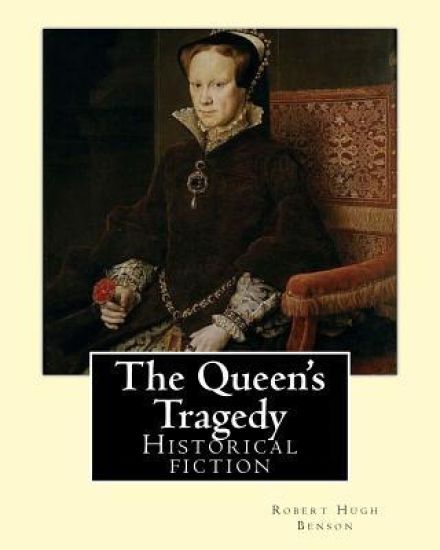
The Queen's Tragedy (1907). By: Robert Hugh Benson: Historical fiction
Robert Hugh Benson
Createspace Independent Publishing Platform
2016
nidottu
THE QUEEN'S TRAGEDY is Robert Hugh Benson's third in a series of novels designed to tell the story of the English Reformation from the Catholic point of view. Benson handles a difficult subject with skill and compassion, succeeding in breaking through centuries of prejudgment and propaganda about Mary Tudor, one of the least popular of England's rulers.............. Robert Hugh Benson (18 November 1871 - 19 October 1914) was an English Anglican priest who in 1903 was received into the Roman Catholic Church in which he was ordained priest in 1904. He wrote the notable novel Lord of the World (1907). Benson was the youngest son of Edward White Benson (Archbishop of Canterbury) and his wife, Mary, and the younger brother of Edward Frederic Benson and A. C. Benson. Benson was educated at Eton College and then studied classics and theology at Trinity College, Cambridge, from 1890 to 1893. In 1895, Benson was ordained a priest in the Church of England by his father, who was the then Archbishop of Canterbury. After his father died suddenly in 1896, Benson was sent on a trip to the Middle East to recover his own health. While there he began to question the status of the Church of England and to consider the claims of the Roman Catholic Church. His own piety began to tend toward the High Church tradition, and he started exploring religious life in various Anglican communities, eventually obtaining permission to join the Community of the Resurrection. Benson made his profession as a member of the community in 1901, at which time he had no thoughts of leaving the Church of England. As he continued his studies and began writing, however, he became more and more uneasy with his own doctrinal position and, on 11 September 1903, he was received into the Catholic Church. He was awarded the Dignitary of Honour of the Order of the Holy Sepulchre. Benson was ordained as a Roman Catholic priest in 1904 and sent to Cambridge. He continued his writing career along with his ministry as a priest. Like both his brothers, Edward Frederic Benson ("Fred") and Arthur Christopher Benson, Robert wrote many ghost and horror stories, collected in The Light Invisible (1903) and A Mirror of Shallott (1907). His novel, Lord of the World (1907), is generally regarded as one of the first modern dystopias (see List of dystopian literature). 1] As a young man, Benson recalled, he had rejected the idea of marriage as "quite inconceivable". Benson was appointed a supernumerary private chamberlain to the Pope in 1911 and, consequently, styled as Monsignor. Benson died in 1914 in Salford, where he had been preaching a mission. He was 42. At his request, he was buried in the orchard of Hare Street House, his house in the Hertfordshire village of Hare Street. A chapel, dedicated to St Hugh, was built over the site. Benson bequeathed the house to the Catholic Church as a county retreat for the Archbishop of Westminster. The Roman Catholic church in the nearby town of Buntingford, which he helped finance, is dedicated to St Richard of Chichester, but also known as the Benson Memorial Church.
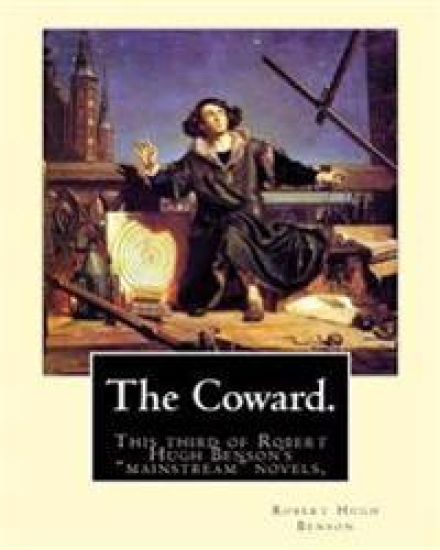
The Coward. By: Robert Hugh Benson: This third of Robert Hugh Benson's "mainstream" novels, The Coward, first published in 1912, may h
Robert Hugh Benson
Createspace Independent Publishing Platform
2016
nidottu
This third of Robert Hugh Benson's "mainstream" novels, The Coward, first published in 1912, may have been the most shocking to the upper class sensibilities of Benson's day. A young man is faced with challenges and manages to fail at every step. He becomes convinced he is an irredeemable coward - and only then begins to find courage. In a damning indictment of close-minded Edwardian society, a supreme act of courage on the young man's part is mistaken for yet one more craven act. The Coward takes on the soul-destroying tendency to adhere unthinkingly to social conventions. This newly formatted and edited edition features a foreword by Benson scholar Michael D. Greaney.............. Robert Hugh Benson (18 November 1871 - 19 October 1914) was an English Anglican priest who in 1903 was received into the Roman Catholic Church in which he was ordained priest in 1904. He wrote the notable novel Lord of the World (1907). Benson was the youngest son of Edward White Benson (Archbishop of Canterbury) and his wife, Mary, and the younger brother of Edward Frederic Benson and A. C. Benson. Benson was educated at Eton College and then studied classics and theology at Trinity College, Cambridge, from 1890 to 1893. In 1895, Benson was ordained a priest in the Church of England by his father, who was the then Archbishop of Canterbury. After his father died suddenly in 1896, Benson was sent on a trip to the Middle East to recover his own health. While there he began to question the status of the Church of England and to consider the claims of the Roman Catholic Church. His own piety began to tend toward the High Church tradition, and he started exploring religious life in various Anglican communities, eventually obtaining permission to join the Community of the Resurrection. Benson made his profession as a member of the community in 1901, at which time he had no thoughts of leaving the Church of England. As he continued his studies and began writing, however, he became more and more uneasy with his own doctrinal position and, on 11 September 1903, he was received into the Catholic Church. He was awarded the Dignitary of Honour of the Order of the Holy Sepulchre. Benson was ordained as a Roman Catholic priest in 1904 and sent to Cambridge. He continued his writing career along with his ministry as a priest. Like both his brothers, Edward Frederic Benson ("Fred") and Arthur Christopher Benson, Robert wrote many ghost and horror stories, collected in The Light Invisible (1903) and A Mirror of Shallott (1907). His novel, Lord of the World (1907), is generally regarded as one of the first modern dystopias (see List of dystopian literature). 1] As a young man, Benson recalled, he had rejected the idea of marriage as "quite inconceivable". Benson was appointed a supernumerary private chamberlain to the Pope in 1911 and, consequently, styled as Monsignor. Benson died in 1914 in Salford, where he had been preaching a mission. He was 42. At his request, he was buried in the orchard of Hare Street House, his house in the Hertfordshire village of Hare Street. A chapel, dedicated to St Hugh, was built over the site. Benson bequeathed the house to the Catholic Church as a county retreat for the Archbishop of Westminster. The Roman Catholic church in the nearby town of Buntingford, which he helped finance, is dedicated to St Richard of Chichester, but also known as the Benson Memorial Church.
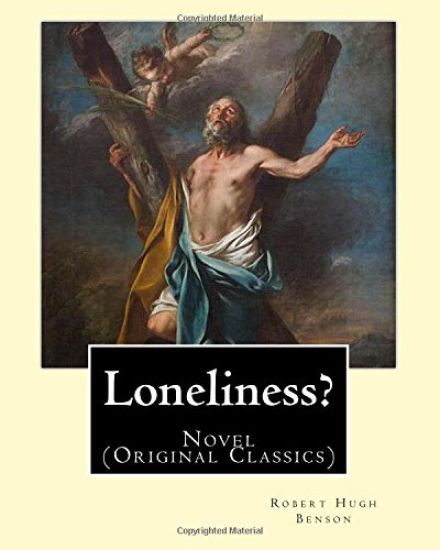
Loneliness? (1915). By: Robert Hugh Benson: Novel (Original Classics)
Robert Hugh Benson
Createspace Independent Publishing Platform
2016
nidottu
Robert Hugh Benson (18 November 1871 - 19 October 1914) was an English Anglican priest who in 1903 was received into the Roman Catholic Church in which he was ordained priest in 1904. He wrote the notable novel Lord of the World (1907). Benson was the youngest son of Edward White Benson (Archbishop of Canterbury) and his wife, Mary, and the younger brother of Edward Frederic Benson and A. C. Benson. Benson was educated at Eton College and then studied classics and theology at Trinity College, Cambridge, from 1890 to 1893. In 1895, Benson was ordained a priest in the Church of England by his father, who was the then Archbishop of Canterbury. After his father died suddenly in 1896, Benson was sent on a trip to the Middle East to recover his own health. While there he began to question the status of the Church of England and to consider the claims of the Roman Catholic Church. His own piety began to tend toward the High Church tradition, and he started exploring religious life in various Anglican communities, eventually obtaining permission to join the Community of the Resurrection. Benson made his profession as a member of the community in 1901, at which time he had no thoughts of leaving the Church of England. As he continued his studies and began writing, however, he became more and more uneasy with his own doctrinal position and, on 11 September 1903, he was received into the Catholic Church. He was awarded the Dignitary of Honour of the Order of the Holy Sepulchre. Benson was ordained as a Roman Catholic priest in 1904 and sent to Cambridge. He continued his writing career along with his ministry as a priest. Like both his brothers, Edward Frederic Benson ("Fred") and Arthur Christopher Benson, Robert wrote many ghost and horror stories, collected in The Light Invisible (1903) and A Mirror of Shallott (1907). His novel, Lord of the World (1907), is generally regarded as one of the first modern dystopias (see List of dystopian literature). 1] As a young man, Benson recalled, he had rejected the idea of marriage as "quite inconceivable". Benson was appointed a supernumerary private chamberlain to the Pope in 1911 and, consequently, styled as Monsignor. Benson died in 1914 in Salford, where he had been preaching a mission. He was 42. At his request, he was buried in the orchard of Hare Street House, his house in the Hertfordshire village of Hare Street. A chapel, dedicated to St Hugh, was built over the site. Benson bequeathed the house to the Catholic Church as a county retreat for the Archbishop of Westminster. The Roman Catholic church in the nearby town of Buntingford, which he helped finance, is dedicated to St Richard of Chichester, but also known as the Benson Memorial Church.
Lord of the World (Fine Print)
Robert Hugh Benson
Createspace Independent Publishing Platform
2016
nidottu
Lord of the world. By: Robert Hugh Benson
Robert Hugh Benson
Createspace Independent Publishing Platform
2016
nidottu
Le maître de la terre: la crise des derniers temps
Robert-Hugh Benson
Createspace Independent Publishing Platform
2016
nidottu
le Ma tre de la Terre est une parabole, illustrant la crise religieuse qui, suivant toute vraisemblance, se produira dans un si cle, ou m me plus t t encore, si les lignes de nos controverses d'aujourd'hui se trouvent prolong es ind finiment; ...] car celles-ci ne peuvent manquer d'aboutir la formation de deux camps oppos s, le camp du Catholicisme et le camp de l'Humanitarisme, et l'opposition de ces deux camps, son tour, ne peut manquer de prendre la forme d'une lutte l gale, avec menace d'effusion de sang pour le parti vaincu . Et voici maintenant, traduite tout enti re, la Pr face de M. Robert-H. Benson: Je me rends bien compte que ce livre est, un tr s haut point, un roman d'aventures, et que, de ce fait, - comme aussi sous maints autres rapports, - il est sujet des objections et critiques sans nombre. Mais c'est que je n'ai point d couvert de meilleur moyen, pour exprimer, sous la forme d'un roman, les principes que j'avais coeur d'exprimer (et que je crois passionn ment tre vrais), que de les pousser jusqu' leur limite extr me, - ce qui devait, fatalement, les faire para tre sensationnels. Du moins ai-je toujours t ch ne point crier trop haut, et garder, autant que possible, consid ration et respect pour les opinions oppos es aux miennes. Quant savoir si j'y ai r ussi, c'est une autre question, et laquelle je me garderai bien de vouloir r pondre. Ces deux citations ont assez de quoi d finir l'objet du Ma tre de la Terre, et les motifs dont s'est inspir l'auteur en l' crivant, pour que le traducteur fran ais se trouve dispens d'y rien ajouter. Je dirai seulement que M. Robert-Hugh Benson est aujourd'hui, sans aucun doute, le premier des romanciers catholiques de son pays, - ou, peut- tre m me, de toute l'Europe, depuis la mort de notre cher et grand J. K. Huysmans, - et que jamais encore autant que dans son Ma tre de la Terre il n'a fait voir, r unis et fondus en un ensemble vivant, ses dons pr cieux de conteur, de peintre, et de philosophe. Il a, d'ailleurs, apport , la forme litt raire et au style de son dernier roman, un soin que je crains que le lecteur fran ais ne puisse gu re appr cier, encore que je me sois efforc de mon mieux en garder un reflet dans ma traduction; et c'est express ment pour la pr sente dition fran aise du Ma tre de la Terre qu'il a crit quelques-unes des plus belles pages des deux derniers chapitres, - ce dont il faut que je lui affirme ici, publiquement, ma reconnaissance. Teodor de Wyzewa
In early 21st century London, two priests, the white-haired Father Percy Franklin and the younger Father John Francis, are visiting the subterranean lodgings of the elderly Mr. Templeton. A Catholic and former Tory who witnessed the marginalization of his religion and the destruction of his Party, Mr. Templeton describes to the two priests the last century of British and world history. Since the Labour Party took control of the British Government in 1917, the House of Lords has been abolished, the British Royal Family has been deposed, Oxford and Cambridge have been closed down and all their professors exiled to Ireland. Marxism and Secular Humanism, which are described as the instruments of Freemasonry, dominate both culture and government. The Anglican Communion has been disestablished since 1929 and, like all forms of Protestantism, is almost extinct. The world now has only three main religious forces: Catholicism, Secular Humanism, and "the Eastern religions." Nationalism has been destroyed by Marxist internationalism and the world has been divided into three power-blocs. The first, which is generally marked in red on maps, is an European Confederation of Marxist one-party states and their colonies in Africa that use Esperanto for a world language. The second, marked in yellow, is "The Eastern Empire", whose Emperor, the "Son of Heaven", descends from both the Japanese and Chinese Imperial Families. The third, the blue marked, "The American Republic", consists of North, South, and Central America. In a move that almost toppled Marxism in the Confederation during the 1970s and '80s, the Eastern Empire invaded, annexed, and now rules India, Australia, New Zealand, as well as all of Russia east of the Ural Mountains. For this and other reasons, Mr. Templeton explains, the Confederation and the Eastern Empire are now on the brink of a global war.
Paradoxes of Catholicism
Robert Hugh Benson
Createspace Independent Publishing Platform
2016
nidottu