Kirjojen hintavertailu – 12 859 819 kirjaa ja 27 kauppaa
Kirjailija
Robert Hugh Benson
Kirjat ja teokset yhdessä paikassa: 354 kirjaa, julkaisuja vuosilta 2001–2026, suosituimpiin kuuluu None Other Gods. Vertaile teosten hintoja ja tarkista saatavuus suomalaisista kirjakaupoista.
The History of Richard Raynal, Solitary is a historical novel by Robert Hugh Benson, first published in 1906. The novel is presented as if it had been edited from a fifteenth-century manuscript. It describes the life of Richard Raynal, an English solitary or hermit, whose quiet life is interrupted by a vision he interprets as a call from God to deliver a message to the king (seemingly Henry VI). Although the character of Raynal is fictitious, he bears some similarity to the real English mystic Richard Rolle. Raynal travels to London to warn the king that he will face suffering and death, and as a result, is himself imprisoned in the royal palace. In its exploration of fifteenth-century English spiritual life, the novel is particularly concerned, Waugh wrote, with "the conflicting call of solitude and contemplation with that of direct intervention-often rather drastic intervention-in the lives of others." It was Benson's personal favourite of his books......... Robert Hugh Benson AFSC KC*SG KGCHS (18 November 1871 - 19 October 1914) was an English Anglican priest who in 1903 was received into the Roman Catholic Church in which he was ordained priest in 1904. He was a prolific writer of fiction and wrote the notable dystopian novel Lord of the World (1907). His output encompassed historical, horror and science fiction, contemporary fiction, children's stories, plays, apologetics, devotional works and articles. He continued his writing career at the same time as he progressed through the hierarchy to become a Chamberlain to the Pope in 1911 and subsequently titled Monsignor. Early life: Benson was the youngest son of Edward White Benson (Archbishop of Canterbury) and his wife, Mary, and the younger brother of Edward Frederic Benson and A. C. Benson. Benson was educated at Eton College and then studied classics and theology at Trinity College, Cambridge, from 1890 to 1893. In 1895, Benson was ordained a priest in the Church of England by his father, who was the then Archbishop of Canterbury. Career: After his father died suddenly in 1896, Benson was sent on a trip to the Middle East to recover his own health. While there he began to question the status of the Church of England and to consider the claims of the Roman Catholic Church. His own piety began to tend toward the High Church tradition, and he started exploring religious life in various Anglican communities, eventually obtaining permission to join the Community of the Resurrection. Benson made his profession as a member of the community in 1901, at which time he had no thoughts of leaving the Church of England. As he continued his studies and began writing, however, he became more and more uneasy with his own doctrinal position and, on 11 September 1903, he was received into the Catholic Church. He was awarded the Dignitary of Honour of the Order of the Holy Sepulchre. Benson was ordained as a Roman Catholic priest in 1904 and sent to Cambridge. He continued his writing career along with his ministry as a priest. Novelist: Like both his brothers, Edward Frederic Benson ("Fred") and Arthur Christopher Benson, Robert wrote many ghost and horror stories, as well as children's stories and historical fiction. His horror and ghost fiction are collected in The Light Invisible (1903) and A Mirror of Shallott (1907). His novel, Lord of the World (1907), is generally regarded as one of the first modern dystopian novels (see List of dystopian literature). The bibliography below reveals a prodigious output..............
The brothers of the Torridon family make their way in the world -- the eldest, Ralph, in service to Cromwell and the youngest, Christopher, in service to God and the Catholic church as a monk in the Priory at Lewes. Their paths carry them to completely different destinations and Ralph is instrumental in turning Christopher and his fellow monks out of their monastery. Christopher, however, manages to rise above his pride and anger and ministers to Ralph in his hour of need. ............. Robert Hugh Benson AFSC KC*SG KGCHS (18 November 1871 - 19 October 1914) was an English Anglican priest who in 1903 was received into the Roman Catholic Church in which he was ordained priest in 1904. He was a prolific writer of fiction and wrote the notable dystopian novel Lord of the World (1907). His output encompassed historical, horror and science fiction, contemporary fiction, children's stories, plays, apologetics, devotional works and articles. He continued his writing career at the same time as he progressed through the hierarchy to become a Chamberlain to the Pope in 1911 and subsequently titled Monsignor. Early life: Benson was the youngest son of Edward White Benson (Archbishop of Canterbury) and his wife, Mary, and the younger brother of Edward Frederic Benson and A. C. Benson. Benson was educated at Eton College and then studied classics and theology at Trinity College, Cambridge, from 1890 to 1893. In 1895, Benson was ordained a priest in the Church of England by his father, who was the then Archbishop of Canterbury. Career: After his father died suddenly in 1896, Benson was sent on a trip to the Middle East to recover his own health. While there he began to question the status of the Church of England and to consider the claims of the Roman Catholic Church. His own piety began to tend toward the High Church tradition, and he started exploring religious life in various Anglican communities, eventually obtaining permission to join the Community of the Resurrection. Benson made his profession as a member of the community in 1901, at which time he had no thoughts of leaving the Church of England. As he continued his studies and began writing, however, he became more and more uneasy with his own doctrinal position and, on 11 September 1903, he was received into the Catholic Church. He was awarded the Dignitary of Honour of the Order of the Holy Sepulchre. Benson was ordained as a Roman Catholic priest in 1904 and sent to Cambridge. He continued his writing career along with his ministry as a priest. Novelist: Like both his brothers, Edward Frederic Benson ("Fred") and Arthur Christopher Benson, Robert wrote many ghost and horror stories, as well as children's stories and historical fiction. His horror and ghost fiction are collected in The Light Invisible (1903) and A Mirror of Shallott (1907). His novel, Lord of the World (1907), is generally regarded as one of the first modern dystopian novels (see List of dystopian literature). The bibliography below reveals a prodigious output.................
"Oddsfish " (a title derived from King Charles' favorite epithet) is the last of Benson's historical romances and describes the plots and political movements of the closing scenes of the life of Charles II. Interwoven with the accurately portrayed events and places of the time are fictitious characters, including the narrator, Mr. Roger Mallock and his cousin and lady-love Dolly. Sent by Pope Innocent XI to Charles' court as a diplomatic representative of the Vatican, Mallock becomes a trusted confidant of the King and acts upon Charles's deathbed wish to give his confession to, and receive absolution from, a Catholic priest....................... Robert Hugh Benson AFSC KC*SG KGCHS (18 November 1871 - 19 October 1914) was an English Anglican priest who in 1903 was received into the Roman Catholic Church in which he was ordained priest in 1904. He was a prolific writer of fiction and wrote the notable dystopian novel Lord of the World (1907). His output encompassed historical, horror and science fiction, contemporary fiction, children's stories, plays, apologetics, devotional works and articles. He continued his writing career at the same time as he progressed through the hierarchy to become a Chamberlain to the Pope in 1911 and subsequently titled Monsignor. Early life: Benson was the youngest son of Edward White Benson (Archbishop of Canterbury) and his wife, Mary, and the younger brother of Edward Frederic Benson and A. C. Benson. Benson was educated at Eton College and then studied classics and theology at Trinity College, Cambridge, from 1890 to 1893. In 1895, Benson was ordained a priest in the Church of England by his father, who was the then Archbishop of Canterbury. Career: After his father died suddenly in 1896, Benson was sent on a trip to the Middle East to recover his own health. While there he began to question the status of the Church of England and to consider the claims of the Roman Catholic Church. His own piety began to tend toward the High Church tradition, and he started exploring religious life in various Anglican communities, eventually obtaining permission to join the Community of the Resurrection. Benson made his profession as a member of the community in 1901, at which time he had no thoughts of leaving the Church of England. As he continued his studies and began writing, however, he became more and more uneasy with his own doctrinal position and, on 11 September 1903, he was received into the Catholic Church. He was awarded the Dignitary of Honour of the Order of the Holy Sepulchre. Benson was ordained as a Roman Catholic priest in 1904 and sent to Cambridge. He continued his writing career along with his ministry as a priest................
Come Rack Come Rope is a historical novel by the English priest and writer Robert Hugh Benson (1871-1914), a convert to Catholicism from Anglicanism. Set in Derbyshire at the time of the Elizabethan persecution of Catholics, when being or harbouring a priest was considered treason and was punishable with death, it tells the story of two young lovers who give up their chance of happiness together, choosing instead to face imprisonment and martyrdom, so that God's will may be done. Plot: part i: Robin Audrey and Marjorie Manners, both aged seventeen, are secretly engaged. They both come from recusant Catholic families in Derbyshire, but she is the more devout of the two. Robin's mother died when he was about seven, and his father has continued to practise the Catholic faith, despite having to pay heavy fines for refusing to attend services in the established Church of England. The two families meet several times a year, when Mass is being secretly offered by a priest. The story begins when Robin visits his fianc e and tells her that his father has announced that he can no longer tolerate the persecution and fines, that he will take the bread and wine in the Anglican church at Easter, and that Robin must do the same. Marjorie advises her lover to leave the area for Easter, so that his father will have time to accept that his son will not follow him. She gives him a rosary which belonged to the recently executed priest Cuthbert Mayne, kisses him for the first time, and urges him to trust in God. When he arrives home, Robin finds his friend Anthony Babington waiting for him. Anthony is also a Catholic, fanatically devoted to the imprisoned, Catholic Queen of Scots. Robin tells Anthony of his troubles. Later, the two men are out riding, and pass three other men. One of them, Mr. Garlick, recognises Anthony, having heard Mass in his house, and on being assured that Robin is also a Catholic, introduces the newly ordained Mr. Simpson and his travelling companion Mr. Ludlam to the two friends, telling them that Mr. Simpson will say Mass the following Sunday. Robin realises, as he goes home, that he must not mention this to his father. Robin's troubles at home increase, as he has to cope with his father's anger and sneers. Meanwhile, Marjorie is tormented by unexpected but persistent ideas that perhaps God is calling Robin to the priesthood. She feels that if a love higher than hers is calling, she must not stand in the way, but is unsure whether such thoughts come from God or from her own imagination. She talks to Mr. Simpson, but he is unable to advise her. She is afraid to mention it to Robin, in case she has merely imagined this to be God's will, yet feels she should at least sow a seed in his mind. She prays for guidance, thinking that "a broken heart and God's will done would be better than that God's will should be avoided and her own satisfied.".............. Robert Hugh Benson AFSC KC*SG KGCHS (18 November 1871 - 19 October 1914) was an English Anglican priest who in 1903 was received into the Roman Catholic Church in which he was ordained priest in 1904. He was a prolific writer of fiction and wrote the notable dystopian novel Lord of the World (1907). His output encompassed historical, horror and science fiction, contemporary fiction, children's stories, plays, apologetics, devotional works and articles. He continued his writing career at the same time as he progressed through the hierarchy to become a Chamberlain to the Pope in 1911 and subsequently titled Monsignor. Early life: Benson was the youngest son of Edward White Benson (Archbishop of Canterbury) and his wife, Mary, and the younger brother of Edward Frederic Benson and A. C. Benson. Benson was educated at Eton College and then studied classics and theology at Trinity College, Cambridge, from 1890 to 1893....
Robert Hugh Benson (1871-1914) was the youngest son of Edward White Benson, Archbishop of Canterbury, and younger brother of Edward Frederic Benson. In 1895, he was ordained a priest in the Church of England by his father who was then Archbishop of Canterbury. After many years of questioning and soul-searching he was received into the Roman Catholic Church in 1903. He was ordained a Catholic priest in 1904 and named a Monsignor in 1911. This book, written in 1907, is Benson's dystopic vision of a near future world in which religion has, by and large, been rejected or simply fallen by the wayside. The Catholic Church has retreated to Italy and Ireland, while the majority of the rest of the world is either Humanistic or Pantheistic. There is a 'one world' government, and euthanasia is widely available. The plot follows the tale of a priest, Percy Franklin, who becomes Pope Silvester III, and a mysterious man named Julian Felsenburgh, who is identical in looks to the priest and who becomes "Lord of the World". "The one condition of progress...on the planet that happened to be men's dwelling place, was peace, not the sword which Christ brought or that which Mahomet wielded; but peace that arose from, not passed, understanding; the peace that sprang from a knowledge that man was all and was able to develop himself only by sympathy with his fellows..."..................... Robert Hugh Benson AFSC KC*SG KGCHS (18 November 1871 - 19 October 1914) was an English Anglican priest who in 1903 was received into the Roman Catholic Church in which he was ordained priest in 1904. He was a prolific writer of fiction and wrote the notable dystopian novel Lord of the World (1907). His output encompassed historical, horror and science fiction, contemporary fiction, children's stories, plays, apologetics, devotional works and articles. He continued his writing career at the same time as he progressed through the hierarchy to become a Chamberlain to the Pope in 1911 and subsequently titled Monsignor. Early life: Benson was the youngest son of Edward White Benson (Archbishop of Canterbury) and his wife, Mary, and the younger brother of Edward Frederic Benson and A. C. Benson. Benson was educated at Eton College and then studied classics and theology at Trinity College, Cambridge, from 1890 to 1893. In 1895, Benson was ordained a priest in the Church of England by his father, who was the then Archbishop of Canterbury.................
Lord of the World is a 1907 dystopian science fiction novel by Monsignor Robert Hugh Benson that centers upon the reign of the Anti-Christ and the End of the World. In early 21st century London, two priests, the white-haired Father Percy Franklin and the younger Father John Francis, are visiting the subterranean lodgings of the elderly Mr. Templeton. A Catholic and former Conservative Member of Parliament who witnessed the marginalization of his religion and the destruction of his party, Mr. Templeton describes to the two priests the last century of British and world history...
Alice Mary (Weld-Blundell) Fraser (1845 - 1938) Birthdate: March 1, 1846 (92) Birthplace: Ince Blundell Hall, Liverpool, Merseyside, England, United Kingdom Death: June 3, 1938 (92) Immediate Family: Daughter of Thomas Weld-Blundell and Theresa Mary Eleanora Weld-Blundell Wife of Simon Fraser, 13th Baron Lovat Mother of Mary Laura Scott; Alice Mary Charlotte Constable-Maxwell; Simon Joseph Fraser, 14th Baron Lovat; Hon. Etheldreda Mary Lindley, Lady Lindley; Alastair Thomas Joseph Fraser and 4 others Sister of Edith Mary Caroline Weld-Blundell; Mary Elizabeth Frances Weld-Blundell; Teresa Mary Anne Weld-Blundell; Charles Joseph Weld-Blundell; Henry Joseph Weld-Blundell and 7 others... Robert Hugh Benson AFSC KC*SG KGCHS (18 November 1871 - 19 October 1914) was an English Anglican priest who in 1903 was received into the Roman Catholic Church in which he was ordained priest in 1904. He was a prolific writer of fiction and wrote the notable dystopian novel Lord of the World (1907). His output encompassed historical, horror and science fiction, contemporary fiction, children's stories, plays, apologetics, devotional works and articles. He continued his writing career at the same time as he progressed through the hierarchy to become a Chamberlain to the Pope in 1911 and subsequently titled Monsignor. Early life: Benson was the youngest son of Edward White Benson (Archbishop of Canterbury) and his wife, Mary, and the younger brother of Edward Frederic Benson and A. C. Benson. Benson was educated at Eton College and then studied classics and theology at Trinity College, Cambridge, from 1890 to 1893. In 1895, Benson was ordained a priest in the Church of England by his father, who was the then Archbishop of Canterbury. Career: After his father died suddenly in 1896, Benson was sent on a trip to the Middle East to recover his own health. While there he began to question the status of the Church of England and to consider the claims of the Roman Catholic Church. His own piety began to tend toward the High Church tradition, and he started exploring religious life in various Anglican communities, eventually obtaining permission to join the Community of the Resurrection. Benson made his profession as a member of the community in 1901, at which time he had no thoughts of leaving the Church of England. As he continued his studies and began writing, however, he became more and more uneasy with his own doctrinal position and, on 11 September 1903, he was received into the Catholic Church. He was awarded the Dignitary of Honour of the Order of the Holy Sepulchre. Benson was ordained as a Roman Catholic priest in 1904 and sent to Cambridge. He continued his writing career along with his ministry as a priest. Novelist: Like both his brothers, Edward Frederic Benson ("Fred") and Arthur Christopher Benson, Robert wrote many ghost and horror stories, as well as children's stories and historical fiction. His horror and ghost fiction are collected in The Light Invisible (1903) and A Mirror of Shallott (1907). His novel, Lord of the World (1907), is generally regarded as one of the first modern dystopian novels (see List of dystopian literature). The bibliography below reveals a prodigious output................
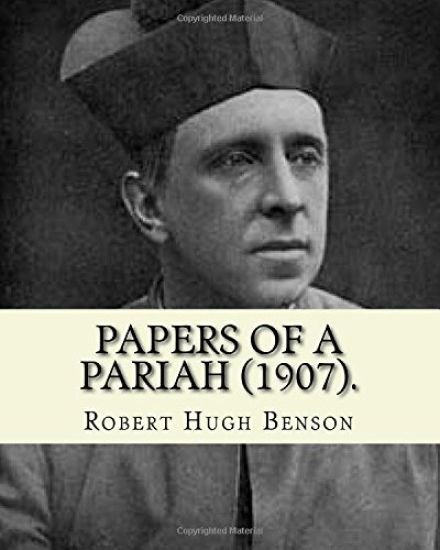
Robert Hugh Benson AFSC KC*SG KGCHS (18 November 1871 - 19 October 1914) was an English Anglican priest who in 1903 was received into the Roman Catholic Church in which he was ordained priest in 1904. He was a prolific writer of fiction and wrote the notable dystopian novel Lord of the World (1907). His output encompassed historical, horror and science fiction, contemporary fiction, children's stories, plays, apologetics, devotional works and articles. He continued his writing career at the same time as he progressed through the hierarchy to become a Chamberlain to the Pope in 1911 and subsequently titled Monsignor. Early life: Benson was the youngest son of Edward White Benson (Archbishop of Canterbury) and his wife, Mary, and the younger brother of Edward Frederic Benson and A. C. Benson. Benson was educated at Eton College and then studied classics and theology at Trinity College, Cambridge, from 1890 to 1893. In 1895, Benson was ordained a priest in the Church of England by his father, who was the then Archbishop of Canterbury. Career: After his father died suddenly in 1896, Benson was sent on a trip to the Middle East to recover his own health. While there he began to question the status of the Church of England and to consider the claims of the Roman Catholic Church. His own piety began to tend toward the High Church tradition, and he started exploring religious life in various Anglican communities, eventually obtaining permission to join the Community of the Resurrection. Benson made his profession as a member of the community in 1901, at which time he had no thoughts of leaving the Church of England. As he continued his studies and began writing, however, he became more and more uneasy with his own doctrinal position and, on 11 September 1903, he was received into the Catholic Church. He was awarded the Dignitary of Honour of the Order of the Holy Sepulchre. Benson was ordained as a Roman Catholic priest in 1904 and sent to Cambridge. He continued his writing career along with his ministry as a priest. Novelist: Like both his brothers, Edward Frederic Benson ("Fred") and Arthur Christopher Benson, Robert wrote many ghost and horror stories, as well as children's stories and historical fiction. His horror and ghost fiction are collected in The Light Invisible (1903) and A Mirror of Shallott (1907). His novel, Lord of the World (1907), is generally regarded as one of the first modern dystopian novels (see List of dystopian literature). The bibliography below reveals a prodigious output.............
Robert Hugh Benson AFSC KC*SG KGCHS (18 November 1871 - 19 October 1914) was an English Anglican priest who in 1903 was received into the Roman Catholic Church in which he was ordained priest in 1904. He was a prolific writer of fiction and wrote the notable dystopian novel Lord of the World (1907). His output encompassed historical, horror and science fiction, contemporary fiction, children's stories, plays, apologetics, devotional works and articles. He continued his writing career at the same time as he progressed through the hierarchy to become a Chamberlain to the Pope in 1911 and subsequently titled Monsignor. Early life: Benson was the youngest son of Edward White Benson (Archbishop of Canterbury) and his wife, Mary, and the younger brother of Edward Frederic Benson and A. C. Benson. Benson was educated at Eton College and then studied classics and theology at Trinity College, Cambridge, from 1890 to 1893. In 1895, Benson was ordained a priest in the Church of England by his father, who was the then Archbishop of Canterbury. Career: After his father died suddenly in 1896, Benson was sent on a trip to the Middle East to recover his own health. While there he began to question the status of the Church of England and to consider the claims of the Roman Catholic Church. His own piety began to tend toward the High Church tradition, and he started exploring religious life in various Anglican communities, eventually obtaining permission to join the Community of the Resurrection. Benson made his profession as a member of the community in 1901, at which time he had no thoughts of leaving the Church of England. As he continued his studies and began writing, however, he became more and more uneasy with his own doctrinal position and, on 11 September 1903, he was received into the Catholic Church. He was awarded the Dignitary of Honour of the Order of the Holy Sepulchre. Benson was ordained as a Roman Catholic priest in 1904 and sent to Cambridge. He continued his writing career along with his ministry as a priest. Novelist: Like both his brothers, Edward Frederic Benson ("Fred") and Arthur Christopher Benson, Robert wrote many ghost and horror stories, as well as children's stories and historical fiction. His horror and ghost fiction are collected in The Light Invisible (1903) and A Mirror of Shallott (1907). His novel, Lord of the World (1907), is generally regarded as one of the first modern dystopian novels (see List of dystopian literature). The bibliography below reveals a prodigious output..................
At the turn of the century, Robert Hugh Benson became one of the most famous converts from Anglicanism to Catholicism in England. This is his story, told in his own words. "The Unsung Genius of the Catholic Literary Revival" Benson's masterly Confessions of a Convert stands beside John Henry Newman's Apologia pro Vita Sua and Ronald Knox's A Spiritual Aeneid as a timeless classic in the literature of conversion. Joseph Pearce, author of Literary Converts He knew that there was only one relationship of absolute value, that of the soul to God. How was he to approach God, how best serve Him? ... in each of his novels one can see a sketch of what he thought might possibly be the type which God was seeking to produce in him. Evelyn Waugh I always looked on him as the guide who had led me to Catholic truth - I did not know then that he used to pray for my conversion. Msgr. Ronald Knox ........... Robert Hugh Benson AFSC KC*SG KGCHS (18 November 1871 - 19 October 1914) was an English Anglican priest who in 1903 was received into the Roman Catholic Church in which he was ordained priest in 1904. He was a prolific writer of fiction and wrote the notable dystopian novel Lord of the World (1907). His output encompassed historical, horror and science fiction, contemporary fiction, children's stories, plays, apologetics, devotional works and articles. He continued his writing career at the same time as he progressed through the hierarchy to become a Chamberlain to the Pope in 1911 and subsequently titled Monsignor. Early life: Benson was the youngest son of Edward White Benson (Archbishop of Canterbury) and his wife, Mary, and the younger brother of Edward Frederic Benson and A. C. Benson. Benson was educated at Eton College and then studied classics and theology at Trinity College, Cambridge, from 1890 to 1893. In 1895, Benson was ordained a priest in the Church of England by his father, who was the then Archbishop of Canterbury. Career: After his father died suddenly in 1896, Benson was sent on a trip to the Middle East to recover his own health. While there he began to question the status of the Church of England and to consider the claims of the Roman Catholic Church. His own piety began to tend toward the High Church tradition, and he started exploring religious life in various Anglican communities, eventually obtaining permission to join the Community of the Resurrection. Benson made his profession as a member of the community in 1901, at which time he had no thoughts of leaving the Church of England. As he continued his studies and began writing, however, he became more and more uneasy with his own doctrinal position and, on 11 September 1903, he was received into the Catholic Church. He was awarded the Dignitary of Honour of the Order of the Holy Sepulchre. Benson was ordained as a Roman Catholic priest in 1904 and sent to Cambridge. He continued his writing career along with his ministry as a priest. Novelist: Like both his brothers, Edward Frederic Benson ("Fred") and Arthur Christopher Benson, Robert wrote many ghost and horror stories, as well as children's stories and historical fiction. His horror and ghost fiction are collected in The Light Invisible (1903) and A Mirror of Shallott (1907). His novel, Lord of the World (1907), is generally regarded as one of the first modern dystopian novels (see List of dystopian literature). The bibliography below reveals a prodigious output.........
Robert Hugh Benson AFSC KC*SG KGCHS (18 November 1871 - 19 October 1914) was an English Anglican priest who in 1903 was received into the Roman Catholic Church in which he was ordained priest in 1904. He was a prolific writer of fiction and wrote the notable dystopian novel Lord of the World (1907). His output encompassed historical, horror and science fiction, contemporary fiction, children's stories, plays, apologetics, devotional works and articles. He continued his writing career at the same time as he progressed through the hierarchy to become a Chamberlain to the Pope in 1911 and subsequently titled Monsignor. Early life: Benson was the youngest son of Edward White Benson (Archbishop of Canterbury) and his wife, Mary, and the younger brother of Edward Frederic Benson and A. C. Benson. Benson was educated at Eton College and then studied classics and theology at Trinity College, Cambridge, from 1890 to 1893. In 1895, Benson was ordained a priest in the Church of England by his father, who was the then Archbishop of Canterbury. Career: After his father died suddenly in 1896, Benson was sent on a trip to the Middle East to recover his own health. While there he began to question the status of the Church of England and to consider the claims of the Roman Catholic Church. His own piety began to tend toward the High Church tradition, and he started exploring religious life in various Anglican communities, eventually obtaining permission to join the Community of the Resurrection. Benson made his profession as a member of the community in 1901, at which time he had no thoughts of leaving the Church of England. As he continued his studies and began writing, however, he became more and more uneasy with his own doctrinal position and, on 11 September 1903, he was received into the Catholic Church. He was awarded the Dignitary of Honour of the Order of the Holy Sepulchre. Benson was ordained as a Roman Catholic priest in 1904 and sent to Cambridge. He continued his writing career along with his ministry as a priest. Novelist: Like both his brothers, Edward Frederic Benson ("Fred") and Arthur Christopher Benson, Robert wrote many ghost and horror stories, as well as children's stories and historical fiction. His horror and ghost fiction are collected in The Light Invisible (1903) and A Mirror of Shallott (1907). His novel, Lord of the World (1907), is generally regarded as one of the first modern dystopian novels (see List of dystopian literature). The bibliography below reveals a prodigious output.
Robert Hugh Benson AFSC KC*SG KGCHS (18 November 1871 - 19 October 1914) was an English Anglican priest who in 1903 was received into the Roman Catholic Church in which he was ordained priest in 1904. He was a prolific writer of fiction and wrote the notable dystopian novel Lord of the World (1907). His output encompassed historical, horror and science fiction, contemporary fiction, children's stories, plays, apologetics, devotional works and articles. He continued his writing career at the same time as he progressed through the hierarchy to become a Chamberlain to the Pope in 1911 and subsequently titled Monsignor. Early life: Benson was the youngest son of Edward White Benson (Archbishop of Canterbury) and his wife, Mary, and the younger brother of Edward Frederic Benson and A. C. Benson. Benson was educated at Eton College and then studied classics and theology at Trinity College, Cambridge, from 1890 to 1893. In 1895, Benson was ordained a priest in the Church of England by his father, who was the then Archbishop of Canterbury. Career: After his father died suddenly in 1896, Benson was sent on a trip to the Middle East to recover his own health. While there he began to question the status of the Church of England and to consider the claims of the Roman Catholic Church. His own piety began to tend toward the High Church tradition, and he started exploring religious life in various Anglican communities, eventually obtaining permission to join the Community of the Resurrection. Benson made his profession as a member of the community in 1901, at which time he had no thoughts of leaving the Church of England. As he continued his studies and began writing, however, he became more and more uneasy with his own doctrinal position and, on 11 September 1903, he was received into the Catholic Church. He was awarded the Dignitary of Honour of the Order of the Holy Sepulchre. Benson was ordained as a Roman Catholic priest in 1904 and sent to Cambridge. He continued his writing career along with his ministry as a priest. Novelist: Like both his brothers, Edward Frederic Benson ("Fred") and Arthur Christopher Benson, Robert wrote many ghost and horror stories, as well as children's stories and historical fiction. His horror and ghost fiction are collected in The Light Invisible (1903) and A Mirror of Shallott (1907). His novel, Lord of the World (1907), is generally regarded as one of the first modern dystopian novels (see List of dystopian literature). The bibliography below reveals a prodigious output.......................
Robert Hugh Benson AFSC KC*SG KGCHS (18 November 1871 - 19 October 1914) was an English Anglican priest who in 1903 was received into the Roman Catholic Church in which he was ordained priest in 1904. He was a prolific writer of fiction and wrote the notable dystopian novel Lord of the World (1907). His output encompassed historical, horror and science fiction, contemporary fiction, children's stories, plays, apologetics, devotional works and articles. He continued his writing career at the same time as he progressed through the hierarchy to become a Chamberlain to the Pope in 1911 and subsequently titled Monsignor. Early life: Benson was the youngest son of Edward White Benson (Archbishop of Canterbury) and his wife, Mary, and the younger brother of Edward Frederic Benson and A. C. Benson. Benson was educated at Eton College and then studied classics and theology at Trinity College, Cambridge, from 1890 to 1893. In 1895, Benson was ordained a priest in the Church of England by his father, who was the then Archbishop of Canterbury. Career: After his father died suddenly in 1896, Benson was sent on a trip to the Middle East to recover his own health. While there he began to question the status of the Church of England and to consider the claims of the Roman Catholic Church. His own piety began to tend toward the High Church tradition, and he started exploring religious life in various Anglican communities, eventually obtaining permission to join the Community of the Resurrection. Benson made his profession as a member of the community in 1901, at which time he had no thoughts of leaving the Church of England. As he continued his studies and began writing, however, he became more and more uneasy with his own doctrinal position and, on 11 September 1903, he was received into the Catholic Church. He was awarded the Dignitary of Honour of the Order of the Holy Sepulchre. Benson was ordained as a Roman Catholic priest in 1904 and sent to Cambridge. He continued his writing career along with his ministry as a priest. Novelist: Like both his brothers, Edward Frederic Benson ("Fred") and Arthur Christopher Benson, Robert wrote many ghost and horror stories, as well as children's stories and historical fiction. His horror and ghost fiction are collected in The Light Invisible (1903) and A Mirror of Shallott (1907). His novel, Lord of the World (1907), is generally regarded as one of the first modern dystopian novels (see List of dystopian literature). The bibliography below reveals a prodigious output.
Robert Hugh Benson AFSC KC*SG KGCHS (18 November 1871 - 19 October 1914) was an English Anglican priest who in 1903 was received into the Roman Catholic Church in which he was ordained priest in 1904. He was a prolific writer of fiction and wrote the notable dystopian novel Lord of the World (1907). His output encompassed historical, horror and science fiction, contemporary fiction, children's stories, plays, apologetics, devotional works and articles. He continued his writing career at the same time as he progressed through the hierarchy to become a Chamberlain to the Pope in 1911 and subsequently titled Monsignor. Early life: Benson was the youngest son of Edward White Benson (Archbishop of Canterbury) and his wife, Mary, and the younger brother of Edward Frederic Benson and A. C. Benson. Benson was educated at Eton College and then studied classics and theology at Trinity College, Cambridge, from 1890 to 1893. In 1895, Benson was ordained a priest in the Church of England by his father, who was the then Archbishop of Canterbury. Career: After his father died suddenly in 1896, Benson was sent on a trip to the Middle East to recover his own health. While there he began to question the status of the Church of England and to consider the claims of the Roman Catholic Church. His own piety began to tend toward the High Church tradition, and he started exploring religious life in various Anglican communities, eventually obtaining permission to join the Community of the Resurrection. Benson made his profession as a member of the community in 1901, at which time he had no thoughts of leaving the Church of England. As he continued his studies and began writing, however, he became more and more uneasy with his own doctrinal position and, on 11 September 1903, he was received into the Catholic Church. He was awarded the Dignitary of Honour of the Order of the Holy Sepulchre. Benson was ordained as a Roman Catholic priest in 1904 and sent to Cambridge. He continued his writing career along with his ministry as a priest. Novelist: Like both his brothers, Edward Frederic Benson ("Fred") and Arthur Christopher Benson, Robert wrote many ghost and horror stories, as well as children's stories and historical fiction. His horror and ghost fiction are collected in The Light Invisible (1903) and A Mirror of Shallott (1907). His novel, Lord of the World (1907), is generally regarded as one of the first modern dystopian novels (see List of dystopian literature). The bibliography below reveals a prodigious output......................
Thomas Becket also known as Saint Thomas of Canterbury, Thomas of London, and later Thomas Becket;(21 December c. 1119 (or 1120) - 29 December 1170) was Archbishop of Canterbury from 1162 until his murder in 1170. He is venerated as a saint and martyr by both the Catholic Church and the Anglican Communion. He engaged in conflict with Henry II, King of England, over the rights and privileges of the Church and was murdered by followers of the king in Canterbury Cathedral. Soon after his death, he was canonised by Pope Alexander III......... Robert Hugh Benson AFSC KC*SG KGCHS (18 November 1871 - 19 October 1914) was an English Anglican priest who in 1903 was received into the Roman Catholic Church in which he was ordained priest in 1904. He was a prolific writer of fiction and wrote the notable dystopian novel Lord of the World (1907). His output encompassed historical, horror and science fiction, contemporary fiction, children's stories, plays, apologetics, devotional works and articles. He continued his writing career at the same time as he progressed through the hierarchy to become a Chamberlain to the Pope in 1911 and subsequently titled Monsignor. Early life: Benson was the youngest son of Edward White Benson (Archbishop of Canterbury) and his wife, Mary, and the younger brother of Edward Frederic Benson and A. C. Benson. Benson was educated at Eton College and then studied classics and theology at Trinity College, Cambridge, from 1890 to 1893. In 1895, Benson was ordained a priest in the Church of England by his father, who was the then Archbishop of Canterbury. Career: After his father died suddenly in 1896, Benson was sent on a trip to the Middle East to recover his own health. While there he began to question the status of the Church of England and to consider the claims of the Roman Catholic Church. His own piety began to tend toward the High Church tradition, and he started exploring religious life in various Anglican communities, eventually obtaining permission to join the Community of the Resurrection. Benson made his profession as a member of the community in 1901, at which time he had no thoughts of leaving the Church of England. As he continued his studies and began writing, however, he became more and more uneasy with his own doctrinal position and, on 11 September 1903, he was received into the Catholic Church. He was awarded the Dignitary of Honour of the Order of the Holy Sepulchre. Benson was ordained as a Roman Catholic priest in 1904 and sent to Cambridge. He continued his writing career along with his ministry as a priest. Novelist: Like both his brothers, Edward Frederic Benson ("Fred") and Arthur Christopher Benson, Robert wrote many ghost and horror stories, as well as children's stories and historical fiction. His horror and ghost fiction are collected in The Light Invisible (1903) and A Mirror of Shallott (1907). His novel, Lord of the World (1907), is generally regarded as one of the first modern dystopian novels (see List of dystopian literature). The bibliography below reveals a prodigious output...............
Robert Hugh Benson AFSC KC*SG KGCHS (18 November 1871 - 19 October 1914) was an English Anglican priest who in 1903 was received into the Roman Catholic Church in which he was ordained priest in 1904. He was a prolific writer of fiction and wrote the notable dystopian novel Lord of the World (1907). His output encompassed historical, horror and science fiction, contemporary fiction, children's stories, plays, apologetics, devotional works and articles. He continued his writing career at the same time as he progressed through the hierarchy to become a Chamberlain to the Pope in 1911 and subsequently titled Monsignor. Early life: Benson was the youngest son of Edward White Benson (Archbishop of Canterbury) and his wife, Mary, and the younger brother of Edward Frederic Benson and A. C. Benson. Benson was educated at Eton College and then studied classics and theology at Trinity College, Cambridge, from 1890 to 1893. In 1895, Benson was ordained a priest in the Church of England by his father, who was the then Archbishop of Canterbury. Career: After his father died suddenly in 1896, Benson was sent on a trip to the Middle East to recover his own health. While there he began to question the status of the Church of England and to consider the claims of the Roman Catholic Church. His own piety began to tend toward the High Church tradition, and he started exploring religious life in various Anglican communities, eventually obtaining permission to join the Community of the Resurrection. Benson made his profession as a member of the community in 1901, at which time he had no thoughts of leaving the Church of England. As he continued his studies and began writing, however, he became more and more uneasy with his own doctrinal position and, on 11 September 1903, he was received into the Catholic Church. He was awarded the Dignitary of Honour of the Order of the Holy Sepulchre. Benson was ordained as a Roman Catholic priest in 1904 and sent to Cambridge. He continued his writing career along with his ministry as a priest. Novelist: Like both his brothers, Edward Frederic Benson ("Fred") and Arthur Christopher Benson, Robert wrote many ghost and horror stories, as well as children's stories and historical fiction. His horror and ghost fiction are collected in The Light Invisible (1903) and A Mirror of Shallott (1907). His novel, Lord of the World (1907), is generally regarded as one of the first modern dystopian novels (see List of dystopian literature). The bibliography below reveals a prodigious output.