Kirjailija
Robert J. Sternberg
Kirjat ja teokset yhdessä paikassa: 52 kirjaa, julkaisuja vuosilta 1982–2026, suosituimpiin kuuluu The Nature of Intellectual Styles. Vertaile teosten hintoja ja tarkista saatavuus suomalaisista kirjakaupoista.
Nimi esiintyy myös muodoissa: Robert J Sternberg
52 kirjaa
Kirjojen julkaisuvuodet: 1982–2026.
The goal of this book is to present and evaluate the concept of dynamic testing. Unlike ‘static’ tests such as the SAT or IQ tests, dynamic testing emphasizes learning potential rather than past learning accomplishments. The book opens with a theoretical framework of abilities as forms of developing expertise. It then continues with an introduction to dynamic testing and then a capsule history of dynamic testing. The book also reviews the approaches of Feuerstein and Budoff and other diverse approaches to dynamic testing. The Drs Sternberg and Grigorenko present their own three-prong approach to dynamic testing along with two case studies using dynamic testing in their own research. The authors conclude that dynamic testing has enormous potential which has not yet been tapped.

In this absorbing book, renowned psychologist Robert J. Sternberg presents a psychological approach to human relationships that reveals how and why people fall in and out of love. Fascinating reading for anyone who wants to learn more about love, Cupid's Arrow draws on fields ranging from history to cognitive science to folklore, offering a comprehensive account of love in its many forms. Grounded in Sternberg's own 'triangular theory', the book explores the many varieties of love as different combinations of intimacy, passion, and commitment. Using this theory as a focal point, Cupid's Arrow delivers an interesting perspective on the experience of love during the lifetime of the individual as well as a rich history of the conceptions of love throughout the ages.
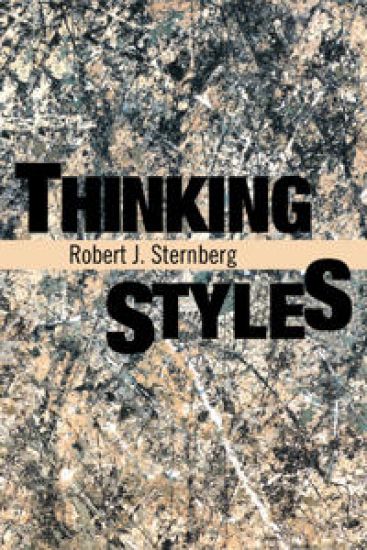
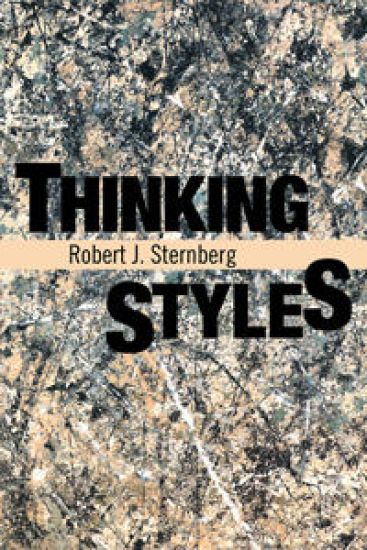
In our society, the recognition of talent depends largely on idealized and entrenched perceptions of academic achievement and job performance. Thinking Styles bucks this trend by emphasizing the method of our thought rather than its content. Psychologist Robert Sternberg argues that ability often goes unappreciated and uncultivated not because of lack of talent, but because of conflicting styles of thinking and learning. Using a variety of examples that range from scientific studies to personal anecdotes, Sternberg presents a theory of thinking styles that aims to explain why aptitude tests, school grades, and classroom performance often fail to identify real ability. He believes that criteria for intelligence in both school and the workplace are unfortunately based on the ability to conform rather than learn. He takes the theory a step further by stating that ‘achievement’ can be a result of the compatibility of personal and institutional thinking styles, and ‘failure’ is too often the result of a conflict of thinking styles, rather than a lack of intelligence or aptitude. Sternberg bases his theory on hard scientific data, yet presents a work that remains highly accessible.
In this absorbing book, renowned psychologist Robert J. Sternberg presents a psychological approach to human relationships that reveals how and why people fall in and out of love. Fascinating reading for anyone who wants to learn more about love, Cupid's Arrow draws on fields ranging from history to cognitive science to folklore, offering a comprehensive account of love in its many forms. Grounded in Sternberg's own 'triangular theory', the book explores the many varieties of love as different combinations of intimacy, passion, and commitment. Using this theory as a focal point, Cupid's Arrow delivers an interesting perspective on the experience of love during the lifetime of the individual as well as a rich history of the conceptions of love throughout the ages.
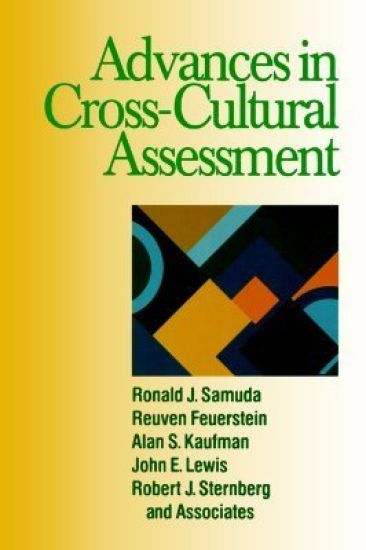
Advances in Cross-Cultural Assessment
Ronald J. Samuda; Reuven Feuerstein; Alan S. Kaufman; John E. Lewis; Robert J. Sternberg; n/a Associates
SAGE Publications Inc
1998
nidottu
Presenting the major trends, theories, and practices in assessing culturally diverse clients, Advances in Cross-Cultural Assessment comprises chapters from some of the key leading authors in intelligence and intelligence testing. Author Ronald J. Samuda and associates contend that classic IQ tests and traditional standardized tests of cognitive ability are only appropriate for middle-class mainstream individuals, not for those of different cultural backgrounds. For those who grow up in deficient "environmental backgrounds" (inadequate rearing, serious economic stress), the traditional objective standardized tests are neither valid nor reliable in measuring intelligence. A number of scholars, some of whom are among the bookÆs contributing authors, have introduced alternative approaches to assessing cognitive ability in persons from such backgrounds. A groundbreaking volume that encourages professionals to treat individuals on an individual basis, Advances in Cross-Cultural Assessment will heighten the awareness of professionals and academics in clinical and counseling psychology, educational psychology, social work, psychology, public health, and ethnic studies.
In our society, the recognition of talent depends largely on idealized and entrenched perceptions of academic achievement and job performance. Thinking Styles bucks this trend by emphasizing the method of our thought rather than its content. Psychologist Robert Sternberg argues that ability often goes unappreciated and uncultivated not because of lack of talent, but because of conflicting styles of thinking and learning. Using a variety of examples that range from scientific studies to personal anecdotes, Sternberg presents a theory of thinking styles that aims to explain why aptitude tests, school grades, and classroom performance often fail to identify real ability. He believes that criteria for intelligence in both school and the workplace are unfortunately based on the ability to conform rather than learn. He takes the theory a step further by stating that ‘achievement’ can be a result of the compatibility of personal and institutional thinking styles, and ‘failure’ is too often the result of a conflict of thinking styles, rather than a lack of intelligence or aptitude. Sternberg bases his theory on hard scientific data, yet presents a work that remains highly accessible.
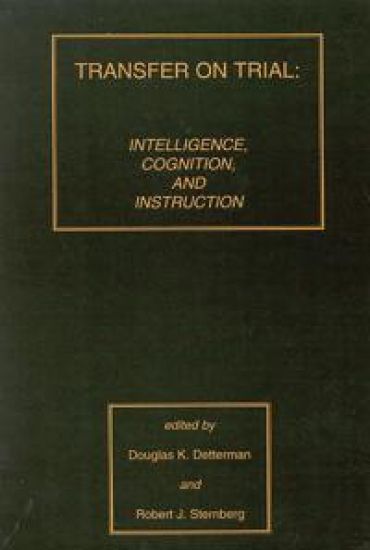
The importance of transfer for understanding intelligence, cognition, and education has been debated for a century, as it has been one of the central theoretical issues in psychology, education, and cognition. Education theories are based on the assumption that students will transfer what they learn in school to new situations. But what if transfer does not occur? Much of current educational practice could be called into question. This book presents views on the status of transfer research. Detterman argues that there is little evidence to support the existence of the transfer of complex skills such as those usually taught in school. Contributors Earl C. Butterfield and James G. Greeno argue that transfer not only exists but that it is fundamental to complex cognitive performance. Other contributors take intermediate positions, presenting a review of transfer studies in applied domains. These authors explore the situations in which transfer can or cannot occur.
Metaphors of Mind seeks to help readers understand human intelligence as viewed from a variety of standpoints, such as those of psychology, anthropology, computational science, sociology, and philosophy. Much of the present confusion surrounding the concept of intelligence stems from our having looked at it from these different standpoints without considering how they relate to each other or how they might be combined into a unified view that goes beyond the boundaries of a particular discipline. Readers of Metaphors of Mind will come away with a comprehensive understanding of the concept of intelligence and how ideas about it have evolved and are continuing to evolve.
First published in 1985, this book presents a 'triarchic' theory of human intelligence that goes beyond IQ in its conceptualisation and implications for assessment. The theory has three parts. The first deals with relations between intelligence and experience; the second, with relations between intelligence and the external world; the third part with relations between intelligence and the internal world of the individual. Robert J. Sternberg begins by sketching the history of intelligence research. He then outlines the three parts of the theory and adduces supporting evidence, including evidence from studies of 'practical' as well as 'academic' intelligence. He considers the issues raised by exceptional intelligence and by intelligence testing. His conclusions will be of interest to all those concerned with intelligence, its development and its measurement.
How and How Much Can Intellegence Be Increased
Douglas. K. Detterman; Robert J. Sternberg
Praeger Publishers Inc
1982
sidottu
This volume is divided into two parts with an extensive introduction presenting a selective history of the attempts to change cognitive abilities. The first part deals with programs which have attempted to raise IQ by intensive intervention. The second part focuses on attempts to improve specific cognitive skills. The authors represent a diverse segment of scientists concerned with the improvements of intellectual functioning.