Kirjojen hintavertailu – 12 859 818 kirjaa ja 27 kauppaa
Kirjailija
Robert Kirk
Kirjat ja teokset yhdessä paikassa: 26 kirjaa, julkaisuja vuosilta 1994–2026, suosituimpiin kuuluu The Secret Commonwealth of Elves, Fauns, & Fairies. Vertaile teosten hintoja ja tarkista saatavuus suomalaisista kirjakaupoista.
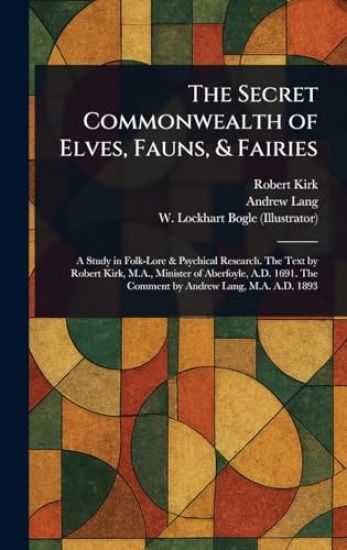
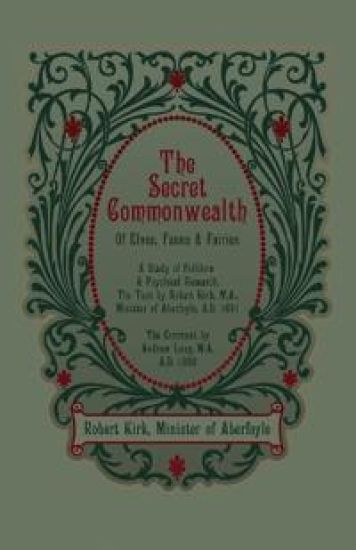
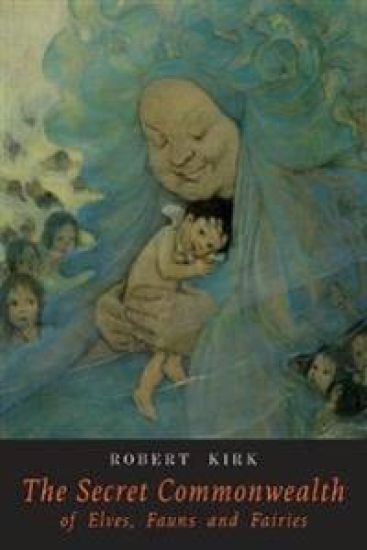
The Secret Commonwealth is a fascinating and enigmatic text about Celtic fairies. Written in 1691 by a Scottish clergyman, Robert Kirk, though not printed until the early 19th century, this work is an unusual account of the fae, and a complex of still mysterious extrasensory phenomena including poltergeists, clairvoyance, and 'co-walkers'. This edition was issued in 1893 in a very limited edition by the London the London publisher David Nutt. It incorporates commentary by folklorist Andrew Lang. Rebel Satori here presents a facsimile of the 1893 edition in hardback format.
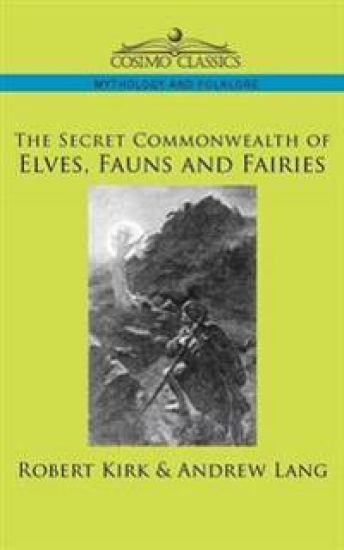
"The Secret Commonwealth of Elves, Fauns, and Fairies" is the famous and mysterious treatise on fairy folklore, witchcraft, second sight, and ghosts by Gaelic scholar and minister, Robert Kirk. Written before he died in 1692, the work was not published until 1815 after many legends had grown around Kirk's death, which imagined that he was secreted away by the fairies themselves for revealing their secrets. Most famous during his own lifetime for publishing one of the first translations of the Bible into Gaelic, Kirk spent much of his professional life collecting the many folklore tales native to Scotland. He believed that these tales of fairies, witches, and ghosts, as well as stories claiming that many Scots were gifted with second sight, or extrasensory perception, were proof that the stories in the Bible were in fact true and supernatural phenomenon in fact existed. While Kirk died before his collection of otherworldly encounters was published, it is widely regarded by scholars as one of the most important and significant works on fairy folklore and the Scottish belief in second sight. Many of our modern depictions of fairies can find their origins in this fascinating and historically important work that continues to entertain and inspire readers the world over. This edition is printed on premium acid-free paper.
Exam Board: SQA Level: Higher Subject: French Two books in one! Combining a revision guide and a full set of practice test papers, this fantastic resource is all you need to revise for the exam. The revision guide• Covers all of the topics in the CfE Higher French curriculum, broken down into manageable chunks for easy revision• Clearly explains key concepts, research evidence and real-life applications• Contains Quick Tests to let students check their knowledge and understanding as they go along The practice test papers• Are in the format and the style of the SQA exam, giving students an opportunity to practice taking the Higher French exam Marking instructions and sample answers are provided online, so students can check their progress.
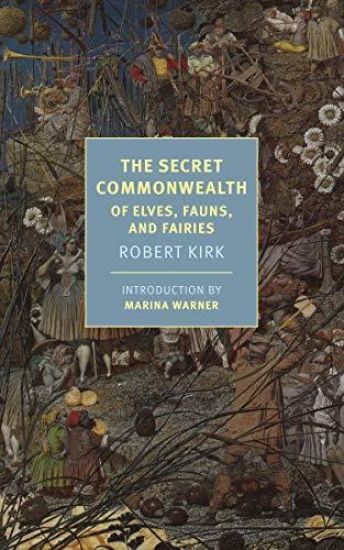
A classic, enchanting document of Scottish folklore about fairies, elves, and other supernatural creatures. Late in the seventeenth century, Robert Kirk, an Episcopalian minister in the Scottish Highlands, set out to collect his parishioners' many striking stories about elves, fairies, fauns, doppelgangers, wraiths, and other beings of, in Kirk's words, "a middle nature betwixt man and angel." For Kirk these stories constituted strong evidence for the reality of a supernatural world, existing parallel to ours, which, he passionately believed demanded exploration as much as the New World across the seas. Kirk defended these views in The Secret Commonwealth, an essay that was left in manuscript when he died in 1692. It is a rare and fascinating work, an extraordinary amalgam of science, religion, and folklore, suffused with the spirit of active curiosity and bemused wonder that fills Robert Burton's Anatomy of Melancholy and the works of Sir Thomas Browne. The Secret Commonwealth is not only a remarkable document in the history of ideas but a study of enchantment that enchants in its own right. First published in 1815 by Sir Walter Scott, then re-edited in 1893 by Andrew Lang, with a dedication to Robert Louis Stevenson, The Secret Commonwealth has long been difficult to obtain--available, if at all, only in scholarly editions. This new edition modernizes the spelling and punctuation of Kirk's little book and features a wide-ranging and illuminating introduction by the critic and historian Marina Warner, who brings out the originality of Kirk's contribution and reflects on the ongoing life of fairies in the modern mind.
Could robots be genuinely intelligent? Could they be conscious? Could there be zombies? Prompted by these questions Robert Kirk introduces the main problems of consciousness and sets out a new approach to solving them. He starts by discussing behaviourism, Turing’s test of intelligence and Searle’s famous Chinese Room argument, and goes on to examine dualism – the idea that consciousness requires something beyond the physical – together with its opposite, physicalism. Probing the idea of zombies, he concludes they are logically impossible. Having presented the central problems, he sketches his solution: a version of functionalism, according to which consciousness consists in the performance of functions. While there is wide agreement among philosophers about what the main problems of consciousness are, there is little agreement on how to go about solving them. With this powerful case for his version of functionalism, Kirk offers an engaging introduction to both the problems and a possible solution.
Could robots be genuinely intelligent? Could they be conscious? Could there be zombies? Prompted by these questions Robert Kirk introduces the main problems of consciousness and sets out a new approach to solving them. He starts by discussing behaviourism, Turing’s test of intelligence and Searle’s famous Chinese Room argument, and goes on to examine dualism – the idea that consciousness requires something beyond the physical – together with its opposite, physicalism. Probing the idea of zombies, he concludes they are logically impossible. Having presented the central problems, he sketches his solution: a version of functionalism, according to which consciousness consists in the performance of functions. While there is wide agreement among philosophers about what the main problems of consciousness are, there is little agreement on how to go about solving them. With this powerful case for his version of functionalism, Kirk offers an engaging introduction to both the problems and a possible solution.
How are truths about physical and mental states related? Physicalism entails that non-physical truths are redescriptions of a world specifiable in narrowly physical terms. In The Conceptual Link from Physical to Mental Robert Kirk argues that physicalists must therefore hold that the physical truth 'logico-conceptually' entails the mental truth: it is impossible for broadly logical and conceptual reasons that the former should have held without the latter. 'Redescriptive physicalism' is a fresh approach to the physical-to-mental connection that he bases on these ideas. Contrary to what might have been expected, this connection does not depend on analytic truths: there are holistic but non-analytic conceptual links, explicable by means of functionalism--which, he argues, physicalism entails. Redescriptive physicalism should not be confused with 'a priori physicalism': although physicalists must maintain that phenomenal truths are logico-conceptually entailed by physical truths, they must deny that they are also entailed a priori. Kripke-inspired 'a posteriori physicalism', on the other hand, is too weak for physicalism, and the psycho-physical identity thesis is not sufficient for it. Though non-reductive, redescriptive physicalism is an excellent basis for dealing with the problems that mental causation raises for other non-reductive views. 'Cartesian intuitions' of zombies and transposed qualia may seem to raise irresistible objections; Kirk shows that the intuitions are false. As to the 'explanatory gap', there is certainly an epistemic gap, but it has a physicalistically acceptable explanation which deals effectively with the problem of how the physical and functional facts fix particular phenomenal facts.
This book is all about how companies are applying the key principles in International Financial Reporting Standards (IFRS) and shows this by use of extensive examples of UK company accounts. The book provides coverage of the key points of each standard and links that with actual practice. It is not a detailed guidance book as such, or a transistion book from UK standards to IFRS, but a quick reference for the busy accountant which shows how to apply the key points of each standard by reference to how other companies have done it. Robert Kirk BSc (Econ) FCA CPA trained in Belfast with Price Waterhouse & Co., and subsequently spent two years in industry in a subsidiary of Shell (UK) and four further years in practice. He is currently Professor of Financial Reporting in the School of Accounting at the University of Ulster and has been lecturing on the CIMA Mastercourses Accounting Standards and Accounting Standards in Depth since 1985. He has authored four editions of Accounting Standards in Depth; UK Accounting Standards: A Quick Reference Guide; and International Reporting Standards in Depth Volume 1 Theory and Practice and Volume 2 Solutions.
By definition zombies would be physically and behaviourally just like us, but not conscious. This currently very influential idea is a threat to all forms of physicalism, and has led some philosophers to give up physicalism and become dualists. It has also beguiled many physicalists, who feel forced to defend increasingly convoluted explanations of why the conceivability of zombies is compatible with their impossibility. Robert Kirk argues that the zombie idea depends on an incoherent view of the nature of phenomenal consciousness. His book has two main aims. One is to demolish the zombie idea once and for all. There are plenty of objections to it in the literature, but they lack intuitive appeal. He offers a striking new argument which reveals fundamental confusions in the implied conception of consciousness. His other main contribution is to develop a fresh and original approach to the true nature of phenomenal consciousness. Kirk argues that a necessary condition is a 'basic package' of capacities. An important component of his argument is that the necessary cognitive capacities are not as sophisticated as is often assumed. By focusing on humbler creatures than ourselves he avoids some of the distracting complications of our sophisticated forms of cognition. The basic package does not seem to be sufficient for phenomenal consciousness. What is also needed is 'direct activity' - a special feature of the way the events which constitute incoming perceptual information affect the system. This is an integrated process, to be conceived of holistically, and contrasts sharply with what is often called the 'availability' or 'poisedness' of perceptual information. This original, penetrating, and highly readable book will be of interest to all who have a serious concern with the nature of consciousness: not only professional philosophers and students, but also many psychologists and neuroscientists.
This book reflects IFRS as of the preparation of the text during 2004, and as far as possible up to the date of first publication in July 2005. Accounting Standards in Depth contains a: * Brief summary of the relevant international accounting standards * Selection of questions illustrating how international standards are used in practice and provide useful revision practice for those attempting accountancy exams The book starts with an introduction to the standard setting process, as well as looking at the development of IASB. It examines the framework for the preparation and presentation of financial statements which underpins the practice of financial accounting. The intention of the book is that the reader will be tested on basic numerical application, on an understanding of the underlying theory, and on presentation of financial statements under the international regulatory framework. The questions have been carefully chosen to test the readers ability to write good practical reports, perform calculations, and present both extracts and full sets of financial statements.
The pace of development in financial reporting has accelerated sharply during the last few years and shows no sign of abating as the UK prepares to comply with International Accounting Standards. This text gives accounting professionals an understanding of UK accounting standards and demonstrate how they are used in practice. It is the perfect companion for those who need to keep abreast of changes to accounting standards or who need to see how the standards are applied in practice. Accounting Standards includes: * Summaries outlining the principles behind UK accounting standards * Examples and extracts from well-known recent company accounts