
Kirjailija
Robert Louis Stevenson
Kirjat ja teokset yhdessä paikassa: 3 236 kirjaa, julkaisuja vuosilta 1878–2027, suosituimpiin kuuluu The Strange Case of Dr Jekyll and Mr Hyde and Other Tales of Terror. Vertaile teosten hintoja ja tarkista saatavuus suomalaisista kirjakaupoista.
Nimi esiintyy myös muodoissa: Robert-Louis Stevenson, Robert Louis Stevenson
3 236 kirjaa
Kirjojen julkaisuvuodet: 1878–2027.

More New Arabian Nights
Robert Louis Stevenson; Fanny Van de Grift Stevenson
Hansebooks
2017
pokkari


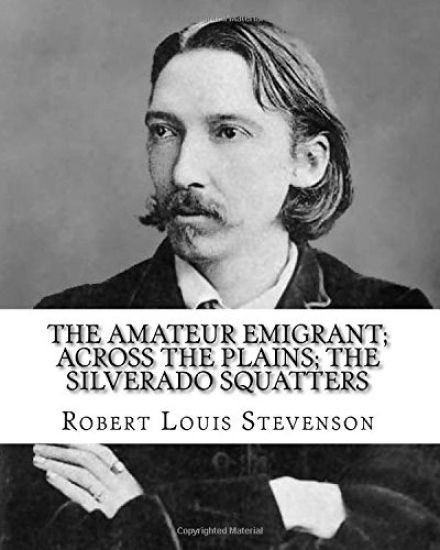
The amateur emigrant; Across the plains; The Silverado squatters, By: Robert Louis Stevenson, and By: S .W . Van Schaick: Stephen Wilson Van Schaick A
S. W. Van Schaick; Robert Louis Stevenson
Createspace Independent Publishing Platform
2017
nidottu
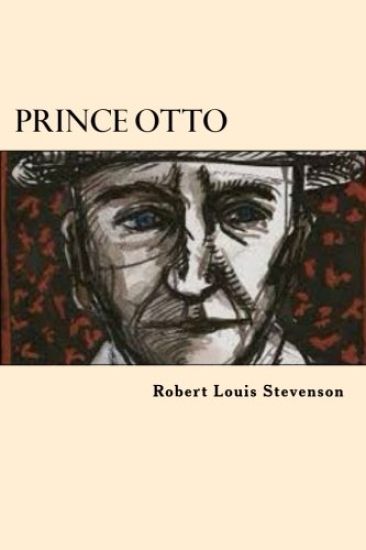
Prince Otto (1885). By: Robert Louis Stevenson: Novel (World's classic's)
Robert Louis Stevenson
Createspace Independent Publishing Platform
2017
nidottu
Prince Otto: A Romance is a novel written by Robert Louis Stevenson, first published in 1885. The novel was largely written during 1883. Stevenson referred to Prince Otto as "my hardest effort", one of the chapters was rewritten eight times by Stevenson and once by his wife. The Robert Louis Stevenson website maintains a complete list of derivative works. Robert Louis Balfour Stevenson (13 November 1850 - 3 December 1894) was a Scottish novelist, poet, essayist, and travel writer. His most famous works are Treasure Island, Kidnapped, Strange Case of Dr Jekyll and Mr Hyde, and A Child's Garden of Verses. A literary celebrity during his lifetime, Stevenson now ranks as the 26th most translated author in the world. His works have been admired by many other writers, including Jorge Luis Borges, Bertolt Brecht, Marcel Proust, Arthur Conan Doyle, Henry James, Cesare Pavese, Emilio Salgari, Ernest Hemingway, Rudyard Kipling, Jack London, Vladimir Nabokov, J. M. Barrie, and G. K. Chesterton, who said of him that he "seemed to pick the right word up on the point of his pen, like a man playing spillikins" Stevenson was born at 8 Howard Place, Edinburgh, Scotland, on 13 November 1850, to Thomas Stevenson (1818-87), a leading lighthouse engineer, and his wife Margaret Isabella (born Balfour; 1829-97). He was christened Robert Lewis Balfour Stevenson. At about age 18, Stevenson was to change the spelling of "Lewis" to "Louis", and in 1873, he dropped "Balfour". Lighthouse design was the family's profession: Thomas's father (Robert's grandfather) was the famous Robert Stevenson, and both of Thomas's brothers (Robert's uncles) Alan and David, were in the same field. 9] Indeed, even Thomas's maternal grandfather, Thomas Smith, had been in the same profession. However, Robert's mother's family were not of the same profession. Margaret's natal family, the Balfours, were gentry, tracing their lineage back to a certain Alexander Balfour who had held the lands of Inchyra in Fife in the fifteenth century. Margaret's father, Lewis Balfour (1777-1860), was a minister of the Church of Scotland at nearby Colinton, and her siblings included the physician George William Balfour and the marine engineer James Balfour. Stevenson spent the greater part of his boyhood holidays in his maternal grandfather's house. "Now I often wonder," wrote Stevenson, "what I inherited from this old minister. I must suppose, indeed, that he was fond of preaching sermons, and so am I, though I never heard it maintained that either of us loved to hear them." Lewis Balfour and his daughter both had weak chests, so they often needed to stay in warmer climates for their health. Stevenson inherited a tendency to coughs and fevers, exacerbated when the family moved to a damp, chilly house at 1 Inverleith Terrace in 1851. The family moved again to the sunnier 17 Heriot Row when Stevenson was six years old, but the tendency to extreme sickness in winter remained with him until he was eleven. Illness would be a recurrent feature of his adult life and left him extraordinarily thin. Contemporary views were that he had tuberculosis, but more recent views are that it was bronchiectasis or even sarcoidosis. Stevenson's parents were both devout and serious Presbyterians, but the household was not strict in its adherence to Calvinist principles. His nurse, Alison Cunningham (known as Cummy), was more fervently religious. Her Calvinism and folk beliefs were an early source of nightmares for the child, and he showed a precocious concern for religion.....

Ballads (1890). By: Robert Louis Stevenson: The collection of poems presents beautiful ballads, a couple of which are based on actual folk
Robert Louis Stevenson
Createspace Independent Publishing Platform
2017
nidottu
The collection of poems presents beautiful ballads, a couple of which are based on actual folk tales of Scotland, while others were conjectured by the poet himself. The stories are harmoniously narrated and compiled. The last one touches the tender love of children towards their parents. Robert Louis Balfour Stevenson (13 November 1850 - 3 December 1894) was a Scottish novelist, poet, essayist, and travel writer. His most famous works are Treasure Island, Kidnapped, Strange Case of Dr Jekyll and Mr Hyde, and A Child's Garden of Verses. A literary celebrity during his lifetime, Stevenson now ranks as the 26th most translated author in the world. His works have been admired by many other writers, including Jorge Luis Borges, Bertolt Brecht, Marcel Proust, Arthur Conan Doyle, Henry James, Cesare Pavese, Emilio Salgari, Ernest Hemingway, Rudyard Kipling, Jack London, Vladimir Nabokov, J. M. Barrie, and G. K. Chesterton, who said of him that he "seemed to pick the right word up on the point of his pen, like a man playing spillikins" Stevenson was born at 8 Howard Place, Edinburgh, Scotland, on 13 November 1850, to Thomas Stevenson (1818-87), a leading lighthouse engineer, and his wife Margaret Isabella (born Balfour; 1829-97). He was christened Robert Lewis Balfour Stevenson. At about age 18, Stevenson was to change the spelling of "Lewis" to "Louis", and in 1873, he dropped "Balfour". Lighthouse design was the family's profession: Thomas's father (Robert's grandfather) was the famous Robert Stevenson, and both of Thomas's brothers (Robert's uncles) Alan and David, were in the same field. 9] Indeed, even Thomas's maternal grandfather, Thomas Smith, had been in the same profession. However, Robert's mother's family were not of the same profession. Margaret's natal family, the Balfours, were gentry, tracing their lineage back to a certain Alexander Balfour who had held the lands of Inchyra in Fife in the fifteenth century. Margaret's father, Lewis Balfour (1777-1860), was a minister of the Church of Scotland at nearby Colinton, and her siblings included the physician George William Balfour and the marine engineer James Balfour. Stevenson spent the greater part of his boyhood holidays in his maternal grandfather's house. "Now I often wonder," wrote Stevenson, "what I inherited from this old minister. I must suppose, indeed, that he was fond of preaching sermons, and so am I, though I never heard it maintained that either of us loved to hear them."
The Black Arrow (1888). By: Robert Louis Stevenson: Historical, Adventure, Romance novel
Robert Louis Stevenson
Createspace Independent Publishing Platform
2017
nidottu
An Inland Voyage (1878) is a travelogue by Robert Louis Stevenson about a canoeing trip through France and Belgium in 1876. It is Stevenson's earliest book and a pioneering work of outdoor literature. As a young man, Stevenson desired to be financially independent so that he might pursue the woman he loved, and set about funding his freedom from parental support by writing travelogues, the three most prominent being An Inland Voyage, Travels with a Donkey in the C vennes (1879) and The Silverado Squatters (1883). Voyage was undertaken with Stevenson's Scottish friend Sir Walter Grindlay Simpson, mostly along the Oise River from Belgium through France, in the Fall of 1876 when Stevenson was 26 years old. The first part, in Belgium, passed through heavily industrial areas and many canal locks, proving to be not much of a vacation. They then went by rail to France, starting downriver at Maubeuge and ending at Pontoise, close to the Seine. The route itinerary has become a popular route for modern travelers to re-enact with guidebooks and maps available.
Dr Livesey opened up the folded paper - it was a hand-drawn map of a small island. My heart raced as I saw the three crosses in red ink, and next to them the following words: 'Most of the treasure lies here'. After the discovery of the map young Jim Hawkins joins an expedition to the island with Dr Livesey and the squire. But who else knows the secret of the buried treasure? Soon Jim and his companions find that they are in a desperate fight for survival with Captain Flint's old shipmates, who are determined to kill everyone who stands between them and the hidden gold. Who is the peculiar man who lives on the island? Whose side is he on? When Jim is separated from his friends, can he think of a way to outwit the pirates before they capture him?

Underwoods (1887). By: Robert Louis Stevenson: Collection of poems
Robert Louis Stevenson
Createspace Independent Publishing Platform
2017
nidottu
Underwoods is a collection of poems by Robert Louis Stevenson published in 1887. It comprises two books, Book I with 38 poems in English, Book II with 16 poems in Scots. He says in the initial note that "I am from the Lothians myself; it is there I heard the language spoken about my childhood; and it is in the drawling Lothian voice that I repeat it to myself." The dedication is to "a few out of many doctors who have brought me comfort and help." He starts by saying that "There are men and classes of men that stand above the common herd: the soldier, the sailor and the shepherd not infrequently; the artist rarely; rarer still the clergyman; the physician almost as a rule. He is the flower (such as it is) of our civilization ...." Robert Louis Balfour Stevenson (13 November 1850 - 3 December 1894) was a Scottish novelist, poet, essayist, and travel writer. His most famous works are Treasure Island, Kidnapped, Strange Case of Dr Jekyll and Mr Hyde, and A Child's Garden of Verses. A literary celebrity during his lifetime, Stevenson now ranks as the 26th most translated author in the world. His works have been admired by many other writers, including Jorge Luis Borges, Bertolt Brecht, Marcel Proust, Arthur Conan Doyle, Henry James, Cesare Pavese, Emilio Salgari, Ernest Hemingway, Rudyard Kipling, Jack London, Vladimir Nabokov, J. M. Barrie, and G. K. Chesterton, who said of him that he "seemed to pick the right word up on the point of his pen, like a man playing spillikins" Stevenson was born at 8 Howard Place, Edinburgh, Scotland, on 13 November 1850, to Thomas Stevenson (1818-87), a leading lighthouse engineer, and his wife Margaret Isabella (born Balfour; 1829-97). He was christened Robert Lewis Balfour Stevenson. At about age 18, Stevenson was to change the spelling of "Lewis" to "Louis", and in 1873, he dropped "Balfour". Lighthouse design was the family's profession: Thomas's father (Robert's grandfather) was the famous Robert Stevenson, and both of Thomas's brothers (Robert's uncles) Alan and David, were in the same field. 9] Indeed, even Thomas's maternal grandfather, Thomas Smith, had been in the same profession. However, Robert's mother's family were not of the same profession. Margaret's natal family, the Balfours, were gentry, tracing their lineage back to a certain Alexander Balfour who had held the lands of Inchyra in Fife in the fifteenth century. Margaret's father, Lewis Balfour (1777-1860), was a minister of the Church of Scotland at nearby Colinton, and her siblings included the physician George William Balfour and the marine engineer James Balfour. Stevenson spent the greater part of his boyhood holidays in his maternal grandfather's house. "Now I often wonder," wrote Stevenson, "what I inherited from this old minister. I must suppose, indeed, that he was fond of preaching sermons, and so am I, though I never heard it maintained that either of us loved to hear them." Lewis Balfour and his daughter both had weak chests, so they often needed to stay in warmer climates for their health. Stevenson inherited a tendency to coughs and fevers, exacerbated when the family moved to a damp, chilly house at 1 Inverleith Terrace in 1851. The family moved again to the sunnier 17 Heriot Row when Stevenson was six years old, but the tendency to extreme sickness in winter remained with him until he was eleven. Illness would be a recurrent feature of his adult life and left him extraordinarily thin. Contemporary views were that he had tuberculosis, but more recent views are that it was bronchiectasis or even sarcoidosis.
Treasure Island: Large Print Edition
Robert Louis Stevenson
Createspace Independent Publishing Platform
2017
nidottu
BEFORE JACK SPARROW THERE WAS LONG JOHN SILVER Young Jim Hawkins is drawn into an amazing adventure on the High Seas, which takes him aboard the Hispaniola in search of pirate treasure. He faces danger and betrayal and a remarkable friendship with a remarkable villain... Long John Silver. Robert Louis Stevenson
The Silverado squatters By: Robert Louis Stevenson, illustrated By: Joseph D.(Dwight) Strong: The Silverado Squatters (1883) is Robert Louis Steve
Joseph D. Strong; Robert Louis Stevenson
Createspace Independent Publishing Platform
2017
nidottu
The Silverado Squatters (1883) is Robert Louis Stevenson's travel memoir of his two-month honeymoon trip with Fanny Vandegrift (and her son Lloyd Osbourne) to Napa Valley, California, in 1880. In July 1879, Stevenson received word that his future American wife's divorce was almost complete, but that she was seriously ill. He left Scotland right away and travelled to meet her in Monterey, California, (his trip detailed in The Amateur Emigrant (1894) and Across the Plains (1892)). Broken financially, suffering from a lifelong fibrinous bronchitis condition, and with his writing career at a dead end, he was nursed back to health by his doctor, his nurse, and his future wife, while living briefly in Monterey, San Francisco, and Oakland. His father having provided money to help, on May 19, 1880, he married the San Francisco native, whom he had first met in France in 1875, soon after the events of An Inland Voyage. Still too weak to undertake the journey back to Scotland, friends suggested Calistoga, in the upper Napa Valley, with its healthy mountain air. They first went to the Hot Springs Hotel in Calistoga, but unable to afford the 10 dollars a week, they spent an unconventional honeymoon in an abandoned three-story bunkhouse at a derelict mining camp called "Silverado" on the shoulder of Mount Saint Helena in the Mayacamas Mountains. There they managed to "squat" for two months during a pleasant California summer, putting up makeshift cloth windows and hauling water in by hand from a nearby stream while dodging rattlesnakes and the occasional fog banks so detrimental to Stevenson's health. The Silverado Squatters provides some interesting views of California during the late 19th century. Stevenson uses the first telephone of his life. He meets a number of wine growers in Napa Valley, an enterprise he deemed "experimental", with growers sometimes even mislabelling the bottles as originating from Spain in order to sell their product to sceptical Americans. He visits the oldest wine grower in the valley, Jacob Schram, who had been experimenting for 18 years at his Schramsberg Winery, and had recently expanded the wine cellar in his backyard. Stevenson also visits a petrified forest owned by an old Swedish ex-sailor who had stumbled upon it while clearing farmland-the precise nature of the petrified forest remained for everyone a source of curiosity. Stevenson also details his encounters with a local Jewish merchant, whom he compares to a character in a Charles Dickens novel (probably Fagin from Oliver Twist), and portrays as happy-go-lucky but always scheming to earn a dollar. Like Dickens in American Notes (1842), Stevenson found the American habit of spitting on the floor hard to get used to. His experiences at Silverado were recorded in a journal he called "Silverado Sketches", parts of which he incorporated into Silverado Squatters in 1883 while living in Bournemouth, England, with other tales appearing in "Essays of Travel" and "Across the Plains". Many of his notes on the scenery around him later provided much of the descriptive detail for Treasure Island (1883). The Robert Louis Stevenson State Park now encompasses the area where the Stevensons stayed. The entrance to the park is at the summit of State Route 29. A new trail has been constructed in recent years. The "Silverado Museum" in St. Helena, California, is dedicated to Stevenson.... Joseph Dwight Strong, Jr. (1853-1899) was an artist from the United States.... Robert Louis Balfour Stevenson (13 November 1850 - 3 December 1894) was a Scottish novelist, poet, essayist, and travel writer. His most famous works are Treasure Island, Kidnapped, Strange Case of Dr Jekyll and Mr Hyde, and A Child's Garden of Verses....
St. Ives: being the adventures of a French prisoner in England (1897). By: Robert Louis Stevenson, and Arthur Quiller-Couch: Unf
Arthur Quiller-Couch; Robert Louis Stevenson
Createspace Independent Publishing Platform
2017
nidottu
St. Ives: Being The Adventures of a French Prisoner in England (1897) is an unfinished novel by Robert Louis Stevenson. It was completed in 1898 by Arthur Quiller-Couch. The book plot concerns the adventures of the dashing Viscomte Anne de Keroual de St. Ives, a Napoleonic soldier enlisted as a private under the name Champdivers, after his capture by the British. The book is available on Project Gutenberg in both its incomplete and complete form (for the story as completed by Arthur Quiller-Couch look for "The Works of Robert Louis Stevenson volume twenty."). Sir Arthur Thomas Quiller-Couch (21 November 1863 - 12 May 1944) was a Cornish writer who published using the pseudonym Q. Although a prolific novelist, he is remembered mainly for the monumental publication The Oxford Book Of English Verse 1250-1900 (later extended to 1918) and for his literary criticism. He influenced many who never met him, including American writer Helene Hanff, author of 84, Charing Cross Road and its sequel, Q's Legacy. His Oxford Book of English Verse was a favourite of John Mortimer's fictional character Horace Rumpole.... Robert Louis Balfour Stevenson (13 November 1850 - 3 December 1894) was a Scottish novelist, poet, essayist, and travel writer. His most famous works are Treasure Island, Kidnapped, Strange Case of Dr Jekyll and Mr Hyde, and A Child's Garden of Verses. A literary celebrity during his lifetime, Stevenson now ranks as the 26th most translated author in the world. His works have been admired by many other writers, including Jorge Luis Borges, Bertolt Brecht, Marcel Proust, Arthur Conan Doyle, Henry James, Cesare Pavese, Emilio Salgari, Ernest Hemingway, Rudyard Kipling, Jack London, Vladimir Nabokov, J. M. Barrie, and G. K. Chesterton, who said of him that he "seemed to pick the right word up on the point of his pen, like a man playing spillikins" Stevenson was born at 8 Howard Place, Edinburgh, Scotland, on 13 November 1850, to Thomas Stevenson (1818-87), a leading lighthouse engineer, and his wife Margaret Isabella (born Balfour; 1829-97). He was christened Robert Lewis Balfour Stevenson. At about age 18, Stevenson was to change the spelling of "Lewis" to "Louis", and in 1873, he dropped "Balfour". Lighthouse design was the family's profession: Thomas's father (Robert's grandfather) was the famous Robert Stevenson, and both of Thomas's brothers (Robert's uncles) Alan and David, were in the same field. 9] Indeed, even Thomas's maternal grandfather, Thomas Smith, had been in the same profession. However, Robert's mother's family were not of the same profession. Margaret's natal family, the Balfours, were gentry, tracing their lineage back to a certain Alexander Balfour who had held the lands of Inchyra in Fife in the fifteenth century. Margaret's father, Lewis Balfour (1777-1860), was a minister of the Church of Scotland at nearby Colinton, and her siblings included the physician George William Balfour and the marine engineer James Balfour. Stevenson spent the greater part of his boyhood holidays in his maternal grandfather's house. "Now I often wonder," wrote Stevenson, "what I inherited from this old minister. I must suppose, indeed, that he was fond of preaching sermons, and so am I, though I never heard it maintained that either of us loved to hear them."
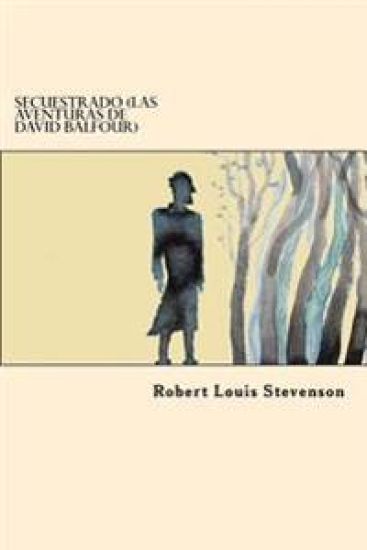
Secuestrado (Las aventuras de David Balfour)
Robert Louis Stevenson
Createspace Independent Publishing Platform
2017
nidottu
David Balfour, un muchacho atrevido y orgulloso como el Jim de La isla del Tesoro, se ve envuelto en una doble serie de aventuras: las producidas por su propia situaci n personal -un hu rfano a quien le han usurpado la herencia- y las derivadas de su encuentro con Alan Breck, que lo sumergen en el transfondo sociopol tico de las secuelas de la guerra civil inglesa del siglo XVIII, mientras se inicia en su nueva condici n de adulto. Al inter s del relato hay que sumar la belleza de la prosa limpia y musical de Stevenson, de quien dijo Chesterton: Fue un hombre universal, y dijo cosas sensatas no solo sobre todos los asuntos, sino, dentro de lo l gicamente posible, en todos los sentidos.
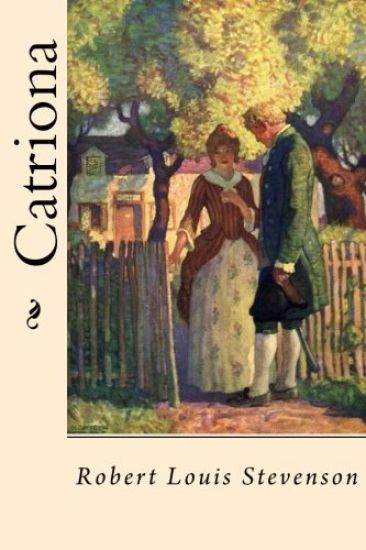
Catriona (Spanish Edition)
Robert Louis Stevenson
Createspace Independent Publishing Platform
2017
nidottu

La Flecha Negra (Spanish) Edition
Robert Louis Stevenson
Createspace Independent Publishing Platform
2017
nidottu
La Flecha Negra es una novela hist rica, la novela comienza en Tunstall; Richard "Dick" Shelton y Bennet Hatch tratan de reclutar al arquero Appleyard. De pronto, una flecha surge del bosque y mata al veterano soldado, en el proyectil se lee: Ten a en el cinto cuatro flechas negras por las cuatro penas que he soportadoy para los cuatro hombres malvados que nos tiranizan y nos atropellan...