Kirjojen hintavertailu – 12 859 826 kirjaa ja 27 kauppaa

Kirjailija

Robert Louis Stevenson

Kirjat ja teokset yhdessä paikassa: 3 236 kirjaa, julkaisuja vuosilta 1878–2027, suosituimpiin kuuluu The Strange Case of Dr Jekyll and Mr Hyde and Other Tales of Terror. Vertaile teosten hintoja ja tarkista saatavuus suomalaisista kirjakaupoista.

Nimi esiintyy myös muodoissa: Robert-Louis Stevenson, Robert Louis Stevenson

3 236 kirjaa

Kirjojen julkaisuvuodet: 1878–2027.

Treasure Island By: Robert Louis Stevenson, illustrated By: N. C. Wyeth: Classics for Younger Readers. Newell Convers Wyeth (October 22, 1
Treasure Island is an adventure novel by Scottish author Robert Louis Stevenson, narrating a tale of "buccaneers and buried gold". Its influence is enormous on popular perceptions of pirates, including such elements as treasure maps marked with an "X", schooners, the Black Spot, tropical islands, and one-legged seamen bearing parrots on their shoulders. PLOT: PART I-"THE OLD BUCCANEER" An old sailor, calling himself "the captain"-real name "Billy" Bones-comes to lodge at the Admiral Benbow Inn on the west English coast during the mid-1700s, paying the innkeeper's son, Jim Hawkins, a few pennies to keep a lookout for a one-legged "seafaring man". A seaman with intact legs shows up, frightening Billy-who drinks far too much rum-into a stroke, and Billy tells Jim that his former shipmates covet the contents of his sea chest. After a visit from yet another man, Billy has another stroke and dies; Jim and his mother (his father has also died just a few days before) unlock the sea chest, finding some money, a journal, and a map. The local physician, Dr. Livesey, deduces that the map is of an island where a deceased pirate-Captain Flint-buried a vast treasure. The district squire, Trelawney, proposes buying a ship and going after the treasure, taking Livesey as ship's doctor and Jim as cabin boy. PART II-"THE SEA COOK" Several weeks later, Trelawney sends for Jim and Livesey and introduces them to "Long John" Silver, a one-legged Bristol tavern-keeper whom he has hired as ship's cook. (Silver enhances his outre attributes-crutch, pirate argot, etc.-with a talking parrot.) They also meet Captain Smollett, who tells them that he dislikes most of the crew on the voyage, which it seems everyone in Bristol knows is a search for treasure. After taking a few precautions, however, they set sail on Trelawny's schooner, the Hispaniola, for the distant island. During the voyage, the first mate, a drunkard, disappears overboard. And just before the island is sighted, Jim-concealed in an apple barrel-overhears Silver talking with two other crewmen. They are all former "gentlemen o'fortune" (pirates) in Flint's crew and have planned a mutiny. Jim alerts the captain, doctor, and squire, and they calculate that they will be seven to 19 against the mutineers and must pretend not to suspect anything until the treasure is found when they can surprise their adversaries. PART III-"MY SHORE ADVENTURE" But after the ship is anchored, Silver and some of the others go ashore, and two men who refuse to join the mutiny are killed-one with so loud a scream that everyone realizes there can be no more pretense. Jim has impulsively joined the shore party and covertly witnessed Silver committing one of the murders; now, in fleeing, he encounters a half-crazed Englishman, Ben Gunn, who tells him he was marooned here and can help against the mutineers in return for passage home and part of the treasure............... Robert Louis Balfour Stevenson (13 November 1850 - 3 December 1894) was a Scottish novelist, poet, essayist, and travel writer. His most famous works are Treasure Island, Kidnapped, Strange Case of Dr Jekyll and Mr Hyde, and A Child's Garden of Verses. Newell Convers Wyeth (October 22, 1882 - October 19, 1945), known as N. C. Wyeth, was an American artist and illustrator. He was the pupil of artist Howard Pyle and became one of America's greatest illustrators. 1] During his lifetime, Wyeth created over 3,000 paintings and illustrated 112 books, 2] 25 of them for Scribner's, the Scribner Classics, which is the work for which he is best known. The first of these, Treasure Island, was one of his masterpieces and the proceeds paid for his studio. Wyeth was a realist painter just as the camera and photography began to compete with his craft.....
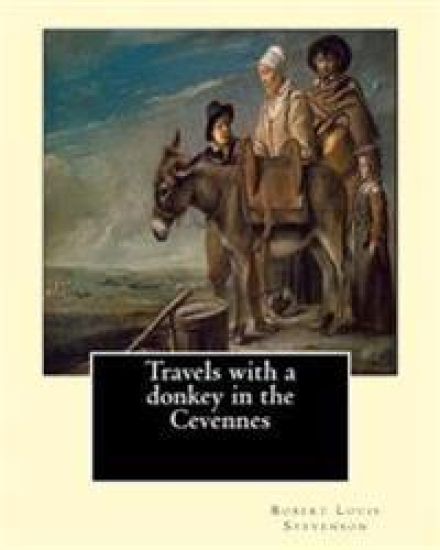
Travels with a donkey in the Cevennes By: Robert Louis Stevenson, illustrated By: Walter Crane (15 August 1845 - 14 March 1915): Travels with a Donkey
Travels with a Donkey in the Cevennes (1879) is one of Robert Louis Stevenson's earliest published works and is considered a pioneering classic of outdoor literature. Background: Stevenson was in his late 20s and still dependent on his parents for support. His journey was designed to provide material for publication while allowing him to distance himself from a love affair with an American woman of which his friends and families did not approve and who had returned to her husband in California. Travels recounts Stevenson's 12-day, 200 kilometres (120 mi) solo hiking journey through the sparsely populated and impoverished areas of the C vennes mountains in south-central France in 1878. The terrain, with its barren rocky heather-filled hillsides, he often compared to parts of Scotland. The other principal character is Modestine, a stubborn, manipulative donkey he could never quite master. It is one of the earliest accounts to present hiking and camping outdoors as a recreational activity. It also tells of commissioning one of the first sleeping bags, large and heavy enough to require a donkey to carry. Stevenson is several times mistaken for a peddler, the usual occupation of someone traveling in his fashion. Some locals are horrified that he would sleep outdoors and suggest it is dangerous to do so because of wolves or robbers. Stevenson provides the reader with the philosophy behind his undertaking: 2] For my part, I travel not to go anywhere, but to go. I travel for travel's sake. The great affair is to move; to feel the needs and hitches of our life more clearly; to come down off this feather-bed of civilization, and find the globe granite underfoot and strewn with cutting flints. Alas, as we get up in life, and are more preoccupied with our affairs, even a holiday is a thing that must be worked for. To hold a pack upon a pack-saddle against a gale out of the freezing north is no high industry, but it is one that serves to occupy and compose the mind. And when the present is so exacting who can annoy himself about the future? The C vennes was the site of a Protestant rebellion around 1702, severely suppressed by Catholic Louis XIV. The Protestant insurgents were known as the Camisards. Stevenson was Protestant by upbringing, and a non-believer by philosophy. Stevenson was well-versed in the history and evokes scenes from the rebellion as he passes through the area of the rebellion during the final days of his trek. He notes that the Catholics and the Protestants, at the time of his travels, live peaceably alongside one another, though each community is faithful to its own traditions and its version of the region's history. All disapprove equally of a young Catholic man who married a Protestant girl and changed his faith, agreeing that "It's a bad idea for a man to change." As for a Catholic priest who left the priesthood and married, the sentiment common to all was that it is wrong to change one's commitments. The book appeared the following year, 1879, and is dedicated to his friend Sidney Colvin, an art historian and critic who had befriended him when he was unpublished and seeking to develop a career as a writer. Walter Crane (15 August 1845 - 14 March 1915) was an English artist and book illustrator. Robert Louis Balfour Stevenson (13 November 1850 - 3 December 1894) was a Scottish novelist, poet, essayist, and travel writer. His most famous works are Treasure Island, Kidnapped, Strange Case of Dr Jekyll and Mr Hyde, and A Child's Garden of Verses.
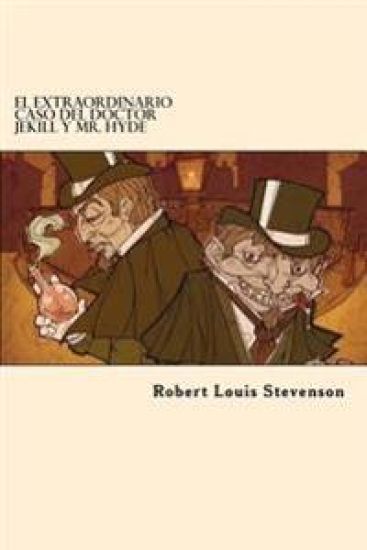
El Extraordinario Caso del Doctor Jekill y Mr. Hyde (Spanish Edition)

El Extraordinario Caso del Doctor Jekill y Mr. Hyde (Spanish Edition)

Robert Louis Stevenson

Createspace Independent Publishing Platform
2017
nidottu
Esta memorable novela de Robert Louis Stevenson es una alegor a moral, un magistral relato de misterio que sucesivas generaciones de lectores han convertido en un cl sico de la literatura universal. El extra o caso del Dr. Jekyll y Mr. Hyde es una mezcla de misterio, terror y ciencia ficci n, que se inmortaliz como la historia del hombre y la bestia. En una Londres envuelta en niebla y fr o, suceden hechos incre bles que revelan el lado oscuro del alma humana. El n cleo de la obra radica en la dualidad del esp ritu humano, balance ndose entre los principios del bien y del mal, y conduciendo al protagonista a una doble personalidad mediante los efectos de una p cima cient fica. En una historia que ntimamente nos involucra, la moraleja de este relato, es que el mal est dentro de nosotros, es un constituyente de nuestro ser; podemos derrotarlo pero jam s eliminbarlo del todo y no debemos jugar con l o de lo contrario corremos el riesgo de que nos destruya como al Dr. Jekyll.
Catriona (Spanish) Edition

Catriona (Spanish) Edition

Robert Louis Stevenson

Createspace Independent Publishing Platform
2017
nidottu
Robert Louis Balfour Stevenson novelista, poeta y ensayista escoc s. Su legado es una vasta obra que incluye cr nicas de viaje, novelas de aventuras e hist ricas, as como l rica y ensayos. Se lo conoce principalmente por ser el autor de algunas de las historias fant sticas y de aventuras m s cl sicas de la literatura juvenil.
Virginibus puerisque, and other papers By: Robert Louis Stevenson: Memories and Portrait by Robert Louis Stevenson
Robert Louis Balfour Stevenson (13 November 1850 - 3 December 1894) was a Scottish novelist, poet, essayist, and travel writer. His most famous works are Treasure Island, Kidnapped, Strange Case of Dr Jekyll and Mr Hyde, and A Child's Garden of Verses. A literary celebrity during his lifetime, Stevenson now ranks as the 26th most translated author in the world. His works have been admired by many other writers, including Jorge Luis Borges, Bertolt Brecht, Marcel Proust, Arthur Conan Doyle, Henry James, Cesare Pavese, Emilio Salgari, Ernest Hemingway, Rudyard Kipling, Jack London, Vladimir Nabokov, J. M. Barrie, and G. K. Chesterton, who said of him that he "seemed to pick the right word up on the point of his pen, like a man playing spillikins" Stevenson was born at 8 Howard Place, Edinburgh, Scotland, on 13 November 1850, to Thomas Stevenson (1818-87), a leading lighthouse engineer, and his wife Margaret Isabella (born Balfour; 1829-97). He was christened Robert Lewis Balfour Stevenson. At about age 18, Stevenson was to change the spelling of "Lewis" to "Louis", and in 1873, he dropped "Balfour". Lighthouse design was the family's profession: Thomas's father (Robert's grandfather) was the famous Robert Stevenson, and both of Thomas's brothers (Robert's uncles) Alan and David, were in the same field. 9] Indeed, even Thomas's maternal grandfather, Thomas Smith, had been in the same profession. However, Robert's mother's family were not of the same profession. Margaret's natal family, the Balfours, were gentry, tracing their lineage back to a certain Alexander Balfour who had held the lands of Inchyra in Fife in the fifteenth century. Margaret's father, Lewis Balfour (1777-1860), was a minister of the Church of Scotland at nearby Colinton, and her siblings included the physician George William Balfour and the marine engineer James Balfour. Stevenson spent the greater part of his boyhood holidays in his maternal grandfather's house. "Now I often wonder," wrote Stevenson, "what I inherited from this old minister. I must suppose, indeed, that he was fond of preaching sermons, and so am I, though I never heard it maintained that either of us loved to hear them." Lewis Balfour and his daughter both had weak chests, so they often needed to stay in warmer climates for their health. Stevenson inherited a tendency to coughs and fevers, exacerbated when the family moved to a damp, chilly house at 1 Inverleith Terrace in 1851. The family moved again to the sunnier 17 Heriot Row when Stevenson was six years old, but the tendency to extreme sickness in winter remained with him until he was eleven. Illness would be a recurrent feature of his adult life and left him extraordinarily thin. Contemporary views were that he had tuberculosis, but more recent views are that it was bronchiectasis or even sarcoidosis. Stevenson's parents were both devout and serious Presbyterians, but the household was not strict in its adherence to Calvinist principles. His nurse, Alison Cunningham (known as Cummy), was more fervently religious. Her Calvinism and folk beliefs were an early source of nightmares for the child, and he showed a precocious concern for religion. But she also cared for him tenderly in illness, reading to him from Bunyan and the Bible as he lay sick in bed and telling tales of the Covenanters. Stevenson recalled this time of sickness in "The Land of Counterpane" in A Child's Garden of Verses (1885), dedicating the book to his nurse. An only child, strange-looking and eccentric, Stevenson found it hard to fit in when he was sent to a nearby school at age six, a problem repeated at age eleven when he went on to the Edinburgh Academy; but he mixed well in lively games with his cousins in summer holidays at Colinton......................
An Inland Voyage (1878). By: Robert Louis Stevenson: An Inland Voyage (1878) is a travelogue by Robert Louis Stevenson about a canoeing trip throug
An Inland Voyage (1878) is a travelogue by Robert Louis Stevenson about a canoeing trip through France and Belgium in 1876. It is Stevenson's earliest book and a pioneering work of outdoor literature. As a young man, Stevenson desired to be financially independent so that he might pursue the woman he loved, and set about funding his freedom from parental support by writing travelogues, the three most prominent being An Inland Voyage, Travels with a Donkey in the C vennes (1879) and The Silverado Squatters (1883). Voyage was undertaken with Stevenson's Scottish friend Sir Walter Grindlay Simpson, mostly along the Oise River from Belgium through France, in the Fall of 1876 when Stevenson was 26 years old. The first part, in Belgium, passed through heavily industrial areas and many canal locks, proving to be not much of a vacation. They then went by rail to France, starting downriver at Maubeuge and ending at Pontoise, close to the Seine. The route itinerary has become a popular route for modern travelers to re-enact with guidebooks and maps available. Stevenson (named "Arethusa" in the book after his canoe) and Simpson (called "Cigarette" along with his canoe) each had a wooden canoe rigged with a sail, comparable in style to a modern kayak, known as a "Rob Roy". They were narrow, decked, and paddled with double-bladed paddles, a style that had recently become popular in England, France, and neighboring countries, inspired by Scottish explorer John MacGregor's book A Thousand Miles in the Rob Roy Canoe (1866). Outdoor travel for leisure was unusual for the time, and the two Scotsmen were often mistaken for lowly traveling salesman (a status that more than once kept them from a room for the night), but the novelty of their canoes would occasion entire villages to come out and wave along the banks with cheers of "come back soon " A fundamentally Romantic work in style and tone, the book paints a delightful atmosphere of Europe in a more innocent time, with quirky innkeepers, traveling entertainers and puppeteers, old men who had never left their villages, ramshackle military units parading with drums and swords, and gypsy-like families who lived on canal barges. The first edition was published by C. Kegan Paul & Co. Since then there have been several editions; a later edition adds an adventure on foot in which Stevenson is thought to be a beggar and is tossed in jail by police, and also a preface by Stevenson's future wife Fanny Vandegrift Osbourne and stepson Lloyd Osbourne, who met him on this journey. Robert Louis Balfour Stevenson (13 November 1850 - 3 December 1894) was a Scottish novelist, poet, essayist, and travel writer. His most famous works are Treasure Island, Kidnapped, Strange Case of Dr Jekyll and Mr Hyde, and A Child's Garden of Verses.
Weir of Hermiston; an unfinished romance (1896). By: Robert Louis Stevenson: Weir of Hermiston (1896) is an unfinished novel
Weir of Hermiston (1896) is an unfinished novel by Robert Louis Stevenson. It is markedly different from his previous works in style and has often been praised as a potential masterpiece. It was cut short by Stevenson's sudden death in 1894 from a cerebral hemorrhage. The novel is set at the time of the Napoleonic Wars. The novel tells the story of Archie Weir, a youth born into an upper-class Edinburgh family. Because of his Romantic sensibilities and sensitivity, Archie is estranged from his father, who is depicted as the coarse and cruel judge of a criminal court. By mutual consent, Archie is banished from his family of origin and sent to live as the local laird on a family property in the vicinity of the Borders hamlet Hermiston. While serving as the laird, Archie meets and falls in love with Kirstie (Christina). As the two are deepening their relationship, the book breaks off. Confusingly, there are two characters in the novel called Christina, the younger of whom is Archie's sweetheart.......... Robert Louis Balfour Stevenson (13 November 1850 - 3 December 1894) was a Scottish novelist, poet, essayist, and travel writer. His most famous works are Treasure Island, Kidnapped, Strange Case of Dr Jekyll and Mr Hyde, and A Child's Garden of Verses. A literary celebrity during his lifetime, Stevenson now ranks as the 26th most translated author in the world. His works have been admired by many other writers, including Jorge Luis Borges, Bertolt Brecht, Marcel Proust, Arthur Conan Doyle, Henry James, Cesare Pavese, Emilio Salgari, Ernest Hemingway, Rudyard Kipling, Jack London, Vladimir Nabokov, J. M. Barrie, and G. K. Chesterton, who said of him that he "seemed to pick the right word up on the point of his pen, like a man playing spillikins" Stevenson was born at 8 Howard Place, Edinburgh, Scotland, on 13 November 1850, to Thomas Stevenson (1818-87), a leading lighthouse engineer, and his wife Margaret Isabella (born Balfour; 1829-97). He was christened Robert Lewis Balfour Stevenson. At about age 18, Stevenson was to change the spelling of "Lewis" to "Louis", and in 1873, he dropped "Balfour". Lighthouse design was the family's profession: Thomas's father (Robert's grandfather) was the famous Robert Stevenson, and both of Thomas's brothers (Robert's uncles) Alan and David, were in the same field. 9] Indeed, even Thomas's maternal grandfather, Thomas Smith, had been in the same profession. However, Robert's mother's family were not of the same profession. Margaret's natal family, the Balfours, were gentry, tracing their lineage back to a certain Alexander Balfour who had held the lands of Inchyra in Fife in the fifteenth century. Margaret's father, Lewis Balfour (1777-1860), was a minister of the Church of Scotland at nearby Colinton, and her siblings included the physician George William Balfour and the marine engineer James Balfour. Stevenson spent the greater part of his boyhood holidays in his maternal grandfather's house. "Now I often wonder," wrote Stevenson, "what I inherited from this old minister. I must suppose, indeed, that he was fond of preaching sermons, and so am I, though I never heard it maintained that either of us loved to hear them." Lewis Balfour and his daughter both had weak chests, so they often needed to stay in warmer climates for their health. Stevenson inherited a tendency to coughs and fevers, exacerbated when the family moved to a damp, chilly house at 1 Inverleith Terrace in 1851. The family moved again to the sunnier 17 Heriot Row when Stevenson was six years old, but the tendency to extreme sickness in winter remained with him until he was eleven. Illness would be a recurrent feature of his adult life and left him extraordinarily thin. Contemporary views were that he had tuberculosis, but more recent views are that it was bronchiectasis or even sarcoidosis.
Strange Case of Dr Jekyll and MR Hyde (1886). by: Robert Louis Stevenson: Novella

Strange Case of Dr Jekyll and MR Hyde (1886). by: Robert Louis Stevenson: Novella

Robert Louis Stevenson

Createspace Independent Publishing Platform
2017
nidottu
Strange Case of Dr Jekyll and Mr Hyde is a novella by the Scottish author Robert Louis Stevenson first published in 1886. The work is also known as The Strange Case of Dr. Jekyll and Mr. Hyde, Dr. Jekyll and Mr. Hyde, or simply Jekyll & Hyde. It is about a London lawyer named Gabriel John Utterson who investigates strange occurrences between his old friend, Dr Henry Jekyll, and the evil Edward Hyde. The novella's impact is such that it has become a part of the language, with the very phrase "Jekyll and Hyde" coming to mean a person who is vastly different in moral character from one situation to the next. Plot: Gabriel John Utterson and his cousin Richard Enfield reach the door of a large house on their weekly walk. Enfield tells Utterson that months ago he saw a sinister-looking man named Edward Hyde trample a young girl after accidentally bumping into her. Enfield forced Hyde to pay 100 to avoid a scandal. Hyde brought them to this door and provided a cheque signed by a reputable gentleman (later revealed to be Dr. Henry Jekyll, a friend and client of Utterson). Utterson is disturbed because Jekyll recently changed his will to make Hyde the sole beneficiary. Utterson fears that Hyde is blackmailing Jekyll. When Utterson tries to discuss Hyde with Jekyll, Jekyll turns pale and asks that Hyde be left alone. One night in October, a servant sees Hyde beat to death Sir Danvers Carew, another of Utterson's clients. The police contact Utterson, who leads officers to Hyde's apartment. Hyde has vanished, but they find half of a broken cane. Utterson recognizes the cane as one he had given to Jekyll. Utterson visits Jekyll, who shows Utterson a note, allegedly written to Jekyll by Hyde, apologising for the trouble that he has caused. However, Hyde's handwriting is similar to Jekyll's own, leading Utterson to conclude that Jekyll forged the note to protect Hyde. For two months, Jekyll reverts to his former sociable manner, but in early January, he starts refusing visitors. Dr. Hastie Lanyon, a mutual acquaintance of Jekyll and Utterson, dies of shock after receiving information relating to Jekyll. Before his death, Lanyon gives Utterson a letter to be opened after Jekyll's death or disappearance. In late February, during another walk with Enfield, Utterson starts a conversation with Jekyll at a window of his laboratory. Jekyll suddenly slams the window and disappears. In early March, Jekyll's butler, Mr. Poole, visits Utterson and says Jekyll has secluded himself in his laboratory for weeks. Utterson and Poole break into the laboratory, where they find Hyde wearing Jekyll's clothes and apparently dead from suicide. They find a letter from Jekyll to Utterson. Utterson reads Lanyon's letter, then Jekyll's. Lanyon's letter reveals his deterioration resulted from the shock of seeing Hyde drink a serum that turned him into Jekyll. Jekyll's letter explains that he had indulged in unstated vices and feared discovery. He found a way to transform himself and thereby indulge his vices without fear of detection. Jekyll's transformed personality, Hyde, was evil, self-indulgent, and uncaring to anyone but himself. Initially, Jekyll controlled the transformations with the serum, but one night in August, he became Hyde involuntarily in his sleep. Jekyll resolved to cease becoming Hyde. One night, he had a moment of weakness and drank the serum. Hyde, furious at having been caged for so long, killed Carew. Horrified, Jekyll tried more adamantly to stop the transformations. Then, in early January, he transformed involuntarily while awake..... Robert Louis Balfour Stevenson (13 November 1850 - 3 December 1894) was a Scottish novelist, poet, essayist, and travel writer.
Fables By: Robert Louis Stevenson: Robert Louis Balfour Stevenson (13 November 1850 - 3 December 1894) was a Scottish novelist, p
Robert Louis Balfour Stevenson (13 November 1850 - 3 December 1894) was a Scottish novelist, poet, essayist, and travel writer. His most famous works are Treasure Island, Kidnapped, Strange Case of Dr Jekyll and Mr Hyde, and A Child's Garden of Verses. A literary celebrity during his lifetime, Stevenson now ranks as the 26th most translated author in the world. His works have been admired by many other writers, including Jorge Luis Borges, Bertolt Brecht, Marcel Proust, Arthur Conan Doyle, Henry James, Cesare Pavese, Emilio Salgari, Ernest Hemingway, Rudyard Kipling, Jack London, Vladimir Nabokov, J. M. Barrie, and G. K. Chesterton, who said of him that he "seemed to pick the right word up on the point of his pen, like a man playing spillikins" Stevenson was born at 8 Howard Place, Edinburgh, Scotland, on 13 November 1850, to Thomas Stevenson (1818-87), a leading lighthouse engineer, and his wife Margaret Isabella (born Balfour; 1829-97). He was christened Robert Lewis Balfour Stevenson. At about age 18, Stevenson was to change the spelling of "Lewis" to "Louis", and in 1873, he dropped "Balfour". Lighthouse design was the family's profession: Thomas's father (Robert's grandfather) was the famous Robert Stevenson, and both of Thomas's brothers (Robert's uncles) Alan and David, were in the same field. 9] Indeed, even Thomas's maternal grandfather, Thomas Smith, had been in the same profession. However, Robert's mother's family were not of the same profession. Margaret's natal family, the Balfours, were gentry, tracing their lineage back to a certain Alexander Balfour who had held the lands of Inchyra in Fife in the fifteenth century. Margaret's father, Lewis Balfour (1777-1860), was a minister of the Church of Scotland at nearby Colinton, and her siblings included the physician George William Balfour and the marine engineer James Balfour. Stevenson spent the greater part of his boyhood holidays in his maternal grandfather's house. "Now I often wonder," wrote Stevenson, "what I inherited from this old minister. I must suppose, indeed, that he was fond of preaching sermons, and so am I, though I never heard it maintained that either of us loved to hear them." Lewis Balfour and his daughter both had weak chests, so they often needed to stay in warmer climates for their health. Stevenson inherited a tendency to coughs and fevers, exacerbated when the family moved to a damp, chilly house at 1 Inverleith Terrace in 1851. The family moved again to the sunnier 17 Heriot Row when Stevenson was six years old, but the tendency to extreme sickness in winter remained with him until he was eleven. Illness would be a recurrent feature of his adult life and left him extraordinarily thin. Contemporary views were that he had tuberculosis, but more recent views are that it was bronchiectasis or even sarcoidosis. Stevenson's parents were both devout and serious Presbyterians, but the household was not strict in its adherence to Calvinist principles. His nurse, Alison Cunningham (known as Cummy), was more fervently religious. Her Calvinism and folk beliefs were an early source of nightmares for the child, and he showed a precocious concern for religion. But she also cared for him tenderly in illness, reading to him from Bunyan and the Bible as he lay sick in bed and telling tales of the Covenanters. Stevenson recalled this time of sickness in "The Land of Counterpane" in A Child's Garden of Verses (1885), dedicating the book to his nurse. An only child, strange-looking and eccentric, Stevenson found it hard to fit in when he was sent to a nearby school at age six, a problem repeated at age eleven when he went on to the Edinburgh Academy; but he mixed well in lively games with his cousins in summer holidays at Colinton....
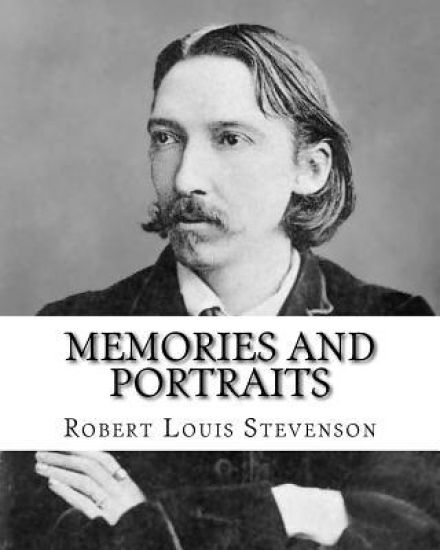
Memories and portraits By: Robert Louis Stevenson: Memories and Portraits is a collection of essays by Robert Louis Stevenson, first published in 1887
Memories and Portraits is a collection of essays by Robert Louis Stevenson, first published in 1887. Robert Louis Balfour Stevenson (13 November 1850 - 3 December 1894) was a Scottish novelist, poet, essayist, and travel writer. His most famous works are Treasure Island, Kidnapped, Strange Case of Dr Jekyll and Mr Hyde, and A Child's Garden of Verses. A literary celebrity during his lifetime, Stevenson now ranks as the 26th most translated author in the world. His works have been admired by many other writers, including Jorge Luis Borges, Bertolt Brecht, Marcel Proust, Arthur Conan Doyle, Henry James, Cesare Pavese, Emilio Salgari, Ernest Hemingway, Rudyard Kipling, Jack London, Vladimir Nabokov, J. M. Barrie, and G. K. Chesterton, who said of him that he "seemed to pick the right word up on the point of his pen, like a man playing spillikins" Stevenson was born at 8 Howard Place, Edinburgh, Scotland, on 13 November 1850, to Thomas Stevenson (1818-87), a leading lighthouse engineer, and his wife Margaret Isabella (born Balfour; 1829-97). He was christened Robert Lewis Balfour Stevenson. At about age 18, Stevenson was to change the spelling of "Lewis" to "Louis", and in 1873, he dropped "Balfour". Lighthouse design was the family's profession: Thomas's father (Robert's grandfather) was the famous Robert Stevenson, and both of Thomas's brothers (Robert's uncles) Alan and David, were in the same field. 9] Indeed, even Thomas's maternal grandfather, Thomas Smith, had been in the same profession. However, Robert's mother's family were not of the same profession. Margaret's natal family, the Balfours, were gentry, tracing their lineage back to a certain Alexander Balfour who had held the lands of Inchyra in Fife in the fifteenth century. Margaret's father, Lewis Balfour (1777-1860), was a minister of the Church of Scotland at nearby Colinton, and her siblings included the physician George William Balfour and the marine engineer James Balfour. Stevenson spent the greater part of his boyhood holidays in his maternal grandfather's house. "Now I often wonder," wrote Stevenson, "what I inherited from this old minister. I must suppose, indeed, that he was fond of preaching sermons, and so am I, though I never heard it maintained that either of us loved to hear them." Lewis Balfour and his daughter both had weak chests, so they often needed to stay in warmer climates for their health. Stevenson inherited a tendency to coughs and fevers, exacerbated when the family moved to a damp, chilly house at 1 Inverleith Terrace in 1851. The family moved again to the sunnier 17 Heriot Row when Stevenson was six years old, but the tendency to extreme sickness in winter remained with him until he was eleven. Illness would be a recurrent feature of his adult life and left him extraordinarily thin. Contemporary views were that he had tuberculosis, but more recent views are that it was bronchiectasis or even sarcoidosis. Stevenson's parents were both devout and serious Presbyterians, but the household was not strict in its adherence to Calvinist principles. His nurse, Alison Cunningham (known as Cummy), was more fervently religious. Her Calvinism and folk beliefs were an early source of nightmares for the child, and he showed a precocious concern for religion. But she also cared for him tenderly in illness, reading to him from Bunyan and the Bible as he lay sick in bed and telling tales of the Covenanters. Stevenson recalled this time of sickness in "The Land of Counterpane" in A Child's Garden of Verses (1885), dedicating the book to his nurse. An only child, strange-looking and eccentric, Stevenson found it hard to fit in when he was sent to a nearby school at age six, a problem repeated at age eleven when he went on to the Edinburgh Academy;
Catriona

Catriona

Robert Louis Stevenson

Hansebooks
2017
pokkari
Catriona is an unchanged, high-quality reprint of the original edition of 1892. Hansebooks is editor of the literature on different topic areas such as research and science, travel and expeditions, cooking and nutrition, medicine, and other genres. As a publisher we focus on the preservation of historical literature. Many works of historical writers and scientists are available today as antiques only. Hansebooks newly publishes these books and contributes to the preservation of literature which has become rare and historical knowledge for the future.
Oxford Children's Classics: Kidnapped

Oxford Children's Classics: Kidnapped

Robert Louis Stevenson

Oxford University Press
2017
nidottu
Danger! Shipwreck! Drama! Revenge! Join 17-year-old Davie Balfour as he's betrayed by his uncle, involved in a shipwreck, rescued by wanted rebel Alan Breck, and together they set off across the treacherous highlands on a quest for justice . . . and revenge! Oxford Children's Classics present not only the original and unabridged story of Kidnapped but also help you to discover a whole world of new adventures with an amazing assortment of recommendations and activities.