Kirjojen hintavertailu – 12 903 735 kirjaa ja 27 kauppaa

Kirjailija

Robert Thomas

Kirjat ja teokset yhdessä paikassa: 47 kirjaa, julkaisuja vuosilta 1999–2026, suosituimpiin kuuluu Practical Guide to ICP-MS and Other Atomic Spectroscopy Techniques. Vertaile teosten hintoja ja tarkista saatavuus suomalaisista kirjakaupoista.

47 kirjaa

Kirjojen julkaisuvuodet: 1999–2026.

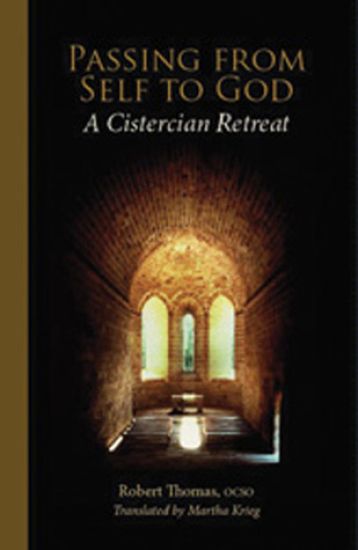
Passing From Self To God

Passing From Self To God

Robert Thomas

Liturgical Press
2006
pokkari
Those seeking to deepen their spiritual life are increasingly being drawn to monasteries and the monastic round of prayer and reflection. Yet rarely do temporary visitors have enough time to absorb as much as they would like about the spiritual life. In this book an experience spiritual master, a monk of Sept-Fons abbey in France, provides an intensive directed retreat which relies heavily on the rich Cistercian Spiritual tradition. Readers are at liberty to read and digest at their own pace, while savoring the author's contagious enthusiasm for the values and attitudes he learned from the monastic way and the Cistercian Fathers he studied throughout his long life. Extensive quotations from early Cistercian writers also make the book an excellent introduction to the thought of these medieval monks and the tradition they created and bequeathed to generation of monks and nuns. Quotations are grouped by topic, making it easy to compare the thoughts of various Fathers on a single subject, and an index of citations is provided. Robert Thomas, OCSO, (1911-2002), was born in Paris and entered the monastery of Sept-Fons in 1928. He studied at the Gregorian University in Rome and was ordained priest in 1937. In addition to serving as prior of his monastery, professor of theology and of Sacred Scripture, and chaplain to Cistercian nuns, he was instrumental in publishing translations, into French, of the early Cistercian Fathers in the pioneering series, Pain de Citeaux. The author of numerous books, Fr. Robert Thomas died in 2002 at the age of ninety-one, a student of the Cistercian tradition to the end.

Door to Door

Door to Door

Robert Thomas

Fordham University Press
2002
pokkari
Winner of the 2001 Poets Out Loud Prize, Door to Door ranges from the wry romance of "Changing the Oil" ("You make love the way you change the oil in your Oldsmobile") to the salesman in the title poem who sees "what the glacier sees in the onslaught of spring." The poems stand at the crossroads of mystery and love, hoping to trade their soul for Federico García Lorca's guitar, or perhaps Jimi Hendrix'.
Door to Door

Door to Door

Robert Thomas

Fordham University Press
2002
sidottu
Winner of the 2001 Poets Out Loud Prize, Door to Door ranges from the wry romance of "Changing the Oil" ("You make love the way you change the oil in your Oldsmobile") to the salesman in the title poem who sees "what the glacier sees in the onslaught of spring." The poems stand at the crossroads of mystery and love, hoping to trade their soul for Federico García Lorca's guitar, or perhaps Jimi Hendrix'.
Legitimate Expectations and Proportionality in Administrative Law
This book presents a comparison of the development of legitimate expectations and proportionality in European and English law against the different traditions of administrative law. While these two principles are well established in European law,only in recent years have the English courts years sought to integrate them into the common law and have experienced various difficulties in doing so. This book seeks to understand the motivation behind this development, explain why the English courts have been troubled by the principles and suggest how such difficulties can be resolved. It will be of interest to all administrative lawyers, both in practice and in academe. It will also be of interest to EU lawyers, particularly those interested in EU public law. Contents 1. Approaches to Administrative Law 2. The Integration of the Principles into English Law 3. Legitimate Expectations 4. Proportionality (I): European Doctrine and English Debate 5. Proportionality (II): Future Development 6. Conclusion
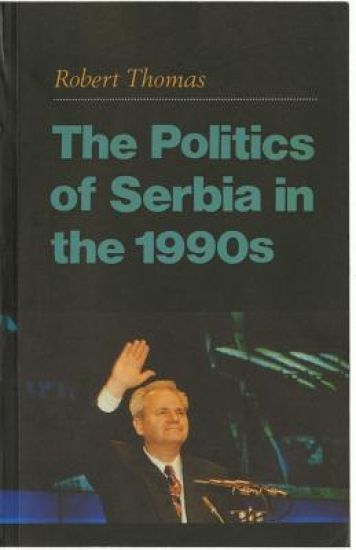
The Politics of Serbia in the 1990s

The Politics of Serbia in the 1990s

Robert Thomas

Columbia University Press
1999
pokkari
In recent years, the contemporary Serbian political scene has been a much-discussed topic in the international media yet untangling the complicated web of parties and factions has become a more difficult task. Robert Thomas carefully examines the complexities of modern Serbian politics, largely in the words of the political players themselves. Drawing from a vast body of interviews and news coverage in Serbian and international media, Thomas brings the shifting political positions of these actors into sharp focus. The Politics of Serbia in the 1990s illuminates the chronic factionalism that has frustrated any attempt to unseat Slobodan Milosevic from the presidency. Opposition leaders have gone through many successive shifts in overall platform and specific tactical maneuvers, and this trend has made it difficult for them to launch a sustained, effective challenge to Milosevic. The Serbian president, meanwhile, emerges as a cunning manipulator of popular prejudices who has managed to retain power while leading the country into blundered wars and deepening economic distress. Dissecting Serb politics of the past decade, Thomas's study opens with a detailed overview of Serbian history and its communist years, and political dissent during this era. The book continues with in-depth explorations of such subjects as the fragmentation of Serb politics during the most deadly years of fighting in the region, the nation's fragile electoral politics at several critical moments, the alliance of radical and socialist groups and its rapid disintegration, and the aftermath of the Dayton accords. The author provides a complete list of abbreviations and a comprehensive index.
Serbia Under Milosevic

Serbia Under Milosevic

Robert Thomas

C Hurst Co Publishers Ltd
1999
nidottu
This study examines, in the context of Serbia's political and cultural development, how in the late 1980s a faction within the Serbian Communist Party, led by Slobodon Milosevic, was able to exploit national and constitutional tensions within the former Yugoslavia in order to preserve its power.