Kirjojen hintavertailu – 12 903 725 kirjaa ja 27 kauppaa

Kirjailija

Rolf Steininger

Kirjat ja teokset yhdessä paikassa: 24 kirjaa, julkaisuja vuosilta 1997–2026, suosituimpiin kuuluu Ein Neues Land an Rhein Und Ruhr. Vertaile teosten hintoja ja tarkista saatavuus suomalaisista kirjakaupoista.

24 kirjaa

Kirjojen julkaisuvuodet: 1997–2026.

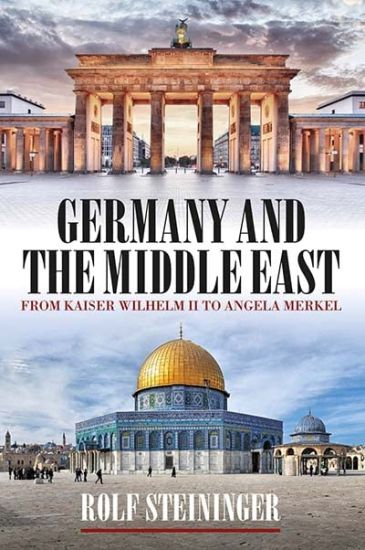
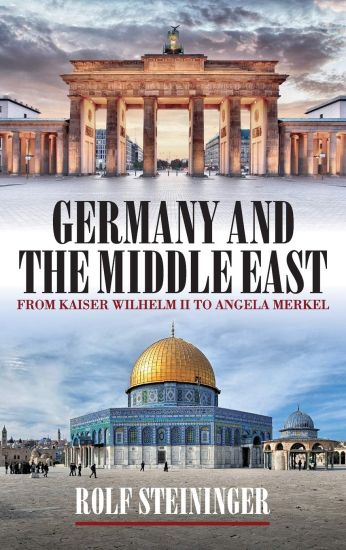
Germany and the Middle East

Germany and the Middle East

Rolf Steininger

BERGHAHN BOOKS
2026
pokkari
For over a century, the Middle East has weathered seemingly endless conflicts, ensnaring political players from around the world. And perhaps no nation has displayed a greater range of policies toward, and experiences in, the region than Germany, as this short and accessible volume demonstrates. Beginning with Kaiser Wilhelm’s intermittent support for Zionism, it follows the course of German-Mideast relations through two world wars and the rise of Adolf Hitler. As Steininger shows, the crimes of the Third Reich have inevitably shaped postwar German Mideast policy, with Germany emerging as one of Israel’s staunchest supporters while continuing to navigate the region’s complex international, religious, and energy politics.
Germany and the Middle East

Germany and the Middle East

Rolf Steininger

Berghahn Books
2018
sidottu
For over a century, the Middle East has weathered seemingly endless conflicts, ensnaring political players from around the world. And perhaps no nation has displayed a greater range of policies toward, and experiences in, the region than Germany, as this short and accessible volume demonstrates. Beginning with Kaiser Wilhelm’s intermittent support for Zionism, it follows the course of German-Mideast relations through two world wars and the rise of Adolf Hitler. As Steininger shows, the crimes of the Third Reich have inevitably shaped postwar German Mideast policy, with Germany emerging as one of Israel’s staunchest supporters while continuing to navigate the region’s complex international, religious, and energy politics.
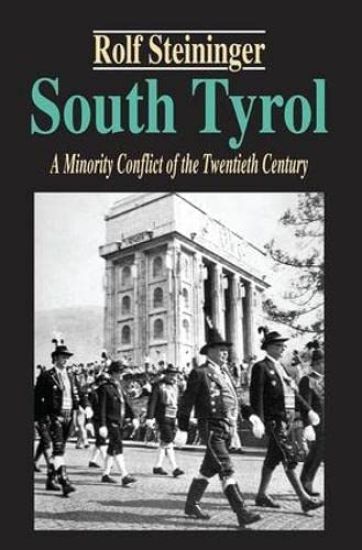
South Tyrol

South Tyrol

Rolf Steininger

Routledge
2017
sidottu
South Tyrol, a region in the heart of the Alps about half the size of Connecticut, brings into sharp focus an important part of twentieth-century history. Tyrol, a province that had been part of Austria for over 500 years and was almost totally German-speaking, was split in two after World War I and the southern part awarded to Italy as "spoils of war." The first phase to follow after the split of Tyrol was systematic subjection by the Italian Fascists of what had been a regional majority in South Tyrol, but was now a minority within Italy. In a second phase, to gain an Italian majority, the country was settled with Italians from the south, who had a totally different mentality from the Italians residing in South Tyrol. With the emergence of National Socialism in Germany, and eventually with the Hitler-Mussolini Agreement of 1939, a third phase emerged: an experiment in "ethnic cleansing" called the "Option." Eighty-six percent of all South Tyroleans agreed to leave South Tyrol and become citizens of "Greater Germany." After World War II, the region was not returned to Austria: South Tyrol became the first victim of the Cold War. It took almost forty years of hard bargaining before South Tyrol was granted real autonomy in 1969. This resolution is now regarded as a model for solving minority conflicts. Rolf Steininger traces the history of this troubled region during several periods: 1918-1922, in which he covers the period from the division of Tyrol to the march on Bozen; 1922-1938, in which he reviews fascist policy towards South Tyrol; the "Option" of 1939; the resettlement and so-called reunification from 1943-1945; South Tyrol's role as a bargaining chip in the Cold War, and the Gruber-Gasperi Agreement of 1946; and the volume closes with a discussion of the plan negotiated in 1969 for a new autonomy for South Tyrol that came to be known as the "Package.".

Austria, Germany, and the Cold War

Austria, Germany, and the Cold War

Rolf Steininger

Berghahn Books
2012
pokkari
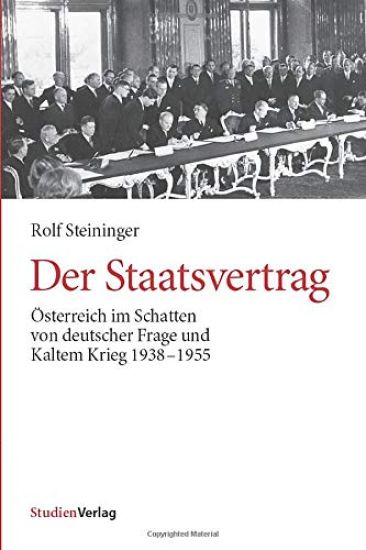
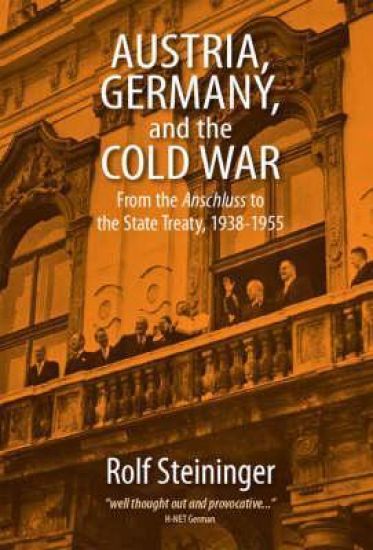
In the 'Moscow Declaration' of 1943 the Allies officially propagated the notion of Austria as the first victim of Hitlerite aggression and announced their intention to set up a "free and independent Austria" after the war, which finally happened in 1955. By questioning why it took so long to get to this point, the author addresses issues such as the victim thesis, Austrians as perpetrators, Austrian anti-Semitism and official attempts to mitigate its effects after the war. He discusses the various proposals for post-war Austria and connects for the first time the issues of Anschluss, German question, Cold War, and the State Treaty. He makes it clear that the question of Austria was from the very beginning inextricably linked with the more important question of Germany.
Austria, Germany, and the Cold War

Austria, Germany, and the Cold War

Rolf Steininger

Berghahn Books
2008
sidottu
In the 'Moscow Declaration' of 1943 the Allies officially propagated the notion of Austria as the first victim of Hitlerite aggression and announced their intention to set up a "free and independent Austria" after the war, which finally happened in 1955. By questioning why it took so long to get to this point, the author addresses issues such as the victim thesis, Austrians as perpetrators, Austrian anti-Semitism and official attempts to mitigate its effects after the war. He discusses the various proposals for post-war Austria and connects for the first time the issues of Anschluss, German question, Cold War, and the State Treaty. He makes it clear that the question of Austria was from the very beginning inextricably linked with the more important question of Germany.