Kirjojen hintavertailu – 12 859 819 kirjaa ja 27 kauppaa

Kirjailija

Romila Thapar

Kirjat ja teokset yhdessä paikassa: 22 kirjaa, julkaisuja vuosilta 2005–2026, suosituimpiin kuuluu Speaking of History. Vertaile teosten hintoja ja tarkista saatavuus suomalaisista kirjakaupoista.

22 kirjaa

Kirjojen julkaisuvuodet: 2005–2026.

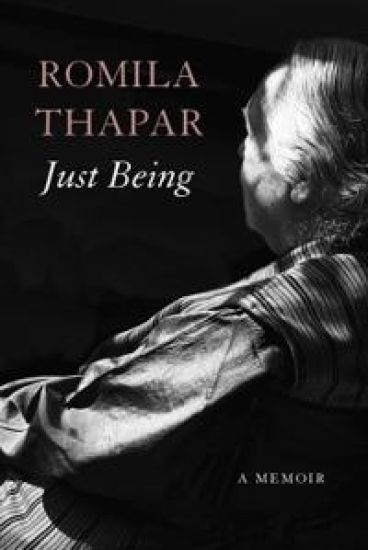
Just Being

Just Being

Romila Thapar

SEAGULL BOOKS LONDON LTD
2026
sidottu
Historian Romila Thapar reflects on a rich, path-breaking life—and the ideas, friendships, and journeys that shaped her. In Just Being, historian Romila Thapar invites us into her illustrious world—a rich, extensive memoir from a scholar who has profoundly shaped our understanding of India’s past and present. From her childhood growing up in British India, through her years of education in London, her extensive travels to archaeological sites across Asia and beyond, and her trailblazing role in shaping the Centre for Historical Studies at Jawaharlal Nehru University, Thapar reflects on a life lived in the service of inquiry and education. Composed over the past few years, Just Being is a testimony to Thapar’s ability to view herself within the larger flow of history, and to illumine it with a scholar’s depth and a storyteller’s sensitivity. It reveals not only an extraordinary, boundary-defying life but a profound conviction that understanding our past in the light of irrefutable evidence is essential to an insight into the present and to shaping a more thoughtful future.
The Idea of India

The Idea of India

Gayatri Chakravorty Spivak; Romila Thapar

SEAGULL BOOKS LONDON LTD
2024
sidottu
A lively discussion between two eminent Indian academics that examines what it means to be an Indian. Through a stimulating dialogue, two old friends trace the history of the idea of India through digressions, anecdotes, and observations. Historian Romila Thapar and theorist Gayatri Chakravorty Spivak reflect on the challenges posed by essentialism and exclusion whenever cultures attempt to define and assert themselves. They also emphasize the role of education in fostering a more inclusive and accurate understanding of the nation’s complex history. Their conversation revolves around the narratives that have shaped Indian identity—from Vedic times to the present—and those whose voices and visions for this land remain unheard and unseen. Ranging from nationalism to religion and beyond, TheIdea of India discusses an urgent question: What does it mean to be an Indian in contemporary society?
Our History, Their History, Whose History?

Our History, Their History, Whose History?

Romila Thapar

SEAGULL BOOKS LONDON LTD
2024
sidottu
An overview of nationalism and its impact on the study of history from one of India’s most prominent historians. In this timely book, historian Romila Thapar delves into the complex world of nationalism and its impact on the interpretations of the past and on the discipline of history itself. History, she expounds, is no mere collection of information and chronology, and its purpose extends well beyond storytelling. Recognizing nationalism as a powerful force that gives rise to various narratives that provide ancestry to communities and shape the direction of societies, Thapar explores how, in India, two conflicting notions of nationalism have evolved and shaped the idea of the nation. Today, one such nationalistic theory claims the victimization of one religious community by another through centuries of “misrule.” Such a claim willfully ignores ample evidence to the contrary to suit a particular political and ideological purpose. Thapar counters such attempts at misrepresentation by citing several historical instances of the nuanced interface and intermingling of cultures, as well as by showing how today’s conflicts have their roots in the British colonial construction of India’s history. She also addresses the recent controversy surrounding the deletions of sections of Indian history textbooks published by NCERT, the Indian educational council, and suggests that the intention is more likely to be the promotion of a particular reading of history that conforms to the ideology of those in power. Engaging and thought-provoking, Our History, Their History, Whose History? invites readers to question the authenticity of historical narratives touted by one group of nationalists, and it explores the clash between professional historians who study the past to understand our inherited present and fabricators who wield history for political gain.
Voices of Dissent – An Essay

Voices of Dissent – An Essay

Romila Thapar

SEAGULL BOOKS LONDON LTD
2023
nidottu
Written by one of India’s best-known public intellectuals, this book is essential reading for anyone interested in India’s fascinating history as well as the direction in which the nation is headed. People have argued since time immemorial. Disagreement is a part of life, of human experience. But we now live in times when any form of protest in India is marked as anti-Indian and met with arguments that the very concept of dissent was imported into India from the West. As Romila Thapar explores in her timely historical essay, however, dissent has a long history in the subcontinent, even if its forms have evolved through the centuries. In Voices of Dissent: An Essay, Thapar looks at the articulation of nonviolent dissent and relates it to various pivotal moments throughout India’s history. Beginning with Vedic times, she takes us from the second to the first millennium BCE, to the emergence of groups that were jointly called the Shramanas—the Jainas, Buddhists, and Ajivikas. Going forward in time, she also explores the views of the Bhakti sants and others of the fifteenth and sixteenth centuries and brings us to a major moment of dissent that helped to establish a free and democratic India: Mahatma Gandhi’s satyagraha. Then Thapar places in context the recent peaceful protests against India’s new, controversial citizenship law, maintaining that dissent in our time must be opposed to injustice and supportive of democratic rights so that society may change for the better.
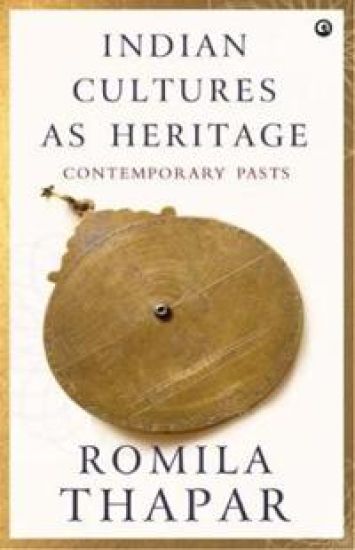
Indian Cultures as Heritage

Indian Cultures as Heritage

Romila Thapar

Seagull Books London Ltd
2021
sidottu
Every society has its cultures: patterns of how people live and express themselves and how they value objects and thoughts. Recently, there has been considerable debate about what constitutes Indian culture and heritage and about how much diversity those categories ought to contain. Romila Thapar begins by explaining how definitions of culture have changed over the past three centuries. She suggests that cultures can be defined as a shared understanding of selected objects and thoughts from the past, but this understanding is often stripped of its historical context. Thapar touches on a few of these illuminating contexts, such as social discrimination, the role of women, and attitudes toward science and knowledge. This thought-provoking book is sure to spark productive debate about some current shibboleths in India’s culture.
Gazing Eastwards

Gazing Eastwards

Romila Thapar

Seagull Books London Ltd
2021
sidottu
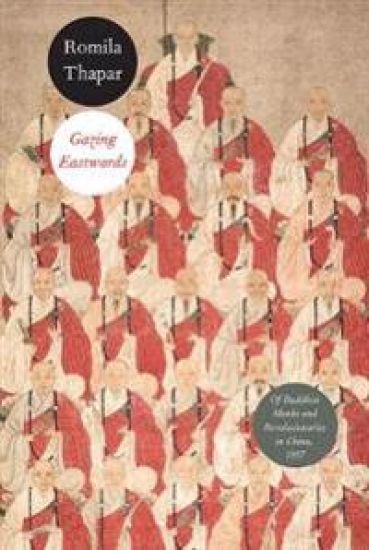
In 1957, renowned Indian historian Romila Thapar visited China, where, together with Sri Lankan art historian Anil de Silva, she worked at two cave sites that were the locations of Buddhist monasteries and shrines from the first millennium CE. The first site was the then lesser known Maijishan in north China, and the second was the famous site of Dunhuang on the edge of the Gobi desert in Northwest China. Now, decades later, she is supplementing the academic work that emerged from that trip with a captivating travelogue: Gazing Eastward takes readers back to midcentury China, through the observations that Thapar made in her diary during her time at the two archaeological sites and her trips there and to other sites. Traveling by train or truck, Thapar met people from throughout the country and all stations in society, from peasants on a cooperative farm to Chairman Mao himself. An enchanting document of a long-lost era, Gazing Eastward is a marvel, a richly observed work of travel writing that brings a time and a place fully to life.
Voices of Dissent: An Essay

Voices of Dissent: An Essay

Romila Thapar

Seagull Books London Ltd
2021
sidottu
People have argued since time immemorial. Disagreement is a part of life, of human experience. But we now live in times when any form of protest in India is marked as anti-Indian and met with arguments that the very concept of dissent was imported into India from the West. As Romila Thapar explores in her timely historical essay, however, dissent has a long history in the subcontinent, even if its forms have evolved through the centuries. In Voices of Dissent: An Essay, Thapar looks at the articulation of nonviolent dissent and relates it to various pivotal moments throughout India’s history. Beginning with Vedic times, she takes us from the second to the first millennium BCE, to the emergence of groups that were jointly called the Shramanas—the Jainas, Buddhists, and Ajivikas. Going forward in time, she also explores the views of the Bhakti sants and others of the fifteenth and sixteenth centuries, and brings us to a major moment of dissent that helped to establish a free and democratic India: Mahatma Gandhi’s satyagraha. Then Thapar places in context the recent peaceful protests against India’s new, controversial citizenship law, maintaining that dissent in our time must be opposed to injustice and supportive of democratic rights so that society may change for the better. Written by one of India’s best-known public intellectuals, Voices of Dissent will be essential reading not for anyone interested in India’s fascinating history, but also the direction in which the nation is headed.
The Past Before Us

The Past Before Us

Romila Thapar

Harvard University Press
2021
sidottu
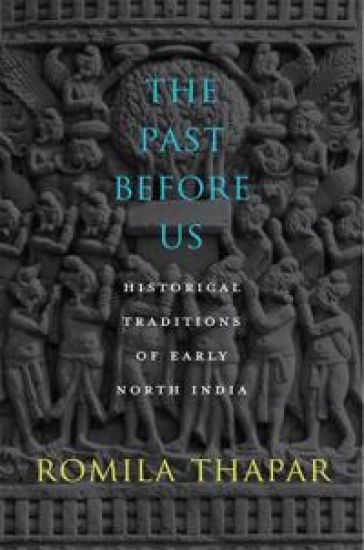
“An authority on thousands of years of India’s past, Thapar has a rare and special perspective on the country it was and the country it is becoming.” —Financial TimesWinner of the Kluge Prize Romila Thapar presents a sweeping survey of the historical traditions of North India, revealing a deep consciousness of history embedded in classical Indian literature. The claim, often made, that India—uniquely among civilizations—lacks historical writing distracts us from a more pertinent question, according to Romila Thapar: how to recognize the historical sense of societies whose past is recorded in ways very different from European conventions. In The Past Before Us, a distinguished scholar of ancient India guides us through a panoramic survey of the historical traditions of North India. Thapar reveals a deep and sophisticated consciousness of history embedded in the diverse body of classical Indian literature. The history recorded in such texts as the Ramayana and the Mahabharata is less concerned with authenticating persons and events than with presenting a picture of traditions striving to retain legitimacy and continuity amid social change. Spanning an epoch of nearly twenty-five hundred years, from 1000 BCE to 1400 CE, Thapar delineates three distinct historical traditions: an Itihasa-Purana tradition of Brahman authors; a tradition composed mainly by Buddhist and Jaina scholars; and a popular bardic tradition. The Vedic corpus, the epics, the Buddhist canon and monastic chronicles, inscriptions, regional accounts, and royal biographies and dramas are all scrutinized afresh—not as sources to be mined for factual data but as genres that disclose how Indians of ancient times represented their own past to themselves.
The Past as Present

The Past as Present

Romila Thapar

Seagull Books London Ltd
2019
sidottu
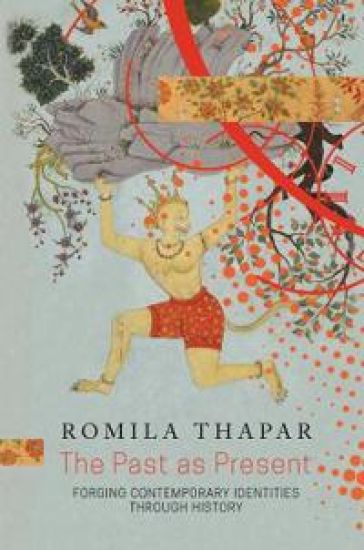
Nations need identities. These are created from perceptions of how societies have evolved. In this, history plays a central role. Insisting on reliable history is therefore crucial to more than just a pedagogic cause. Delicate relationships between the past and present or an exacting understanding of the past, call for careful analyses. Understanding India’s past is of vital importance to the present. Many popularly held views about the past need to be critically enquired into before they can be taken as historical. Why is it important for Indian society to be secular? When did communalism as an ideology gain a foothold in the country? How and when did the patriarchal system begin to support a culture of violence against women? Historian Romila Thapar has investigated, analyzed, and interpreted the history that underlies such questions throughout her career. Through the incisive essays in The Past as Present, she argues that it is of critical importance for the Indian past to be carefully and rigorously explained if the legitimacy of the present, wherever it derives from the past, is to be portrayed as accurately as possible. This is particularly crucial given the attempts by unscrupulous politicians, religious fundamentalists, and their ilk to wilfully misrepresent and manipulate the past in order to serve their present-day agendas. The Past as Present is an essential and necessary book at a time when sectarianism, false nationalism, and the muddying of historical facts are increasingly becoming a feature of our public, private, and intellectual lives.
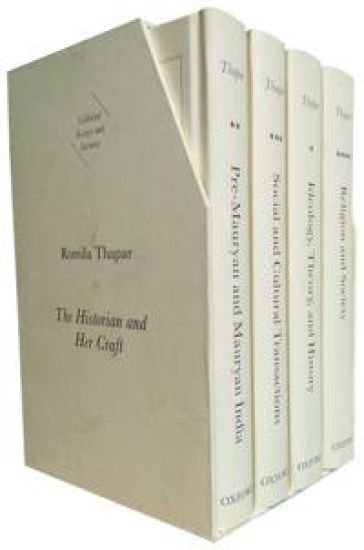
The Historian and her Craft

The Historian and her Craft

Romila Thapar

OUP India
2018
sidottu
This is a set of four volumes aimed at bringing together the best research by Romila Thapar to showcase her academic contributions to the understanding of history and historiography in India. The four volumes will focus on bringing together all the lectures and papers on an area of her work-historiography, Mauryas and Mauryan India, Social and Cultural Transaction, and Religion and Society. Each volume also includes a detailed interview with the author and a reflection on her work by an expert in the field, who will introduce the essays in that volume. The introduction to the set by Romila Thapar will explore her academic life and approaches to early Indian history and history writing. It will incorporate a detailed analysis of all the trends and transformations in historical thinking and history writing that have shaped the last six decades of Indian history. The set of volumes would conserve and reflect on the life and work of an eminent historian of India.
On Nationalism

On Nationalism

Romila Thapar

Aleph Book Company
2016
sidottu
What is true nationalism? What is pseudo-nationalism? What is anti-national? What is patriotism? Is the shouting of nationalist slogans important to prove one's patriotism? Why is Bharat Mata ki Jai so important to the right wing? Why does the law of sedition continue to exist on the statute book of an independent country? Who should the sedition law be used against? Why is cultural freedom important to a nation? What sort of India do we want? What sort of Indians do we want to be? What sort of country do we want to leave behind for future generations? These questions all involve one of the most fundamental ideas of India-the nationalism we inherited at birth. It is also one of the most hotly contested ideas of the twenty-first century. In this book, some of our finest thinkers and writers provide calm, measured insights into the origins, nature, practice and future of Indian nationalism.
Somanatha

Somanatha

Romila Thapar

Verso Books
2015
nidottu
In 1026, Sultan Mahmud of Ghazni raided the Hindu temple of Somanatha (Somnath in textbooks of the colonial period). The story of the raid has reverberated in Indian history, but largely during the raj. It was first depicted as a trauma for the Hindu population not in India, but in the House of Commons. The triumphalist accounts of the event in Turko-Persian chronicles became the main source for most eighteenth-century historians. It suited everyone and helped the British to divide and rule a multi-millioned subcontinent. In her new book, Romila Thapar, the doyenne of Indian historians, reconstructs what took place by studying other sources, including local Sanskrit inscriptions, biographies of kings and merchants of the period, court epics and popular narratives that have survived. The result is astounding and undermines the traditional version of what took place. These findings also contest the current Hindu religious nationalism that constantly utilises the conventional version of this history.
Past as Present

Past as Present

Romila Thapar

Aleph Book Company
2014
sidottu
Many popularly held views about the past need to be critically inquired into before they can be taken as historical. For instance, what was the aftermath of the raid on the Somanatha temple? Which of us is Aryan or Dravidian? Why is it important for Indian society to be secular? When did communalism as an ideology gain a foothold in the country? How and when did our patriarchal mindset begin to support a culture of violence against women? Why are the fundamentalists so keen to rewrite history textbooks? The answers to these and similar questions have been disputed and argued about ever since they were first posed. Distinguished historian Romila Thapar has investigated, analyzed and interpreted the history that underlies such questions throughout her career; now, in this book, through a series of incisive essays she argues that it is of critical importance for the past to be carefully and rigorously explained, if the legitimacy of our present, wherever it derives from the past, is to be portrayed as accurately as possible. This is especially pertinent given the attempts by unscrupulous politicians, religious fundamentalists and their ilk to try and misrepresent and willfully manipulate the past in order to serve their present-day agendas. An essential and necessary book at a time when sectarianism, bogus 'nationalism' and the muddying of historical facts are increasingly becoming a feature of our public, private and intellectual lives.
Early Indian History

Early Indian History

Romila Thapar

OUP India
2013
sidottu
This book discusses the period from 1000 BC to the end of the sixth century AD. Divided into five thematic sections, the first section discusses questions like perceptions, historical consciousness, and approaches to the study of ancient Indian history. The second and third parts give a detailed account of changes in society and economy and the evolution and transformation of the political formations from ancient times. The segment on religion presents information on development in the field of religion and philosophy while the last section underlines changes which paved way for new socio-economic and political formations. The new Introduction updates research on the subject and explains the various themes discussed in the volume. This book is an important reading for teachers, students, and scholars of ancient Indian history.
Asoka and the Decline of the Mauryas
The Mauryan period witnessed the rise of the first subcontinental empire which required administration appropriate to a changing political economy, communication adequate to a subcontinental territory, and new ideological attempts to draw support from a multicultural population. This book provides a fresh interpretation of the history of early India and its linkages with later developments. It discusses the history of the Mauryas with a special emphasis on the reign and activities of A?oka. The author focuses on sources, socio-economic conditions, administration, Dhamma, foreign relations, and the decline of the Mauryas. This new edition includes a Pre-word, updating the research on the subject. This book is an important reading for undergraduate and postgraduate students and teachers, as well as researchers of ancient Indian history. It will also interest the informed general reader.
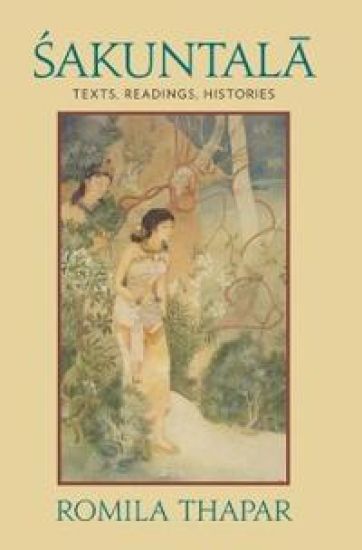
Sakuntala

Sakuntala

Romila Thapar

Columbia University Press
2011
sidottu
The figure of Sakuntala appears in many forms throughout South Asian literature, most famously in the Mahabharata and in Kalidisa's fourth-century Sanskrit play, Sakuntala and the Ring of Recollection. In these two texts, Sakuntala undergoes a critical transformation, relinquishing her assertiveness and autonomy to become the quintessentially submissive woman, revealing much about the performance of Hindu femininity that would come to dominate South Asian culture. Through a careful analysis of sections from Sakuntala and their various iterations in different contexts, Romila Thapar explores the interactions between literature and history, culture and gender, that frame the development of this canonical figure, as well as a distinct conception of female identity.