Kirjojen hintavertailu – 12 859 819 kirjaa ja 27 kauppaa
Kirjailija
Rory Miller
Kirjat ja teokset yhdessä paikassa: 25 kirjaa, julkaisuja vuosilta 1993–2027, suosituimpiin kuuluu The Last Temptation. Vertaile teosten hintoja ja tarkista saatavuus suomalaisista kirjakaupoista.
Why have states continued to intervene in the Israel-Palestine conflict? How have those interventions helped shape the current crisis, and is a better way of engagement possible? Exploring the role of colonial mandates, super-power rivalries and multilateral peace processes, this book considers how states, regional organizations and international institutions have influenced the conflict since 1967. Rory Miller and Ciarán Ó Cuinn explore what these interventions have achieved, where they have fallen short, and why they continue to matter both on the ground and around the world. As the conflict continues to dominate the international diplomatic and political agenda, Miller and Ó Cuinn propose a new framework for external intervention. Building on the 'Parity, then Peace' concept, this approach seeks to ensure that the core issues of the conflict are dealt with on the basis of equality.
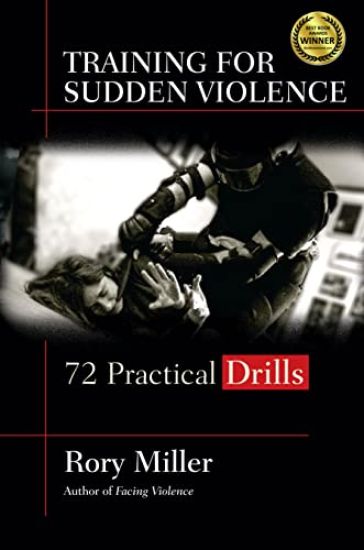
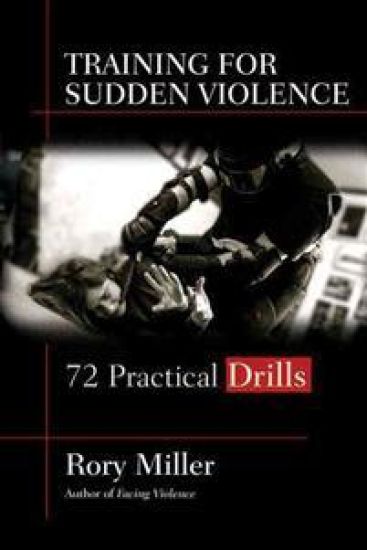
The speed and brutality of a predatory attack can shock even an experienced martial artist. The sudden chaos, the cascade of stress hormones-you feel as though time slows down. In reality, the assault is over in an instant. How does anyone prepare for that? As a former corrections sergeant and tactical team leader, Rory Miller is a proven survivor. He instructs police and corrections professionals who, in many cases, receive only eight hours of defensive tactics training each year. They need techniques that work and they need unflinching courage. In Training for Sudden Violence Miller gives you the tools to prepare and prevail, both physically and psychologically. He shares hard-won lessons from a world most of us hope we never experience. Train in fundamentals,combat drills, and dynamic fighting. Develop situational awareness. Condition yourself through stress inoculation. Take a critical look at your training habits. “You don't get to pick where fights go,” Miller writes. That's why he has created a series of drills to train you for the worst of it. You will defend yourself on your feet, on the ground, against weapons, in a crowd, and while blindfolded. You will reevaluate your training scenarios-keeping what works, discarding what does not, and improving your chances of survival. Miller's internal work, world work, and plastic mind exercises will challenge you in ways that mere physical training does not. Sections include: StalkingEscape and evasionThe predator mindPersonal threat assessment This is a fight for your life, and it won't happen on a nice soft mat. It will get, as Miller says, “all kinds of messy.” Training for Sudden Violence prepares you for that mess.
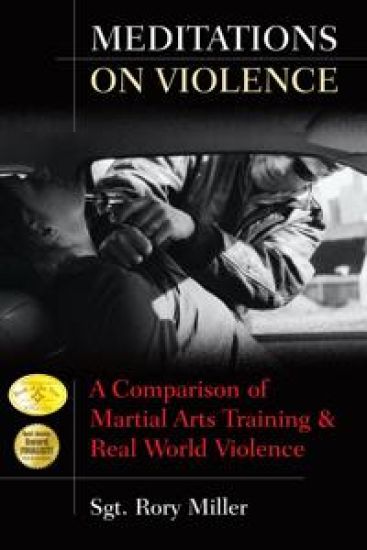
Examining the Gap Between Martial Arts Training and Real World Violence. Experienced martial artist and veteran correction officer Sgt. Rory Miller (RET) distills what he has learned from jailhouse brawls, tactical operations and ambushes to explore the differences between martial arts and the subject martial arts were designed to deal with: Violence. Section One: The Matrix. Introduces the myths, metaphors and expectations that most martial artists have about what they will ultimately learn in their dojo. This is then compared with the complexity of the reality of violence. Complexity is one of the recurring themes throughout this work. Section Two: How To Think. Examines how to think critically about violence, how to evaluate sources of knowledge and clearly explains the concepts of strategy and tactics. Sections Three and Four: Violence and Predators. Focuses on the dynamics of violence itself and the predators who perpetuate it. Drawing on hundreds of encounters and thousands of hours spent with criminals Sgt. Miller explains the types of violence; how, where, when and why it develops; the effects of adrenaline; how criminals think, and even the effects of drugs and altered states of consciousness in a fight. Section Five: Training. Centers on training for violence, and adapting your present training methods to that reality. It discusses the pros and cons of modern and ancient martial arts training and gives a unique insight into early Japanese kata as a military training method. Section Six: Making Physical Defense Work. Is all about how to make self-defense work. Miller examines how to look at defense in a broader context, and how to overcome some of your own subconscious resistance to meeting violence with violence. Section 7: Aftermath. Deals with the aftermath—the cost of surviving sudden violence or violent environments, how it can change you for good or bad. It gives advice for supervisors and even for instructors on how to help a student/survivor. You may even learn a bit about enlightenment. This book will change your perception of the world, martial arts and violence.
This Book Stands Alone as an Introduction to the Context of Self-Defense. There are seven elements that must be addressed to bring self-defense training to something approaching ‘complete.’ Any training that dismisses any of these areas leaves you vulnerable. We strongly recommend this book to anybody wishing to learn self-defense, or understand how to stay safe should violence rear it's ugly head. Legal and ethical implications. A student learning self-defense must learn force law. Otherwise it is possible to train to go to prison. Side by side with the legal rules, every student must explore his or her own ethical limitations. Most do not really know where this ethical line lies within them. Violence dynamics. Self-defense must teach how attacks happen. Students must be able to recognize an attack before it happens and know what kind they are facing. Avoidance. Students need to learn and practice not fighting. Learning includes escape and evasion, verbal de-escalation, and also pure-not-be there avoidance. Counter-ambush. If the student didn’t see the precursors or couldn’t successfully avoid the encounter he or she will need a handful of actions trained to reflex level for a sudden violent attack. Breaking the freeze. Freezing is almost universal in a sudden attack. Students must learn to recognize a freeze and break out of one. The fight itself. Most martial arts and self-defense instructors concentrate their time right here. What is taught just needs to be in line with how violence happens in the world. The aftermath. There are potential legal, psychological, and medical effects of engaging in violence no matter how justified. Advanced preparation is critical. Any teacher or student of self-defense, anyone interested in self-defense, and any person who desires a deeper understanding of violence really should read this book. Survival Favors the Prepared Mind—Robert Crowley AWARDS eLit Award GOLD WINNER - 2012USA Best Books Award FINALIST - 2012Eric Hoffer Award HONORABLE MENTION - 2012
The great majority of the world's legally sovereign states are small. The conventional view among scholars and policymakers has been that size is the determining factor of state-behaviour and that the lack of surplus capabilities in small states limits their capacity to act autonomously both at home and abroad. The co-authors acknowledge the constraints of "smallness", but at the same time, this book argues for a more nuanced view of small states. In doing so, the authors frame their discussion in terms of the extensive and constantly evolving theoretical literature on small states. They also draw on a wide-range of small state case studies, with a special focus on the recent blockade of Qatar, to analyse the opportunities as well as challenges that small states must deal with as economic and foreign policy actors in the contemporary global system.
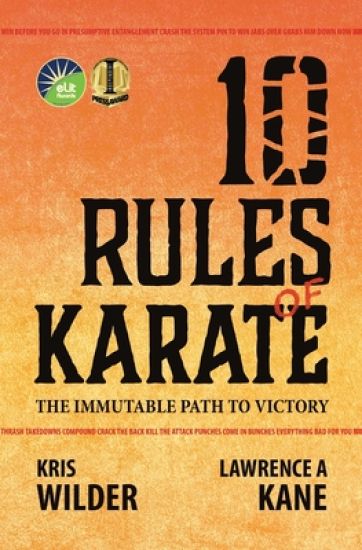
From the bestselling authors of The Way of Kata, The Little Black Book of Violence, and Musashi's Dokkodo... Your immutable path to victory All ten precepts in this concise book cut to the heart of ending physical confrontations as quickly as possible with empty-hand techniques. Our definition of "ending" is to make the attack stop. There is no running after the now fleeing assailant to catch and strike him down. There is no lesson, no teaching, no therapy, no epiphany. There is only making that bad guy stop what he is doing instantly so that you and those you care about will be safe. The strategy of karate is based on principle, what practitioners do to prepare for contact with an adversary, while tactics are what we do during the heat of battle. Practicing a martial art from tactics upward to principles creates a house of cards that will collapse from a gentle breeze, whereas working downward from principles into tactics builds a formidable foundation that can weather near any storm. These ten principles are style agnostic, all about ending fights immediately. They define how to best apply your skills and training in the real world. Those who work with these principles will find swiftness, clarity, and victory in so doing. Praise for 10 Rules of Karate: "Since losing isn't an option on or off the mat, this is an absolute must read for karateka." - Christian Wedewardt, Founder & Head of Karatepraxis (Frechen, Germany)"In your hands is a book that cuts straight through the chatter and gets to the point of unarmed self-defense. No relying on luck, no need for hoping that strength alone will carry the day. This is advice which gets to the heart of what is important and despite the title is applicable regardless of martial arts style or system." - Wallace Smedley, hung gar kung fu master instructor (Dallas/Fort Worth, United States)"Wilder and Kane, both prolific authors and active martial artists, have synthesized decades of their industry-proven experience to bring you 10 must-have principles to integrate into your martial arts and self-defence curriculum. Get the book. I did " - Chris Hanson, Founder of Karate Unity (Toronto, Canada)"The beauty of dojo training is also its biggest weakness outside the dojo. Wilder and Kane masterfully take the safe, structured lessons of karate and show how they must adapt to survive the chaos of real-world violence. Highly recommended " - Goran Powell, 5th dan Goju Ryu karate (London, England)About the authors: Kris Wilder, BCC was inducted into the United States Martial Arts Hall of Fame in 2018. He holds black belt rankings in karate, judo, and taekwondo, conducting seminars across the United States, Canada, and Europe. A Nationally Board-Certified Life Coach and prolific author, Kris has lectured at Washington State University and Susquehanna University. He has also been interviewed by CNN, FOX, The Huffington Post, Thrillist, Nickelodeon, The Howard Stern Show, and more. Lawrence Kane, COP-GOV, CSP, CSMP, CIAP was inducted into SIG Sourcing Supernova Hall of Fame in 2018 for pioneering leadership in strategic sourcing, procurement, supplier innovation, and digital transformation. He has been studying and teaching martial arts since 1970, often putting what he learned into action while working stadium security part time. A bestselling author, he has been interviewed by FOX, The Jim Bohannon Show, Computerworld, Forbes, Art of Procurement, Police Magazine, and more. Rory Miller, who wrote the foreword, is the author of several works on self-defense, including the seminal Meditations on Violence. He is a former Corrections sergeant and former contractor for the Iraqi Corrections Service under the Department of justice's ICITAP program. Retired, he now lives peacefully in the Pacific Northwest.
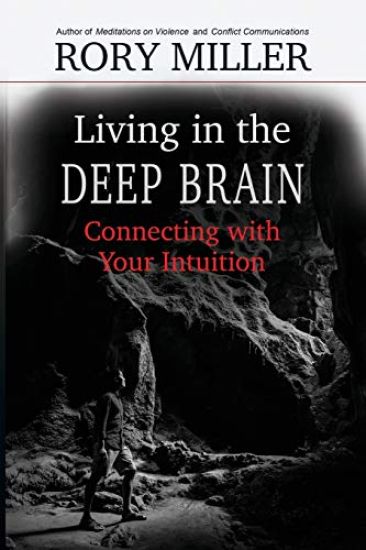
"Trust your gut." So easy to say. But what does it mean? In Rory Miller's world, it means living in your senses. It means responding from a place of awareness, training, and experience without the mental chatter and over-thinking that can slow you down and make you choke under stress. But what is intuition? How do you know if yours is trustworthy? Can you heal damaged intuition?"...if it wasn't for this mechanism, this seemingly magical ability called "intuition" would just simply be how we perceive all the time. Intuition is what your brain and senses are already doing ALL THE TIME. Your social conditioning acts as a filter to suppress your natural way to perceive, and it is so good at it that we are amazed when our brain occasionally functions the way it is meant to." Your intuition is not some stranger that you can choose to trust. It is a part of you, and like every part of you it needs to be nurtured and trained to become effective. Open the door to the deep brain. What you find may surprise you.
The blockade of Qatar, which was launched in June 2017, has not only had important long-term implications for life in Qatar, it has also cast a giant shadow over future relations between Gulf neighbours and has impacted on dynamics across the wider international community. In this volume, fifteen Doha-based scholars and experts offer insider accounts of the ways the blockade has influenced Qatars economy, politics, and society; how it has impacted on regional and international diplomatic, security, and strategic relations; and how it has been covered in traditional and social media outlets. These reader-friendly contributions are complemented by a series of photographs that provide an illuminating visual record of events. The result is an unmatched chronicle of the dynamics of the blockade in its first year that will appeal to experts and general readers alike.
This is a workbook intended to complement the Violence Dynamics Prime class in Blaine, Minnesota on October 18-21, 2018. It is not intended as a stand-alone work. _______________________________ Hello and welcome to Violence Dynamics 2018. In your hands you are holding the Viody handbook for 2018. It is our hope that this will make your learning experience more rewarding and provide a means to review the material after the seminar whenever you like. This year Violence Dynamics features Kasey Keckeisen, Terry Trahan, Dr. Tammy Yard-McCracken, Randy King, and Rory Miller.
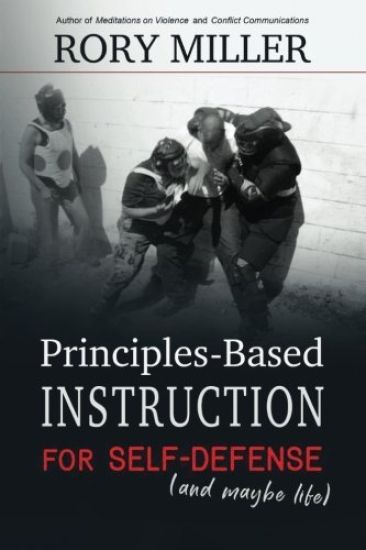
Rory Miller is one of the leaders in the modern self-defense industry. His previous books, especially Meditations on Violence, Facing Violence and Conflict Communications, have changed the dialogue on violence and conflict. His ability to clarify seemingly complex problems and develop practical solutions have made him an instructor with a world-wide following. In Principles Based Instruction Miller delves deep into teaching methodology. Why do current methods fail under pressure? What might work? With information on teaching problem students and elite teams, designing curriculum and evaluating sources, Principles is a unique and necessary book for anyone dealing with or training for, high-risk, chaotic situations. Including life.
This is a workbook intended to complement the Violence Dynamics Prime class in Minnesota. It is not intended as a stand-alone work. _______________________________ Hello and welcome to Violence Dynamics 2017. In your hands you are holding the first ever Viody handbook. It is our hope that this will make your learning experience more rewarding and provide a means to review the material after the seminar whenever you like. This year Violence Dynamics features Kasey Keckeisen, Terry Trahan, Dr. Tammy Yard-McCracken, Randy King, and Rory Miller.
The first full-length survey of Britain's role in Latin America as a whole from the early 1800s to the 1950s, when influence in the region passed to the United States. Rory Miller examines the reasons for the rise and decline of British influence, and reappraises its impact on the Latin American states. Did it, as often claimed, circumscribe their political autonomy and inhibit their economic development? This sustained case study of imperialism and dependency will have an interest beyond Latin American specialists alone.
A lively analysis of the Arab Gulf states’ stunning rise to global power over the last half-century and of the daunting challenges they confront today Once just sleepy desert sheikdoms, the Arab Gulf states of Saudi Arabia, Oman, the United Arab Emirates, Qatar, Bahrain, and Kuwait now exert unprecedented influence on international affairs—the result of their almost unimaginable riches in oil and gas. In this book, Rory Miller, an expert in Gulf politics and international affairs, provides an accessible account of the achievements of these countries since the 1973 global oil crisis. He also investigates how the shrewd Arab Gulf rulers who have overcome crisis after crisis meet the external and internal challenges of the onrushing future. The Arab Gulf region has become an East–West hub for travel, tourism, sport, culture, trade, and finance. But can the autocratic regimes maintain stability at home and influence abroad as they deal with the demands of social and democratic reform? Miller considers an array of factors—Islamism, terrorism, the Arab Spring, volatile oil prices, global power dynamics, and others—to assess the future possibilities.
WINNER - Self-Help, 2016 Best Books AwardThe speed and brutality of apredatory attack can shock even an experienced martial artist. The suddenchaos, the cascade of stress hormonesyou feel as though time slows down. Inreality, the assault is over in an instant. How does anyone prepare for that? As a former correctionssergeant and tactical team leader, Rory Miller is a proven survivor. Heinstructs police and corrections professionals who, in many cases, receive onlyeight hours of defensive tactics training each year. They need techniques thatwork and they need unflinching courage. In Drills: Training for Sudden Violence Miller gives you the toolsto prepare and prevail, both physically and psychologically. He shares hard-wonlessons from a world most of us hope we never experience. *Train in fundamentals,combat drills, and dynamic fighting.*Developsituational awareness.*Conditionyourself through stress inoculation.*Take a criticallook at your training habits. You don't get to pick wherefights go," Miller writes. That's why he has created a series of drills to trainyou for the worst of it. You will defend yourself on your feet, on the ground, againstweapons, in a crowd, and while blindfolded. You will reevaluate your trainingscenarioskeeping what works, discarding what does not, and improving yourchances of survival. Miller's internal work,"world work," and plastic mind" exercises will challenge you in ways that merephysical training does not. Sections include *Stalking*Escape andevasion*The predatormind*Personal threatassessmentThis is a fight for yourlife, and it won't happen on a nice soft mat. It will get, as Miller says, allkinds of messy." Drills: Training for Sudden Violence prepares you for that mess.
Using primary sources, this study of the relationship between three anti-Zionist bodies in Britain in the years that directly preceded the founding of the State of Israel also analyzes the Zionist attitude to the Jewish Fellowship, the Arab Office and the Committee for Arab Affairs.
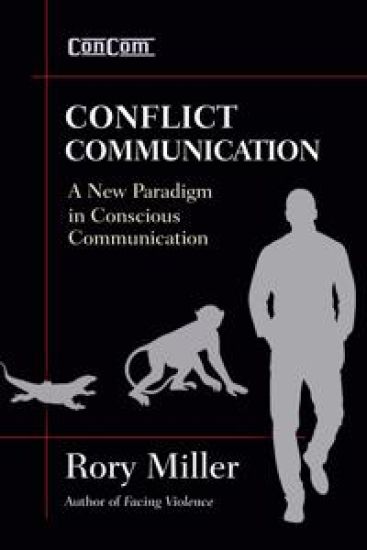
This book presents a functional taxonomy to see, understand and manipulate the roots of life's conflicts. You will have the background, the principles, and a collection of tricks to manage and ideally avoid dangerous conflicts. You may not realize that your reactions to conflict are subconscious, scripted, and for the good of the group. Once recognized, you can take actions that will reduce your chances of being caught up in conflicts. After reading this book, you can never go back. Even if you refuse to admit how often your monkey brain has controlled your life, escalations leading to conflict will never again be invisible to you.
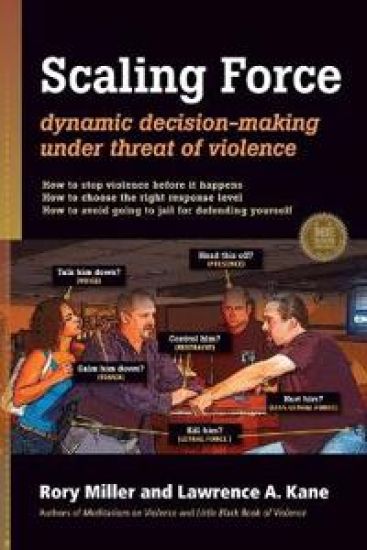
Bronze Winner - 2013 eLit AwardsFinalist - 2013 Next Generation Indie Books AwardFinalist - 2013 Book of the Year Award by ForeWord Magazine Conflict and violence cover a broad range of behaviors, from intimidation to murder, and they require an equally broad range of responses. A kind word will not resolve all situations, nor will wristlocks, punches or even a gun. In Scaling Force the authors introduce you to the full range of options, from skillfully doing nothing to applying deadly force. They realistically guide you through understanding the limits of each type of force, when specific levels may be appropriate, the circumstances under which you may have to apply them, and the potential cost, legally and personally, of your decision. * Level 1 Presence. Staving off violence using body language alone.* Level 2 - Voice. Verbally de-escalating conflict before physical methods become necessary.* Level 3 - Touch. Defusing an impending threat or gaining compliance via touch.* Level 4 - Empty-Hand Restraint. Controlling a threat through pain or forcing compliance through leverage.* Level 5 - Less-Lethal Force. Incapacitating a threat while minimizing the likelihood of fatality or permanent injury.* Level 6 - Lethal Force. Stopping a threat with techniques or implements likely to cause death or grievous bodily harm. It is vital to enter this scale at the right level, and to articulate why what you did was appropriate. If you do not know how to succeed at all six levels there are situations in which you will have no appropriate options. More often than not, that will end badly.
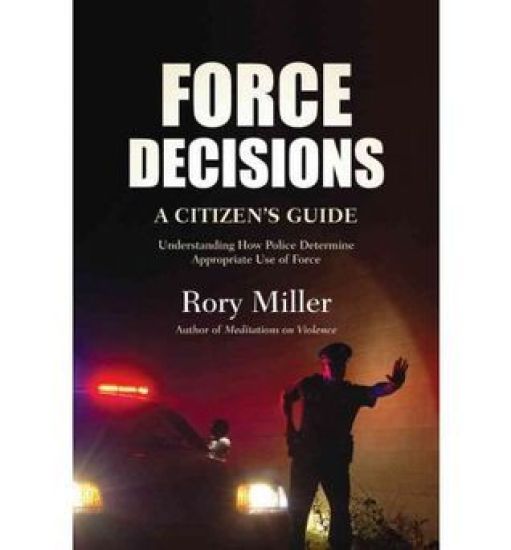
Winner - 2013 USA Best Books AwardFinalist - 2013 Book of the Year Award by ForeWord Magazine In a free and peaceful society where so many have been taught that all violence is wrong, citizens are often confused and dismayed when officers use force, even when the force is perfectly lawful and justified. This book allows you to 'take' a basic USE OF FORCE class just as if you were a rookie at the police academy. Below are some highlights of what is included in 'your' basic use of force class: SECTION 1. TRAINING. I explain policy and laws that officers are taught. We examine use of force, how to define a threat, and the difference between excessive force and unnecessary force. SECTION 2. CHECKS AND BALANCES. This section explains how an officer's decisions are examined if suspected of being bad decisions. SECTION 3. EXPERIENCE. We explore how officers see the world that they live in. Somewhere in the fog between training and experience, the officer has to make a decision. Sometimes decisions will be made in a fraction of a second and on partial information. Sometimes a decision will change the lives of everyone involvedforever. SECTION 4. ABOUT YOU. Review what you should have learned. Why does community action fail? What is it that can really be done? Know how to behave when faced by an officer. Until this section, I have tried to put you in the headspace of an officer, giving you an overview of his training and a taste of his experiences. Now I will try to let you feel like a suspect. That's a lot of mind bending for one book. Get plenty of sleep and drink lots of water.
Since that fateful week of war in June 1967, when Israel's speedy military victory over the Arab states redrew the map of the Middle East, Europe, at least in terms of its influence in this crucial region, has been a cause looking for an opportunity (to borrow Henry Kissinger's classic description of Russian foreign policy). Europe's ongoing attempt to assert itself as a key player in the Middle East conflict has come to nought and it has failed to bring the warring parties to the negotiating table. For the most part it has not even been able to arrive at a united and coherent view regarding how to act vis a vis this conflict. Even when it has overcome this obstacle it has rarely succeeded in turning this united position into effective action. Though successive generations of European leaders have shared Joschka Fischer's belief that 'solving the Middle East and developing a real vision of peace is the major, major challenge for Europe', nowhere has the contrast between rhetoric and action been more obvious than in its attempts to meet this challenge. Inglorious Disarray tells the story of Europe's evolving, albeit stilted and often frustrating, involvement in the Israel-Palestine conflict over the last half century. It doing so it sets out how Europe's role has affected its relationship with Israelis, Palestinians and the wider Arab world, not to mention Europe's Muslim population, and how it has influenced Europe's political development in the decades since it became an economic powerhouse.