Kirjojen hintavertailu – 12 859 818 kirjaa ja 27 kauppaa

Kirjailija

Rory Miller

Kirjat ja teokset yhdessä paikassa: 25 kirjaa, julkaisuja vuosilta 1993–2027, suosituimpiin kuuluu The Last Temptation. Vertaile teosten hintoja ja tarkista saatavuus suomalaisista kirjakaupoista.

25 kirjaa

Kirjojen julkaisuvuodet: 1993–2027.

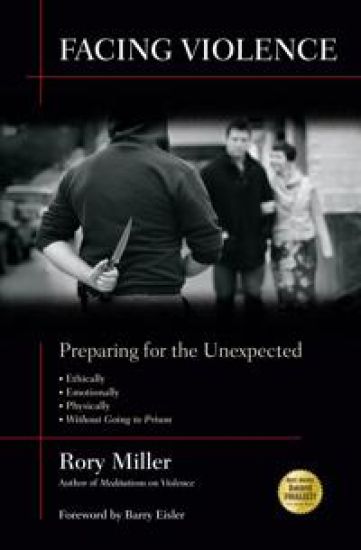
Facing Violence

Facing Violence

Rory Miller; Barry Eisler

YMAA Publication Center
2011
pokkari

Halvin toimitettuna 25,00 €

Gold Winner - 2012 eLit AwardFinalist - 2012 USA Best Books AwardHonorable Mention - 2012 Eric Hoffer Award Seven Steps to Legal, Emotional and Physical Preparation This book stands alone as an introduction to the context of self-defense. There are seven elements that must be addressed to bring self-defense training to something approaching 'complete.' Any training that dismisses any of these areas leaves you vulnerable. 1. Legal and ethical implications. A student learning self-defense must learn force law. Otherwise it is possible to train to go to prison. Side by side with the legal rules, every student must explore his or her own ethical limitations. Most do not really know where this ethical line lies within them. 2. Violence dynamics. Self-defense must teach how attacks happen. Students must be able to recognize an attack before it happens and know what kind they are facing. 3. Avoidance. Students need to learn and practice not fighting. Learning includes escape and evasion, verbal de-escalation, and also pure-not-be there avoidance. 4. Counter-ambush. If the student didn't see the precursors or couldn't successfully avoid the encounter he or she will need a handful of actions trained to reflex level for a sudden violent attack. 5. Breaking the freeze. Freezing is almost universal in a sudden attack. Students must learn to recognize a freeze and break out of one. 6. The fight itself. Most martial arts and self-defense instructors concentrate their time right here. What is taught just needs to be in line with how violence happens in the world. 7. The aftermath. There are potential legal, psychological, and medical effects of engaging in violence no matter how justified. Advanced preparation is critical. Any teacher or student of self-defense, anyone interested in self-defense, and any person who desires a deeper understanding of violence needs to read this book.
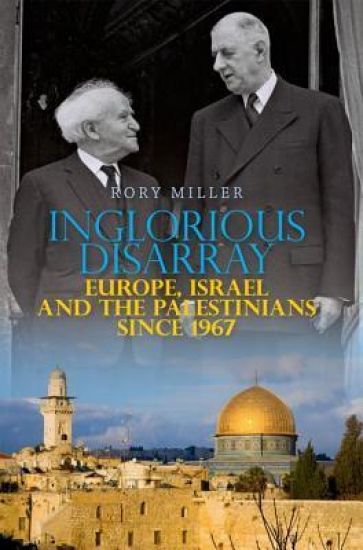
Inglorious Disarray: Europe, Israel and the Palestinians Since 1967
Since that fateful week of war in June 1967, when Israel's speedy military victory over the Arab states redrew the map of the Middle East, Europe--at least in terms of its influence in this crucial region--has been a cause looking for an opportunity (to borrow Henry Kissinger's classic description of Russian foreign policy). Europe's ongoing attempt to assert itself as a key player in the Middle East conflict has come to nought. It has even proved unable to arrive at a consensus about how to act, and when it has overcome this obstacle it has rarely succeeded in turning this united position into effective action. Though successive generations of European leaders have shared Joschka Fischer's belief that "solving the Middle East and developing a real vision of peace is the major challenge for Europe", nowhere has the contrast between rhetoric and action been more obvious than in its attempts to meet this challenge. Inglorious Disarray tells the story of Europe's evolving, albeit stilted and often frustrating, involvement in the Israel-Palestine conflict over the last half century. In doing so it sets out how Europe's role has affected its relationship with Israelis, Palestinians and the wider Arab world, not to mention Europe's Muslim population, and how it has influenced Europe's political development in the decades since it became an economic powerhouse.
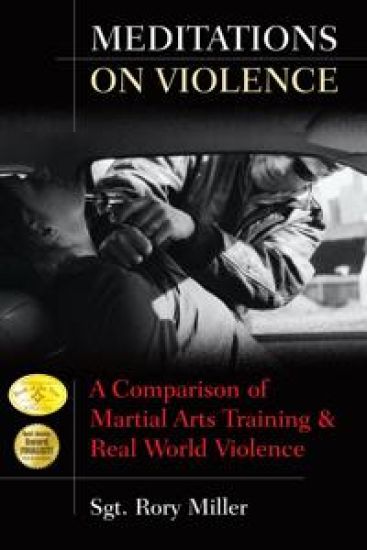
Meditations on Violence

Meditations on Violence

Rory Miller

YMAA Publication Center
2008
pokkari

Halvin toimitettuna 25,00 €

Examining the Gap Between Martial Arts Training and Real World Violence. Experienced martial artist and veteran correction officer Sgt. Rory Miller (RET) distills what he has learned from jailhouse brawls, tactical operations and ambushes to explore the differences between martial arts and the subject martial arts were designed to deal with: Violence. Section One: The Matrix. Introduces the myths, metaphors and expectations that most martial artists have about what they will ultimately learn in their dojo. This is then compared with the complexity of the reality of violence. Complexity is one of the recurring themes throughout this work. Section Two: How To Think. Examines how to think critically about violence, how to evaluate sources of knowledge and clearly explains the concepts of strategy and tactics. Sections Three and Four: Violence and Predators. Focuses on the dynamics of violence itself and the predators who perpetuate it. Drawing on hundreds of encounters and thousands of hours spent with criminals Sgt. Miller explains the types of violence; how, where, when and why it develops; the effects of adrenaline; how criminals think, and even the effects of drugs and altered states of consciousness in a fight. Section Five: Training. Centers on training for violence, and adapting your present training methods to that reality. It discusses the pros and cons of modern and ancient martial arts training and gives a unique insight into early Japanese kata as a military training method. Section Six: Making Physical Defense Work. Is all about how to make self-defense work. Miller examines how to look at defense in a broader context, and how to overcome some of your own subconscious resistance to meeting violence with violence. Section 7: Aftermath. Deals with the aftermath—the cost of surviving sudden violence or violent environments, how it can change you for good or bad. It gives advice for supervisors and even for instructors on how to help a student/survivor. You may even learn a bit about enlightenment. This book will change your perception of the world, martial arts and violence.
Divided Against Zion

Divided Against Zion

Rory Miller

Routledge
2000
sidottu
Using primary sources, this study of the relationship between three anti-Zionist bodies in Britain in the years that directly preceded the founding of the State of Israel also analyzes the Zionist attitude to the Jewish Fellowship, the Arab Office and the Committee for Arab Affairs.
Britain and Latin America in the 19th and 20th Centuries
The first full-length survey of Britain's role in Latin America as a whole from the early 1800s to the 1950s, when influence in the region passed to the United States. Rory Miller examines the reasons for the rise and decline of British influence, and reappraises its impact on the Latin American states. Did it, as often claimed, circumscribe their political autonomy and inhibit their economic development? This sustained case study of imperialism and dependency will have an interest beyond Latin American specialists alone.