Kirjojen hintavertailu – 12 903 725 kirjaa ja 27 kauppaa

Kirjailija

Roscoe Pound

Kirjat ja teokset yhdessä paikassa: 85 kirjaa, julkaisuja vuosilta 1917–2026, suosituimpiin kuuluu New Paths of the Law: First Lectures in the Roscoe Pound Lectureship Series. Vertaile teosten hintoja ja tarkista saatavuus suomalaisista kirjakaupoista.

85 kirjaa

Kirjojen julkaisuvuodet: 1917–2026.

Interpretations of Legal History

Interpretations of Legal History

Roscoe Pound

Cambridge University Press
2013
pokkari
Nathan Roscoe Pound (1870–1964) was an American legal scholar and jurist who held the position of Dean of Harvard Law School from 1916 to 1936. Originally published in 1923, this book presents a critical history of various aspects of juristic thought as it developed in England and other countries. The text was based upon a series of lectures delivered by Pound at Trinity College, Cambridge during the Lent Term of 1922. Detailed notes are included in the main body of the text. This book will be of value to anyone with an interest in Pound and perspectives on legal history.
Masonic Jurisprudence

Masonic Jurisprudence

Roscoe Pound

Literary Licensing, LLC
2013
sidottu
Masonic Jurisprudence is a comprehensive guide to the laws, principles, and practices of the Masonic fraternity. Written by Roscoe Pound, a renowned legal scholar and Masonic expert, this book provides an in-depth exploration of the history, philosophy, and governance of Freemasonry. The book covers a wide range of topics, from the origins of the Masonic organization to the role of Masonic lodges in modern society. It examines the symbolism and rituals of the Masonic order, as well as the rules and regulations that govern its members. Throughout the book, Pound emphasizes the importance of Masonic principles such as brotherhood, charity, and moral uprightness. He also discusses the challenges and controversies that have faced the Masonic fraternity over the years, including accusations of secrecy and elitism. Masonic Jurisprudence is an essential resource for anyone seeking to learn more about the Masonic fraternity, its history, and its role in the world today. Whether you are a current member of the Masonic order or simply interested in learning more about this fascinating organization, this book is sure to provide valuable insights and information. This is a new release of the original 1946 edition. This scarce antiquarian book is a facsimile reprint of the old original and may contain some imperfections such as library marks and notations. Because we believe this work is culturally important, we have made it available as part of our commitment for protecting, preserving, and promoting the world's literature in affordable, high quality, modern editions, that are true to their original work.

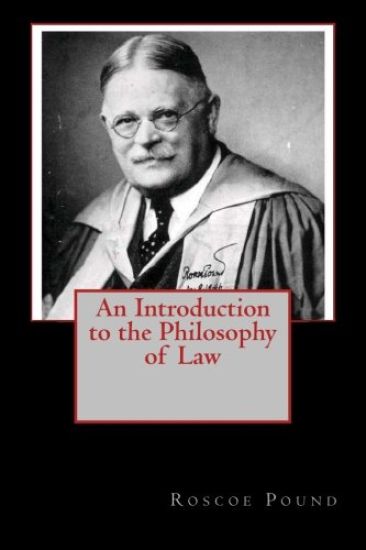
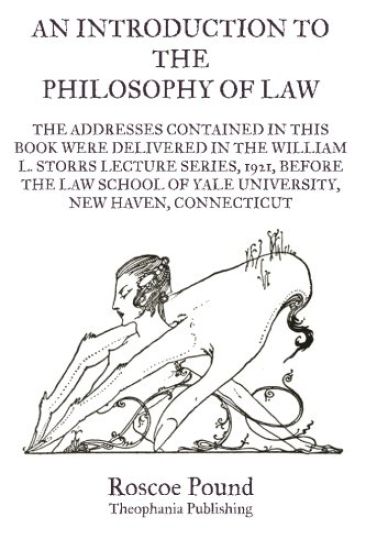
An Introduction to the Philosophy of Law

An Introduction to the Philosophy of Law

Roscoe Pound

Createspace Independent Publishing Platform
2012
nidottu
Thank you for checking out this book by Theophania Publishing. We appreciate your business and look forward to serving you soon. We have thousands of titles available, and we invite you to search for us by name, contact us via our website, or download our most recent catalogues. This book is a written version of lectures delivered before the Law School of Yale University as Storrs Lectures in the school year 1921-1922. A metaphysician who had written on the secret of Hegel was congratulated upon his success in keeping the secret. One who essays an introduction to the philosophy of law may easily achieve a like success. His hearers are not unlikely to find that he has presented not one subject but two, presupposing a knowledge of one and giving them but scant acquaintance with the other. If he is a philosopher, he is not unlikely to have tried a highly organized philosophical apparatus upon those fragments of law that lie upon the surface of the legal order, or upon the law as seen through the spectacles of some jurist who had interpreted it in terms of a wholly different philosophical system. Looking at the list of authorities relied upon in Spencer's Justice, and noting that his historical legal data were taken from Maine's Ancient Law and thus came shaped by the political-idealistic interpretation of the English historical school, it is not difficult to perceive why positivist and Hegelian came to the same juristic results by radically different methods. On the other hand, if he is a lawyer, he will very likely have been able to do no more than attempt none too intelligently to work with the complicated and delicate engines of others upon the toughest and most resistant of legal materials. Until some Anglo-American jurist arises with the universal equipment of Josef Kohler the results of common-law incursions into philosophy will resemble the effort of the editorial writer who wrote upon Chinese Metaphysics after reading in the Encyclop dia Britannica under China and Metaphysics and combining his information. Yet such incursions there must be. Philosophy has been a powerful instrument in the legal armory and the times are ripe for restoring it to its old place therein. At least one may show what philosophy has done for some of the chief problems of the science of law, what stands before us to be done in some of the more conspicuous problems of that science today in which philosophy may help us, and how it is possible to look at those problems philosophically without treating them in terms of the eighteenth-century natural law or the nineteenth-century metaphysical jurisprudence which stand for philosophy in the general understanding of lawyers.