Kirjailija
Rudolf Steiner
Kirjat ja teokset yhdessä paikassa: 1 477 kirjaa, julkaisuja vuosilta 1910–2026, suosituimpiin kuuluu The Cosmic New Year: A Course of Lectures by Rudolf Steiner. Vertaile teosten hintoja ja tarkista saatavuus suomalaisista kirjakaupoista.
1 477 kirjaa
Kirjojen julkaisuvuodet: 1910–2026.
Knowledge of the cosmic significance of Christ and his mission, once experienced intuitively, has faded over the centuries. As theologians and historians of the Church critically scrutinized the Gospel records, their focus shifted from a gnostic vision of Christ to the human figure of ‘the simple man’, Jesus of Nazareth. In these enlightening lectures, Rudolf Steiner shows how ‘the Mystery of Golgotha’ (his term for the Crucifixion and Resurrection of Christ) can be understood as the pivotal event in human history, and the Gospels as ‘initiation documents’ that can serve to guide us on a path of spiritual development. He contrasts elements of the religious thinking of Jesuitism with Rosicrucianism – particularly in relation to the effect on human will – and discusses the characteristics of the two Jesus children in the contrasting accounts by Luke and Matthew. Steiner demonstrates how the great religious traditions of Zarathustra and Buddha helped prepare the way for the events of Palestine. In the process he clarifies controversial topics in Christian theology, such as the resurrection of the physical body of Jesus Christ. The emphasis throughout these lectures is on rediscovering the esoteric path to Christ and awakening to a new revelation manifesting in our time: Christ as the ‘Lord of Karma’. This edition features a revised translation and is complemented with editorial notes and appendices by Frederick Amrine and an introduction by Robert McDermott.
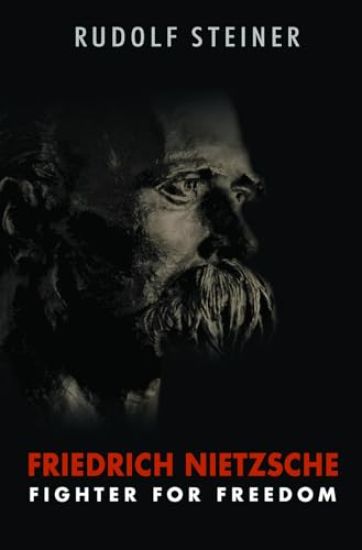
Friedrich Nietzsche
Rudolf Steiner; Bernard J Garber
STEINERBOOKS, INC
2024
pokkari
Halvin toimitettuna 27,60 €
Written in 1889 (CW 5)Immediately upon reading Nietzsche's Beyond Good and Evil in 1889, Rudolf Steiner recognized a kindred spirit--a courageous fighter for the freedom of the human individuality who waged a fierce but unconscious battle against the unspiritual views of the age. Rudolf Steiner met Nietzsche once in Naumburg in 1895. By this time, Nietzsche's mental state had already deteriorated. In his autobiography, Steiner recounts his intensely affecting encounter with Nietzsche, facilitated by Nietzsche's sister, Frau Foerster-Nietzsche. There, Steiner describes the profound impact of being led into Nietzsche's room and observing him lying on his bed in a state Steiner called "spirit-night." In a radiant vision, Steiner saw Nietzsche's ill-starred destiny, his soul yearning for the spiritual enlightenment it sought but could not fully grasp. This moment transformed Steiner's previous impression of Nietzsche into an encompassing spiritual understanding. Soon afterward, Frau Foerster-Nietzsche asked Steiner to organize the Nietzsche Library at the Archive in Naumberg, and for several weeks Steiner was able to immerse himself in the books Nietzsche had read. Reflecting on Nietzsche's intense, devoted, and wide-ranging studies, Steiner especially pointed to a heavily annotated volume by Ralph Waldo Emerson. Rudolf Steiner's meeting with Nietzsche and his experience in the Archive immediately preceded his writing this book. They are the heart of Friedrich Nietzsche: Fighter for Freedom and inform the mood in which it was written. Friedrich Nietzsche: Fighter for Freedom is an intimate and unique portrait of Friedrich Nietzsche himself and a true characterization of his eternal creative goal, the "superman." Through authentic spiritual research, Rudolf Steiner illuminates for us Nietzsche's enduring legacy and provides a deep, spiritual understanding of his life and work. This book is a translation from German of Friedrich Nietzsche, ein K mpfer gegen seine Zeit (GA 5).
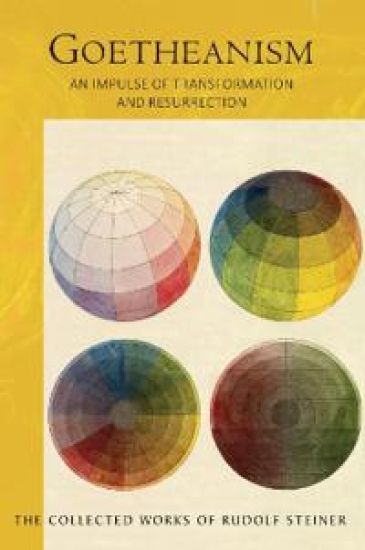
‘There will be a resurrection – a resurrection that should not be imagined politically… but it will be a resurrection. Goetheanism still rests in the grave as far as external culture is concerned. But Goetheanism must rise again.’In the first winter following the Great War, Rudolf Steiner appealed to the spirit of Central Europe – which he characterized as Goetheanism – that had been languishing for decades. Only such a spiritual force could provide answers to the pressing social, national and international questions of the time. A new constellation of polar, hostile opposition had emerged after the war, with the East and Bolshevism on one side, and the victorious West and Americanism on the other. In the middle, with no apparent role or hope for the future, was the defeated Central Europe. But this ‘centre’, beseeched Steiner, should not become a vacuum. Rather, it needs to discover its true, world-historical task. In this context, with deep seriousness and urgency, Rudolf Steiner speaks of the work of Goetheanism, which begins with understanding the threefold human being and leads to threefolding the social organism. Steiner goes on to describe the decisive role of the consciousness soul in the present epoch, and how Schiller’s Aesthetic Letters and Goethe’s Fairy Tale relate to contemporary challenges. He discusses a multitude of seemingly diverse but interrelated themes, such as the migration of peoples in the past and present, the thinking of John of the Cross, and the modern path of spirit cognition. The first English publication of these lectures features an introduction by Christian von Arnim, notes and an index.
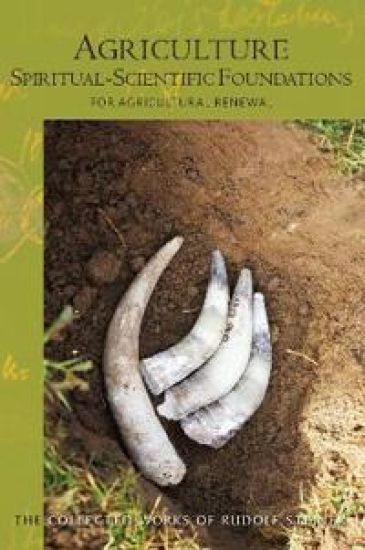
One hundred years after Rudolf Steiner presented his lectures on agriculture in 1924, the impact of his words are self-evident. Around the world, biodynamic principles are practised in thousands of thriving farms, vineyards and gardens, and Demeter certification for biodynamic produce is recognized internationally as a mark of quality. Speaking to a modest audience of farmers in a village in modern-day Poland, Steiner launched the first organic agricultural movement. But what has come to be known as ‘biodynamics’ is distinguished by many unique aspects, including the use of herbal and mineral ‘preparations’ (which serve as dynamizing applications for compost and field sprays) and the concept of the farm or garden as a single living organism, encompassing animals, crops, soil and community. This definitive, centenary edition of the influential Agriculture Course has been reedited from primary sources to be as faithful as possible to Steiner’s original meaning. Shorthand reports have been freshly transcribed, archival discoveries added, and fresh commentary and notes inserted. In addition to the original eight lectures and four discussions, this volume features a wealth of new texts, including notes, addresses and resolutions relating to the Experimental Circle – founded contemporaneously to bridge research and practice – comprehensive facsimiles of Rudolf Steiner’s preparatory notes for the course; original programmes and attendee lists; questions sent in advance; written and verbal reports by Steiner, including his address to young people; photos of Koberwitz, and high-quality colour plates of his original blackboard drawings.
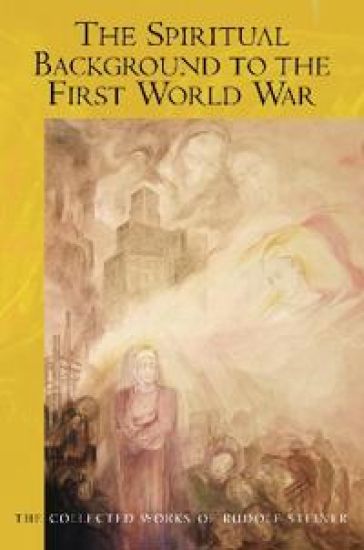
In a broad-ranging series of lectures, Rudolf Steiner shines new light on the spiritual background to the outbreak of the Great War in Europe. Spiritual entities stand behind the various peoples of the world, he says. He describes how these beings - Folk Souls - relate to the cultural diversity of Europe, America and the East, and speaks of their individual tasks and destinies in relation to the deeper causes of the catastrophic war. Central Europe has the particular mission of mediating between the Western world, the Slavic countries and by extension the East. Steiner alleges that Western secret societies consciously suppressed the spiritual life of this central cultural region through malign activities. These same brotherhoods exploited H. P. Blavatsky's occult faculties for their own ends. Given in Munich between the years 1914 and 1918 - and appearing in English for the first time - Rudolf Steiner addresses an array of topics in these lectures, including the potential elimination of the soul through specific medicines; intelligence testing as an expression of an ahrimanic trend; the stunted state of inner growth of many people after the age of 27; the effects in the spiritual world of those who die young; how war is an educator of selflessness; and the significance of Michael for the appearance of Christ in the etheric. The volume also features an introduction by Terry Boardman, editorial notes and an index.
With the unprecedented global conflict of the First World War as an overarching theme, Rudolf Steiner addresses timeless issues such as the search for harmony between peoples and nations, the development of the human capacity for love, the contemporary presence of Christ, and the questions of reincarnation and life after death. Speaking in the German city of Stuttgart during and after the war years, Steiner discusses the perpetual tension between East and West - particularly in relation to Europe. The war, he says, arose principally out of the Anglo-Saxon peoples' determination 'to exercise world-domination'. Knowing that Slavic culture is destined to be the precursor of the sixth cultural epoch, Western national interests resolved to make Eastern Europe - specifically Russia - 'the field for socialist experiments'. These events were aggravated by the failure of the Central European peoples in their own world-historical task, to 'rise to a broad sense of vision' as intermediaries between the two groups. Throughout, Steiner refers to the work of individual Folk Souls, but distinguishes them from the scourge of nationalism - especially when it is based on blood - whilst emphasizing the sovereignty of the individual human being. Although more than a century old, the enduring themes of these previously-untranslated lectures will resonate with many readers today. The main text is supplemented with an introduction by Simon Blaxland-de Lange, editorial notes and an index.
‘When you perform a ritual, it is an appeal to the spiritual powers of the universe, an appeal to the powers that are meant to connect with the earth precisely through what people do…’ – Rudolf Steiner With rituals or cultic forms as his central motif, Rudolf Steiner refers extensively to Indian, Persian and in particular Egyptian initiation rites, and how these enabled people of antiquity to connect with specific spiritual beings. He explains the practical purpose of mummification for the religious life of ancient Egypt, and of the use of ritual in certain secret societies or brotherhoods today as, in turn, a mummification of Egyptian rites. But he also points to the future, describing how truly-formulated rituals have a positive effect on human development. Whilst inhalation exercises were relevant to cultures of the past, the principle of ‘exhalation’ is important for future evolution. On the one hand, these extraordinary lectures relate to Rudolf Steiner’s ceremonial work in the Esoteric School of 1906-1914, but more significantly they were given in parallel to the founding of the Christian Community, for which Rudolf Steiner mediated its sacraments. Today, he states, Christ must be sought through a new access to the spiritual world, and any remaining traditional ritualistic forms should be permeated with the power of the Mystery of Golgotha. The lectures are accompanied with an introduction by Dale Brunsvold, editorial notes and an index.
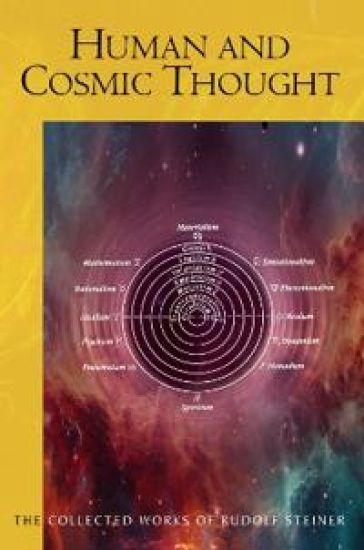
What convinces us of the truth of a point of view? Why do we find it difficult to understand or accept differing perspectives? What are the inner foundations of our knowledge? In these concentrated and aphoristic lectures, Rudolf Steiner speaks of twelve main philosophical standpoints, and the importance of comprehending each one of them. Appreciating the variety of world-views not only sharpens our thinking and makes it more flexible, but helps us to overcome a narrow-minded one sidedness, promoting tolerance of other people and their opinions. The future of philosophy rests not upon defending one single perspective and refuting all others, but in learning to experience the validity of all points of view. Steiner goes on to explain how each philosophical standpoint is coloured by a particular ‘soul mood’, which influences the way we pursue knowledge as individuals. He characterizes the work of several thinkers in this way, throwing light on their unique contributions to human culture. Through such insights into the true nature of human thinking, we are led to understand the quality of cosmic thought, and how the human being is a ‘thought which is thought by the Hierarchies of the cosmos’. This revised translation is complemented with an introduction by Robert McDermott, editorial notes and appendices by Frederick Amrine and an index.
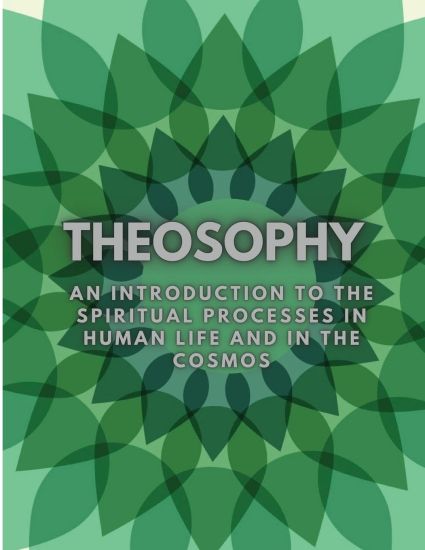
Theosophy: An Introduction to the Spiritual Processes in Human Life and in the Cosmos
Rudolf Steiner
Dennis Vogel
2024
nidottu
Theosophy is a key work for gaining a solid footing in spiritual reality as described by Rudolf Steiner. It is organized into four parts. First, Steiner builds a comprehensive understanding of human nature: physical bodily nature; soul qualities; spirit being, or "I"-being; and the higher spiritual aspects. In the next section, Steiner offers an extraordinary overview of the laws of reincarnation and the principles of karma, as we pass from one life to the next. This prepares us for the third section, in which he shows the various ways in which we live―during life on earth and after death and in the three worlds of body, soul, and spirit. Finally, we are given a succinct description of the path of knowledge, along which each person can begin to understand the marvelous and harmonious complexity of the psycho-spiritual worlds in their fullness.
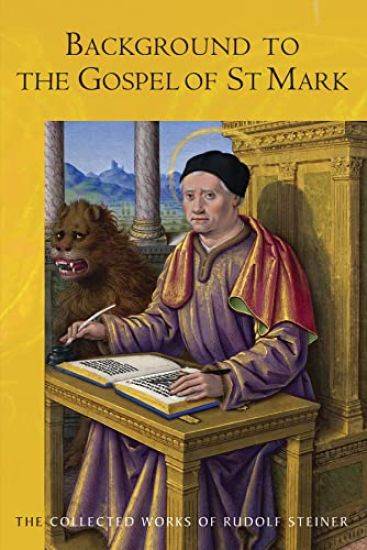
Background to the Gospel of St Mark
Rudolf Steiner
RUDOLF STEINER PRESS
2023
nidottu
Halvin toimitettuna 29,80 €
‘Christianity was bound at first to be a matter of faith and is only now beginning, very gradually, to be a matter of knowledge.’ – Rudolf Steiner Rudolf Steiner gave 70 lectures on the four canonical Gospels, characterizing the distinctive contribution of each of the evangelists. The Gospel of Mark is a ‘cosmic’ text that calls for an astronomical as well as a human reading. It is also critical for understanding the evolution of Christianity, which depends on knowledge of ‘the Mystery of Golgotha’ (Christ’s crucifixion, resurrection and ascension). ‘We are only at the beginning of Christian evolution’, Steiner states, reiterating that its further development will depend on spiritual knowledge. In order to develop such cognition, ‘most important of all is reverence for the great truths and the feeling that we can approach them only with awe and veneration’. Many profound spiritual truths are indeed revealed in these lectures. Among the panoply of topics covered are: ‘Mystery Teachings in St Mark’s Gospel’; ‘The Son of God and the Son of Man’; ‘The Symbolic Language of the Macrocosm’; ‘The Moon-religion of Yahweh’ and ‘The Penetration of the Buddha-Mercury Stream into Rosicrucianism’. This thoroughly revised edition includes notes and appendices by Frederick Amrine and an extensive introduction by Robert McDermott.
Die Sakramente - in der freien christlichen Fassung Rudolf Steiners heute
Rudolf Steiner
BoD - Books on Demand
2022
sidottu
Planteriket i lys av åndsvitenskapen. Foredrag holdt i Berlin 8. desember 1910.
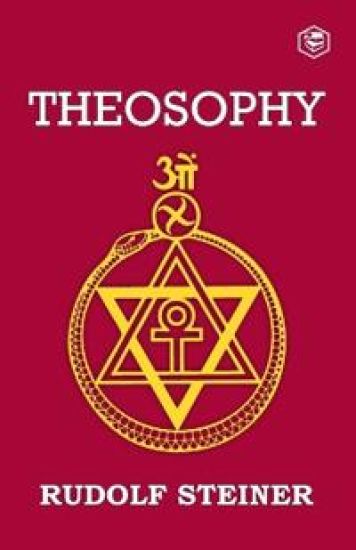
A Timeless Classic of Theosophical literature. Rudolf Steiner was the most prolific and arguably the most influential philosopher of his era. This book throws light on the development of the thoughts of this remarkable individual and reveals Steiner's engagement throughout his life with the world of theosophy. The author's experience on the subject comes through in a clear and authoritative manner. It leaves the reader asking for more on the subject while at the same time the content of this book requires a few rereading to fully appreciate it. This work profoundly impacted the development of alternative spirituality in the early twentieth century. In summation, this unusual book is a must-read classic for all students of enlightenment-both novices and seasoned scholars alike.
Reproduktion des Originals: Friedrich Nietzsche von Rudolf Steiner