Kirjojen hintavertailu – 12 903 725 kirjaa ja 27 kauppaa

Kirjailija

Rudolf Steiner

Kirjat ja teokset yhdessä paikassa: 1 477 kirjaa, julkaisuja vuosilta 1910–2026, suosituimpiin kuuluu The Cosmic New Year: A Course of Lectures by Rudolf Steiner. Vertaile teosten hintoja ja tarkista saatavuus suomalaisista kirjakaupoista.

1 477 kirjaa

Kirjojen julkaisuvuodet: 1910–2026.

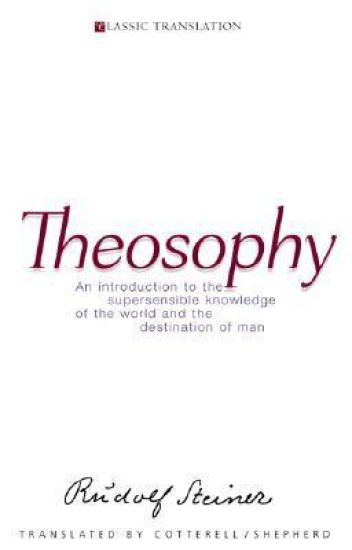
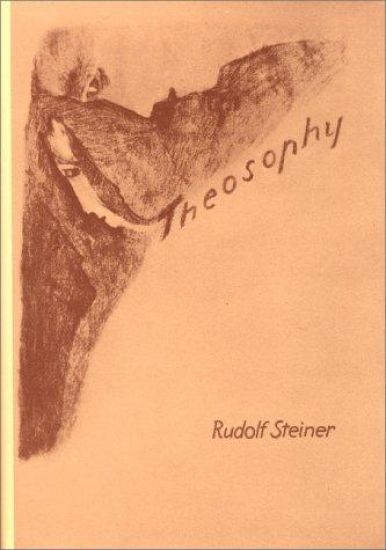
Theosophy

Theosophy

Rudolf Steiner

Rudolf Steiner Press
2005
nidottu

Halvin toimitettuna 19,40 €

Given his energetic involvement in practical initiatives and extensive lecturing, Rudolf Steiner had little time to write books. Of those he did write - belonging almost entirely to the earlier years of his work - four titles form an indispensable introduction to his later teaching: Knowledge of the Higher Worlds, Occult Science, The Philosophy of Freedom and Theosophy. Theosophy focuses on a psychology based not on the usual duality of body and mind, but on the more ancient division of body, soul and spirit. Steiner describes in detail the functions and organs of these three aspects of the human being, and the objective realms to which they belong. Just as the body derives from and belongs to the material world, so do the human soul and spirit belong to their own specific realms. These are the dimensions through which all human beings travel in the life after death, and in which - after passing the 'midnight hour' - we prepare to seek our destiny, or karma, in a new life. Theosophy features one of the most comprehensive and condensed of all Steiner's accounts of these realms, and of the experiences which our immortal being undergoes in passing through them. The book ends with a chapter on the modern 'path of knowledge', in which Steiner describes the exercises through which every person may develop the latent powers of perception which are necessary for a knowledge of metaphysical worlds.
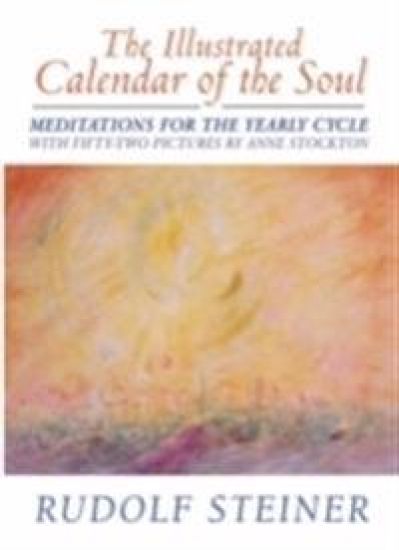
The Illustrated Calendar of the Soul

The Illustrated Calendar of the Soul

Rudolf Steiner

Temple Lodge Publishing
2004
sidottu
Rudolf Steiner's beautiful meditative verses for the yearly cycle have been used by countless people over the years. Their purpose is to awaken a feeling of unity with nature, and at the same time to stimulate a discovery of self. In listening to the changing language of the year and awakening a profound sympathy for it, we can in turn discover our own individual nature. Steiner's original and unique meditations facilitate this process, leading to a healthy feeling of being at one with the natural world. This edition features Anne Stockton's 52 celebrated and evocative paintings, which are a wonderful complement to Steiner's text. Steiner's words are newly translated for this edition by John Thomson.
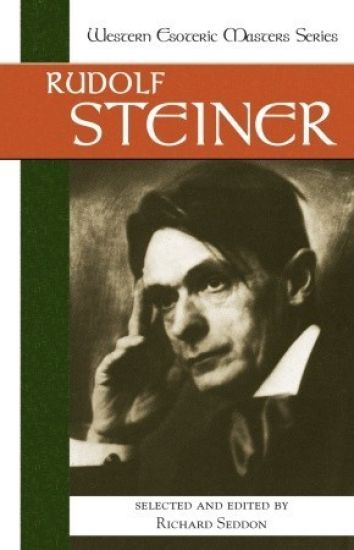
Rudolf Steiner

Rudolf Steiner

Rudolf Steiner

NORTH ATLANTIC BOOKS,U.S.
2004
pokkari
A pivotal figure of modern isotericism, Rudolf Steiner (1861-1925) was a clairvoyant and supersensitive with a scientific and philosophical education. He believed that man can gain objective knowledge of higher worlds and apply these insights to all fields of human activity. Anthroposophy, the path of wisdom and knowledge he intiated, plots man’s struggle to attain full spiritual development through the practical application of the forces brought by Christ. Steiner saw the spirit as the creative element in evolution, and his work is increasingly accepted as a practical vitalizing force for today’s world.
Rudolf Steiner Speaks to the British

Rudolf Steiner Speaks to the British

Rudolf Steiner

Rudolf Steiner Press
1998
pokkari
As demonstrated in this book, Rudolf Steiner had the ability to speak to the British in a very lively an d direct way. This volume provides readers with a fuller pic ture of Steiner''s work in Britain and his approach to esoter ic ideas whilst here. '
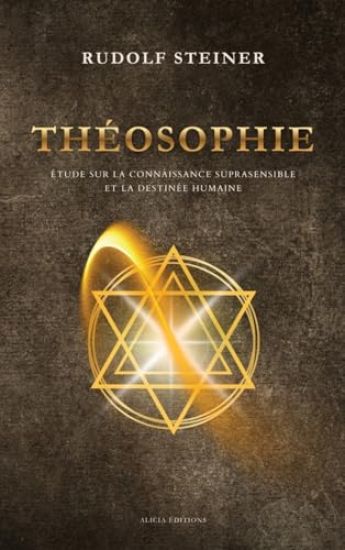
Theosophy: An Introduction to the Supersensible Knowledge of the World and the Destination of Man (Cw 9)
Written in 1904 (CW 9)Theosophy is a key work for gaining a solid footing in spiritual reality as described by Rudolf Steiner. It is organized into four parts. First, Steiner builds a comprehensive understanding of human nature: physical bodily nature; soul qualities; spirit being, or I-being; and the higher spiritual aspects. This leads us to Steiner's description of the human being as sevenfold: - Material, physical body - Ether body, or body of life forces - Sentient soul body - Mind soul - Spirit-filled consciousness soul - Life spirit - Spirit body (or spirit man)In the next section, Steiner offers an extraordinary overview of the laws of reincarnation and the principles of karma, as we pass from one life to the next. This prepares us for the third section, in which he shows the various ways in which we live--during life on earth and after death and in the three worlds of body, soul, and spirit. Finally, we are given a succinct description of the path of knowledge, along which each person can begin to understand the marvelous and harmonious complexity of the psycho-spiritual worlds in their fullness. This volume is a translation of Theosophie, Einf hrung in bersinnliche Welterkenntnis und Menschenbestimmung (GA 9).
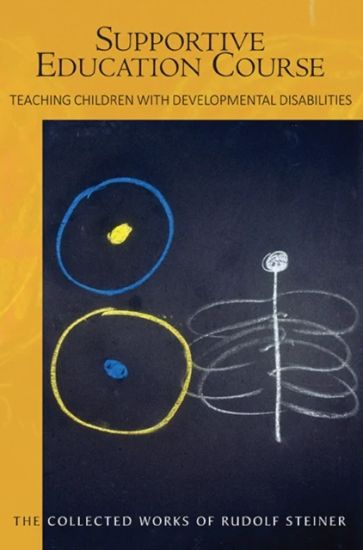
Supportive Education CourseTeaching Children with Developmental Disabilities
In the summer of 1924, in the final months of his lecturing career, Rudolf Steiner delivered this groundbreaking, foundational course on anthroposophic therapeutic education. Directed at teachers, physicians, carers and therapists, these twelve lectures weave together spiritual insight, educational practice and compassionate observation, offering a holistic approach to understanding and supporting children with developmental disabilities. Steiner emphasizes the individuality and inherent dignity of every child, maintaining that effective support must arise from a deep understanding of the relationship between body, soul and spirit. Alongside his exploration of child development and human nature, he presents detailed case studies, discussing conditions such as epilepsy, intellectual disability, behavioural difficulties, memory disorders and kleptomania. Throughout, he gives practical indications for educational work, medical support, therapeutic movement, speech exercises, artistic activities and the cultivation of an appropriate inner attitude on the part of the educator. A recurring theme is the close connection between education and healing. Steiner calls upon educators to develop powers of observation, empathy, responsibility and self-knowledge, seeing these qualities as essential for meeting the unique needs of each child. This expanded edition, based on the revised German text and enriched with extensive supplementary materials, offers an important resource for teachers, physicians, therapists, carers and anyone interested in human development, inclusive education and the transformative potential of human-centred pedagogy. Twelve lectures, June–July 1924, Dornach, GA 317

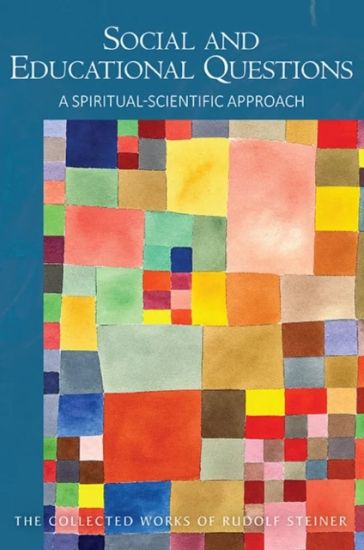
Social and Educational Questions

Social and Educational Questions

Rudolf Steiner

Rudolf Steiner Press
2026
Nidottu
In the aftermath of the First World War, as Europe grappled with social upheaval and the collapse of long-established political and cultural certainties, Rudolf Steiner turned his attention to the urgent question of how society might be renewed from its very foundations. Here, he argues that lasting solutions cannot arise from political programmes or economic reforms, but require a transformation in the way human beings think about the relationship between cultural, political and economic life. Central to these lectures is Steiner’s vision of social threefolding, presented not as an abstract theory but as a practical response to the realities of modern materialistic civilisation. Addressing themes that remain highly pertinent today, Steiner examines the roots of social crises, the responsibilities of citizenship and the freedom inherent in cultural life. Particularly significant are three lectures devoted to education, in which Rudolf Steiner outlines principles that would soon find concrete expression in the founding of the first Waldorf School. Emphasizing child development, artistic activity and the cultivation of independent thinking, the lectures present education as a central task in the renewal of society. Published in English for the first time alongside an introduction by Simon Blaxland-de Lange, these lectures challenge readers to rethink the nature of education, social responsibility and the future of human community. Seventeen lectures, April–Sept. 1919, Stuttgart, GA 192
Forming Social Judgement

Forming Social Judgement

Rudolf Steiner

Rudolf Steiner Press
2026
Nidottu
Reflecting on the forces that had brought catastrophe to Europe, Rudolf Steiner discusses how sound social judgement can be formed amidst the challenges of conflicting interests, ideology and propaganda. He references contemporary documents, political developments and the actions of social movements, emphasizing the necessity of grounding judgement in facts whilst cultivating the inner capacities required to perceive the spiritual dimensions of social life. Presented in the turbulent weeks at the end of the First World War, these lectures offer penetrating perspectives on a period of profound transformation, raising questions that remain strikingly relevant today. Steiner illuminates the historical roles of the nobility, bourgeoisie and proletariat, and the influence of Karl Marx and the emergence of modern class consciousness, whilst formulating his ideas on the balancing of relationships between economics, politics and culture – social threefolding – which would soon become central to his thinking in the post-war period. Combining historical analysis, social critique and spiritual insight, this remarkable series of lectures – newly translated in English – addresses not only the political and economic upheavals of the time but also the deeper spiritual realities that underlie historical events. This edition features an introduction by Christian von Arnim as well as an index and notes. Eight lectures, 9–24 Nov. 1918, Dornach, GA 185a