

Kirjailija
Rudolf Steiner
Kirjat ja teokset yhdessä paikassa: 1 477 kirjaa, julkaisuja vuosilta 1910–2026, suosituimpiin kuuluu The Cosmic New Year: A Course of Lectures by Rudolf Steiner. Vertaile teosten hintoja ja tarkista saatavuus suomalaisista kirjakaupoista.
1 477 kirjaa
Kirjojen julkaisuvuodet: 1910–2026.
The Partition of Human Personality During Spiritual Training
Rudolf Steiner
Kessinger Pub
2005
pokkari


'The spiritual-scientific investigator has...to transform the soul itself into an instrument; then - when his soul is awakened and he can see into a spiritual world - he experiences, on a higher level, a similar great moment as blind people do when, having been operated upon, they look at a world they have not seen before.' In a key series of lectures on personal development, Rudolf Steiner explains that the central mission of spiritual science is to enable people to ascend, in full consciousness, to a knowledge of spiritual realities. But given that the means to achieve spiritual perception are now widely available, there is the danger that some individuals will gain access to the spiritual world whilst harbouring impure motives. This can lead to a distorted understanding and vision of that world. Steiner's emphasis, therefore, is on the preparatory steps - the metamorphosis and purification of the human soul - required for achieving true spiritual enlightenment. Life itself teaches and prepares us for progress, and anthroposophy explains and brings this to consciousness. In some of his most lucid lectures, Steiner describes the missions of anger, truth and reverence, the significance of human character, the meaning of asceticism and illness, and the phenomenon of egoism. He also clarifies the differences between Buddhism and Christianity, describes the goal of spiritual science, and makes some esoteric observations about the moon. Throughout the talks, Steiner refers to many significant historical figures, including St Augustine, Coleridge, Leonardo da Vinci, Madame Blavatsky, Goethe, Homer, and Shakespeare.
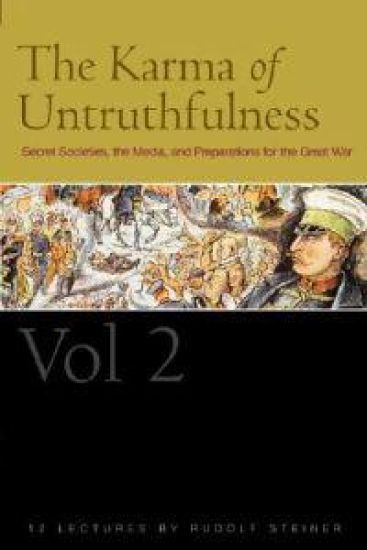
Although these lectures were given during 1916, they have much to teach us about the political spin, media distortions, propaganda and downright lies we encounter on a daily basis in public life. Rudolf Steiner's calm and methodological approach penetrates the smokescreen of accusations and counterclaims, of illusion and untruth, surrounding the Great War. Hiding behind this fog, and under the guise of outer events, he reveals the true spiritual struggle that is taking place. His words give a deeper understanding of the politics and world conflicts that confront us today through the filter of the media. In the midst of the turmoil of the First World War, Steiner speaks out courageously against the hatred and untruthfulness in the propaganda of the time. From his detailed research into the spiritual impulses of human evolution, he describes the dominant role secret brotherhoods played in the events culminating in the cataclysmic war, and warns that the retarding forces of nationalism must be overcome if Europe is to find its new destiny. He also emphasizes the urgent need for new social structures if further catastrophes are to be avoided. At a time when political events throughout the world are moving with breathless rapidity, the reader will find much in these lectures that will illuminate what lies behind the symptoms of our turbulent times. This new edition, reproduced in a larger format, is put in a modern context and introduced by Terry Boardman.
"The Foundation Stone Meditation" holds a central place in the inner life of many students of Rudolf Steiner's work. First presented during the refounding of the Anthroposophical Society at the Christmas Conference of 1923/24, it is a powerful and penetrating meditative text, which many consider to be a key to the spiritual mysteries of our time. This budget-priced pocket version features three alternative translations (by George Adams, Pauline Wehrle and Richard Seddon), together with the original German verses and an introduction by Michael Wilson.

Given the upsurge of interest in complementary therapies and treatments, medical researchers are gradually being pressured to reassess and expand existing knowledge about the structure and organization of the human body. But in spite of the advances in modern technology, there are vast areas of human physiological activity, which continue to remain undetectable. Such processes, indicates Rudolf Steiner, are connected to spiritual forces. In these revealing lectures Steiner concentrates on the relationship of such forces to the physical organs. In particular, he discusses the organs, which make up our digestive and respiratory systems; the significance of 'warmth' in the function of the blood and its effects upon the ego; and the evolutionary process implicit in the formation of the spinal column and brain. All are dealt with in a scientific manner that will appeal equally to doctors and therapists, as well as students of Steiner's spiritual philosophy. At the same time they are remarkably accessible to the general reader.

Ihmiskunnan historialliseen kehitykseen ja yksilölliseen ihmiselämään liittyviä karmallisia tarkasteluja - Karman muodostuminen kuoleman jälkeen - Karman kosminen muoto Seitsemäntoista esitelmääItävaltalaissyntyisen kasvattajan, filosofin ja henkisen opettajan Rudolf Steinerin laaja esitelmätoiminta huipentui ns. karmaesitelmiin, jotka nyt julkaistaan kuusiosaisena sarjana. Sarjan juuri ilmestynyt 2. osa kertoo monipuolisesti ja havainnollisin esimerkein kohtalon voimien toiminnasta ja ihmiskohtalon määräytymisestä. Steiner kuvaa mm. tsunamin kaltaisten suurten luonnonkatastrofien karmallista taustaa. Sarjan 1. osa ilmestyi 2004, aiemmin ilmestynyt kolmas osa on saatavissa nimellä "Antroposofisen liikkeen kohtalonyhteydet".
8 lectures, Koberwitz, June 7-20, 1924 (CW 327)The audio book, complete and unabridged (10 CD set), is read by respected actor and speech teacher Peter Bridgmont, author of Liberation of the ActorWhen Rudolf Steiner gave these lectures eighty years ago, industrial farming was on the rise and organic methods were being replaced in the name of science, efficiency, and technology. With the widespread alarm over food quality in recent years, and with the growth of the organic movement and its mainstream acceptance, perceptions are changing. The qualitative aspect of food is on the agenda again, and in this context Steiner's only course of lectures on agriculture is critical to the current debate. With these talks, Steiner created and launched "biodynamic" farming--a form of agriculture that has come to be regarded as the best organically produced food. However, the agriculture Steiner speaks of here is much more than organic--it involves working with the cosmos, with the earth, and with spiritual beings. To facilitate this, Steiner prescribes specific "preparations" for the soil, as well as other distinct methods born from his profound understanding of the material and spiritual worlds. He presents a comprehensive picture of the complex dynamic relationships at work in nature and gives basic indications of the practical measures needed to bring them into full play. These lectures are reprinted here in the "classic" translation made by Rudolf Steiner's English interpreter, George Adams. This edition also features a preface by Steiner's colleague the medical doctor Ehrenfried Pfeiffer, as well as eight color plates. This is the course that began the biodynamic movement. Rudolf Steiner's Agriculture Course is the essential work for anyone wanting to understand and use Steiner's methods of food production. This book is a translation from German of Geisteswissenschaftliche Grundlagen zum Gedeihen der Landwirtschaft. Landwirtschaftlicher Kursus (GA 327).

7 selected lectures by Rudolf Steiner In 1924--in response to questions about the depletion of soils and a general deterioration of crops and livestock--Rudolf Steiner gave eight lectures on "the spiritual foundations for a renewal of agriculture." Based on his suggestions and spiritual science, generations of farmers, gardeners, viticulturist, and researchers developed biodynamics as a healing, nurturing, holistic, ecological, organic, and spiritual approach to a sustainable care of the Earth. Biodynamic methods consider the farm or garden to be a self-contained organism, embedded in the living landscape of the Earth, which is in turn part of a living, dynamic cosmos of vital, spiritual energies. The aim is to increase the health and vitality of the whole, including the farmer or gardener. The biodynamic practitioner follows an alchemical, transformative path of working with the Earth through the nine "homeopathic" preparations created by Steiner. What Is Biodynamics? collects seven seminal lectures--four on developing a spiritual perception of nature and three from his Agriculture Course, dealing with the preparations. Hugh Courtney of the Josephine Porter Institute for Applied Biodynamics contributes an informative, passionate, and visionary introduction. Whether you are concerned with the quality of agriculture and gardening in particular or have a broader interest in the ecological crises facing us today, this book offers a transformative approach that can truly change the way we live together on Earth. C O N T E N T S "That the Earth May Be Healed" An Introduction to Biodynamic Agriculture, by Hugh Courtney 1. Spiritual Beings 12. Spiritual Beings 23. Elementals 14. Elementals 25. Agriculture 16. Agriculture 27. Agriculture 3 Further Reading


Featuring over 90 of Rudolf Steiner's best-loved verses and meditations, this volume collects a range of material on various themes, such as working with spiritual beings, connecting with loved ones who have passed over, developing selfhood, and celebrating festivals and seasons. Countless people have worked with these meditations over the decades and can testify to their power, as well as the strength and comfort they offer the meditant. Although various translations from the German exist for many of the verses, George and Mary Adams's renderings can truly be said to be 'classic', and are the most widely used within the English-speaking anthroposophical movement that has grown up around Steiner's work. George Adams acted as Rudolf Steiner's personal interpreter when he lectured in Britain, and thus developed an intuitive understanding of Steiner's deepest impulses connected to esoteric work. Those who know these verses will be delighted that they are available again, while those who approach them for the first time will discover a treasure of wisdom as well as abundant tools for personal transformation. This edition also features the original German texts where applicable.
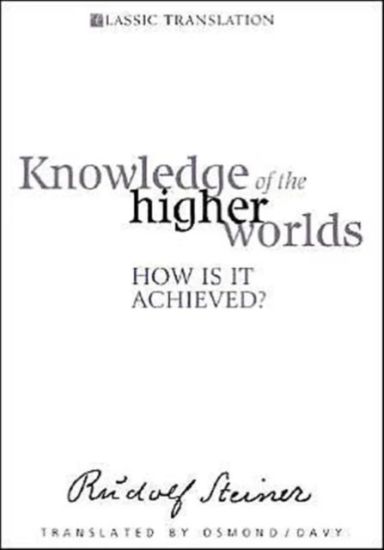
Published in 1904 (CW 10)Rudolf Steiner's foundational handbook for spiritual and personal development has grown more modern with time, though his methods remain clearly distinguishable from many current paths of inner work. First, Steiner's method is based on the clarity of thought normally associated with scientific research. Instead of denying clear thinking, his aim is to extend it beyond its present limitations. Second, Steiner recognizes--as do all genuine paths--that the way to spiritual experience is arduous and dangerous and calls for self-control in thought, word, and action. The human being comprises a unity, and we cannot develop knowledge without a corresponding development of feeling and will. Steiner predicted that humanity would begin to experience a longing for forms of experience that transcended intellectual, materialistic thinking. More than a hundred years after the first publication of this book, countless means are offered for achieving transcendental experience, including Eastern meditation practices, channeling, remote viewing, and astral projection. Moreover, there has been a huge increase in the number of people who report various suprasensory perceptions, such as near-death experiences and meetings with angels. In this context, Steiner's key spiritual guidebook is needed more than ever, given its unique, precise instructions for inner training, its protective exercises, and its indications for staying grounded and centered. Knowledge of the Higher Worlds begins with the preconditions for personal development and guides the reader through the stages of initiation, its practical aspects, and its effects. This volume is a translation from German of the written work Wie erlangt man Erkenntnisse der hoeheren Welten? (GA 10).

This volume is an investigation into secret groups with hidden agendas.

Although these lectures were given to teachers as preparatory material, they are by no means concerned only with education. Study of Man is Steiner's most succinct presentation of his human-centred spiritual psychology, accessible to anyone interested in the riddles of human existence. His approach is unique in that it takes account not only of influences working into humanity from the past, but also of future states of consciousness and being. Reprinted here in the original 'classic' Harwood/Fox translation, the lectures were delivered in 1919 to the teachers of the Waldorf school in Stuttgart, the first to be founded on the work of Rudolf Steiner. Over the years, since the exponential growth of Steiner education around the world, this volume has become the basic study text for teachers in Steiner schools. But as well as providing a grounding for the work of educators, Study of Man will be of keen interest to parents, counsellors, psychologists, and students of Steiner's philosophy. For the latter, this volume provides a fundamental picture of the human being according to the anthroposophical understanding of the world.