Kirjojen hintavertailu – 12 903 725 kirjaa ja 27 kauppaa

Kirjailija

Rudolf Steiner

Kirjat ja teokset yhdessä paikassa: 1 477 kirjaa, julkaisuja vuosilta 1910–2026, suosituimpiin kuuluu The Cosmic New Year: A Course of Lectures by Rudolf Steiner. Vertaile teosten hintoja ja tarkista saatavuus suomalaisista kirjakaupoista.

1 477 kirjaa

Kirjojen julkaisuvuodet: 1910–2026.

The Spiritual Ground of Education

The Spiritual Ground of Education

Rudolf Steiner

SteinerBooks, Inc
2004
nidottu
9 lectures, Oxford, England, August 16-29, 1922 (CW 305) These lectures follow from those presented in Soul Economy. Given during a conference on spiritual values in education and life and attended by many prominent people of the time, Steiner's Oxford lectures present the principles of Waldorf education at the highest cultural level. The Manchester Guardian reported: "Dr. Steiner's lectures...brought to us in a very vivid way an ideal of humanity in education. He spoke to us about teachers who, freely and unitedly, unrestricted by external prescription, develop their educational methods exclusively out of a thorough knowledge of human nature. He spoke to us about a kind of knowledge needed by the teacher, a knowledge of the being of man and the world, which is at the same time scientific and also penetrates into the most intimate inner life, which is intuitive and artistic." These lectures form one of the best introductions to Waldorf education. Contents: Introduction by Christopher Bamford The Spiritual Ground of Education The Perception of Soul and Spirit The Spiritual Ground of Physical Education The Art of Educating Young Children The Art of Educating Older Boys and Girls Teachers As Artists in Education The Organization of the Waldorf School Moral Teaching & Eurythmy in the Waldorf School Teachers in the Waldorf School German source: Die geistig-seelischen Grundkr fte der Erziehungskunst. Spirituelle Werte in Erziehung und sozialem Leben (GA 305).
Calender of the Soul

Calender of the Soul

Rudolf Steiner

SteinerBooks, Inc
2004
nidottu
"You will find meditative verses for the individual weeks of the year. You should take these meditations quite particularly into your hearts, for they contain what can make the soul alive and what really corresponds to a living relationship of the soul forces to the forces of the macrocosm." --Rudolf Steiner Many are familiar with Rudolf Steiner's work The Calendar of the Soul, the book of fifty-two weekly meditative verses that run from Easter to Easter. Few, however, know anything of its history. The form in which it appears today derives from the 1925 edition, which appeared only a few days after Steiner's death. This was the first printing of the verses in their current form as a commercially available edition. Seven years earlier, in 1918, an edition with a short introduction by Steiner appeared as the thirteenth of the "Colorful Waldorf Astoria Booklets," tiny books packaged with Waldorf Astoria cigarettes and intended for soldiers in the trenches. The project was an initiative of Emil Molt, the owner of the cigarette company, an anthroposophist, and a close friend of Rudolf Steiner. It also appeared in a series of books edited by Molt's friend Hermann Hesse, intended for German prisoners of war. Neither edition was available to the public through bookstores. The Calendar itself came into being seven years previously. Imma von Eckhardstein, who had been a member of Steiner's inner circle of coworkers since 1904, first had the idea in spring 1911. Soon afterword--for health reasons--Marie von Sivers decided to spend three months at Portorose, near Trieste, on the Adriatic. Imma von Eckhardstein accompanied her. Rudolf Steiner also spent much time there when not lecturing. Von Eckhardstein was given the task of illustrating the calendar, following Steiner's indications for new monthly zodiacal images, as well as for other images. Publication was planned for the end of 1911, with the help of a grant from the Foundation for Theosophical Art. The actual printing occurred in Munich in March 1912, under the watchful eyes of Imma von Eckhardstein. Books were available in April. Only a limited edition was published, and it was never reissued. On April 11, in Helsinki, following a special lecture for Russian members who had traveled from Moscow to hear him, Steiner showed his audience the new Calendar 1912/13, saying, "Whoever meditates on these verses will achieve a great deal." The calendar begins with an introduction by Steiner on the nature of a calendar as a way to connect past and future as well as earth and cosmos. It is important to get a sense of the movements of the Sun and Moon in relation to the planets and fixed stars. It is also important to bring the past into the present by invoking great beings in the evolution of consciousness on their appropriate birth or death days, and to celebrate the Holy Days. Steiner designed new zodiacal images for each month, traced the phases of the moon, and specified significant people, events, and/or festivals for each day. By living into the year in this way, one is ready for the meditative year as expressed by the weekly verses of the soul calendar. C O N T E N T S Introduction by Christopher BamfordWhat We Intend (Was gemeint ist): Rudolf Steiner's Introduction The Facsimile (Original Calendar of the Soul)The Calendar of the Soul (in English)Rudolf Steiner's Sketches for The Calendar of the Soul with Oral Explanations

Kohtalon yhteyksiä

Kohtalon yhteyksiä

Rudolf Steiner

SUOMEN ANTROPOSOFINEN LIITTO
2004
sidottu
Itävaltalaissyntyisen henkisen opettajan, kasvattajan ja filosofin Rudolf Steinerin laaja esitelmätoiminta huipentui ns. karmaesitelmiin, jotka nyt julkaistaan kuusiosaisena sarjana. Steiner tarkastelee ensin yleisesti kohtalon voimien vaikutustapaa ihmisen eri olemuspuolissa ja käsittelee mm. kysymystä vapauden ja välttämättömyyden suhteesta ihmiselämässä. Hän kuvaa, miten ihminen luo kohtalonsa ääriviivat yhdessä korkeampien olentojen kanssa ennen syntymäänsä. Kirjan loppuosan esitelmissä Rudolf Steiner kertoo kohtalon ja jälleensyntymisen tapahtumista esimerkkien avulla. Esittelemällä mm. Franz Schubertin, Friedrich Nietzschen ja Charles Darwinin edellisen elämän olosuhteita hän antaa esimerkkejä siitä, miten kohtalo vaikuttaa elämästä toiseen siirryttäessä.
Maatalouskurssi

Maatalouskurssi

Rudolf Steiner

Biodynaaminen yhdistys
2004
nidottu

Halvin toimitettuna 39,20 €

Rudolf Steiner opastaa katsomaan ja hoitamaan luonnon yhteyksiä kokonaisvaltaisesti. Elintarvikkeita tuotetaan täten tavalla, joka tekee mahdolliseksi elämän jatkumisen maapallolla. Biodynaaminen liike sai alkunsa näistä Steinerin viime vuosisadan alussa pitämistä esitelmistä.2. laajennettu painos.
Medicine

Medicine

Rudolf Steiner

Rudolf Steiner Press
2003
nidottu
Rudolf Steiner, the often undervalued, multifaceted genius of modern times, contributed much to the regeneration of culture. In addition to his philosophical teachings, he provided ideas for the development of many practical activities including education--both general and special--agriculture, medicine, economics, architecture, science, religion, and the arts. Today there are thousands of schools, clinics, farms, and many other organizations based on his ideas. Steiner's original contribution to human knowledge was based on his ability to conduct spiritual research, the investigation of metaphysical dimensions of existence. With his scientific and philosophical training, he brought a new systematic discipline to the field, allowing for conscious methods and comprehensive results. A natural seer from childhood, he cultivated his spiritual vision to a high degree, enabling him to speak with authority on previously veiled mysteries of life. Topics include: true human nature as a basis for medical practice; the science of knowing; the mission of reverence; the four temperaments; the bridge between universal spirituality and the physical; the constellation of the supersensible bodies; the invisible human within us: the pathology underlying therapy; cancer and mistletoe, and aspects of psychiatry; case history questions: diagnosis and therapy; anthroposophic medicine in practice: and three case histories.
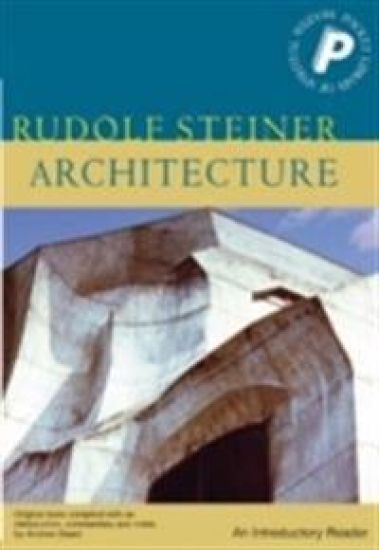
Architecture

Architecture

Rudolf Steiner

Rudolf Steiner Press
2003
nidottu
Rudolf Steiner, the often undervalued, multifaceted genius of modern times, contributed much to the regeneration of culture. In addition to his philosophical teachings, he provided ideas for the development of many practical activities including education--both general and special--agriculture, medicine, economics, architecture, science, religion, and the arts. Today there are thousands of schools, clinics, farms, and many other organizations based on his ideas. Steiner's original contribution to human knowledge was based on his ability to conduct spiritual research, the investigation of metaphysical dimensions of existence. With his scientific and philosophical training, he brought a new systematic discipline to the field, allowing for conscious methods and comprehensive results. A natural seer from childhood, he cultivated his spiritual vision to a high degree, enabling him to speak with authority on previously veiled mysteries of life. Topics include: the origins and nature of architecturethe formative influence of architectural formsthe history of architecture in the light of human spiritual evolutionnew architecture as a means of uniting with spiritual forcesart and architecture as manifestations of spiritual realitiesmetamorphosis in architectureaspects of a new form of architecturethe first and second Goetheanum buildingsthe architecture of a community in Dornachthe temple is the human beingthe restoration of the lost temple
Education

Education

Rudolf Steiner

Rudolf Steiner Press
2003
nidottu
Rudolf Steiner, the often undervalued, multifaceted genius of modern times, contributed much to the regeneration of culture. In addition to his philosophical teachings, he provided ideas for the development of many practical activities including education both general and special agriculture, medicine, economics, architecture, science, religion, and the arts. Today there are thousands of schools, clinics, farms, and many other organizations based on his ideas. Steiner's original contribution to human knowledge was based on his ability to conduct spiritual research, the investigation of metaphysical dimensions of existence. With his scientific and philosophical training, he brought a new systematic discipline to the field, allowing for conscious methods and comprehensive results. A natural seer from childhood, he cultivated his spiritual vision to a high degree, enabling him to speak with authority on previously veiled mysteries of life. Topics include: a social basis for education; the spirit of the Waldorf school; educational methods based on anthroposophy; children at play; teaching through the insights of spiritual science; adolescents after the fourteenth year; science, art, religion, and morality; the spiritual basis of education; the role of caring in education; the roots of education and the kingdom of childhood; address at a parents' evening; and education within the broader social context."
Agriculture

Agriculture

Rudolf Steiner

Rudolf Steiner Press
2003
nidottu
Rudolf Steiner, the often undervalued, multifaceted genius of modern times, contributed much to the regeneration of culture. In addition to his philosophical teachings, he provided ideas for the development of many practical activities including education--both general and special--agriculture, medicine, economics, architecture, science, religion, and the arts. Today there are thousands of schools, clinics, farms, and many other organizations based on his ideas. Steiner's original contribution to human knowledge was based on his ability to conduct spiritual research, the investigation of metaphysical dimensions of existence. With his scientific and philosophical training, he brought a new systematic discipline to the field, allowing for conscious methods and comprehensive results. A natural seer from childhood, he cultivated his spiritual vision to a high degree, enabling him to speak with authority on previously veiled mysteries of life. Topics include: the evolving human being; cosmos as the source of life; plants and the living earth; farms and the realms of nature; bringing the chemical elements to life; soil and the world of spirit; supporting and regulating life processes; spirits of the elements; nutrition and vitality; responsibility for the future.
Evil

Evil

Rudolf Steiner

Rudolf Steiner Press
2003
nidottu
This selection of lectures offers insights into the complexity of evil as a phe-nomenon that arises when an event or process appears outside its true context. As a result, something that is "good" initially may become "evil" because it occurs in the wrong place. Steiner tells us that this as an effect of Lucifer and Ahriman, spiritual beings who work as polar forces and hinder human evolution by opposing our appropriate development. Confronting these difficulties, however, ultimately furthers our spiritual development. CONTENTSEditor's Introduction1. Origin and Nature of EvilEvil Illuminated through the Science of the SpiritGood and Evil: Creation and Death2. All Life Unfolds between the Polarities of Luciferic and Ahrimanic ForcesChrist, Ahriman and Lucifer in Relationship to the Human BeingThe Relation of Ahrimanic and Luciferic Beings to Normally Evolved Hierarchies3. The "Fall" Consequences and CounterbalanceThe Midgard Snake, the Fenris Wolf, and HelThe Tree of Life and the Tree of the Knowledge of Good and Evil4. The Intensification of Evil and the Task of Our Present Consciousness Soul AgeSupersensible Aspects of Historical ResearchThe Three Streams of Materialistic Civilization5. "666" and the Future of Humanithy--The Task of ManichaeismHow Do I Find the Christ? The Future of Human Evolution
Life Beyond Death

Life Beyond Death

Rudolf Steiner

Rudolf Steiner Press
2003
nidottu
Although Western humanity has conquered the outer world with the aid of technology and science, death remains an unsolved and largely unexplored mystery. Rudolf Steiner, as an exceptional seer, was able to research spiritually the question of what happens to human consciousness after the physical body passes away. In these remarkably matter-of-fact lectures, he affirms that life continues beyond death. Far from being dissipated, the individual's consciousness awakens to a new reality, beginning a great journey to the farthest expanses of the cosmos. One's consciousness embarks on a journey and process of purification and preparation. Steiner indicates that one of the most important tasks for our present civilization is to reestablish living connections with those who have died. He gives suggestions as to how this can be done safely and describes how the dead can be of help to those on Earth. Life Beyond Death is an ideal introduction to the spiritual scientific views of our continuing journey.