Kirjojen hintavertailu – 12 859 824 kirjaa ja 27 kauppaa

Kirjailija

Rudyard Kipling

Kirjat ja teokset yhdessä paikassa: 2 583 kirjaa, julkaisuja vuosilta 1890–2026, suosituimpiin kuuluu Oxford Reading Tree TreeTops Classics: Level 15: Pack of 6. Vertaile teosten hintoja ja tarkista saatavuus suomalaisista kirjakaupoista.

2 583 kirjaa

Kirjojen julkaisuvuodet: 1890–2026.

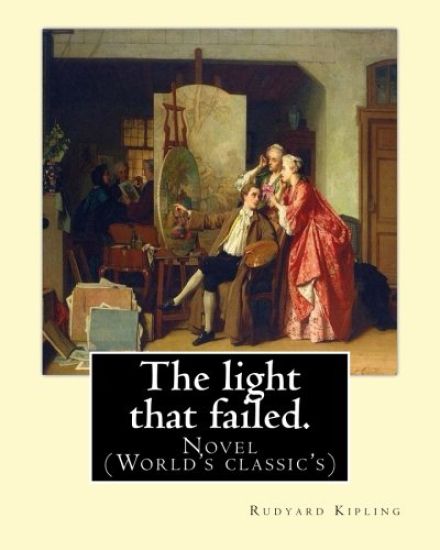
The light that failed. By: Rudyard Kipling: Novel (World's classic's)

The light that failed. By: Rudyard Kipling: Novel (World's classic's)

Rudyard Kipling

Createspace Independent Publishing Platform
2016
nidottu
The Light That Failed is a novel by Rudyard Kipling that was first published in 1890 in Lippincott's Monthly Magazine dated January 1891. Most of the novel is set in London, but many important events throughout the story occur in Sudan or India. The Light that Failed follows the life of Dick Heldar, a painter who goes blind. A play by George Fleming, starring Johnston Forbes-Robertson, his wife Gertrude Elliott, and Sydney Valentine, was first staged in the West End from February to April 1903 1] and moved on to Broadway in November, making the story more famous. It was made into a 1916 silent film by Path , with Robert Edeson and Jose Collins, a 1923 silent film by Famous Players-Lasky, and a 1939 film by Paramount, starring Ronald Colman as Heldar, with Muriel Angelus, Ida Lupino, and Walter Huston............ Joseph Rudyard Kipling ( 30 December 1865 - 18 January 1936) was an English journalist, short-story writer, poet, and novelist. Kipling's works of fiction include The Jungle Book (1894), Kim (1901), and many short stories, including "The Man Who Would Be King" (1888). His poems include "Mandalay" (1890), "Gunga Din" (1890), "The Gods of the Copybook Headings" (1919), "The White Man's Burden" (1899), and "If-" (1910). He is regarded as a major innovator in the art of the short story; his children's books are classics of children's literature; and one critic described his work as exhibiting "a versatile and luminous narrative gift". Kipling was one of the most popular writers in the United Kingdom, in both prose and verse, in the late 19th and early 20th centuries. Henry James said: "Kipling strikes me personally as the most complete man of genius, as distinct from fine intelligence, that I have ever known." In 1907, at the age of 42, he was awarded the Nobel Prize in Literature, making him the first English-language writer to receive the prize, and its youngest recipient to date. He was also sounded out for the British Poet Laureateship and on several occasions for a knighthood, both of which he declined. Kipling's subsequent reputation has changed according to the political and social climate of the age and the resulting contrasting views about him continued for much of the 20th century. George Orwell called him a "prophet of British imperialism". Literary critic Douglas Kerr wrote: " Kipling] is still an author who can inspire passionate disagreement and his place in literary and cultural history is far from settled. But as the age of the European empires recedes, he is recognised as an incomparable, if controversial, interpreter of how empire was experienced. That, and an increasing recognition of his extraordinary narrative gifts, make him a force to be reckoned with."
The Phantom 'Rickshaw and Other Ghost Stories

The Phantom 'Rickshaw and Other Ghost Stories

Rudyard Kipling

Createspace Independent Publishing Platform
2016
nidottu
Rudyard Kipling was a prolific English writer who is widely considered to be one of the greatest authors in all of literature. Kipling wrote classics in many genres including the Jungle Books, Just So Stories, Kim, and The Man Who Would Be King. This is a collection of the following five ghost stories: The Phantom Rickshaw, My Own True Ghost Story, The Strange Ride of Morrowbie Jukes, The Man Who Would Be King, and "The Finest Story in the World".
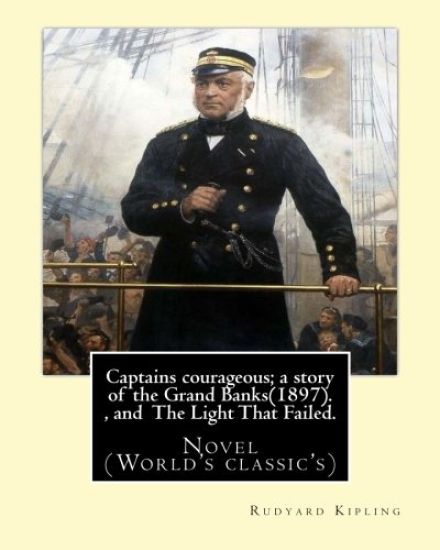
Captains courageous; a story of the Grand Banks(1897). By: Rudyard Kipling, and The Light That Failed. By: Rudyard Kipling: Novel (World's classic's)
Captains Courageous is an 1897 novel, by Rudyard Kipling, that follows the adventures of fifteen-year-old Harvey Cheyne Jr., the spoiled son of a railroad tycoon, after he is saved from drowning by a Portuguese fisherman in the north Atlantic. The novel originally appeared as a serialisation in McClure's, beginning with the November 1896 edition. In 1900, in his essay "What We Can Expect of the American Boy," Teddy Roosevelt extolled the book and praised Kipling for describing "in the liveliest way just what a boy should be and do." 1] The book's title comes from the ballad "Mary Ambree", which starts, "When captains courageous, whom death could not daunt". Kipling had previously used the same title for an article on businessmen as the new adventurers, published in The Times of 23 November 1892. Protagonist Harvey Cheyne, Jr., is the son of a wealthy railroad magnate and his wife, in San Diego, California. Washed overboard from a transatlantic steamship and rescued by fishermen off the Grand Banks of Newfoundland, Harvey can neither persuade them to take him quickly to port, nor convince them of his wealth. Disko Troop, captain of the schooner We're Here, offers him temporary membership in the crew until they return to port, and Harvey later accepts. Through a series of trials and adventures, Harvey, with the help of the captain's son Dan Troop, becomes acclimated to the fishing lifestyle, and even skillful. Eventually, the schooner returns to port and Harvey wires his parents, who immediately hasten to Boston, Massachusetts, and thence to the fishing town of Gloucester to recover him. There, Harvey's mother rewards the seaman Manuel, who initially rescued her son; Harvey's father hires Dan to work on his prestigious tea clipper fleet; and Harvey goes to Stanford to prepare for taking over his father's shipping lines........ The Light That Failed is a novel by Rudyard Kipling that was first published in 1890 in Lippincott's Monthly Magazine dated January 1891. Most of the novel is set in London, but many important events throughout the story occur in Sudan or India. The Light that Failed follows the life of Dick Heldar, a painter who goes blind. A play by George Fleming, starring Johnston Forbes-Robertson, his wife Gertrude Elliott, and Sydney Valentine, was first staged in the West End from February to April 1903 1] and moved on to Broadway in November, making the story more famous. 2] It was made into a 1916 silent film by Path , with Robert Edeson and Jose Collins, a 1923 silent film by Famous Players-Lasky, and a 1939 film by Paramount, starring Ronald Colman as Heldar, with Muriel Angelus, Ida Lupino, and Walter Huston..... Joseph Rudyard Kipling ( 30 December 1865 - 18 January 1936) was an English journalist, short-story writer, poet, and novelist. Kipling's works of fiction include The Jungle Book (1894), Kim (1901), and many short stories, including "The Man Who Would Be King" (1888). His poems include "Mandalay" (1890), "Gunga Din" (1890), "The Gods of the Copybook Headings" (1919), "The White Man's Burden" (1899), and "If-" (1910). He is regarded as a major innovator in the art of the short story; his children's books are classics of children's literature; and one critic described his work as exhibiting "a versatile and luminous narrative gift". Kipling was one of the most popular writers in the United Kingdom, in both prose and verse, in the late 19th and early 20th centuries. Henry James said: "Kipling strikes me personally as the most complete man of genius, as distinct from fine intelligence, that I have ever known." ....
Captains courageous; a story of the Grand Banks (1897). By: Rudyard Kipling: Novel (illustrated)
Captains Courageous is an 1897 novel, by Rudyard Kipling, that follows the adventures of fifteen-year-old Harvey Cheyne Jr., the spoiled son of a railroad tycoon, after he is saved from drowning by a Portuguese fisherman in the north Atlantic. The novel originally appeared as a serialisation in McClure's, beginning with the November 1896 edition. In 1900, in his essay "What We Can Expect of the American Boy," Teddy Roosevelt extolled the book and praised Kipling for describing "in the liveliest way just what a boy should be and do."..... Protagonist Harvey Cheyne, Jr., is the son of a wealthy railroad magnate and his wife, in San Diego, California. Washed overboard from a transatlantic steamship and rescued by fishermen off the Grand Banks of Newfoundland, Harvey can neither persuade them to take him quickly to port, nor convince them of his wealth. Disko Troop, captain of the schooner We're Here, offers him temporary membership in the crew until they return to port, and Harvey later accepts. Through a series of trials and adventures, Harvey, with the help of the captain's son Dan Troop, becomes acclimated to the fishing lifestyle, and even skillful. Eventually, the schooner returns to port and Harvey wires his parents, who immediately hasten to Boston, Massachusetts, and thence to the fishing town of Gloucester to recover him. There, Harvey's mother rewards the seaman Manuel, who initially rescued her son; Harvey's father hires Dan to work on his prestigious tea clipper fleet; and Harvey goes to Stanford to prepare for taking over his father's shipping lines..... Joseph Rudyard Kipling ( 30 December 1865 - 18 January 1936) was an English journalist, short-story writer, poet, and novelist. Kipling's works of fiction include The Jungle Book (1894), Kim (1901), and many short stories, including "The Man Who Would Be King" (1888). His poems include "Mandalay" (1890), "Gunga Din" (1890), "The Gods of the Copybook Headings" (1919), "The White Man's Burden" (1899), and "If-" (1910). He is regarded as a major innovator in the art of the short story; his children's books are classics of children's literature; and one critic described his work as exhibiting "a versatile and luminous narrative gift". Kipling was one of the most popular writers in the United Kingdom, in both prose and verse, in the late 19th and early 20th centuries. Henry James said: "Kipling strikes me personally as the most complete man of genius, as distinct from fine intelligence, that I have ever known." In 1907, at the age of 42, he was awarded the Nobel Prize in Literature, making him the first English-language writer to receive the prize, and its youngest recipient to date. He was also sounded out for the British Poet Laureateship and on several occasions for a knighthood, both of which he declined. Kipling's subsequent reputation has changed according to the political and social climate of the age and the resulting contrasting views about him continued for much of the 20th century. George Orwell called him a "prophet of British imperialism". Literary critic Douglas Kerr wrote: " Kipling] is still an author who can inspire passionate disagreement and his place in literary and cultural history is far from settled. But as the age of the European empires recedes, he is recognised as an incomparable, if controversial, interpreter of how empire was experienced. That, and an increasing recognition of his extraordinary narrative gifts, make him a force to be reckoned with."
Kim

Kim

Rudyard Kipling

Createspace Independent Publishing Platform
2016
nidottu
Kim is the orphaned son of an Irish soldier and a poor Irish mother who have both died in poverty. Living a vagabond existence in India under British rule in the late 19th century, Kim earns his living by begging and running small errands on the streets of Lahore. He occasionally works for Mahbub Ali, a Pashtun horse trader who is one of the native operatives of the British secret service. Kim is so immersed in the local culture, few realise he is a white child, though he carries a packet of documents from his father entrusted to him by an Indian woman who cared for him.
Kim

Kim

Rudyard Kipling

Createspace Independent Publishing Platform
2016
nidottu
Kim is a novel by Nobel Prize-winning English author Rudyard Kipling. It was rst published serially in McClure's Magazine from December 1900 to October 1901 as well as in Cassell's Magazine from January to November 1901, and rst published in book form by Macmillan & Co. Ltd in October 1901. The story unfolds against the backdrop of The Great Game, the political con ict between Russia and Britain in Central Asia. The novel made the term "Great Game" popular and introduced the theme of great power rivalry and intrigue. It is set after the Second Afghan War which ended in 1881, but before the Third, probably in the period 1893 to 1898. The novel is notable for its detailed portrait of the people, culture, and varied religions of India. "The book presents a vivid picture of India, its teeming populations, religions, and superstitions, and the life of the bazaars and the road." In 1998, the Modern Library ranked Kim No. 78 on its list of the 100 best English-language novels of the 20th century. In 2003 the book was listed on the BBC's The Big Read poll of the UK's "best-loved novel." Each RADLEY CLASSIC is a meticulously restored, luxurious and faithful reproduction of a classic book; produced with elegant text layout, clarity of presentation, and stylistic features that make reading a true pleasure. Special attention is given to legible fonts and adequate letter sizing, correct line length for readability, generous margins and triple lead (lavish line separation); plus we do not allow any mistakes/changes/ additions to creep into the author's words. Visit RADLEY BOOKS at www.radleybooks.com to see more classic book titles in this series.
The Day's Work: (1894) by: Rudyard Kipling. ( The book contains 13 short stories, which were mainly written between 1893 and 1896 whil
The Day's Work is a collection of short stories by Rudyard Kipling. It was first published in 1898. There are no poems included between the different stories in The Day's Work, as there are in many other of Kipling's collections. Contents The book contains 13 short stories, which were mainly written between 1893 and 1896 while Kipling was living in Vermont. Four of the stories contained in The Day's Work include anthropomorphic characters. "The Bridge-Builders" "A Walking Delegate" "The Ship that Found Herself" "The Tomb of His Ancestors" "The Devil and the Deep Sea" "William the Conqueror - part I" "William the Conqueror - part II" ".007" "The Maltese Cat" "Bread upon the Waters" "An Error in the Fourth Dimension" "My Sunday at Home" "The Brushwood Boy"
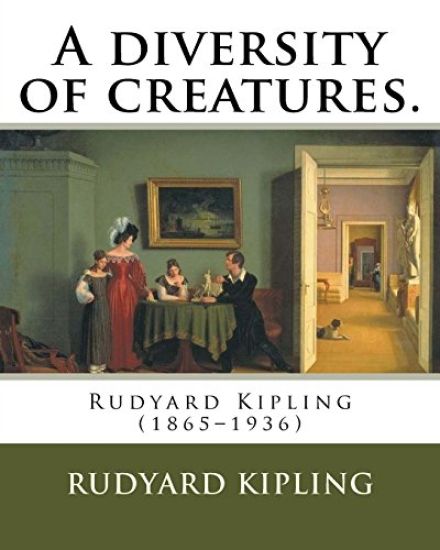
A diversity of creatures. By: Rudyard Kipling: Rudyard Kipling (1865-1936)

A diversity of creatures. By: Rudyard Kipling: Rudyard Kipling (1865-1936)

Rudyard Kipling

Createspace Independent Publishing Platform
2016
nidottu
Joseph Rudyard Kipling ( 30 December 1865 - 18 January 1936) was an English journalist, short-story writer, poet, and novelist. Kipling's works of fiction include The Jungle Book (1894), Kim (1901), and many short stories, including "The Man Who Would Be King" (1888). His poems include "Mandalay" (1890), "Gunga Din" (1890), "The Gods of the Copybook Headings" (1919), "The White Man's Burden" (1899), and "If-" (1910). He is regarded as a major innovator in the art of the short story; his children's books are classics of children's literature; and one critic described his work as exhibiting "a versatile and luminous narrative gift". Kipling was one of the most popular writers in the United Kingdom, in both prose and verse, in the late 19th and early 20th centuries. Henry James said: "Kipling strikes me personally as the most complete man of genius, as distinct from fine intelligence, that I have ever known." In 1907, at the age of 42, he was awarded the Nobel Prize in Literature, making him the first English-language writer to receive the prize, and its youngest recipient to date. He was also sounded out for the British Poet Laureateship and on several occasions for a knighthood, both of which he declined. Kipling's subsequent reputation has changed according to the political and social climate of the age and the resulting contrasting views about him continued for much of the 20th century. George Orwell called him a "prophet of British imperialism". Literary critic Douglas Kerr wrote: " Kipling] is still an author who can inspire passionate disagreement and his place in literary and cultural history is far from settled. But as the age of the European empires recedes, he is recognised as an incomparable, if controversial, interpreter of how empire was experienced. That, and an increasing recognition of his extraordinary narrative gifts, make him a force to be reckoned with."
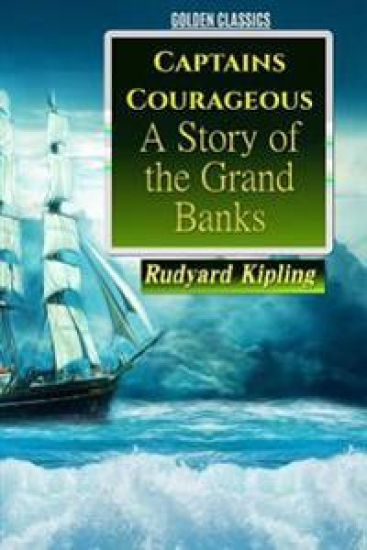
Captains Courageous: A Story of the Grand Banks

Captains Courageous: A Story of the Grand Banks

Rudyard Kipling

Createspace Independent Publishing Platform
2016
nidottu
Classics for Your Collection: goo.gl/U80LCr --------- Protagonist Harvey Cheyne, Jr., is the son of a wealthy railroad magnate and his wife, in San Diego, California. Washed overboard from a transatlantic steamship and rescued by fishermen off the Grand Banks of Newfoundland, Harvey can neither persuade them to take him quickly to port, nor convince them of his wealth. Disko Troop, captain of the schooner We're Here, offers him temporary membership in the crew until they return to port, and Harvey later accepts. Through a series of trials and adventures, Harvey, with the help of the captain's son Dan Troop, becomes acclimated to the fishing lifestyle, and even skillful. Eventually, the schooner returns to port and Harvey wires his parents, who immediately hasten to Boston, Massachusetts, and thence to the fishing town of Gloucester to recover him. There, Harvey's mother rewards the seaman Manuel, who initially rescued her son; Harvey's father hires Dan to work on his prestigious tea clipper fleet; and Harvey goes to Stanford to prepare for taking over his father's shipping lines. Scroll Up and Grab Your Copy