Kirjojen hintavertailu – 12 859 824 kirjaa ja 27 kauppaa

Kirjailija

Rudyard Kipling

Kirjat ja teokset yhdessä paikassa: 2 583 kirjaa, julkaisuja vuosilta 1890–2026, suosituimpiin kuuluu Oxford Reading Tree TreeTops Classics: Level 15: Pack of 6. Vertaile teosten hintoja ja tarkista saatavuus suomalaisista kirjakaupoista.

2 583 kirjaa

Kirjojen julkaisuvuodet: 1890–2026.

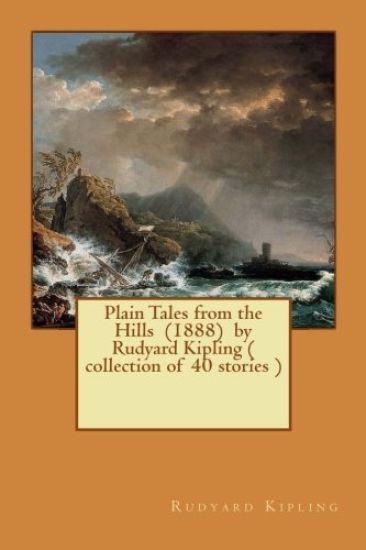
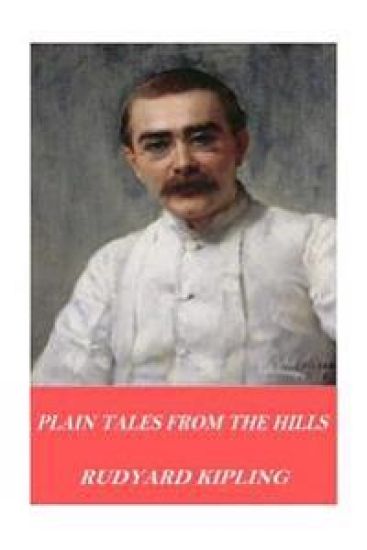
Plain Tales from the Hills (1888) by Rudyard Kipling ( collection of 40 stories )

Plain Tales from the Hills (1888) by Rudyard Kipling ( collection of 40 stories )

Rudyard Kipling

Createspace Independent Publishing Platform
2017
nidottu
Plain Tales from the Hills (published 1888) is the first collection of short stories by Rudyard Kipling. Out of its 40 stories, "eight-and-twenty", according to Kipling's Preface, were initially published in the Civil and Military Gazette in Lahore, Punjab, British India, between November 1886 and June 1887. "The remaining tales are, more or less, new." (Kipling had worked as a journalist for the CMG-his first job-since 1882, when he was not quite 17.) The title refers, by way of a pun on "Plain" as the reverse of "Hills", to the deceptively simple narrative style; and to the fact that many of the stories are set in the Hill Station of Simla-the "summer capital of the British Raj" during the hot weather. Not all of the stories are, in fact, about life in "the Hills" Kipling gives sketches of many aspects of life in British India. The tales include the first appearances, in book form, of Mrs. Hauksbee, the policeman Strickland, and the Soldiers Three (Privates Mulvaney, Ortheris and Learoyd)
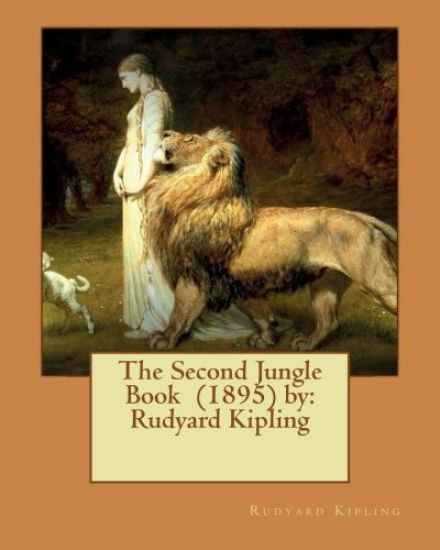
The Second Jungle Book (1895) by: Rudyard Kipling

The Second Jungle Book (1895) by: Rudyard Kipling

Rudyard Kipling

Createspace Independent Publishing Platform
2017
nidottu
The Second Jungle Book is a sequel to The Jungle Book by Rudyard Kipling. First published in 1895, it features five stories about Mowgli and three unrelated stories, all but one set in India, most of which Kipling wrote while living in Vermont. All of the stories were previously published in magazines in 1894-5, often under different titles. The original book is now worth $3.4 million Each story is followed by a related poem: "How Fear Came" This story takes place before Mowgli fights Shere Khan. During a drought, Mowgli and the animals gather at a shrunken Wainganga River for a Water Truce" where the display of the blue-colored Peace Rock prevents anyone from hunting at its riverbanks. After Shere Khan was driven away by him for nearly defiling the Peace Rock, Hathi the elephant tells Mowgli the story of how the first tiger got his stripes when fear first came to the jungle. This story can be seen as a forerunner of the Just So Stories. "The Law of the Jungle" (poem) "The Miracle of Purun Bhagat" An influential Indian politician abandons his worldly goods to become an ascetic holy man. Later, he must save a village from a landslide with the help of the local animals whom he has befriended. "A Song of Kabir" (poem) "Letting in the Jungle" Mowgli has been driven out of the human village for witchcraft, and the superstitious villagers are preparing to kill his adopted parents Messua and her unnamed husband. Mowgli rescues them and then prepares to take revenge. "Mowgli's Song Against People" (poem) "The Undertakers" A mugger crocodile, a jackal and an adjutant stork (erroneously referred to as a crane in the story), three of the most unpleasant characters on the river, spend an afternoon bickering with each other until some Englishmen arrive to settle some unfinished business with the crocodile. "A Ripple Song" (poem) "The King's Ankus" Mowgli discovers a jewelled object beneath the Cold Lairs, which he later discards carelessly, not realising that men will kill each other to possess it. Note: the first edition of The Second Jungle Book inadvertently omits the final 500 words of this story, in which Mowgli returns the treasure to its hiding-place to prevent further killings. Although the error was corrected in later printings, it was picked up by some later editions. "The Song of the Little Hunter" (poem) "Quiquern" A teenaged Inuit boy and girl set out across the arctic ice on a desperate hunt for food to save their tribe from starvation, guided by the mysterious animal-spirit Quiquern. However, Quiquern is not what he seems. "Angutivaun Taina" (poem) "Red Dog" Mowgli's wolfpack is threatened by a pack of rampaging dholes. Mowgli asks Kaa the python to help him formulate a plan to defeat them. "Chil's Song" (poem) "The Spring Running" Mowgli, now almost seventeen years old, is growing restless for reasons he cannot understand. On an aimless run through the jungle he stumbles across the village where his adopted mother Messua is now living with her two-year-old son, and is torn between staying with her and returning to the jungle. "The Outsong" (poem)
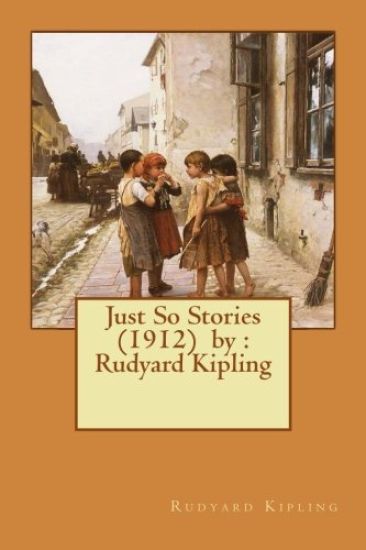
Just So Stories (1912) by: Rudyard Kipling

Just So Stories (1912) by: Rudyard Kipling

Rudyard Kipling

Createspace Independent Publishing Platform
2017
nidottu
Just So Stories for Little Children is a 1902 collection of origin stories by the British author Rudyard Kipling. Considered a classic of children's literature, the book is among Kipling's best known works. Kipling began working on the book by telling the first three chapters as bedtime stories to his daughter Josephine. These had to be told "just so" (exactly in the words she was used to) or she would complain. The stories describe how one animal or another acquired its most distinctive features, such as how the Leopard got his spots. For the book, Kipling illustrated the stories himself. The stories have appeared in a variety of adaptations including a musical and animated films. Evolutionary biologists have noted that what Kipling did in fiction, they have done in reality, providing explanations for the evolutionary development of animal features. The stories, first published in 1902, are origin stories, fantastic accounts of how various features of animals came to be. A forerunner of these stories is Kipling's "How Fear Came", in The Second Jungle Book (1895). In it, Mowgli hears the story of how the tiger got his stripes. The Just So Stories each tell how a particular animal was modified from an original form to its current form by the acts of man, or some magical being. For example, the Whale has a tiny throat because he swallowed a mariner, who tied a raft inside to block the whale from swallowing other men. The Camel has a hump given to him by a djinn as punishment for the camel's refusing to work (the hump allows the camel to work longer between times of eating). The Leopard's spots were painted by an Ethiopian (after the Ethiopian painted himself black). The Kangaroo gets its powerful hind legs, long tail, and hopping gait after being chased all day by a dingo, sent by a minor god responding to the Kangaroo's request to be made different from all other animals. The Just So Stories began as bedtime stories told to his daughter "Effie" Josephine, Kipling's firstborn]; when the first three were published in a children's magazine, a year before her death, Kipling explained: "in the evening there were stories meant to put Effie to sleep, and you were not allowed to alter those by one single little word. They had to be told just so; or Effie would wake up and put back the missing sentence. So at last they came to be like charms, all three of them, -the whale tale, the camel tale, and the rhinoceros
Djungelboken (Vietnamesiska)

Djungelboken (Vietnamesiska)

Rudyard Kipling

Nhà Xu?t B?n Ph? N?
2017
nidottu
Bäst känd för "Mowgli"-berättelserna är Rudyard Kiplings The Jungle Book en mästerlig sammanfogning av myt, moral, äventyr och kraftfull berättande. Satt i centrala Indien blir Mowgli uppfostrad av en flock vargar. På vägen möter han minnesvärda karaktärer som den hotfulla tigern Shere Khan, panthern Bagheera och björnen Baloo. Inklusive andra berättelser som Rikki-Tikki-Tavi, en hjältemodig mangust, och Toomai, en ung elefantförare, Kiplings fabler är lika populära idag som någonsin.
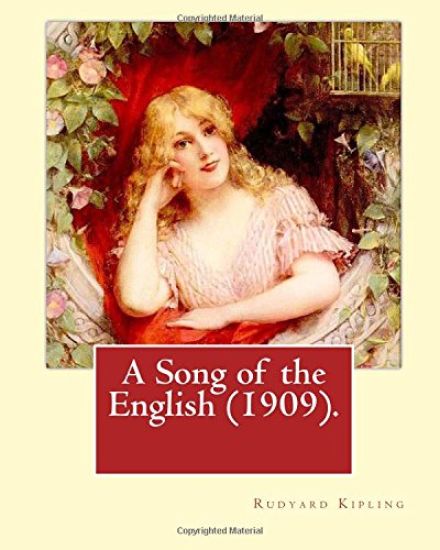
A Song of the English (1909). By: Rudyard Kipling, illustrated By: W. Heath Robinson: William Heath Robinson (31 May 1872 - 13 September 1944) was an
Joseph Rudyard Kipling ( 30 December 1865 - 18 January 1936) was an English journalist, short-story writer, poet, and novelist. Kipling's works of fiction include The Jungle Book (1894), Kim (1901), and many short stories, including "The Man Who Would Be King" (1888). His poems include "Mandalay" (1890), "Gunga Din" (1890), "The Gods of the Copybook Headings" (1919), "The White Man's Burden" (1899), and "If-" (1910). He is regarded as a major innovator in the art of the short story; his children's books are classics of children's literature; and one critic described his work as exhibiting "a versatile and luminous narrative gift". Kipling was one of the most popular writers in the United Kingdom, in both prose and verse, in the late 19th and early 20th centuries. Henry James said: "Kipling strikes me personally as the most complete man of genius, as distinct from fine intelligence, that I have ever known." In 1907, at the age of 42, he was awarded the Nobel Prize in Literature, making him the first English-language writer to receive the prize, and its youngest recipient to date. He was also sounded out for the British Poet Laureateship and on several occasions for a knighthood, both of which he declined. Kipling's subsequent reputation has changed according to the political and social climate of the age and the resulting contrasting views about him continued for much of the 20th century. George Orwell called him a "prophet of British imperialism". Literary critic Douglas Kerr wrote: " Kipling] is still an author who can inspire passionate disagreement and his place in literary and cultural history is far from settled. But as the age of the European empires recedes, he is recognised as an incomparable, if controversial, interpreter of how empire was experienced. That, and an increasing recognition of his extraordinary narrative gifts, make him a force to be reckoned with." William Heath Robinson (31 May 1872 - 13 September 1944) was an English cartoonist and illustrator best known for drawings of ridiculously complicated machines for achieving simple objectives. In the UK, the term "Heath Robinson" entered the language during the 1914-1918 First World War as a description of any unnecessarily complex and implausible contrivance, much as "Rube Goldberg machines" came to be used in the US from the 1920s onwards as a term for similar efforts. "Heath Robinson contraption" is perhaps more often used in relation to temporary fixes using ingenuity and whatever is to hand, often string and tape, or unlikely cannibalisations. Its continuing popularity was undoubtedly linked to Second World War Britain's shortages and the need to "make do and mend".
The Jungle Book

The Jungle Book

Rudyard Kipling

General Press
2017
muu
Since its inception in 1894, 'The Jungle Book' has enchanted readers-both young and old-with its invaluable moral lessons. By bestowing the animals in the stories with human traits, famed writer Rudyard Kipling gives readers timeless parables that teach family values and the importance of community. The most popular of these tales center on Mowgli, a young boy who lives in the jungle amongst a community of animals. All before reaching his teenage years, he is brought up by wolves, trained by a bear, kidnapped by monkeys, and much more. This collection also features other classic stories, most notably 'Rikki Tikki Tavi', a story of a young mongoose named 'Rikki' who serves as a protector from dangerous cobras for a British family residing in India. In this masterful tale, the young mongoose is forced into a ferocious battle with Nagin, a large venomous cobra threatening Rikki's family and seeking revenge for the death of her counterpart, Nag. These stories, with their vibrant characters and important moral lessons, have stood the test of time, having been reprinted in hundreds of different versions and languages around the world. Still amazingly contemporary even though it was written more than 100 years ago, the pacing, language, and characters will keep readers young and old turning the pages, and then begging for more. ABOUT THE AUTHOR: Rudyard Kipling (1865-1936) was born in Bombay, but educated in England at the United Services College, Westward Ho, Bideford. In 1882 he returned to India, where he worked for Anglo-Indian newspapers. His literary career began with Departmental Ditties (1886), but subsequently he became chiefly known as a writer of short stories. A prolific writer, he achieved fame quickly. Kipling was the poet of the British Empire and its yeoman, the common soldier, whom he glorified in many of his works, in particular Plain Tales from the Hills (1888) and Soldiers Three (1888), collections of short stories with roughly and affectionately drawn soldier portraits. His Barrack Room Ballads (1892) were written for, as much as about, the common soldier. In 1894 appeared his Jungle Book, which became a children's classic all over the world. Kim (1901), the story of Kimball O'Hara and his adventures in the Himalayas, is perhaps his most felicitous work. Other works include The Second Jungle Book (1895), The Seven Seas (1896), Captains Courageous (1897), The Day's Work (1898), Stalky and Co. (1899), Just So Stories (1902), Trafficks and Discoveries (1904), Puck of Pook's Hill (1906), Actions and Reactions (1909), Debits and Credits (1926), Thy Servant a Dog (1930), and Limits and Renewals (1932). During the First World War Kipling wrote some propaganda books. His collected poems appeared in 1933. Kipling was the recipient of many honorary degrees and other awards. In 1926 he received the Gold Medal of the Royal Society of Literature, which only Scott, Meredith, and Hardy had been awarded before him. Rudyard Kipling died on January 18, 1936.

The Eyes of Asia

The Eyes of Asia

Rudyard Kipling

Createspace Independent Publishing Platform
2016
nidottu
A series of letters purporting to be written by an East Indian officer, wounded in France, to his relatives at home. The articles forming The Eyes of Asia appeared in the American Saturday Evening Post in six parts over the month of May and the beginning of June 1917 and were published in book form by Doubleday in the United States in 1918. Though three of the stories appeared in the Morning Post in London, there was no English book publication till they were collected in Kipling's posthumous Sussex Edition. The first of the letters to appear in the Morning Post was No. 2, followed by No. 4 in the Morning Post. No. 3 did not appear in a London paper. No. 1 was in the Morning Post on May 17th and 21st, 1917. The book consists of four stories that read as letters home from soldiers from India and the North-West Frontier, which take place in 1915 and 1916. "A Retired Gentleman" and "The Fumes of the Heart" are both fictionalized letters written from the perspective of wounded Indian soldiers, a Rajput and a Sikh, to their families. The second is cast as a dictated letter from a Sikh soldier to his brother and has dramatic asides and digressions from the injured soldier punctuating the text. As for the remaining two stories, "The Private Account" is presented as a scene showing an Afghan family reading and responding to a letter from their son on the Western Front, and the final story, "A Trooper of Horse", takes the form of a letter from an unwounded Muslim soldier in France to his mother.
Rewards and fairies (1910). By: Rudyard Kipling, illustrated By: Charles E. Brock: historical fantasy

Rewards and fairies (1910). By: Rudyard Kipling, illustrated By: Charles E. Brock: historical fantasy

Charles E. Brock; Rudyard Kipling

Createspace Independent Publishing Platform
2016
nidottu
Rewards and Fairies is a historical fantasy book by Rudyard Kipling published in 1910. The title comes from the poem "Farewell, Rewards and Fairies" by Richard Corbet. The poem is referred to by the children in the first story of the preceding book Puck of Pook's Hill. Rewards and Fairies is set one year later chronologically although published four years afterwards. The book consists of a series of short stories set in historical times with a linking contemporary narrative. Dan and Una are two children, living in the Weald of Sussex in the area of Kipling's own home Bateman's. They have encountered Puck and he magically conjures up real and fictional individuals from Sussex's past to tell the children some aspect of its history and prehistory, though the episodes are not always historically accurate. Another recurring character is Old Hobden who represents the continuity of the inhabitants of the land. His ancestors sometimes appear in the stories and seem very much like him. Some stories contain elements of the supernatural as well as history. Each story is preceded and followed by a poem, including If-, often described as Britain's favourite poem. Other well known poems included in the book are Cold Iron and The Way through the Woods..... Charles Edmund Brock (5 February 1870 - 28 February 1938) was a widely published English painter, line artist and book illustrator, who signed most of his work C. E. Brock. He was the eldest of four artist brothers, including Henry Matthew Brock, also an illustrator........ Joseph Rudyard Kipling kip-ling, About this sound listen; 30 December 1865 - 18 January 1936) was an English journalist, short-story writer, poet, and novelist. Kipling's works of fiction include The Jungle Book (1894), Kim (1901), and many short stories, including "The Man Who Would Be King" (1888). His poems include "Mandalay" (1890), "Gunga Din" (1890), "The Gods of the Copybook Headings" (1919), "The White Man's Burden" (1899), and "If-" (1910). He is regarded as a major innovator in the art of the short story;his children's books are classics of children's literature; and one critic described his work as exhibiting "a versatile and luminous narrative gift".
A diversity of creatures. By: Rudyard Kipling

A diversity of creatures. By: Rudyard Kipling

Rudyard Kipling

Createspace Independent Publishing Platform
2016
nidottu
Joseph Rudyard Kipling ( 30 December 1865 - 18 January 1936) was an English journalist, short-story writer, poet, and novelist. Kipling's works of fiction include The Jungle Book (1894), Kim (1901), and many short stories, including "The Man Who Would Be King" (1888). His poems include "Mandalay" (1890), "Gunga Din" (1890), "The Gods of the Copybook Headings" (1919), "The White Man's Burden" (1899), and "If-" (1910). He is regarded as a major innovator in the art of the short story; his children's books are classics of children's literature; and one critic described his work as exhibiting "a versatile and luminous narrative gift". Kipling was one of the most popular writers in the United Kingdom, in both prose and verse, in the late 19th and early 20th centuries. Henry James said: "Kipling strikes me personally as the most complete man of genius, as distinct from fine intelligence, that I have ever known." In 1907, at the age of 42, he was awarded the Nobel Prize in Literature, making him the first English-language writer to receive the prize, and its youngest recipient to date. He was also sounded out for the British Poet Laureateship and on several occasions for a knighthood, both of which he declined. Kipling's subsequent reputation has changed according to the political and social climate of the age and the resulting contrasting views about him continued for much of the 20th century. George Orwell called him a "prophet of British imperialism". Literary critic Douglas Kerr wrote: " Kipling] is still an author who can inspire passionate disagreement and his place in literary and cultural history is far from settled. But as the age of the European empires recedes, he is recognised as an incomparable, if controversial, interpreter of how empire was experienced. That, and an increasing recognition of his extraordinary narrative gifts, make him a force to be reckoned with."