Kirjojen hintavertailu – 12 903 724 kirjaa ja 27 kauppaa

Kirjailija

S. Frederick Starr

Kirjat ja teokset yhdessä paikassa: 36 kirjaa, julkaisuja vuosilta 1992–2024, suosituimpiin kuuluu Une Belle Maison. Vertaile teosten hintoja ja tarkista saatavuus suomalaisista kirjakaupoista.

36 kirjaa

Kirjojen julkaisuvuodet: 1992–2024.

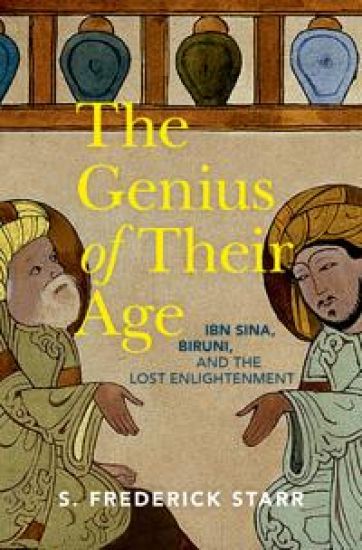
The Genius of their Age

The Genius of their Age

S. Frederick Starr

OXFORD UNIVERSITY PRESS INC
2024
sidottu
A vibrant portrait of an age when Arabic enlightenment anticipated and inspired the European Renaissance, illuminated by its guiding figures and rivals, Ibn Sina and Biruni. In The Genius of their Age, S. Frederick Starr follows up his acclaimed Lost Enlightenment: Central Asia's Golden Age with a portrait of the Arab enlightenment and its key figures--Abu-Ali al-Husayn ibn-'Abdallah Ibn-Sina and Abu al-Rayhan Muhammad ibn Ahmad al-Biruni. A thousand years ago, these two intellectual giants--known as Ibn Sina and Biruni for short--achieved stunning breakthroughs in fields as diverse as medicine, astronomy, mathematics, philosophy, geography, and physics. Biruni measured the earth more precisely than anyone else down to the sixteenth century, pondered a heliocentric universe, and hypothesized the existence of North and South America as inhabited continents. Ibn Sina's writing on philosophy and metaphysics enriched the writings of countless European thinkers, including St. Thomas Aquinas, while Sina's grand synthesis of medical knowledge became the standard for the next six hundred years in Europe, the Middle East, and India. They both also commented extensively on the works of ancient Greeks and earlier Muslim thinkers, whose works they aspired to synthesize--and to transcend. Contemporaries, Ibn Sina and Biruni were born within the borders of what is now Uzbekistan and spent their lives in Central Asia. They also became rivals, launching a correspondence and commentary that galvanized them despite sometimes bitter disagreement. Centuries before the West caught up with them, Ibn Sina and Biruni reflected their age's feats and its intellectual high point, persisting with their inquiries and their independence amid turmoil and rapid change. Though scholars have long dissected the works of Ibn Sina and Biruni, S. Frederick Starr focuses also on their lives and the times in which they lived. By contextualizing their work and by making the age palpable to the reader, S. Frederick Starr gives the achievements of Ibn Sina and Biruni a holistic and unforgettably human dimension.
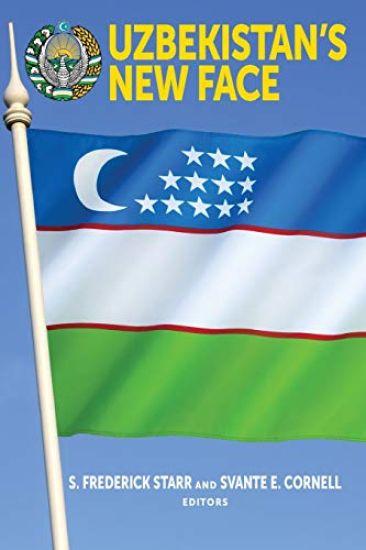
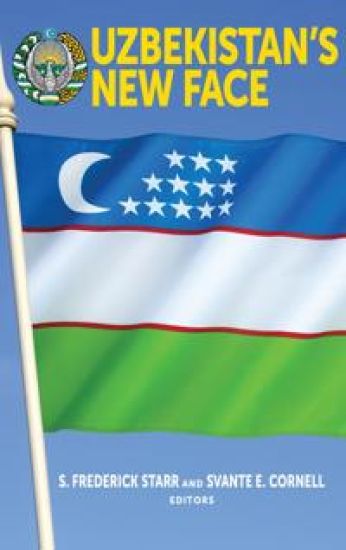
Uzbekistan's New Face

Uzbekistan's New Face

S. Frederick Starr; Svante E. Cornell

Rowman Littlefield
2018
nidottu
Uzbekistan, long considered the center of Central Asia, has the region’s largest population and borders every other regional state including Afghanistan. For the first 25 years of its independence, it adopted a cautious, defensive policy that emphasized sovereignty and treated regional efforts at cooperation with skepticism. But after taking over as President in autumn 2016, Shavkat Mirziyoyev launched a breathtaking series of reform initiatives. His slogan – “it is high time the government serves the people, not vice versa” – led to large-scale reforms in virtually every sector. Time will tell whether the reform effort will succeed, but its first positive fruits are already visible, particularly in a new dynamism within Uzbek society, as well as a fresh approach to foreign relations, where a new spirit of regionalism is taking root. This book is the first systematic effort to analyze Uzbekistan’s reforms.
Uzbekistan's New Face

Uzbekistan's New Face

S. Frederick Starr; Svante E. Cornell

Rowman Littlefield
2018
sidottu
Uzbekistan, long considered the center of Central Asia, has the region’s largest population and borders every other regional state including Afghanistan. For the first 25 years of its independence, it adopted a cautious, defensive policy that emphasized sovereignty and treated regional efforts at cooperation with skepticism. But after taking over as President in autumn 2016, Shavkat Mirziyoyev launched a breathtaking series of reform initiatives. His slogan – “it is high time the government serves the people, not vice versa” – led to large-scale reforms in virtually every sector. Time will tell whether the reform effort will succeed, but its first positive fruits are already visible, particularly in a new dynamism within Uzbek society, as well as a fresh approach to foreign relations, where a new spirit of regionalism is taking root. This book is the first systematic effort to analyze Uzbekistan’s reforms.
The Long Game on the Silk Road

The Long Game on the Silk Road

S. Frederick Starr; Svante E. Cornell

Rowman Littlefield
2018
nidottu
This book argues that American and European policies toward Central Asia and the Caucasus suffer from both conceptual and structural impediments. It traces the framework of Western policies to the 1975 Helsinki Final Act, which resulted in the stovepiping of relations into political, economic, and democracy categories – and in often uncoordinated or contradictory policies. While the authors embrace the goal of promoting human rights and democracy, they argue that the antagonistic methods adopted to advance this goal have proven counter-productive. They propose that Western governments work with the regional states rather than on or against them; and that instead of focusing directly on political systems, policies should focus on developing the quality of governance and help build institutions that will be building blocks of rule of law and democracy in the long term. The authors also argue that Western leaders have largely failed to grasp the significance of this region, relegated it to a subordinate status and thus damaging western interests. The development of sovereign, economically strong, and effectively self-governing states in the Caucasus and Central Asia is an important goal in its own right; the book stresses the importance of a region where the development and preservation of secular statehood could become a model for the entire Muslim world.
The Long Game on the Silk Road

The Long Game on the Silk Road

S. Frederick Starr; Svante E. Cornell

Rowman Littlefield
2018
sidottu
This book argues that American and European policies toward Central Asia and the Caucasus suffer from both conceptual and structural impediments. It traces the framework of Western policies to the 1975 Helsinki Final Act, which resulted in the stovepiping of relations into political, economic, and democracy categories – and in often uncoordinated or contradictory policies. While the authors embrace the goal of promoting human rights and democracy, they argue that the antagonistic methods adopted to advance this goal have proven counter-productive. They propose that Western governments work with the regional states rather than on or against them; and that instead of focusing directly on political systems, policies should focus on developing the quality of governance and help build institutions that will be building blocks of rule of law and democracy in the long term. The authors also argue that Western leaders have largely failed to grasp the significance of this region, relegated it to a subordinate status and thus damaging western interests. The development of sovereign, economically strong, and effectively self-governing states in the Caucasus and Central Asia is an important goal in its own right; the book stresses the importance of a region where the development and preservation of secular statehood could become a model for the entire Muslim world.
Eurasia's Shifting Geopolitical Tectonic Plates

Eurasia's Shifting Geopolitical Tectonic Plates

Alexandros Petersen; S. Frederick Starr

Lexington Books
2017
sidottu
This anthology of articles, short studies, and interviews by Alexandros Petersen was written over the span of ten years, starting in 2004. Yet they are even more relevant today in their prescient analysis. Petersen insightfully addressed the implications of the West withdrawing its engagement from the Caucasus and Central Asia, the expansion of the Chinese influence, and Russia’s strategic interests. The collection is organized along four main topics: (1) Eurasia and a changing transatlantic world: the world politics of shifting frontiers in the post-Soviet world; (2) Energy geopolitics in the Caspian and beyond, with its crucial implications for European energy security; (3) the Black Sea world, covering the dynamics of Russia, Turkey, and the South Caucasus, including the role of NATO and frozen conflicts in the region; (4) the new silk roads: China’s inroads in Central Asia, which is often overlooked in the West but will be critical for the geopolitical balance of powers.
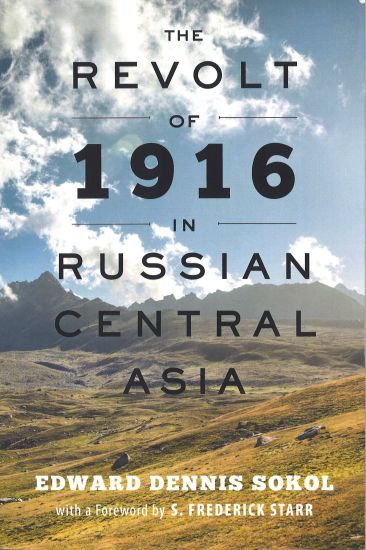
The Revolt of 1916 in Russian Central Asia

The Revolt of 1916 in Russian Central Asia

Edward Dennis Sokol; S. Frederick Starr

Johns Hopkins University Press
2016
pokkari
During the summer of 1916, approximately 270,000 Central Asians-Kazakhs, Kyrgyz, Tajiks, Turkmen, and Uzbeks-perished at the hands of the Russian army in a revolt that began with resistance to the Tsar's World War I draft. In addition to those killed outright, tens of thousands of men, women, and children died while trying to escape over treacherous mountain passes into China. Experts calculate that the Kyrgyz, who suffered most heavily, lost 40% of their total population. This horrific incident was nearly lost to history. During the Soviet era, the massacre of 1916 became a taboo subject, hidden in sealed archives and banished from history books. Edward Dennis Sokol's pioneering Revolt of 1916 in Russian Central Asia, published in 1954 and reissued now for the first time in decades, was for generations the only scholarly study of the massacre in any language. Drawing on early Soviet periodicals, including Krasnyi Arkhiv ( The Red Archive), Sokol's wide-ranging and exhaustively researched work explores the Tsarist policies that led to Russian encroachment against the land and rights of the indigenous Central Asian people. It describes the corruption that permeated Russian colonial rule and argues that the uprising was no mere draft riot, but a revolt against Tsarist colonialism in all its dimensions: economic, political, religious, and national. Sokol's masterpiece also traces the chain reaction between the uprising, the collapse of Tsarism, and the Bolshevik Revolution. A classic study of a vanished world, Sokol's work takes on contemporary resonance in light of Vladimir Putin's heavy-handed efforts to persuade Kyrgyzstan to join his new economic union. Sokol explains how an earlier Russian conquest ended in disaster and implies that a modern conquest might have the same effect. Essential reading for historians, political scientists, and policymakers, this reissued edition is being published to coincide with the centennial observation of the genocide.
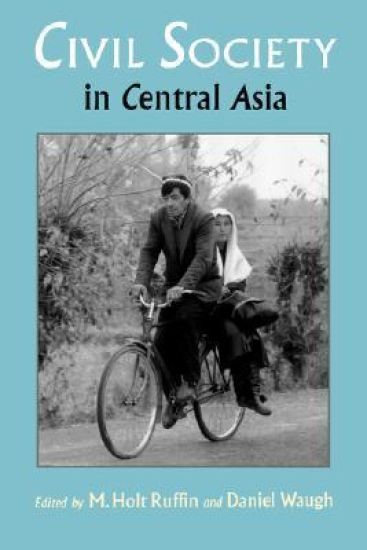
Civil Society in Central Asia

Civil Society in Central Asia

M. Holt Ruffin; Daniel Waugh; S. Frederick Starr

University of Washington Press
2015
sidottu
Central Asia, known as the home of Tamerlane and the Silk Road, is a crossroads of great cultures and civilizations. In 1991 five nations at the heart of the region—Kazakstan, Kyrgyzstan, Tajikistan, Turkmenistan, and Uzbekistan— suddenly became independent. Today they sit strategically between Russia, China, and Iran and hold some of the world's largest deposits of oil and natural gas. Long-suppressed ethnic identities are finding new expression in language, religion, and occasional civil conflicts. Civil Society in Central Asia is a pathbreaking collection of essays by scholars and activists that illuminates the social and institutional forces shaping this important region's future. An appendix provides a guide to projects being carried out by local and international groups.
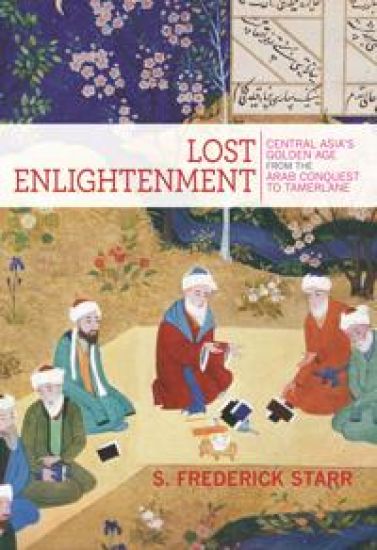
Lost Enlightenment

Lost Enlightenment

S. Frederick Starr

Princeton University Press
2015
pokkari

Halvin toimitettuna 23,90 €

In this sweeping and richly illustrated history, S. Frederick Starr tells the fascinating but largely unknown story of Central Asia's medieval enlightenment through the eventful lives and astonishing accomplishments of its greatest minds--remarkable figures who built a bridge to the modern world. Because nearly all of these figures wrote in Arabic, they were long assumed to have been Arabs. In fact, they were from Central Asia--drawn from the Persianate and Turkic peoples of a region that today extends from Kazakhstan southward through Afghanistan, and from the easternmost province of Iran through Xinjiang, China. Lost Enlightenment recounts how, between the years 800 and 1200, Central Asia led the world in trade and economic development, the size and sophistication of its cities, the refinement of its arts, and, above all, in the advancement of knowledge in many fields. Central Asians achieved signal breakthroughs in astronomy, mathematics, geology, medicine, chemistry, music, social science, philosophy, and theology, among other subjects. They gave algebra its name, calculated the earth's diameter with unprecedented precision, wrote the books that later defined European medicine, and penned some of the world's greatest poetry. One scholar, working in Afghanistan, even predicted the existence of North and South America--five centuries before Columbus. Rarely in history has a more impressive group of polymaths appeared at one place and time. No wonder that their writings influenced European culture from the time of St. Thomas Aquinas down to the scientific revolution, and had a similarly deep impact in India and much of Asia. Lost Enlightenment chronicles this forgotten age of achievement, seeks to explain its rise, and explores the competing theories about the cause of its eventual demise. Informed by the latest scholarship yet written in a lively and accessible style, this is a book that will surprise general readers and specialists alike.
Une Belle Maison

Une Belle Maison

S. Frederick Starr

University Press of Mississippi
2013
sidottu
Described in an 1835 bill of sale as une belle maison, the Lombard plantation house is a rare survivor. Built in the early nineteenth century as a West Indian-style residence, it was the focal point of a large plantation that stretched deep into the cypress swamps of what is now New Orleans's Bywater neighborhood. Featuring the best Norman trussing in North America, it was one of many plantations homes and grand residences that lined the Mississippi downriver from the French Quarter. A working farm until the 1800s, its lands were eventually absorbed into the expanding city. After years of prosperity, the entire area of the Ninth Ward, now known as Bywater, sank into poverty and neglect. This is the story of the rise, fall, and eventual resurrection of one of America's finest extant examples of West Indian Creole architecture and of the entire neighborhood of which it is an anchor. Through meticulous study of archives and archeology, the author presents fascinating insights on how residents of this working plantation actually lived. With concrete evidence, the author covers everything from cooking and cuisine to laundering and gardening. It is a story about buildings but also about people. Because pre-Civil War U. S. censuses never listed more than five enslaved persons, all of whom worked in the house, the plantation appears to have depended mainly on hired labor, both African American and Irish. Eventually these groups came to populate the new neighborhood, along with immigrants from Germany, and then by new migrants from the countryside. This book brings together artist John James Audubon; architect of the U. S. capital, Benjamin Henry Latrobe; Lee Harvey Oswald; and Fats Domino in an engrossing story, linking these and other colorful figures to the history of a beautiful, historic home in New Orleans. Profusely illustrated with heretofore unidentified historic photographs and plans, and with color images by master architectural photographer Robert S. Brantley, this book will equally interest inquisitive tourists and long-term residents of the Gulf South, historic preservationists, and urbanists in search of insights on successful redevelopment, architecture and history buffs, and enthusiasts of one of America's most beloved and storied cities.
Ferghana Valley

Ferghana Valley

S. Frederick Starr

Routledge
2011
nidottu
The Ferghana Valley can reasonably be said to lie in the heart of Central Asia. As such, the Valley has made an inordinate contribution to the history and culture of the region as a whole, as well as significantly affecting the economic, political and religious spheres. This book looks at the region over time, from its early history to the present. It embraces not just the obvious fields of politics, economics and religion, but also ethnography, sociology and culture, and includes the insights of leading scholars from all three Ferghana countries. The book discusses various questions of identity relating to the region, showing how the identity of the Ferghana Valley relates to the emerging national identities of the three post-colonial states that are still gradually emerging from the demise of the Soviet Union, as well as how an understanding of the Ferghana Valley is key to understanding Central Asia itself.
Ferghana Valley

Ferghana Valley

S. Frederick Starr

Routledge
2011
sidottu
The Ferghana Valley can reasonably be said to lie in the heart of Central Asia. As such, the Valley has made an inordinate contribution to the history and culture of the region as a whole, as well as significantly affecting the economic, political and religious spheres. This book looks at the region over time, from its early history to the present. It embraces not just the obvious fields of politics, economics and religion, but also ethnography, sociology and culture, and includes the insights of leading scholars from all three Ferghana countries. The book discusses various questions of identity relating to the region, showing how the identity of the Ferghana Valley relates to the emerging national identities of the three post-colonial states that are still gradually emerging from the demise of the Soviet Union, as well as how an understanding of the Ferghana Valley is key to understanding Central Asia itself.
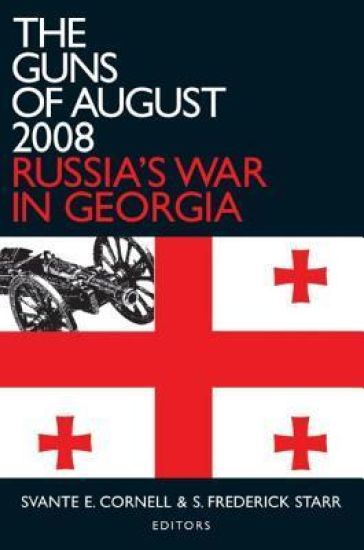
The Guns of August 2008

The Guns of August 2008

Svante E. Cornell; S. Frederick Starr

Routledge
2009
nidottu

Halvin toimitettuna 67,40 €

In the summer of 2008, a conflict that appeared to have begun in the breakaway Georgian territory of South Ossetia rapidly escalated to become the most significant crisis in European security in a decade. The implications of the Russian-Georgian war will be understood differently depending on one's narrative of what transpired and perspective on the broader context. This book is designed to present the facts about the events of August 2008 along with comprehensive coverage of the background to those events. It brings together a wealth of expertise on the South Caucasus and Russian foreign policy, with contributions by Russian, Georgian, European, and American experts on the region.
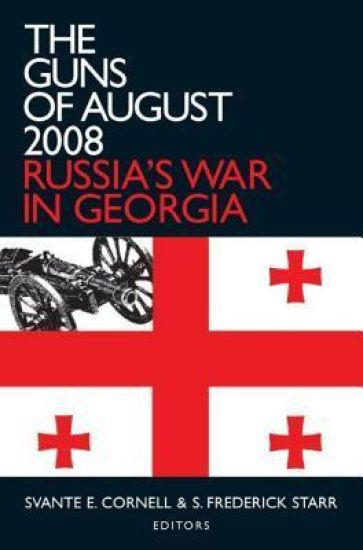
The Guns of August 2008

The Guns of August 2008

Svante E. Cornell; S. Frederick Starr

Routledge
2009
sidottu
In the summer of 2008, a conflict that appeared to have begun in the breakaway Georgian territory of South Ossetia rapidly escalated to become the most significant crisis in European security in a decade. The implications of the Russian-Georgian war will be understood differently depending on one's narrative of what transpired and perspective on the broader context. This book is designed to present the facts about the events of August 2008 along with comprehensive coverage of the background to those events. It brings together a wealth of expertise on the South Caucasus and Russian foreign policy, with contributions by Russian, Georgian, European, and American experts on the region.
New Orleans Cuisine

New Orleans Cuisine

S. Frederick Starr

University Press of Mississippi
2009
sidottu
With contributions from Karen Leathem, Patricia Kennedy Livingston, Michael Mizell-Nelson, Cynthia LeJeune Nobles, Sharon Stallworth Nossiter, Sara Roahen, and Susan Tucker New Orleans Cuisine: Fourteen Signature Dishes and Their Histories provides essays on the unparalleled recognition New Orleans has achieved as the Mecca of mealtime. Devoting each chapter to a signature cocktail, appetizer, sandwich, main course, staple, or dessert, contributors from the New Orleans Culinary Collective plate up the essence of the Big Easy through its best-known export: great cooking. This book views the city's cuisine as a whole, forgetting none of its flavorful ethnic influences--French, African American, German, Italian, Spanish, and more. In servings of such well-recognized foods as shrimp remoulade, Creole tomato salad, turtle soup, and bread pudding, contributors explore a broad range of issues. Essays consider the history of refrigeration and ice in the city, famous restaurants, cooking schools, and the differences between Cajun and Creole cuisines. Biographical sketches of New Orleans's luminaries--including Mary Land, Corinne Dunbar, and Lena Richard--give personality to the stories. Recipes for each dish or beverage, drawn from historical cookbooks and contemporary chefs, complete the package. New Orleans Cuisine shows how ingredients, ethnicities, cooks, chefs, and consumers all converged over time to make the city a culinary capital.
Scholars' Guide to Washington, D.C. for Central Asian and Caucasus Studies

Scholars' Guide to Washington, D.C. for Central Asian and Caucasus Studies

Tigran Martirosyan; Silvia Maretti; S. Frederick Starr

Routledge
2004
sidottu
This handbook is designed to help researchers, journalists, students, and business people to locate the rich array of Washington institutions and organizations that focus on issues pertaining to Central Asia and the Caucasus region, particularly in the post-Soviet period. Washington's status as a major repository of documentation on every aspect of the region is strong and growing daily. Beyond the Library of Congress, which intensively collects newspapers and other published materials from the region, and the Foreign Broadcast Information Service, which does the same for radio, there are hundreds of national and international public, non-profit, and private organizations and institutions in Washington with extensive links to Central Asia and the Caucasus, all of which maintain active archives and collections. The Guide includes more than 270 entries. It describes the structure and scholarly and technical resources of libraries, archives and manuscript repositories, museums and galleries, collections of sound and visual recordings, map and film collections, and the holdings of research centers and information agencies. Academic programs and departments of the metropolitan area's many institutions of higher learning are covered, along with international organizations, U. S. and foreign government agencies, association and advocacy groups, scientific organizations, educational and cultural organizations, corporations, technical assistance organizations, religious organizations, publications and media operations, bookstores and online resources. An index of organizations and institutions enhances the Guide's usefulness.
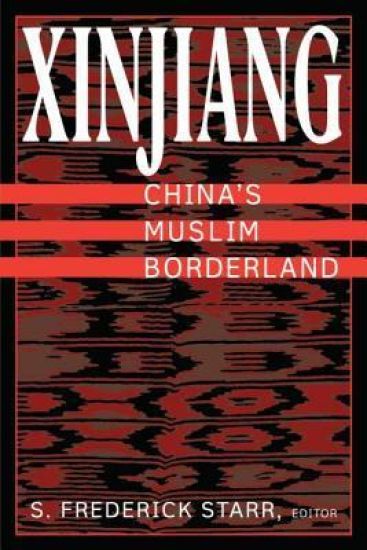
Xinjiang

Xinjiang

S. Frederick Starr

Routledge
2004
nidottu
Eastern Turkestan, now known as Xinjiang or the New Territory, makes up a sixth of China's land mass. Absorbed by the Qing in the 1880s and reconquered by Mao in 1949, this Turkic-Muslim region of China's remote northwest borders on formerly Soviet Central Asia, Afghanistan, Kashmir, Mongolia, and Tibet, Will Xinjiang participate in twenty-first century ascendancy, or will nascent Islamic radicalism in Xinjiang expand the orbit of instability in a dangerous part of the world? This comprehensive survey of contemporary Xinjiang is the result of a major collaborative research project begun in 1998. The authors have combined their fieldwork experience, linguistic skills, and disciplinary expertise to assemble the first multifaceted introduction to Xinjiang. The volume surveys the region's geography; its history of military and political subjugation to China; economic, social, and commercial conditions; demography, public health, and ecology; and patterns of adaption, resistance, opposition, and evolving identities.
Xinjiang

Xinjiang

S. Frederick Starr

Routledge
2004
sidottu
Eastern Turkestan, now known as Xinjiang or the New Territory, makes up a sixth of China's land mass. Absorbed by the Qing in the 1880s and reconquered by Mao in 1949, this Turkic-Muslim region of China's remote northwest borders on formerly Soviet Central Asia, Afghanistan, Kashmir, Mongolia, and Tibet, Will Xinjiang participate in twenty-first century ascendancy, or will nascent Islamic radicalism in Xinjiang expand the orbit of instability in a dangerous part of the world? This comprehensive survey of contemporary Xinjiang is the result of a major collaborative research project begun in 1998. The authors have combined their fieldwork experience, linguistic skills, and disciplinary expertise to assemble the first multifaceted introduction to Xinjiang. The volume surveys the region's geography; its history of military and political subjugation to China; economic, social, and commercial conditions; demography, public health, and ecology; and patterns of adaption, resistance, opposition, and evolving identities.
Civil Society in Central Asia

Civil Society in Central Asia

M. Holt Ruffin; Daniel Waugh; S. Frederick Starr

University of Washington Press
1999
pokkari
Central Asia, known as the home of Tamerlane and the Silk Road, is a crossroads of great cultures and civilizations. In 1991 five nations at the heart of the region—Kazakstan, Kyrgyzstan, Tajikistan, Turkmenistan, and Uzbekistan— suddenly became independent. Today they sit strategically between Russia, China, and Iran and hold some of the world's largest deposits of oil and natural gas. Long-suppressed ethnic identities are finding new expression in language, religion, and occasional civil conflicts. Civil Society in Central Asia is a pathbreaking collection of essays by scholars and activists that illuminates the social and institutional forces shaping this important region's future. An appendix provides a guide to projects being carried out by local and international groups.
The International Politics of Eurasia: v. 10: The International Dimension of Post-communist Transitions in Russia and the New States of Eurasia
First Published in 2015. This book is the last in a series of ten volumes produced by the Russian Littoral Project. This volume shapes the view that despite the dramatic growth of high-quality Western scholarship on post-Soviet developments, the interaction between external influences and trends in Russia and the other post-Soviet countries has not received systematic analysis. The influence of outside actors on post-Soviet affairs is poorly understood.