Kirjailija
Salman Akhtar
Kirjat ja teokset yhdessä paikassa: 58 kirjaa, julkaisuja vuosilta 1992–2026, suosituimpiin kuuluu Chimeric Vaccine Design Against Melioidosis via Subtractive Proteomics. Vertaile teosten hintoja ja tarkista saatavuus suomalaisista kirjakaupoista.
58 kirjaa
Kirjojen julkaisuvuodet: 1992–2026.
This book focuses on the intrapsychic vicissitudes of what it means to be truly alive and how death accompanies us at each step of our life's journey. It shows that, psychologically-speaking, death is always present in life and life in death.
This comprehensive and tightly argued book deals with the process through which a coherent self evolves, the various ways such development fails to occur, and the therapeutic measures to put things back together. Beginning with the child's early relationships and their internalization as the substrate of the self, the text moves on to psychodynamically sophisticated and developmentally anchored descriptions of certain psychopathological syndromes that are widespread and yet inoptimally discussed. Going from the most severe to the least severe conditions in this realm, the book deals with the psychotic core, the schizoid wish to die and be reborn, the fantasies related to unresolved separation-individuation, the sociopathic tendency to lie, and the impact of excessive narcissism on love relations. The book also provides a unique perspective on the treatment of these conditions in so far as it not only elucidates the ways that a therapist listens and talks to his patients but also the subtle but deep impact of his ongoing attitude toward psychotherapeutic work. Even the role the therapist's office silently plays in the conduct of his work is discussed in detail. The book is theoretically sound and contemporary. More importantly, it is clinically generous and provides a number of vignettes to illustrate the ideas proposed. The writing style is a refreshing admixture of scientific scrupulosity, literary elegance, and humane relatedness.
Moving from one country to another causes a radical alteration of one's cultural and geophysical surround. Separation from friends and family, loss of valued possessions, and encountering new ways of living result in mental pain and disorienting anxieties. In Immigration and Acculturation, Salman Akhtar examines the traumatic impact of immigration and the acculturation process and the psychological defenses that are mobilized in the immigrant, including nostalgia and fantasies of return. Akhtar explores each aspect of an immigrant's life, shedding light on the complexities of work, friendship, sex, marriage, aging, religion, and politics, as well as showing how unresolved conflicts are passed on to the next generation. Akhtar provides first-hand accounts from immigrants from a variety of backgrounds and countries of origin, and he provides clinical strategies for working with immigrant and ethnically diverse patients and their offspring. Deftly synthesizing observations from psychoanalysis, anthropology, literature, history, and related disciplines in the humanities, Salman Akhtar elegantly elucidates postmigration identity change.
This book provides easy to read, concise, and clinically useful explanations of over 1800 terms and concepts from the field of psychoanalysis. A history of each term is included in its definition and so is the name of its originator. The attempt is made to demonstrate how the meanings of the term under consideration might have changed, with new connotations accruing with the passage of time and with growth of knowledge. Where indicated and possible, the glossary includes diverse perspectives on a given idea and highlights how different analysts have used the same term for different purposes and with different theoretical aims in mind.
Comprehensive Dictionary of Psychoanalysis
Salman Akhtar
Karnac Books
2009
nidottu
Halvin toimitettuna 63,90 €
This book provides easy to read, concise, and clinically useful explanations of over 1800 terms and concepts from the field of psychoanalysis. A history of each term is included in its definition and so is the name of its originator. The attempt is made to demonstrate how the meanings of the term under consideration might have changed, with new connotations accruing with the passage of time and with growth of knowledge. Where indicated and possible, the glossary includes diverse perspectives on a given idea and highlights how different analysts have used the same term for different purposes and with different theoretical aims in mind.
This comprehensive and tightly argued book deals with the process through which a coherent self evolves, the various ways such development fails to occur, and the therapeutic measures to put things back together. Beginning with the child's early relationships and their internalization as the substrate of the self, the text moves on to psychodynamically sophisticated and developmentally anchored descriptions of certain psychopathological syndromes that are widespread and yet inoptimally discussed. Going from the most severe to the least severe conditions in this realm, the book deals with the psychotic core, the schizoid wish to die and be reborn, the fantasies related to unresolved separation-individuation, the sociopathic tendency to lie, and the impact of excessive narcissism on love relations. The book also provides a unique perspective on the treatment of these conditions in so far as it not only elucidates the ways that a therapist listens and talks to his patients but also the subtle but deep impact of his ongoing attitude toward psychotherapeutic work. Even the role the therapist's office silently plays in the conduct of his work is discussed in detail. The book is theoretically sound and contemporary. More importantly, it is clinically generous and provides a number of vignettes to illustrate the ideas proposed. The writing style is a refreshing admixture of scientific scrupulosity, literary elegance, and humane relatedness.
This book addresses five areas of difficulty in psychotherapy: initial assessment, boundaries, money, disruptions, and suicidal crises. It outlines the conceptual issues and the technical details of each of the concept in detail.
Lying, Cheating, and Carrying On
Salman Akhtar; Henri Parens
Jason Aronson Inc. Publishers
2009
sidottu
What constitutes a lie? What are the different types of lies? Why do people lie? Is dishonesty ubiquitous in human experience? And what should be done with individuals who seek pschotherapeutic help and yet can not reveal important aspects of their lives and even fabricate histories, associations, and dreams? Such questions form the backbone of this exceptional book. Starting with the emergence of the capacity to lie in childhood and the formative influence of the family in children's moral development, the discourse goes on to include the variety of adulthood lies, including social lies, existential lies, pathological lies, narcissistic lies, and sociopathic lies. Contributions from distinguished psychoanalysts like Salman Akhtar, Harold Blum, Ruth Fischer, Lucy LaFarge, Henri Parens, and Michael Stone, along with others, explore the impact of dishonesty on the internal and external realities of an individual. Malignant forms of lies involving serious character pathology and criminality, as well as their detection, are also discussed. The book's aim is to help therapists enhance their empathy with patients who are compelled to lie and to provide them with better therapeutic strategies to deal with the clinical dilemmas that arise in working with such children and adults.
Lying, Cheating, and Carrying On
Salman Akhtar; Henri Parens
Jason Aronson Inc. Publishers
2009
nidottu
What constitutes a lie? What are the different types of lies? Why do people lie? Is dishonesty ubiquitous in human experience? And what should be done with individuals who seek pschotherapeutic help and yet can not reveal important aspects of their lives and even fabricate histories, associations, and dreams? Such questions form the backbone of this exceptional book. Starting with the emergence of the capacity to lie in childhood and the formative influence of the family in children's moral development, the discourse goes on to include the variety of adulthood lies, including social lies, existential lies, pathological lies, narcissistic lies, and sociopathic lies. Contributions from distinguished psychoanalysts like Salman Akhtar, Harold Blum, Ruth Fischer, Lucy LaFarge, Henri Parens, and Michael Stone, along with others, explore the impact of dishonesty on the internal and external realities of an individual. Malignant forms of lies involving serious character pathology and criminality, as well as their detection, are also discussed. The book's aim is to help therapists enhance their empathy with patients who are compelled to lie and to provide them with better therapeutic strategies to deal with the clinical dilemmas that arise in working with such children and adults.
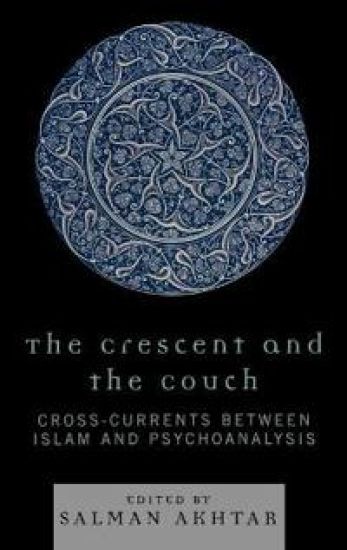
The face of Islam currently visible to the West bears the features of orthodoxy, fundamentalism, the so-called "new anti-Semitism," and political terrorism. Images of inter-ethnic bloodshed in Iraq, bellicose Iranian posturing, Al-Qaeda training camps, and zealot suicide bombers are the basic grammar of such perception. While not entirely untrue, this portrayal of Islam also emanates from the 'villain hunger' of the West, a hunger that has increased since the fall of the USSR. The false equation of 'Muslim' with 'Arab' has also created stereotypes and ambiguities. The fact is that most Muslims of the world are not Arab and many Arabs are not Muslims. Indeed the people, culture, traditions, and even religious practices of Islam are highly varied and complex. Its belief systems range from the austere Wahabbi rigidity to lyrical Sufi mysticism. Its cultural fabric includes the dark spots of suppression of women on the one hand and breathtakingly beautiful fibers of calligraphy, architecture, rug weaving, and romantic poetry on the other hand. Attempting to advance knowledge about Islam and to create the possibility of a dialogue between Islam and psychoanalysis, The Crescent and the Couch brings together a distinguished panel of Muslim and non-Muslim contributors from the fields of history, religion, anthropology, politics, and psychoanalysis. Together these authors highlight the world-changing contributions of prominent Muslim figures, and elucidate the encounter of Islam with Christianity, Judaism, and Hinduism. Moving on to matters of family, individual personality formation, human sexuality, and religious identity, they also address clinical issues that arise in the treatment of Muslim patients as well as the technical work of Muslim psychoanalysts. The book thus becomes a literary ambassador of sorts, bridging the conceptual gap between psychoanalytic theory on the one hand and Islamic conceptualizations of life on the other. It is a work of synthesis at its best and since bringing diverse thin

Winner of the 2006 Gradiva Award A collection of new and previously-published essays that sheds light on the intersections between psychoanalysis and Indic Studies. While Indian academics and clinicians have been familiar with psychoanalysis for many decades, they have kept this Western model of the mind separate from the spiritual and philosophical traditions of their own country. Freud Along the Ganges bridges this important lacuna in psychoanalytic and Indic studies by creating a new theoretical field where human motives are approached not only psychoanalytically but also from the perspective of the teachings of Buddha, Tagore, Ghandi, and Salman Rushdie. The authors of this collection show how the insights of these Indian masters give a new force to the Freudian discovery by providing a basis to better understand the social and psychological Indian makeup. The book begins by questioning the applicability of the psychoanalytic method to non-Western cultures. It then traces the history of the psychoanalytic movement in India from its onset while it emphasizes the intricate overlap between Indian existential and mystical traditions and psychoanalysis. Freud Along the Ganges offers a unique study of the ways that Indian thought and psychoanalysis illuminate and enrich each other.
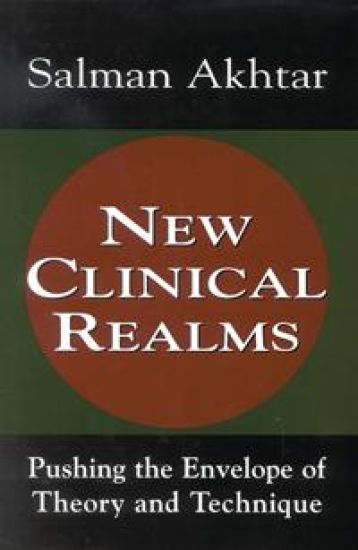
New Clinical Realms, Dr. Akhtar's latest book, raises intriguing questions about man's subjective experience and his relationship with the world around him. What exactly is mental pain? How does forgiveness occur? What is the proper psychosocial role of a mentor? And, even more provocatively, what is man's inner relationship with animals? How do inanimate objects sustain and facilitate psychic development throughout the life span? Do the physical objects in the clinical setting actually affect the patient's mind? How does simplicity lead to contradiction and at what stage does contradiction yield to paradox? With the help of illuminating clinical vignettes and a solid anchor in the contemporary diversity of psychoanalytic theorizing, Akhtar's book offers clinicians a rare glimpse into both the dark corners of psychopathology and the fresh arenas of healthy mental functioning. As a result, the readers find their capacity for empathy deepened and their therapeutic skills sharpened. A Jason Aronson Book
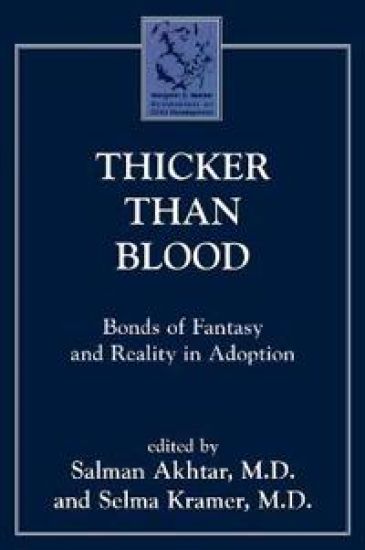
Thicker Than Blood addresses in depth the impact of adoption on biological parents, adoptive parents, adopted children, and siblings.
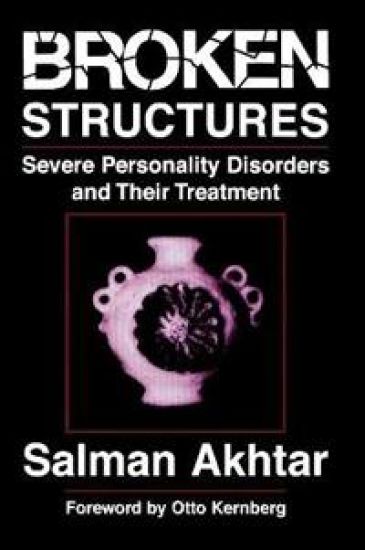
This book integrates psychiatry and psychoanalysis to present deeper and sounder clinical profiles of the personality disorders than have been hitherto available.
Why do people migrate from one country to another? What is the difference between an immigrant and an exile? What determines the psychological outcome of immigration? Can one ever mourn the loss of one's country? What are the defensive functions of nostalgia? Are there specific guidelines for psychotherapy and psychoanalysis for immigrant patients? How can the therapist disentangle the patient's cultural rationalizations from underlying intrapsychic conflicts? In this unique book, psychoanalyst and poet Salman Akhtar provides answers to such questions. He notes that migration from one country to another has lasting effects on an individual's identity. Such identity change involves the dimensions of drives and affects, psychic space, temporality, and social affiliation. Dr. Akhtar addresses the immigrant's idealization and devaluation, closeness and distance, hope and nostalgia, transitional area of the mind, superego change, and linguistic transformation. With poignant clinical vignettes, he illustrates the implications of these ideas for the therapeutic process where the therapist, the patient, or both, are immigrants. Immigration and Identity, replete with poetry and personal letters from immigrant colleagues from many nations, conveys its message with irony, wit, laughter, pain, sadness, empathy, and, above all, clinical and human wisdom.
Sibling relationships and rivalry are as old as recorded history. This analysis explores that ambivalence between siblings casts its shadow throughout people's lifetimes and affects their choices of mates, relationships with their own children, and aversions to others.
How does culture affect child-rearing practices? How do factors such as poverty, ethnic difference, racial minority status, and having immigrant parents alter the experience of a growing child? Are there culturally distinct sub-groups within the African-American population? How ubiquitous are psychoanalytically derived schedules of personality development? In what form and to what extent are transference and countertransference affected by such racial, ethnic, and economic issues? In this volume, eight distinguished psychoanalysts (including some belonging to ethnic and racial minorities) attempt to answer these questions. They provide illuminating details of child-rearing practices in African-American, Indian, and Japanese families. They interweave mythological legacies, historical background, ethnographic data, and clinical observations into a rich tapestry of knowledge, empathy, and understanding. They try to tease out the variables of socioeconomic class from the issue of race and the ambiguities consequent upon raising children in a new and unfamiliar land from the ordinary and inevitable conflicts between generations.
This book integrates psychiatry and psychoanalysis to present deeper and sounder clinical profiles of the personality disorders than have been hitherto available.