

Kirjailija
Samuel Butler
Kirjat ja teokset yhdessä paikassa: 557 kirjaa, julkaisuja vuosilta 1903–2026, suosituimpiin kuuluu The Way of All Flesh. Vertaile teosten hintoja ja tarkista saatavuus suomalaisista kirjakaupoista.
557 kirjaa
Kirjojen julkaisuvuodet: 1903–2026.





This book is about my life and how i grew up in an abusive household and how we grew up poor and then went into foster care this is my autobiography. My childhood meant to reach out to anyone who has or is currently abused I dedicate this book to those who made it though their rough lives and didn't statistic. This was also inspired by Dave Pelzer's books. Child called it and the Lost Boy. Because like him I was abused and I grew up in the system. I hope there are other people who get inspired off of this story


Samuel Butler (4 December 1835 - 18 June 1902) was the iconoclastic English author of the Utopian satirical novel Erewhon (1872) and the semi-autobiographical Bildungsroman The Way of All Flesh, published posthumously in 1903. Both have remained in print ever since. In other studies he examined Christian orthodoxy, evolutionary thought, and Italian art, and made prose translations of the Iliad and Odyssey that are still consulted today. He was also an artist.

Samuel Butler (4 December 1835 - 18 June 1902) was the iconoclastic English author of the Utopian satirical novel Erewhon (1872) and the semi-autobiographical Bildungsroman The Way of All Flesh, published posthumously in 1903. Both have remained in print ever since. In other studies he examined Christian orthodoxy, evolutionary thought, and Italian art, and made prose translations of the Iliad and Odyssey that are still consulted today. He was also an artist.

Samuel Butler (4 December 1835 - 18 June 1902) was the iconoclastic English author of the Utopian satirical novel Erewhon (1872) and the semi-autobiographical Bildungsroman The Way of All Flesh, published posthumously in 1903. Both have remained in print ever since. In other studies he examined Christian orthodoxy, evolutionary thought, and Italian art, and made prose translations of the Iliad and Odyssey that are still consulted today. He was also an artist.

Hudibras. Poëme ecrit dans le tems des troubles d'Angleterre; et traduit en vers françois avec des remarques & des figures. ... of 3; Volume 1
Samuel Butler
Wentworth Press
2018
sidottu

Hudibras. Poëme ecrit dans le tems des troubles d'Angleterre; et traduit en vers françois avec des remarques & des figures. ... of 3; Volume 2
Samuel Butler
Wentworth Press
2018
sidottu

Hudibras. Poëme ecrit dans le tems des troubles d'Angleterre; et traduit en vers françois avec des remarques & des figures. ... of 3; Volume 3
Samuel Butler
Wentworth Press
2018
pokkari

Hudibras. Poëme ecrit dans le tems des troubles d'Angleterre; et traduit en vers françois avec des remarques & des figures. ... of 3; Volume 1
Samuel Butler
Wentworth Press
2018
pokkari
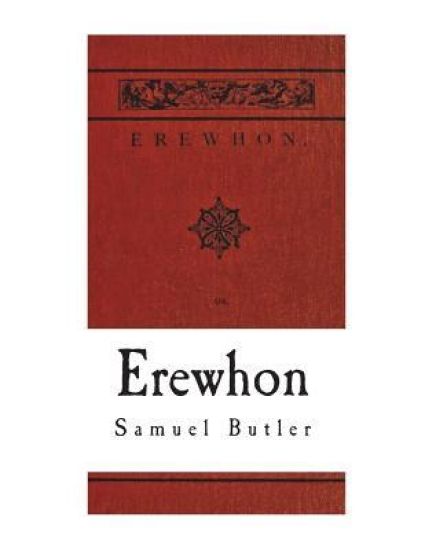
Erewhon or Over the Range by Samuel Butler. Erewhon: or, Over the Range is a novel by Samuel Butler which was first published anonymously in 1872. The title is also the name of a country, supposedly discovered by the protagonist. The first part of "Erewhon" written was an article headed "Darwin among the Machines," and signed Cellarius. It was written in the Upper Rangitata district of the Canterbury Province (as it then was) of New Zealand, and appeared at Christchurch in the Press Newspaper, June 13, 1863. A copy of this article is indexed under my books in the British Museum catalogue. In passing, I may say that the opening chapters of "Erewhon" were also drawn from the Upper Rangitata district, with such modifications as I found convenient. A second article on the same subject as the one just referred to appeared in the Press shortly after the first, but I have no copy. It treated Machines from a different point of view, and was the basis of pp. 270-274 of the present edition of "Erewhon." This view ultimately led me to the theory I put forward in "Life and Habit," published in November 1877. I have put a bare outline of this theory (which I believe to be quite sound) into the mouth of an Erewhonian philosopher in Chapter XXVII. of this book.
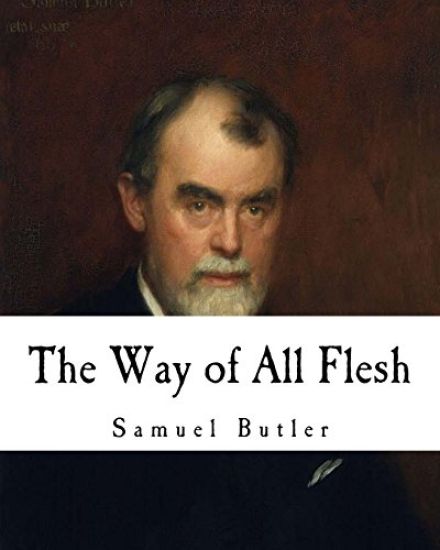
The Way of All Flesh
R. a. Streatfeild; Samuel Butler
Createspace Independent Publishing Platform
2018
nidottu
The Way of All Flesh by Samuel Butler. The Way of All Flesh (1903) is a semi-autobiographical novel by Samuel Butler that attacks Victorian-era hypocrisy. Samuel Butler began to write "The Way of All Flesh" about the year 1872, and was engaged upon it intermittently until 1884. It is therefore, to a great extent, contemporaneous with "Life and Habit," and may be taken as a practical illustration of the theory of heredity embodied in that book. He did not work at it after 1884, but for various reasons he postponed its publication. He was occupied in other ways, and he professed himself dissatisfied with it as a whole, and always intended to rewrite or at any rate to revise it. His death in 1902 prevented him from doing this, and on his death-bed he gave me clearly to understand that he wished it to be published in its present form. I found that the MS. of the fourth and fifth chapters had disappeared, but by consulting and comparing various notes and sketches, which remained among his papers, I have been able to supply the missing chapters in a form which I believe does not differ materially from that which he finally adopted. With regard to the chronology of the events recorded, the reader will do well to bear in mind that the main body of the novel is supposed to have been written in the year 1867, and the last chapter added as a postscript in 1882.
Samuel Butler's Erewhon Revisited is a satirical sequel to his highly successful Erewhon. Mr. Higgs meets many unpleasant accidents and surprises in Butler's utopian nation. A new religion has come into existence as a result of distorted and misunderstood sayings, and corruption has taken over society. Butler's satire touches on subjects ranging from Darwin's theories of biological evolution to the intelligence of machines.