Kirjojen hintavertailu – 12 859 818 kirjaa ja 27 kauppaa
Kirjailija
Samuel Butler
Kirjat ja teokset yhdessä paikassa: 557 kirjaa, julkaisuja vuosilta 1903–2026, suosituimpiin kuuluu The Way of All Flesh. Vertaile teosten hintoja ja tarkista saatavuus suomalaisista kirjakaupoista.
Setting out to make his fortune in a far-off country, a young traveller discovers the remote and beautiful land of Erewhon and is given a home among its extraordinarily handsome citizens. But their visitor soon discovers that this seemingly ideal community has its faults - here crime is treated indulgently as a malady to be cured, while illness, poverty and misfortune are cruelly punished, and all machines have been superstitiously destroyed after a bizarre prophecy. Can he survive in a world where morality is turned upside down? Butler satirically describes a utopian society, using the civilization of 'Erewhon' (an anagram for 'nowhere') to satirize beliefs popular in the England of his day.
Samuel Butler's Erewhon Revisited is a satirical sequel to his highly successful Erewhon. Mr. Higgs meets many unpleasant accidents and surprises in Butler's utopian nation. A new religion has come into existence as a result of distorted and misunderstood sayings, and corruption has taken over society. Butler's satire touches on subjects ranging from Darwin's theories of biological evolution to the intelligence of machines.
The 18th century was a wealth of knowledge, exploration and rapidly growing technology and expanding record-keeping made possible by advances in the printing press. In its determination to preserve the century of revolution, Gale initiated a revolution of its own: digitization of epic proportions to preserve these invaluable works in the largest archive of its kind. Now for the first time these high-quality digital copies of original 18th century manuscripts are available in print, making them highly accessible to libraries, undergraduate students, and independent scholars. Western literary study flows out of eighteenth-century works by Alexander Pope, Daniel Defoe, Henry Fielding, Frances Burney, Denis Diderot, Johann Gottfried Herder, Johann Wolfgang von Goethe, and others. Experience the birth of the modern novel, or compare the development of language using dictionaries and grammar discourses. ++++The below data was compiled from various identification fields in the bibliographic record of this title. This data is provided as an additional tool in helping to insure edition identification: ++++British LibraryT123458The 2 vols. comprise 3 parts, part 2 starting on p.285 of vol. 1 and part 3 starting on p.113 of vol. 2. With a 'Life' of the author, Samuel Butler, in vol.1. The frontispiece portrait in vol.1 is dated 1744. London: printed for C. Bathurst, W. Strahan, B. White, T. Davies, W. Johnston and 13 others in London], 1772. 2v., plates: port.; 8
"For the inconsistencies in the book, and I am aware that there are not a few, I must ask the indulgence of the reader. The blame, however, lies chiefly with the Erewhonians themselves, for they were really a very difficult people to understand." (Preface) Erewhon: or, Over the Range is a novel by Samuel Butler, published in 1872. The title is also the name of a country, supposedly discovered by the protagonist. It is not revealed where Erewhon is, but it is clear that it is a fictional country. Butler meant the title to be read as the word Nowhere backwards, even though the letters "h" and "w" are transposed, therefore Erewhon is an anagram of nowhere. The book is a satire on Victorian society. In the sequel, Erewhon Revisited Twenty Years Later, the Original Discoverer of the Country and His Son returns.
Richard Alexander Streatfeild (22 June 1866 - 6 February 1919) was an English musicologist and critic. His career was spent at the British Museum, although not in its music department. His publications included books on opera, Handel and modern music. He had literary interests, and arranged for posthumous publication of his friend Samuel Butler's The Way of All Flesh.... Samuel Butler (4 December 1835 - 18 June 1902) was the iconoclastic English author of the Utopian satirical novel Erewhon (1872) and the semi-autobiographical Bildungsroman The Way of All Flesh, published posthumously in 1903. Both have remained in print ever since. In other studies he examined Christian orthodoxy, evolutionary thought, and Italian art, and made prose translations of the Iliad and Odyssey that are still consulted today. He was also an artist. CAREER: After Cambridge he went to live in a low-income parish in London 1858-59 as preparation for his ordination into the Anglican clergy; there he discovered that baptism made no apparent difference to the morals and behaviour of his peers and began questioning his faith. This experience would later serve as inspiration for his work The Fair Haven. Correspondence with his father about the issue failed to set his mind at peace, inciting instead his father's wrath. As a result, he emigrated in September 1859, on the ship Roman Emperor to New Zealand. Butler went there like many early British settlers of privileged origins, to put as much distance as possible between himself and his family. He wrote of his arrival and life as a sheep farmer on Mesopotamia Station in A First Year in Canterbury Settlement (1863), and made a handsome profit when he sold his farm, but the chief achievement of his time there was the drafts and source material for much of his masterpiece Erewhon. Erewhon revealed Butler's long interest in Darwin's theories of biological evolution. In 1863, four years after Darwin published On the Origin of Species, the editor of a New Zealand newspaper, The Press, published a letter captioned "Darwin among the Machines." Written by Butler but signed Cellarius (q.v., ) it compares human evolution to machine evolution, prophesying that machines would eventually replace man in the supremacy of the earth: "In the course of ages we shall find ourselves the inferior race." The letter raises many of the themes now debated by proponents of the technological singularity, i. e. that computers evolve much faster than humans and that we are racing towards an unknowable future through explosive technological change. Butler also spent much time criticising Darwin, partly because Butler (himself a man living in the shadow of a previous Samuel Butler) believed that Darwin had not sufficiently acknowledged his grandfather Erasmus Darwin's contribution to the origins of his theory. Butler returned to England in 1864, settling in rooms in Clifford's Inn (near Fleet Street), where he lived for the rest of his life. In 1872, the Utopian novel Erewhon appeared anonymously, causing some speculation as to the identity of the author. When Butler revealed himself, Erewhon made him a well-known figure, more because of this speculation than for its literary merits, which have been undisputed..................
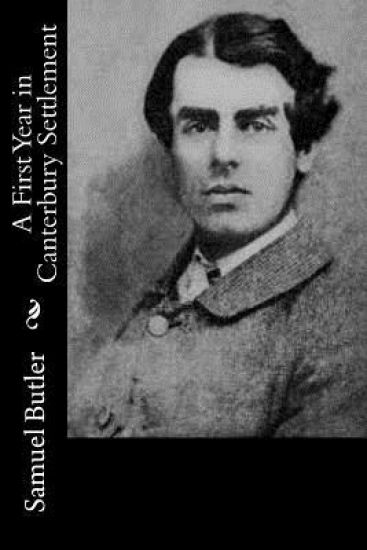
Excerpt from A First Year in Canterbury Settlement: With Other Early Essays With regard to the other pieces included in this volume I have thought it best to prefix brief notes, when necessary, to each in turn explaining the circumstances in which they were written and, when it was possible, giving the date of composition. About the Publisher Forgotten Books publishes hundreds of thousands of rare and classic books. Find more at www.forgottenbooks.com This book is a reproduction of an important historical work. Forgotten Books uses state-of-the-art technology to digitally reconstruct the work, preserving the original format whilst repairing imperfections present in the aged copy. In rare cases, an imperfection in the original, such as a blemish or missing page, may be replicated in our edition. We do, however, repair the vast majority of imperfections successfully; any imperfections that remain are intentionally left to preserve the state of such historical works.
Notice: This Book is published by Historical Books Limited (www.publicdomain.org.uk) as a Public Domain Book, if you have any inquiries, requests or need any help you can just send an email to [email protected] This book is found as a public domain and free book based on various online catalogs, if you think there are any problems regard copyright issues please contact us immediately via [email protected]
Homer's epic tale of Odysseus and his ten-year journey home after the Trojan war is one of the earliest and greatest works of literature. His influence on the Western imagination is immense; Plato calls him "the leader of Greek culture." Samuel Butler has beautifully rendered Homer's Greek verse into English prose. (Unabridged, with footnotes.)
Erewhon: or, Over the Range (e-re-whon) is a novel by Samuel Butler which was first published anonymously in 1872. The title is also the name of a country, supposedly discovered by the protagonist. In the novel, it is not revealed where Erewhon is, but it is clear that it is a fictional country. Butler meant the title to be read as "nowhere" backwards even though the letters "h" and "w" are transposed, as it would have been pronounced in his day (and still is in some dialects of English). The book is a satire on Victorian society. The first few chapters of the novel dealing with the discovery of Erewhon are in fact based on Butler's own experiences in New Zealand where, as a young man, he worked as a sheep farmer on Mesopotamia Station for about four years (1860-1864), and explored parts of the interior of the South Island and which he wrote about in his A First Year in Canterbury Settlement (1863).
Setting out to make his fortune in a far-off country, a young traveller discovers the remote and beautiful land of Erewhon and is given a home among its extraordinarily handsome citizens. But their visitor soon discovers that this seemingly ideal community has its faults - here crime is treated indulgently as a malady to be cured, while illness, poverty and misfortune are cruelly punished, and all machines have been superstitiously destroyed after a bizarre prophecy. Can he survive in a world where morality is turned upside down? Butler satirically describes a utopian society, using the civilization of 'Erewhon' (an anagram for 'nowhere') to satirize beliefs popular in the England of his day.
The Odyssey is one of two major ancient Greek epic poems attributed to Homer. It is, in part, a sequel to the Iliad, the other work ascribed to Homer. The poem is fundamental to the modern Western canon, and is the second oldest extant work of Western literature, the Iliad being the oldest. It is believed to have been composed near the end of the 8th century BC, somewhere in Ionia, the Greek coastal region of Anatolia. The poem mainly centers on the Greek hero Odysseus (known as Ulysses in Roman myths) and his journey home after the fall of Troy. It takes Odysseus ten years to reach Ithaca after the ten-year Trojan War. In his absence, it is assumed he has died, and his wife Penelope and son Telemachus must deal with a group of unruly suitors, the Mnesteres or Proci, who compete for Penelope's hand in marriage. It continues to be read in the Homeric Greek and translated into modern languages around the world. Many scholars believe that the original poem was composed in an oral tradition by an aoidos (epic poet/singer), perhaps a rhapsode (professional performer), and was more likely intended to be heard than read. The details of the ancient oral performance, and the story's conversion to a written work inspire continual debate among scholars. The Odyssey was written in a poetic dialect of Greek-a literary amalgam of Aeolic Greek, Ionic Greek, and other Ancient Greek dialects-and comprises 12,110 lines of dactylic hexameter. Among the most noteworthy elements of the text are its non-linear plot, and the influence on events of choices made by women and serfs, besides the actions of fighting men. In the English language as well as many others, the word odyssey has come to refer to an epic voyage. The Odyssey has a lost sequel, the Telegony, which was not written by Homer. It was usually attributed in Antiquity to Cinaethon of Sparta, but in one source was said to have been stolen from Musaeus by Eugamon or Eugammon of Cyrene (see Cyclic poets).