Kirjojen hintavertailu – 12 903 725 kirjaa ja 27 kauppaa

Kirjailija

Sander L. Gilman

Kirjat ja teokset yhdessä paikassa: 40 kirjaa, julkaisuja vuosilta 1985–2026, suosituimpiin kuuluu Antisemitisms. Vertaile teosten hintoja ja tarkista saatavuus suomalaisista kirjakaupoista.

Nimi esiintyy myös muodoissa: Sander L Gilman

40 kirjaa

Kirjojen julkaisuvuodet: 1985–2026.

Antisemitisms

Antisemitisms

Sander L. Gilman

REAKTION BOOKS
2026
sidottu
Why do Jews continue to serve as targets of hatred – and how coherent is the idea of antisemitism itself? In Antisemitisms, Sander L. Gilman draws on decades of scholarship to argue that such hatreds are less stable and more opportunistic than often assumed. Tracing fantasies of Jewish difference – from appearance and biology to citizenship, nationhood and ‘self-hatred’ – he reveals how contradictory ideas have been used to justify exclusion and violence. This book moves beyond the familiar frameworks of ‘eternal hatred’ or ‘thinking with Jews’ to show how antisemitic and even philosemitic attitudes shift to suit changing political needs. As violence against Jews is on the rise once more, Gilman offers a clear, sobering account of what’s at stake.
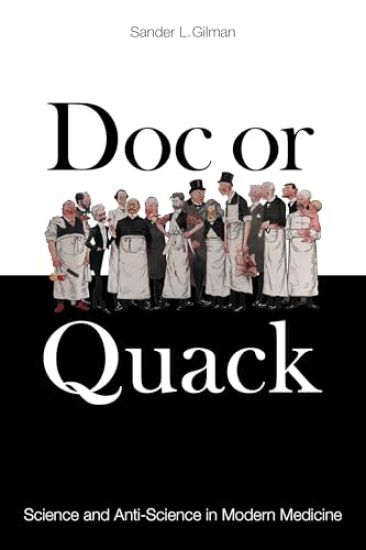
Doc or Quack

Doc or Quack

Sander L. Gilman

REAKTION BOOKS
2025
sidottu

Halvin toimitettuna 32,80 €

Reaching from the beginnings of scientific medicine in the 19th century through to the present, Sander L. Gilman examines the ever-shifting boundary between scientific medicine and quackery, asking if such a fixed boundary can actually exist within mainstream medical practice. Through detailed case studies – stomach ulcers, eye disease and acupuncture – it reveals the influence of pharmaceutical companies in determining the science of medical practice, the pros and cons of the increasing specialization in medical practice, and the murky issue of ‘race’ in scientific medicine. This readable account covers medical practice from the Enlightenment to the present, offering a realistic view of health politics in the US, Germany and the UK. It’s an essential read for anyone interested in the history and politics of Western medicine.
Hysteria Beyond Freud

Hysteria Beyond Freud

Sander L. Gilman; Helen King; Roy Porter; G. S. Rousseau; Elaine Showalter

University of California Press
2022
pokkari
"She's hysterical." For centuries, the term "hysteria" has been used by physicians and laymen to diagnose and dismiss the extreme emotionality and mysterious physical disorders presumed to bedevil others—especially women. How did this medical concept assume its power? What cultural purposes does it serve? Why do different centuries and different circumstances produce different kinds of hysteria? These are among the questions pursued in this absorbing, erudite reevaluation of the history of hysteria. The widely respected authors draw upon the insights of social and cultural history, rather than Freudian psychoanalysis, to examine the ways in which hysteria has been conceived by doctors and patients, writers and artists, in Europe and North America, from antiquity to the early years of the twentieth century. In so doing, they show that a history of hysteria is a history of how we understand the mind. This title is part of UC Press's Voices Revived program, which commemorates University of California Press’s mission to seek out and cultivate the brightest minds and give them voice, reach, and impact. Drawing on a backlist dating to 1893, Voices Revived makes high-quality, peer-reviewed scholarship accessible once again using print-on-demand technology. This title was originally published in 1993.
Hysteria Beyond Freud

Hysteria Beyond Freud

Sander L. Gilman; Helen King; Roy Porter; G. S. Rousseau; Elaine Showalter

University of California Press
2022
sidottu
"She's hysterical." For centuries, the term "hysteria" has been used by physicians and laymen to diagnose and dismiss the extreme emotionality and mysterious physical disorders presumed to bedevil others—especially women. How did this medical concept assume its power? What cultural purposes does it serve? Why do different centuries and different circumstances produce different kinds of hysteria? These are among the questions pursued in this absorbing, erudite reevaluation of the history of hysteria. The widely respected authors draw upon the insights of social and cultural history, rather than Freudian psychoanalysis, to examine the ways in which hysteria has been conceived by doctors and patients, writers and artists, in Europe and North America, from antiquity to the early years of the twentieth century. In so doing, they show that a history of hysteria is a history of how we understand the mind. This title is part of UC Press's Voices Revived program, which commemorates University of California Press’s mission to seek out and cultivate the brightest minds and give them voice, reach, and impact. Drawing on a backlist dating to 1893, Voices Revived makes high-quality, peer-reviewed scholarship accessible once again using print-on-demand technology. This title was originally published in 1993.
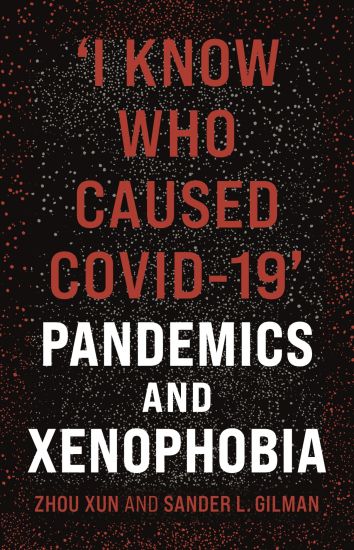
'I Know Who Caused COVID-19'

'I Know Who Caused COVID-19'

Zhou Xun; Sander L. Gilman

Reaktion Books
2021
sidottu
This book explores prejudice towards groups who are thought to have caused and spread the COVID-19 virus. The book examines four cases around the world: the residents of Wuhan, China; Ultra-Orthodox Jewish communities in the USA, Britain and Israel; African-Americans in the United States and Black/Asian/Mixed Ethnic communities in Britain; and 'White' right-wing groups in American and Europe. The book examines stereotyping and the false attribution of blame towards these groups, as well as what happens when a collective is actually at fault, and how the community deals with these conflicting issues. This is a timely, cogent examination of blame and xenophobia, which have been brought to the surface by the COVID-19 pandemic.
Disengagement from Southwest Africa

Disengagement from Southwest Africa

Sander L. Gilman; Owen Kahn

Routledge
2020
nidottu
Gorbachev's new thinking on superpower relations assumes that struggle between two opposing world systems no longer characterizes the present era. This second volume in the East-South Relations series explores the implications of Gorbachev's new thinking for regional conflicts. Because these conflicts jeopardize tranquil relations between the United States and the Soviet Union, they are perceived as contrary to the new spirit of global cooperation. This volume suggests that the accords on Southwest Africa may illustrate how the superpowers will resolve conflict, and shows how smaller powers may now have new roles cast for them by the superpowers. In 1975, Soviet-Cuban assistance to the Leninist-oriented Movement for the Popular Liberation of Angola (MPLA) was the first extensive Soviet-allied military intervention in the Third World. While the Soviet-backed Cubans propped up the MPLA, the South Africans intervened, on a smaller scale, in support of the National Union for the Total Independence of Angola (UNITA) under Jonas Savimbi. After 1985 UNITA began receiving United States support, and a military stalemate ensued. The contributors to this volume analyse how the Soviet Union and the United States used this stalemate to move the MPLA, Cuba and South Africa to settle not only their differences, but also the vexing question of the Independence of Namibia. Central issues explored are how and why South Africa and Cuba got into the Angolan arena, why they stayed so long, and why they saw fit to get out. While the authors differ on the forces at work, their debate is itself enlightening, and offers valuable insights into the policy options of regional powers. The contributors also review further steps, beyond military disengagement, needed to finally resolve the Angolan civil war, and ensure regional stability. They assess the potential for breakdown of the accords, and the likely consequences should this occur. Disengagement from Southwest Africa will interest policymakers and researchers concerned with developments in southern Africa and Cuba, and with relations between the superpowers.
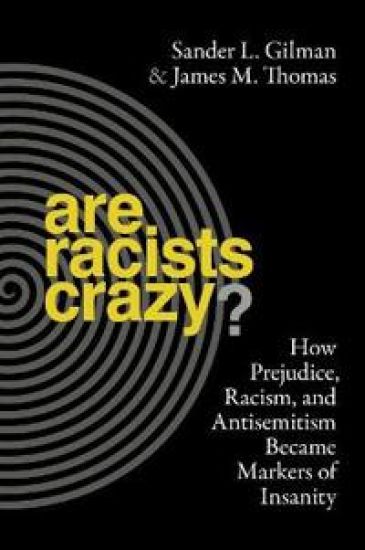
Are Racists Crazy?

Are Racists Crazy?

Sander L. Gilman; James Thomas

New York University Press
2018
pokkari
The connection and science behind race, racism, and mental illness In 2012, an interdisciplinary team of scientists at the University of Oxford reported that - based on their clinical experiment - the beta-blocker drug, Propranolol, could reduce implicit racial bias among its users. Shortly after the experiment, an article in Time Magazine cited the study, posing the question: Is racism becoming a mental illness? In Are Racists Crazy? Sander Gilman and James Thomas trace the idea of race and racism as psychopathological categories., from mid-19th century Europe, to contemporary America, up to the aforementioned clinical experiment at the University of Oxford, and ask a slightly different question than that posed by Time: How did racism become a mental illness? Using historical, archival, and content analysis, the authors provide a rich account of how the 19th century 'Sciences of Man' - including anthropology, medicine, and biology - used race as a means of defining psychopathology and how assertions about race and madness became embedded within disciplines that deal with mental health and illness. An illuminating and riveting history of the discourse on racism, antisemitism, and psychopathology, Are Racists Crazy? connects past and present claims about race and racism, showing the dangerous implications of this specious line of thought for today.
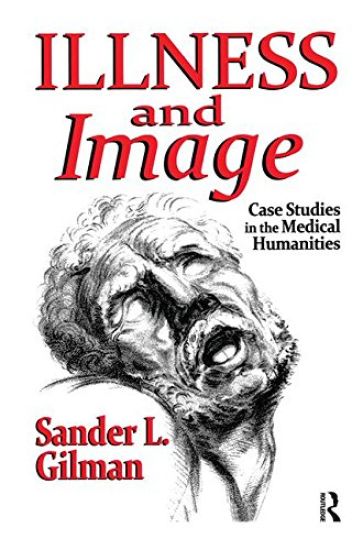
Illness and Image

Illness and Image

Sander L. Gilman

Routledge
2018
nidottu
The humanities in higher education are too often labeled as impractical and are not usually valued in today's marketplace. Yet in professional fields, such as the health sciences, interest in what the humanities can offer has increased. Advocates claim the humanities offer health care professionals greater insight into how to work with those who need their help. Illness and Image introduces undergraduates and professionals to the medical humanities, using a series of case studies, beginning with debates about male circumcision from the ancient world to the present, to the meanings of authenticity in the face transplantation arena. The case studies address the interpretation of mental illness as a disability and the "new" category of mental illness, "self-harm." Sander L. Gilman shows how medicine projects such categories' existence into the historical past to show that they are not bound in time and space and, therefore, are "real." Illness and Image provides students and researchers with models and possible questions regarding categories often assumed to be either trans-historical or objective, making it useful as a textbook.
Diseases and Diagnoses

Diseases and Diagnoses

Sander L. Gilman

Routledge
2017
nidottu
Diseases and Diagnoses discusses why such social problems as addiction, sexually transmitted diseases, racial predisposition for illness, surgery and beauty, and electrotherapy, all of which concerned thinkers a hundred years ago, are reappearing at a staggering rate and in diverse national contexts. In the twentieth century such problems were viewed as only historical concerns. Yet in the twenty-first century, we once again find ourselves confronting their implications. In this fascinating volume, Gilman looks at historical and contemporary debates about the stigma associated with biologically transmitted diseases. He shows that there is no indisputable way to measure when a disease or therapy will reappear, or how it may be perceived at any given moment in time. Consequently, Gilman focuses on the socio-cultural and political implications that the reappearance of such diseases has had on contemporary society. His approach is to show how culture (embedded in cultural objects) both feeds and is fed by the claims of medical science-as for example, the reappearance of "race" as a cultural as well as a medical category. If the twentieth century was the "age of physics," in the latter part of the past century and certainly in the twenty-first century biological concerns are recapturing central stage. Achievements of the biological sciences are changing the public's sense of what constitutes cutting-edge science and medicine. None has captured the public imagination more effectively than the mapping of the human genome and the promise of genetic manipulation, which fuel what Gilman calls a "second age of biology." Although not without controversy, the role of genetics appears to be key. Gilman puts contemporary debates in historical context, showing how they feed social and cultural concerns as well as medical possibilities.
Are Racists Crazy?

Are Racists Crazy?

Sander L. Gilman; James Thomas

New York University Press
2016
sidottu
The connection and science behind race, racism, and mental illness In 2012, an interdisciplinary team of scientists at the University of Oxford reported that - based on their clinical experiment - the beta-blocker drug, Propranolol, could reduce implicit racial bias among its users. Shortly after the experiment, an article in Time Magazine cited the study, posing the question: Is racism becoming a mental illness? In Are Racists Crazy? Sander Gilman and James Thomas trace the idea of race and racism as psychopathological categories., from mid-19th century Europe, to contemporary America, up to the aforementioned clinical experiment at the University of Oxford, and ask a slightly different question than that posed by Time: How did racism become a mental illness? Using historical, archival, and content analysis, the authors provide a rich account of how the 19th century 'Sciences of Man' - including anthropology, medicine, and biology - used race as a means of defining psychopathology and how assertions about race and madness became embedded within disciplines that deal with mental health and illness. An illuminating and riveting history of the discourse on racism, antisemitism, and psychopathology, Are Racists Crazy? connects past and present claims about race and racism, showing the dangerous implications of this specious line of thought for today.
Illness and Image

Illness and Image

Sander L. Gilman

AldineTransaction
2014
sidottu
The humanities in higher education are too often labeled as impractical and are not usually valued in today's marketplace. Yet in professional fields, such as the health sciences, interest in what the humanities can offer has increased. Advocates claim the humanities offer health care professionals greater insight into how to work with those who need their help. Illness and Image introduces undergraduates and professionals to the medical humanities, using a series of case studies, beginning with debates about male circumcision from the ancient world to the present, to the meanings of authenticity in the face transplantation arena. The case studies address the interpretation of mental illness as a disability and the "new" category of mental illness, "self-harm." Sander L. Gilman shows how medicine projects such categories' existence into the historical past to show that they are not bound in time and space and, therefore, are "real." Illness and Image provides students and researchers with models and possible questions regarding categories often assumed to be either trans-historical or objective, making it useful as a textbook.
The Third Reich Sourcebook

The Third Reich Sourcebook

Anson Rabinbach; Sander L. Gilman

University of California Press
2013
sidottu
No documentation of National Socialism can be undertaken without the explicit recognition that the "German Renaissance" promised by the Nazis culminated in unprecedented horror - World War II and the genocide of European Jewry. With "The Third Reich Sourcebook", editors Anson Rabinbach and Sander L. Gilman present a comprehensive collection of newly translated documents drawn from wide-ranging primary sources, documenting both the official and unofficial cultures of National Socialist Germany from its inception to its defeat and collapse in 1945. Framed with introductions and annotations by the editors, the documents presented here include official government and party pronouncements, texts produced within Nazi structures, such as the official Jewish Cultural League, as well as documents detailing the impact of the horrors of National Socialism on those who fell prey to the regime, especially Jews and the handicapped. With thirty chapters on ideology, politics, law, society, cultural policy, the fine arts, high and popular culture, science and medicine, sexuality, education, and other topics, "The Third Reich Sourcebook" is the ultimate collection of primary sources on Nazi Germany.
The Third Reich Sourcebook

The Third Reich Sourcebook

Anson Rabinbach; Sander L. Gilman

University of California Press
2013
pokkari
No documentation of National Socialism can be undertaken without the explicit recognition that the "German Renaissance" promised by the Nazis culminated in unprecedented horror - World War II and the genocide of European Jewry. With "The Third Reich Sourcebook", editors Anson Rabinbach and Sander L. Gilman present a comprehensive collection of newly translated documents drawn from wide-ranging primary sources, documenting both the official and unofficial cultures of National Socialist Germany from its inception to its defeat and collapse in 1945. Framed with introductions and annotations by the editors, the documents presented here include official government and party pronouncements, texts produced within Nazi structures, such as the official Jewish Cultural League, as well as documents detailing the impact of the horrors of National Socialism on those who fell prey to the regime, especially Jews and the handicapped. With thirty chapters on ideology, politics, law, society, cultural policy, the fine arts, high and popular culture, science and medicine, sexuality, education, and other topics, "The Third Reich Sourcebook" is the ultimate collection of primary sources on Nazi Germany.
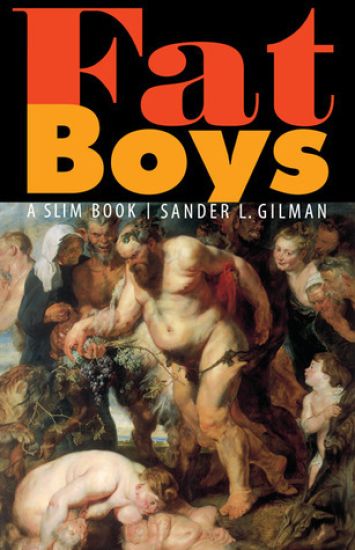
Fat Boys

Fat Boys

Sander L. Gilman

Bison Books
2011
pokkari
The fat man—a cultural icon, a social enigma, a pressing medical issue—is the subject of this remarkably rich book. The figures that Sander L. Gilman considers, from the ugly fat man with the beautiful sylph trapped inside to the smart fat boy to the aging body desirous of rejuvenation, appear and reappear in different guises throughout Western culture. And as is often true, such marginal cases help define the shifting center of our dreams and beliefs. An exploration into the world of male body fantasies, Gilman's book examines how the representation of the fat man alters with time and alters how men relate to their own bodies and the bodies of others, both male and female. His examples—ranging from Santa Claus to Sancho Panza, from Falstaff to Babe Ruth, from Nero Wolfe to Al Roker—illustrate the complexity perennially associated with fat men. From discourses about normality to the playing fields of baseball, from Greek male beauty to the fat detective, Gilman's book examines and illuminates how cultures have imagined and portrayed the fat boy.