Kirjailija
Sander L. Gilman
Kirjat ja teokset yhdessä paikassa: 40 kirjaa, julkaisuja vuosilta 1985–2026, suosituimpiin kuuluu Antisemitisms. Vertaile teosten hintoja ja tarkista saatavuus suomalaisista kirjakaupoista.
Nimi esiintyy myös muodoissa: Sander L Gilman
40 kirjaa
Kirjojen julkaisuvuodet: 1985–2026.
Diseases and Diagnoses discusses why such social problems as addiction, sexually transmitted diseases, racial predisposition for illness, surgery and beauty, and electrotherapy, all of which concerned thinkers a hundred years ago, are reappearing at a staggering rate and in diverse national contexts. In the twentieth century such problems were viewed as only historical concerns. Yet in the twenty-first century, we once again find ourselves confronting their implications. In this fascinating volume, Gilman looks at historical and contemporary debates about the stigma associated with biologically transmitted diseases. He shows that there is no indisputable way to measure when a disease or therapy will reappear, or how it may be perceived at any given moment in time. Consequently, Gilman focuses on the socio-cultural and political implications that the reappearance of such diseases has had on contemporary society. His approach is to show how culture (embedded in cultural objects) both feeds and is fed by the claims of medical science-as for example, the reappearance of "race" as a cultural as well as a medical category. If the twentieth century was the "age of physics," in the latter part of the past century and certainly in the twenty-first century biological concerns are recapturing central stage. Achievements of the biological sciences are changing the public's sense of what constitutes cutting-edge science and medicine. None has captured the public imagination more effectively than the mapping of the human genome and the promise of genetic manipulation, which fuel what Gilman calls a "second age of biology." Although not without controversy, the role of genetics appears to be key. Gilman puts contemporary debates in historical context, showing how they feed social and cultural concerns as well as medical possibilities.
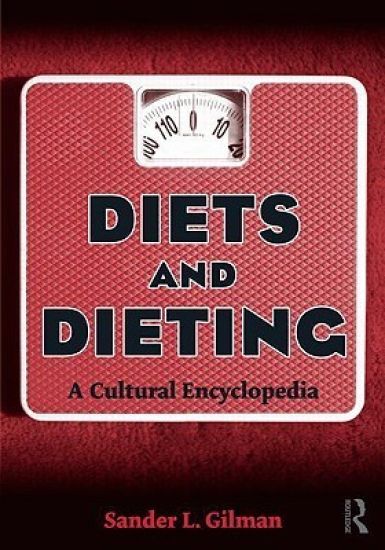
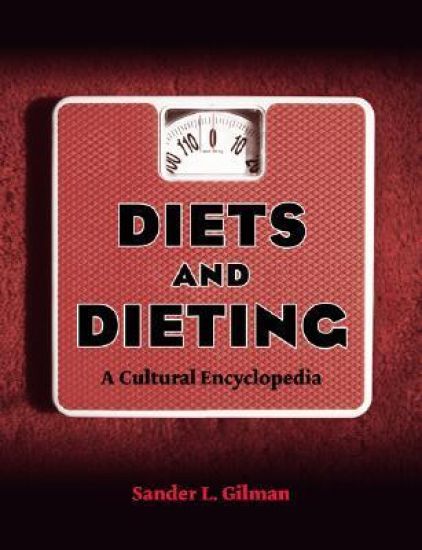
Diets and dieting have concerned—and sometimes obsessed—human societies for centuries. The dieters' regime is about many things, among them the control of weight and the body, the politics of beauty, discipline and even self-harm, personal and societal demands for improved health, spiritual harmony with the universe, and ethical codes of existence. An A to Z encyclopedia, this innovative reference work spans many periods and cultures as the acclaimed cultural and medical historian Sander Gilman lays out the history of diets and dieting in a fascinating series of articles. This volume is a reference tool presenting the historical, popular, and scientific context for diets and dieting from the ancient world to the present. The entries range from biography to large survey essays, which cover the historical and cultural context as well as the practice of dieting. The entries are truly international in scope, and present the context for contemporary dieting culture and celebrity within the longer historical view and across cultures. Sample entries include:AdvertisingAnorexiaRobert AtkinsBariatric Surgery BodybuildingBrillat-SavarinChristianityChina TodayFast FoodFat PositiveGandhiGlobalizationGreek MedicineJohn Harvey KelloggMedieval DietsPaleolithic DietsVegetarianism
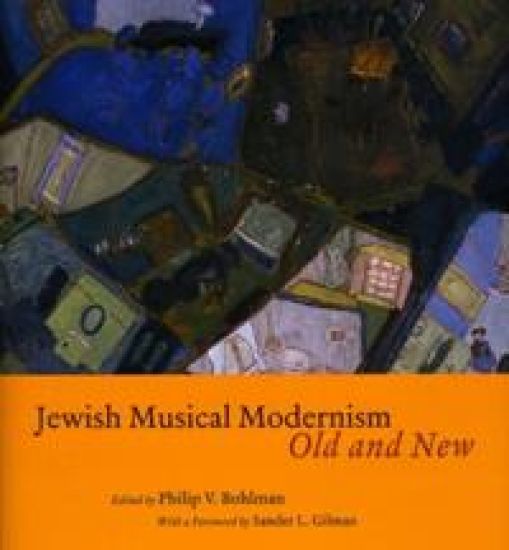
Tackling the myriad issues raised by Sander L. Gilman's provocative opening salvo - "Are Jews Musical?" - this volume's distinguished contributors present a series of essays that trace the intersections of Jewish history and music from the late nineteenth century to the present. Covering the sacred and the secular, the European and the non-European, and all the arenas where these realms converge, these essays recast the established history of Jewish culture and its influences on modernity. Mitchell Ash explores the relationship of Jewish scientists to modernist artists and musicians, while Edwin Seroussi looks at the creation of Jewish sacred music in nineteenth-century Vienna. Discussing Jewish musicologists in Austria and Germany, Pamela Potter details their contributions to the "science of music" as a modern phenomenon. Kay Kaufman Shelemay investigates European influence in the music of an Ethiopian Jewish community, and Michael P. Steinberg traces the life and works of Charlotte Salomon, whose paintings staged the destruction of the Holocaust. Bolstered by Philip V. Bohlman's wide-ranging introduction and epilogue, and featuring lush color illustrations and a complementary compact disc of the period's music, this volume is a lavish tribute to Jewish contributions to modernity.
The modern world is faced with a terrifying new ‘disease’, that of ‘obesity’. As people get fatter, we have come to see excess weight as unhealthy, morally repugnant and socially damaging. Fat it seems has long been a national problem and each age, culture and tradition have all defined a point beyond which excess weight is unacceptable, ugly or corrupting. This fascinating new book by Sander Gilman looks at the interweaving of fact and fiction about obesity, tracing public concern from the mid-nineteenth century to the modern day. He looks critically at the source of our anxieties, covering issues such as childhood obesity, the production of food, media coverage of the subject and the emergence of obesity in modern China. Written as a cultural history, the book is particularly concerned with the cultural meanings that have been attached to obesity over time and to explore the implications of these meanings for wider society. The history of these debates is the history of fat in culture, from nineteenth-century opera to our global dieting obsession. Fat, A Cultural History of Obesity is a vivid and absorbing cultural guide to one of the most important topics in modern society.
Diets and dieting have concerned – and sometimes obsessed – human societies for centuries. The dieters' regime is about many things, among them the control of weight and the body, the politics of beauty, discipline and even self-harm, personal and societal demands for improved health, spiritual harmony with the universe, and ethical codes of existence. In this innovative reference work that spans many periods and cultures, the acclaimed cultural and medical historian Sander L. Gilman lays out the history of diets and dieting in a fascinating series of articles.
Jurek Becker, the author of the first comic novel on the Holocaust, Jacob the Liar, and other highly acclaimed works, was one of West Germany's most famous exiles from the GDR. A survivor of the Shoah-his mother died in a Nazi death camp-and witness to the Soviet occupation of Eastern Europe, Becker endured most of the trials that Jews experienced in Europe from the onset of World War II to the end of the Cold War. In the first biography of this fascinating figure, Sander Gilman tells the story of Becker's life in five worlds: the Polish-Jewish middle-class neighborhood where Becker was born; the Warsaw ghetto and the concentration camps where Becker spent his childhood; the socialist order of the GDR, which Becker idealized, resisted, and finally was forced to leave; the isolated world of West Berlin, where he settled down to continue his writing; and the new, reunified Germany, for which Becker served as both conscience and inspiration. Gilman was close friends with Becker for nearly thirty years, and his biography is based on unprecedented access to both the man and his papers. As Gilman reveals, Becker's story encapsulates the fractured experience of life in twentieth-century Europe, a time and place in which political systems and national borders were constantly in flux. The life of Becker, we learn, was one of great literary achievement and notoriety, but it was also one of profound cultural dislocation. An important theme in the book is Becker's struggle with his Jewishness, an identity he repressed in socialist East Germany, but embraced after reunification, when he found himself at the center of Jewish culture and literature. Sander Gilman's story of Jurek Becker is biography of the highest order, a portrait of an extraordinarily gifted artist whose hope and courage are manifested in his legacy as one of the greatest German writers of the past century.
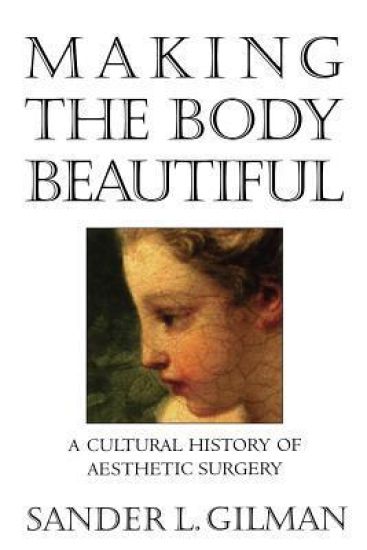
Nose reconstructions have been common in India for centuries. South Korea, Brazil, and Israel have become international centers for procedures ranging from eyelid restructuring to buttock lifts and tummy tucks. Argentina has the highest rate of silicone implants in the world. Around the globe, aesthetic surgery has become a cultural and medical fixture. Sander Gilman seeks to explain why by presenting the first systematic world history and cultural theory of aesthetic surgery. Touching on subjects as diverse as getting a "nose job" as a sweet-sixteen birthday present and the removal of male breasts in seventh-century Alexandria, Gilman argues that aesthetic surgery has such universal appeal because it helps people to "pass," to be seen as a member of a group with which they want to or need to identify. Gilman begins by addressing basic questions about the history of aesthetic surgery. What surgical procedures have been performed? Which are considered aesthetic and why? Who are the patients? What is the place of aesthetic surgery in modern culture? He then turns his attention to that focus of countless human anxieties: the nose. Gilman discusses how people have reshaped their noses to repair the ravages of war and disease (principally syphilis), to match prevailing ideas of beauty, and to avoid association with negative images of the "Jew," the "Irish," the "Oriental," or the "Black." He examines how we have used aesthetic surgery on almost every conceivable part of the body to try to pass as younger, stronger, thinner, and more erotic. Gilman also explores some of the extremes of surgery as personal transformation, discussing transgender surgery, adult circumcision and foreskin restoration, the enhancement of dueling scars, and even a performance artist who had herself altered to resemble the Mona Lisa. The book draws on an extraordinary range of sources. Gilman is as comfortable discussing Nietzsche, Yeats, and Darwin as he is grisly medical details, Michael Jackson, and Barbra Streisand's decision to keep her own nose. The book contains dozens of arresting images of people before, during, and after surgery. This is a profound, provocative, and engaging study of how humans have sought to change their lives by transforming their bodies.
Given the attacks on the humanities by the right ("Goethe is not taught anymore!") and the left ("Why teach dead white males?") over the past decade, how can we teach and research in the humanities in the years to come? Drawing on thirty years of experience, a distinguished teacher and scholar here presents a series of closely interconnected exercises in understanding the present state and future possibilities of the humanities, especially the teaching of "foreign" languages and culture. Rather than rail at a worldwide conspiracy by universities against the humanities, the author argues that the gradual erosion of the status of the humanities has been due to the muddling of the goals of teachers, students, and administrators: all are at fault. Teachers are at fault because they have lost sight of the goal of their profession—the clear and direct transmission of critical thinking and complex knowledge to those who may not immediately benefit from it. Students are at fault because they want social mobility without the necessary investment of time in an apprenticeship to learning and the generation of knowledge. Administrators are at fault because they want to have an economically viable structure in a world in which value is too often measured by a cost/benefit ratio. All three groups must rethink the university. The underlying theme of the eight essays and addresses, four of them published for the first time, is that teachers in the humanities are the spokespersons of the university's history and future, doing the heavy lifting in teaching the bulk of the students those intellectual skills—critical reading, writing, culture, and thought—that will serve them no matter what their major or future employment. The volume illustrates a series of positions from how a teacher should be able to get tenure to what can be taught in innovative, cross-disciplinary teaching. Other topics address why one should teach European languages, how books and jobs are related in today's academy, and whether scientific research can have a place in the teaching of the humanities.
Why do physicians who’ve taken the Hippocratic Oath willingly cut into seemingly healthy patients? How do you measure the success of surgery aimed at making someone happier by altering his or her body? Sander L. Gilman explores such questions in Creating Beauty to Cure the Soul, a cultural history of the connections between beauty of body and happiness of mind. Following these themes through an impressive range of historical moments and players, Gilman traces how aesthetic alterations of the body have been used to “cure” dissatisfied states of mind. In his exploration of the striking parallels between the development of cosmetic surgery and the field of psychiatry, Gilman entertains an array of philosophical and psychological questions that underlie the more practical decisions rountinely made by doctors and potential patients considering these types of surgery. While surveying and incorporating the relevant theories of Sigmund Freud, Alfred Adler, Karl Menninger, Paul Schilder, contemporary feminist critics, and others, Gilman considers the highly unstable nature of cultural notions of health, happiness, and beauty. He reveals how ideas of race and gender structured early understandings of aesthetic surgery in discussions of both the “abnormality” of the Jewish nose and the historical requirement that healthy and virtuous females look “normal,” thereby enabling them to achieve invisibility. Reflecting upon historically widespread prejudices, Gilman describes the persecutions, harrassment, attacks, and even murders that continue to result from bodily difference and he encourages readers to question the cultural assumptions that underlie the increasing acceptability of this surgical form of psychotherapy. Synthesizing a vast body of related literature and containing a comprehensive bibliography, Creating Beauty to Cure the Soul will appeal to a broad audience, including those interested in the histories of medicine and psychiatry, and in philosophy, cultural studies, Jewish cultural studies, and race and ethnicity.
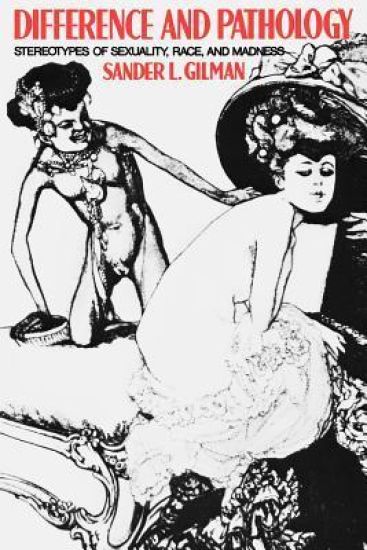
The essays in this collection, written by a pioneering interdisciplinary scholar, deal with the roles of images in the construction of stereotypes and the categories of difference as represented in texts—in high literature, in medical literature, in art—from the last fin-de-siècle to our own. Intensely engaged in the cultural politics of everyday life and conscious of how texts reflect and shape our social practices, they deal primarily with representations and self-representations of "Jews" in the past one hundred years and focus on the question of the constructions of the Jew's body in art and literature. The title essay, "Love + Marriage = Death: STDs and AIDS in the Modern World," however, studies the image of sexually transmitted disease from Shakespeare to Martin Amis. It sets the tone for an understanding of this collection as a book about Jews and their representation, but not as a special, isolated case. The first essay, the largely autobiographical "Ethnicities: Why I Write What I Write," serves as an introduction to the collection. The other essays are: "Max Nordau, Sigmund Freud, and the Question of Conversion"; "Salome, Syphilis, Sarah Bernhardt, and the 'Modern Jewess'"; "Zwetschkenbaum's Competence: Madness and the Discourse of the Jews"; "Otto Weininger and Sigmund Freud: Race and Gender in the Shaping of Psychoanalysis"; "Sibling Incest, Madness, and the Jew"; "R. B. Kitaj's 'Good Bad' Diasporism and the Body in American Jewish Postmodern Art"; and "Who Is Jewish?: The Newest Jewish Writing in German and Daniel Goldhagen."
A Jew in a violently anti-Semitic world, Sigmund Freud was forced to cope with racism even in the "serious" medical literature of the fin de siecle, which described Jews as inherently pathological and sexually degenerate. In this provocative book, Sander L. Gilman argues that Freud's internalizing of these images of racial difference shaped the questions of psychoanalysis. Examining a variety of scientific writings, Gilman discusses the prevailing belief that male Jews were "feminized," as stated outright by Jung and others, and concludes that Freud dealt with his anxiety about himself as a Jew by projecting it onto other cultural "inferiors"--such as women. Gilman's fresh view of the origins of psychoanalysis challenges those who separate Freud's revolutionary theories from his Jewish identity.
Ours is a culture riddled with preoccupations about health and disease. In this timely study Sander L. Gilman demonstrates how images of beauty and ugliness have constructed a visual history which records the artificial boundaries that continue to divide 'healthy' bodies from ones that are ill. He shows how cultural fantasies of health and illness have come to be identified and defined by means of visual, aesthetic criteria - for the healthy is now seen as beautiful and the ill as ugly. How did these categories acquire medical associations? The history of our perception of the 'beautiful body' is charged with anxieties about contagion and ugliness and, furthermore, entangled with political implications brought about by our all-too-frequent interpretation of 'race' as a medical category. Sander Gilman looks at how nineteenth-century theorists collected medical and racial data from the shapes of noses, and at contemporary fears concerning syphilis, vividly personified in the diseased hero of Leroux's "The Phantom of the Opera". He also scrutinizes Mark Twain's frank account of a visit to the Holy Land for signs of implicit prejudice about the health or illness of the resident Arabs and Jews. These concerns are brought up-to-date when the author turns to pathological case histories and recent AIDS posters issued by governments worldwide. This is more than simply a history of medicine augmented by visual evidence; its true originality lies in reading from the same visual sources an otherwise unnoticed aestheticization of the body. In so doing, Sander Gilman has discovered a new, exciting, alternative reading of the history of health and illness.
In The Case of Sigmund Freud, Sander Gilman traces the "medicalization" of Jewishness in the science and medicine of turn-of-the-century Vienna, and the ways in which Jewish physicians responded to the effort to incorporate racist biological literature into medical practice. Focusing on the new science of psychoanalysis, Gilman looks at the strategic devices Sigmund Freud employed to detach himself from the stigma of being Jewish and shows how Freud's work in psychoanalysis evolved in response to the biological discourse of the time.
Reemerging Jewish Culture in Germany
Sander L. Gilman; Karen Remmler
New York University Press
1994
sidottu
How can there by a Jewish culture in today's Germany? Since the fall of the Wall, there has been a substantial increase in the visibility of Jews in German culture, not only an increase in the number of Jews living there, but, more importantly, an explosion of cultural activity. Jews are writing and making films about the central question of Jewish life after the Shoah. Given the xenophobia that has marked Germany since reunification, the appearance of a new Jewish is both surprising and normalizing. Even more striking than the reappearance of Jewish culture in England after the expulsion and massacres of the Middle Ages, the presence of a new generation of Jewish writers in Germany is a sign of the complexity and tenacity of modern Jewish life in the Diaspora. Edited by Sander L. Gilman and Karen Remmler and featuring works by many of the most noted specialists on the subject, including Susan Niemann, Y. Michael Bodemann, Marion Kaplan, Katharina Ochse, Robin Ostow, Rafael Seligmann, Jack Zipes, Jeffrey Peck, Kizer Walker, and Esther Dischereit, this volume explores the questions and doubts surrounding the revitalization of Jewish life in Germany. The writers cover such diverse topics as the social and institutional role that Jews now play, the role of religion in daily life, and gender and culture in post-Wall Jewish writing.
Reemerging Jewish Culture in Germany
Sander L. Gilman; Karen Remmler
New York University Press
1994
pokkari
How can there by a Jewish culture in today's Germany? Since the fall of the Wall, there has been a substantial increase in the visibility of Jews in German culture, not only an increase in the number of Jews living there, but, more importantly, an explosion of cultural activity. Jews are writing and making films about the central question of Jewish life after the Shoah. Given the xenophobia that has marked Germany since reunification, the appearance of a new Jewish is both surprising and normalizing. Even more striking than the reappearance of Jewish culture in England after the expulsion and massacres of the Middle Ages, the presence of a new generation of Jewish writers in Germany is a sign of the complexity and tenacity of modern Jewish life in the Diaspora. Edited by Sander L. Gilman and Karen Remmler and featuring works by many of the most noted specialists on the subject, including Susan Niemann, Y. Michael Bodemann, Marion Kaplan, Katharina Ochse, Robin Ostow, Rafael Seligmann, Jack Zipes, Jeffrey Peck, Kizer Walker, and Esther Dischereit, this volume explores the questions and doubts surrounding the revitalization of Jewish life in Germany. The writers cover such diverse topics as the social and institutional role that Jews now play, the role of religion in daily life, and gender and culture in post-Wall Jewish writing.
Inscribing the Other focuses on great authors who have by birth or choice (or both) found themselves outside the mainstream of their culture but who have still wished to address it: Goethe, Freud, Wilde, Heine, Nietzsche, and Isaac Bashevis Singer, among others. In thirteen probing, provocative essays Sander L. Gilman reinterprets their writing as it reveals their efforts to come to terms with their real or imagined sense of difference. The chapters treat many themes and problems, ranging widely from the romantic notion of the transcendent artist to the twentieth-century artists-in-exile, and employing the perspectives of psychiatry, aesthetics, photography, politics, and the history of mentalities. The fate of Jewish writers in modern Germany, or of Yiddish writers whose language is devalued in European culture, is explored. The theme of difference and its artistic and intellectual manifestations runs throughout the book, which includes discussions of Goethe's and Wilde's homosexuality, Nietzsche's madness, Heine's refusal to be photographed, and Primo Levi's internment at Auschwitz, as well as an interview with Singer. In a frank autobiographical introduction, Gilman attempts to understand his own writing as an exercise in "inscribing the Other," in dealing with is own sense of difference through artistic creation.
Gorbachev's new thinking on superpower relations assumes that struggle between two opposing world systems no longer characterizes the present era. This second volume in the East-South Relations series explores the implications of Gorbachev's new thinking for regional conflicts. Because these conflicts jeopardize tranquil relations between the United States and the Soviet Union, they are perceived as contrary to the new spirit of global cooperation. This volume suggests that the accords on Southwest Africa may illustrate how the superpowers will resolve conflict, and shows how smaller powers may now have new roles cast for them by the superpowers. In 1975, Soviet-Cuban assistance to the Leninist-oriented Movement for the Popular Liberation of Angola (MPLA) was the first extensive Soviet-allied military intervention in the Third World. While the Soviet-backed Cubans propped up the MPLA, the South Africans intervened, on a smaller scale, in support of the National Union for the Total Independence of Angola (UNITA) under Jonas Savimbi. After 1985 UNITA began receiving United States support, and a military stalemate ensued. The contributors to this volume analyse how the Soviet Union and the United States used this stalemate to move the MPLA, Cuba and South Africa to settle not only their differences, but also the vexing question of the Independence of Namibia. Central issues explored are how and why South Africa and Cuba got into the Angolan arena, why they stayed so long, and why they saw fit to get out. While the authors differ on the forces at work, their debate is itself enlightening, and offers valuable insights into the policy options of regional powers. The contributors also review further steps, beyond military disengagement, needed to finally resolve the Angolan civil war, and ensure regional stability. They assess the potential for breakdown of the accords, and the likely consequences should this occur. Disengagement from Southwest Africa will interest policymakers and researchers concerned with developments in southern Africa and Cuba, and with relations between the superpowers.
"'Jewish Self-Hatred' has all the qualities of a master work by a seminal mind. It is a contribution of the first rank and should be regarded as one of the finest studies we are likely to see for a long time of a remarkable and sobering cultural phenomenon."--Chaim Potok, 'Philadelphia Inquirer. '"A broad panorama of antisemitism... Gilman's volume has the great merit of a quite unusual breadth of reference."--'Times Literary Supplement.'