Kirjojen hintavertailu – 12 876 422 kirjaa ja 26 kauppaa

Kirjailija

Sangharakshita

Kirjat ja teokset yhdessä paikassa: 57 kirjaa, julkaisuja vuosilta 1994–2026, suosituimpiin kuuluu Milarepa and the Art of Discipleship II. Vertaile teosten hintoja ja tarkista saatavuus suomalaisista kirjakaupoista.

57 kirjaa

Kirjojen julkaisuvuodet: 1994–2026.

Milarepa and the Art of Discipleship II

Milarepa and the Art of Discipleship II

Sangharakshita

Windhorse Publications
2018
sidottu
This is the continuing story of Milarepa and his disciple Rechungpa, first encountered in volume 18 of the Complete Works. As portrayed in The Hundred Thousand Songs of Milarepa, Rechungpa is a promising disciple, but he has a lot to learn, being sometimes proud, distracted, anxious, desirous of comfort and praise, over-attached to book learning, stubborn, sulky and liable to go to extremes. In other words, he is very human, and surely recognizable to anyone who has embarked on the spiritual path. He all too often takes his teacher's advice the wrong way, or simply ignores it, and it takes all of Milarepa's skill, compassion and patience to keep their relationship intact and help his unruly disciple to stay on the path to Enlightenment. In the story that begins this volume, matters come to a head when Milarepa burns the books that Rechungpa went all the way to India to acquire, but by the end of the volume, Rechungpa is able to set out on his own mission to teach the Dharma. Much happens in between. Sangharakshita's commentary, based on seminars given in the late 1970s and early 1980s, draws from the stories of Milarepa and his wayward disciple much valuable advice for any would-be spiritual practitioner.
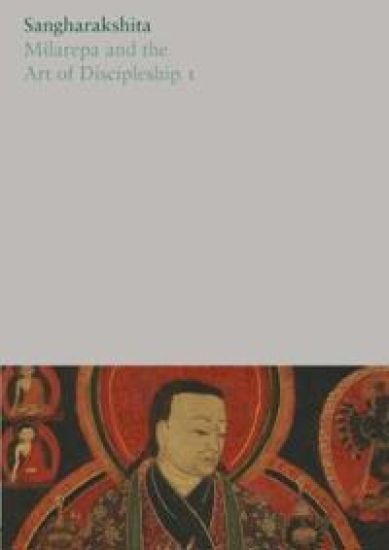
Milarepa and the Art of Discipleship I

Milarepa and the Art of Discipleship I

Sangharakshita

Windhorse Publications
2018
sidottu
The story of the spiritual journey of the famous Tibetan yogi Milarepa is often told, but less well known are the stories of his encounters with those he met and taught after his own Enlightenment, eleven of which are the catalyst for volumes 18 and 19 of the Complete Works. The first three were originally published in The Yogi's Joy, and to these have been added an intriguing fourth, `The Shepherd's Search for Mind'. The other seven stories form a sequence tracing the relationship between Milarepa and his disciple Rechungpa, from their first meeting to their final parting, when Rechungpa is exhorted to go and teach the Dharma himself. As portrayed in The Hundred Thousand Songs of Milarepa, Rechungpa is a promising disciple, but he has a lot to learn, being sometimes proud, distracted, anxious, desirous of comfort and praise, over-attached to book learning, stubborn, sulky and liable to go to extremes. In other words, he is very human, and surely recognizable to anyone who has embarked on the spiritual path. He all too often takes his teacher's advice the wrong way, or simply ignores it, and it takes all of Milarepa's skill, compassion and patience to keep their relationship intact and help his unruly disciple to stay on the path to Enlightenment. Sangharakshita's commentary is based on seminars he gave to young, enthusiastic but as yet inexperienced Dharma followers, and while much can be gleaned from it about the path of practice of the Kagyu tradition, the main emphasis is simply on how to overcome the difficulties that are sure to befall the would-be spiritual practitioner, how to learn what we need to learn - in short, the art of discipleship.
Milarepa and the Art of Discipleship II

Milarepa and the Art of Discipleship II

Sangharakshita

Windhorse Publications
2018
nidottu
This is the continuing story of Milarepa and his disciple Rechungpa, first encountered in volume 18 of the Complete Works. As portrayed in The Hundred Thousand Songs of Milarepa, Rechungpa is a promising disciple, but he has a lot to learn, being sometimes proud, distracted, anxious, desirous of comfort and praise, over-attached to book learning, stubborn, sulky and liable to go to extremes. In other words, he is very human, and surely recognizable to anyone who has embarked on the spiritual path. He all too often takes his teacher's advice the wrong way, or simply ignores it, and it takes all of Milarepa's skill, compassion and patience to keep their relationship intact and help his unruly disciple to stay on the path to Enlightenment. In the story that begins this volume, matters come to a head when Milarepa burns the books that Rechungpa went all the way to India to acquire, but by the end of the volume, Rechungpa is able to set out on his own mission to teach the Dharma. Much happens in between. Sangharakshita's commentary, based on seminars given in the late 1970s and early 1980s, draws from the stories of Milarepa and his wayward disciple much valuable advice for any would-be spiritual practitioner.
Milarepa and the Art of Discipleship I

Milarepa and the Art of Discipleship I

Sangharakshita

Windhorse Publications
2018
nidottu
The story of the spiritual journey of the famous Tibetan yogi Milarepa is often told, but less well known are the stories of his encounters with those he met and taught after his own Enlightenment, eleven of which are the catalyst for volumes 18 and 19 of the Complete Works. The first three were originally published in The Yogi's Joy, and to these have been added an intriguing fourth, `The Shepherd's Search for Mind'. The other seven stories form a sequence tracing the relationship between Milarepa and his disciple Rechungpa, from their first meeting to their final parting, when Rechungpa is exhorted to go and teach the Dharma himself. As portrayed in The Hundred Thousand Songs of Milarepa, Rechungpa is a promising disciple, but he has a lot to learn, being sometimes proud, distracted, anxious, desirous of comfort and praise, over-attached to book learning, stubborn, sulky and liable to go to extremes. In other words, he is very human, and surely recognizable to anyone who has embarked on the spiritual path. He all too often takes his teacher's advice the wrong way, or simply ignores it, and it takes all of Milarepa's skill, compassion and patience to keep their relationship intact and help his unruly disciple to stay on the path to Enlightenment. Sangharakshita's commentary is based on seminars he gave to young, enthusiastic but as yet inexperienced Dharma followers, and while much can be gleaned from it about the path of practice of the Kagyu tradition, the main emphasis is simply on how to overcome the difficulties that are sure to befall the would-be spiritual practitioner, how to learn what we need to learn - in short, the art of discipleship.
Sinnets natur : reaktivt och kreativt

Sinnets natur : reaktivt och kreativt

Sangharakshita

Bodhi förlaget
2026
nidottu
En av Buddhas grundläggande insikter är att vårt sinnestillstånd påverkar våra tankar, som i sin tur påverkar våra handlingar och därmed vår värld. Denna bok innehåller Sangharakshitas klassiska föredrag om denna centrala lära: ”Sinnets natur, reaktivt och kreativt”. Han utvecklar sin syn på vårt sinne som något som fungerar reaktivt eller kreativt i varje ögonblick, och hur vi kan se upplysning som ett tillstånd av ständigt tilltagande kreativitet. Förutom det ursprungliga föredraget innehåller boken även utdrag från seminarier där vi får ytterligare insikter i detta tema.
Ambedkar och buddhismen

Ambedkar och buddhismen

Sangharakshita

Bodhi förlaget
2026
nidottu
Den 14 oktober 1956 lämnade Ambedkar, tillsammans med nästan 400 000 av sina anhängare, det hinduiska kastväsendet – enligt vilket de var dömda att vara ”oberörbara” – och konverterade till buddhismen. I den här boken förklarar Sangharakshita tydligt varför Dr Ambedkar tog detta steg och varför det fortfarande är relevant för alla buddhister världen över. Han berättar också om Ambedkars liv, som en av de högst utbildade personerna i Indien, som dess första justitieminister och författare av den indiska konstitutionen, hur beslutet att konvertera växte fram. Du får också läsa om hur rörelsen lever vidare i dagens Indien.
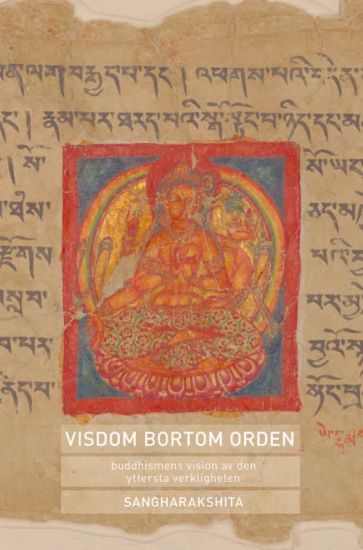
Visdom bortom orden : buddhismens vision av den yttersta verkligheten
Ända sedan Buddhas tid har människor försökt fånga buddhismen på ett sätt som är helt rationellt och begripligt. Läran om visdomens fulländning, Prajñaparamita, utgör en uppfriskande kontrast till detta. Diamantsutran, Hjärtsutran och Ratnaguna-samcayagatha är tre centrala och extraordinära visdomstexter, som fövisso tar upp vardagliga praktiska problem, men samtidigt får de det rationella sinnet att svindla. Det huvudsakliga temat för texterna är bodhisattvan – en person vars hela energi är inriktad på att nå upplysning för alla varelsers skull. Hur ska en sådan person leva och hur upplever den livet? Sangharakshita äger en sällsynt kombination av kunskap, intellektuell klarhet och insikt. Han presenterar dessa sublima läror på ett insatt och levande sätt, så att de känns djupt meningsfulla. Sangharakshita (1925–2018) ägnade hela sitt liv åt att utforska och praktisera Buddhas lära. Han var en viktig brobryggare mellan traditionell österländsk buddhism och etablerandet av en ”västerländsk” buddhism; men hans största bedrift var troligen att etablera en ny vital buddhistisk tradition.
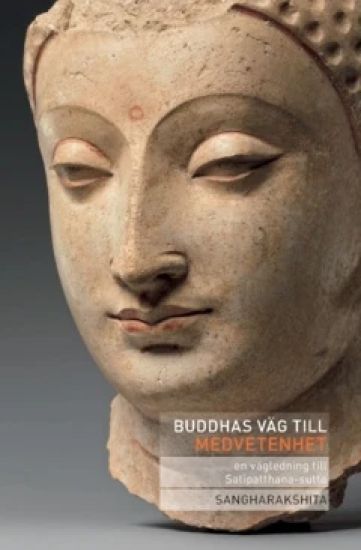
Buddhas väg till medvetenhet : en vägledning till Satipatthana-sutta
Nuförtiden finns det många böcker och annat material om Buddhas undervisning i mindfulness (medvetenhet), men den här vägledningen till Satipatthana-sutta tillför något unikt. Sangharakshita utforskar suttan och medvetenhet in i minsta detalj. Han lyfter fram dess vidare implikationer för våra liv och även dess mer utmanande sidor. Han utgår från vad suttan säger om sig själv – att den är inget mindre än en beskrivning av hela den buddhistiska vägen. ”Sangharakshitas ord är en mäktig mix av intellektuell klarhet och en direkt instruktion i hur vi kan arbeta med det villkorliga sinnet genom att bli medvetna om hela vår upplevelse. Han insisterar på att insikt (som kan uppstå när man ägnar sig åt något så banalt som att skala potatis) inte bara går att uppnå utan är ofrånkomlig om man fortlöpande praktiserar medvetenhet.” Vajradevi, författare till ”Uncontrived Mindfulness: Ending Suffering through Attention, Curiosity and Wisdom”. ”Sangharakshitas vägledning är ett viktigt bidrag till den rika traditionen av satipatthana-kommentarer. Han har en enastående förmåga att översätta och relatera till hela den buddhistiska traditionen.” — Vidyamala, författare till ”Mindfulness, en väg att hantera smärta”. För de som på något sätt mött den älskvärda före detta buddhistmunken Björn Natthiko Lindeblad (författare av ”Jag kan ha fel” och sommarpratare på P1) kan den här boken ge ännu större förståelse för hans bakgrund och hängivenhet att ”varsevara”.
En girlang av begrepp : buddhistiska begrepp som används inom Triratna
En sammanställning av buddhistiska begrepp och termer som de används inom Buddhistiska gemenskapen Triratna, med deras motsvarigheter pali- och sanskritord. Det finns även referenser till var man kan läsa mer om dem i Sangharakshitas böcker och undervisning. Texten publicerades först på Padmaloka retreatcenter, England, av Ashvajit. Här är den i översättning till svenska av Viryabodhi, som fått stor hjälp av Prasadacarin och Vimaladhi.
Through Buddhist Eyes

Through Buddhist Eyes

Sangharakshita

WINDHORSE PUBLICATIONS
2022
sidottu
Through Buddhist Eyes continues Sangharakshita's five volumes of memoirs. Covering journeys across five continents and two decades, this volume is made up of nineteen travel letters and one talk. They are Sangharakshita's heartfelt communications to the growing membership of the new Buddhist movement he founded: the Triratna Buddhist Order.
New Buddhist Movement II

New Buddhist Movement II

Sangharakshita

WINDHORSE PUBLICATIONS
2022
sidottu
This illuminating collection of previously unpublished talks traces the development of Sangharakshita's presentation of the Dharma in the West from 1965 to 2011. Drawing on a wide range of sources, from the Pali canon and The Tibetan Book of the Dead to Beowulf and William Wordsworth, there are many intriguing perspectives.
Buddhas ädla åttafaldiga väg : vision och omvandling
Den ädla åttafaldiga vägen är kanske den mest välkända läran i Buddhas undervisning. Den utgör en unik källa av visdom och praktisk vägledning till livets alla aspekter. Vägen börjar för många med en upplevelse av vision: kanske en insikt i hur livet verkligen förhåller sig, en upplevelse av livets skörhet och flykt, eller av att vi möter någon som tycks ha förstått något och är så mycket mer levande än vi själva. Eller så drabbas vi av livets inneboende smärta och otillfredsställelse. Den åttafaldiga vägen handlar sedan om den gradvisa omvandligen av hela vårt väsen i enlighet med den första visionen. Det här är en utmärkt bok för den som vill fördjupa sig i den buddhistiska läran. Den hämtar inspiration från flera av buddhismens främsta traditioner och är rik på praktiska exempel om hur läran kan omsättas till praktik i ditt liv. Dessutom förklaras många viktiga buddhistiska begrepp. Sangharakshitas levande kommentar ger en känsla att den andliga dimensionen finns närvarande här och nu, vid varje stund på dagen.
The Eternal Legacy /Wisdom Beyond Words

The Eternal Legacy /Wisdom Beyond Words

Sangharakshita

Windhorse Publications
2020
nidottu
This volume, which introduces the sequence of Complete Works volumes that include Sangharakshita's commentaries on a range of traditional Buddhist texts, begins with The Eternal Legacy, an introduction to the canonical literature of Buddhism, which succinctly and with great feeling gives the context for the commentaries to follow. Next comes Sangharakshita's talk 'The Glory of the Literary World', which considers how the Buddhist canon is to be approached, in a broad consideration of the literary traditions of both East and West. This is followed by an introduction to one of the earliest works of the Pali canon, the Udana, newly edited from a 1975 seminar for this Complete Works volume under the title Buddhism before Buddhism. Here we trace the Buddha's life from the period just after his Enlightenment to the time of his approaching death, and Sangharakshita (studying the text with members of what was in 1975 a very young Buddhist movement) draws out the newness and freshness of the Buddha's vision - so new, indeed, that words could scarcely be found to express it. And this volume concludes fittingly with Wisdom Beyond Words, Sangharakshita's much-loved commentary on several Perfection of Wisdom texts, another way of seeing how, in Asvaghosa's words, 'We use words to get free of words until we reach the pure wordless essence.'
Moving Against the Stream

Moving Against the Stream

Sangharakshita

Windhorse Publications
2020
nidottu
In this volume of memoirs we find Sangharakshita after twenty years in the East arriving back in England at the invitation of the English Sangha Trust. He expects to stay no more than a few months, but the months become years and, as he comes to know the then small world of British Buddhism, he realizes that after all it is here that he may best be able to work for the good of Buddhism , as one of his teachers had once exhorted him. After a farewell tour of his friends and teachers in India, he goes on to found a new Buddhist movement and to ordain twelve men and women into a new Buddhist Order. The answer to the question Why did Sangharakshita found a new Buddhist movement and Order? is in these pages. 'Moving Against the Stream' has for its backdrop 1960s Britain, with figures as diverse as Prime Minister Harold Wilson, and David Cooper, the anti-psychiatry psychiatrist. In the world of British Buddhism there is Christmas Humphreys, founder of the London Buddhist Society, and Maurice Walshe, translator of the Digha Nikaya, and many others. Here also is the story of a friendship that was to be deeply significant for Sangharakshita. As he and Terry Delamare drive across Europe visiting the sites of ancient Greece and the churches, museums and great works of art of Renaissance Italy, Sangharakshita makes vivid the role that higher culture can play in spiritual life. This volume includes '1970 - A Retrospect' in which Sangharakshita tells of a year that begins with lectures in Paris, continues with three months at Yale University as a visiting lecturer, and concludes back in Britain as he resumes his work for the Buddhist movement. A new phase is beginning.
Poems and Short Stories

Poems and Short Stories

Sangharakshita

Windhorse Publications
2020
nidottu

Halvin toimitettuna 28,20 €

`It is its spiritual background which gives to Sangharakshita's poetry its depth and emotional appeal. It rests on the inner parallelism between the most fundamental human emotions and the highest experiences on the path of liberation and enlightenment, the relationship between love and wisdom, the individual and the universal, the moods of Nature and the moods of the human heart.' - Lama Anagarika Govinda In his preface to the Complete Poems published in 1994 Sangharakshita wrote that his poems 'constitute a sort of spiritual autobiography, sketchy indeed, but perhaps revealing, or at least suggesting, aspects of my life that would not otherwise be known'. He wrote many more poems after that, and more from his early years have come to light. This volume contains all of them, offering a truly complete collection, and also includes six short stories, written over many years and some of them previously unpublished, also shedding new light on the imagination and perceptions of their author. The volume is prefaced by a foreword and two essays introducing the poems in different ways, and also contains edited versions of two talks Sangharakshita gave about specific poems, and a sequence of conversations about his poetry that were recorded towards the end of his life.
Poems and Short Stories

Poems and Short Stories

Sangharakshita

Windhorse Publications
2020
sidottu
`It is its spiritual background which gives to Sangharakshita's poetry its depth and emotional appeal. It rests on the inner parallelism between the most fundamental human emotions and the highest experiences on the path of liberation and enlightenment, the relationship between love and wisdom, the individual and the universal, the moods of Nature and the moods of the human heart.' - Lama Anagarika Govinda In his preface to the Complete Poems published in 1994 Sangharakshita wrote that his poems 'constitute a sort of spiritual autobiography, sketchy indeed, but perhaps revealing, or at least suggesting, aspects of my life that would not otherwise be known'. He wrote many more poems after that, and more from his early years have come to light. This volume contains all of them, offering a truly complete collection, and also includes six short stories, written over many years and some of them previously unpublished, also shedding new light on the imagination and perceptions of their author. The volume is prefaced by a foreword and two essays introducing the poems in different ways, and also contains edited versions of two talks Sangharakshita gave about specific poems, and a sequence of conversations about his poetry that were recorded towards the end of his life.
Moving Against the Stream

Moving Against the Stream

Sangharakshita

WINDHORSE PUBLICATIONS
2020
sidottu
In this last volume of memoirs we find Sangharakshita arriving back in England after twenty years in the East. He is expecting to stay no more than a few months. But the months become years and as he comes to know the as yet small world of British Buddhism, he realizes that it is here that he may best be able to `work for the good of Buddhism'.
Eternal Legacy /Wisdom Beyond Words

Eternal Legacy /Wisdom Beyond Words

Sangharakshita

WINDHORSE PUBLICATIONS
2020
sidottu
This volume introduces the Complete Works volumes that include Sangharakshita's commentaries on a range of traditional Buddhist texts, beginning with The Eternal Legacy, an introduction to the canonical literature of Buddhism, and concluding with Wisdom Beyond Words, Sangharakshita's much-loved commentary on several Perfection of Wisdom texts.
Dramat om den kosmiska upplysningen : parabler, myter och symboler i Den vita lotussutran
Den vita lotussutran vänder sig inte till huvudet och intellektet, utan till hjärtat och fantasin. Dess liknelser är kanske de viktigaste i hela den stora buddhistiska litteraturen, välkända överallt i den buddhistiska östern. Den är också full av myter och symboler. Till formen är sutran ett drama eller rentav ett mysteriespel. Hela kosmos utgör scenen och handlingen utspelar sig över miljontals år. Rollfigurerna består av buddhor och bodhisattvor, arhanter, gudar, demoner och människor – i själva verket alla levande varelser. Atmosfären i sutran är mycket märklig, fylld av mirakel och underverk som den är. Allteftersom handlingen i sutran vecklar ut sig blir vi vittne till ett transcendentalt ljud-och-ljusspel – det tycks inte finnas något annat sätt att beskriva det. Dramats tema är oerhört storslaget. Det är upplysningen – inte bara Buddhas upplysning eller lärjungarnas upplysning – utan alla levande varelsers upplysning. I boken introducerar Sangharakshita oss till parablerna i Den vita lotussutran, och drar många paralleller till andra kulturer, den grekiska, egyptiska, fornnordiska m.fl. och gör historierna levande och relevanta för oss, liksom de alltid varit för tänkande öppna människor. Det här är sista delen i en trilogi om mahayanasutror, där de andra två är: Vimalakirti-nirdesha (Vimalakirtis undervisning) och Det gyllene ljusets sutra.
Ritual und Hingabe

Ritual und Hingabe

Sangharakshita

Books on Demand
2019
pokkari
Viele Menschen im Westen erleben die bung von Verehrung und Hingabe als sehr konfrontativ und ignorieren diesen Teil der buddhistischen Praxis gerne. Sangharakshita lenkt uns gekonnt durch Schwierigkeiten hindurch, die uns dabei begegnen k nnen. Er zeigt auf, welche wesentliche Rolle Rituale und Ehrerbietung im spirituellen Leben spielen, da sie die Sprache des Herzens sprechen. Er leitet uns durch die Siebenf ltige Puja, eine poetische Abfolge von spirituellen Stimmungen, und vermittelt uns ein Gef hl f r die Tiefe spiritueller Praxis, die sich durch Rezitation, Opfergaben und Mantras offenbart