
Kirjailija
Sangharakshita
Kirjat ja teokset yhdessä paikassa: 57 kirjaa, julkaisuja vuosilta 1994–2026, suosituimpiin kuuluu Milarepa and the Art of Discipleship II. Vertaile teosten hintoja ja tarkista saatavuus suomalaisista kirjakaupoista.
57 kirjaa
Kirjojen julkaisuvuodet: 1994–2026.

In this volume Sangharakshita approaches communicating Buddhism in the West from two very different, but equally illuminating, angles. In the first part, in talks given in the early years of his teaching in England, he introduces the apparently exotic worlds of Tibetan Buddhism (1965) and its creative symbols (1972) and Zen Buddhism (1965), clarifying their mysteries while also somehow allowing them to work their magic. In the second part, by contrast, he examines the practice of Buddhism in the context of Western culture. In the polemical paper The FWBO and 'Protestant Buddhism' (first published in 1992) he looks at the characteristics of the Triratna community (the FWBO at the time of writing) as it was 25 years after its founding, in a response to an academic's assessment of the nascent Buddhist movement. And in From Genesis to the Diamond Sutra (first published in 2005) he reveals his own attitude to the literature and doctrines of Christianity, including the Christian view of homosexuality, in a multi-faceted exploration which includes autobiographical material not found anywhere else in his written work.

One of Sangharakshita’s outstanding contributions to Buddhism has been to survey the whole range of Buddhist schools, each with its own approach, own language and so on, and to distil out what is most fundamental. You are a Buddhist because – and only because – you Go for Refuge to the Three Jewels. But how did this become clear to him and what in any case does it actually mean practically to go for Refuge to the Buddha, Dharma and Sangha? The nine texts in this volume, composed over a period of more than thirty years, show Sangharakshita's unfolding insight into the meaning, significance and centrality of Going for Refuge. It includes some of his most important communications to the Order he founded: on the ten ethical precepts, his relation to the Order, and the history of his Going for Refuge. And in reflecting on his own bhikkhu ordination there is a challenge to some of the Buddhist world's most deeply rooted assumptions. Sangharakshita writes not just as a student and scholar but with the devotion of one who himself Goes for Refuge and seeks to share the fruits of his journey with others.
'The Bodhisattva ideal is a vast subject. It is the major distinctive emphasis of the phase of the development of Buddhism known as the Mahayana, which had its flowering for a period of around 500 years (0–500CE), but is still practised today in many different forms, from Tibetan Buddhism to Zen. To consider this topic is to place one’s hand on the very heart of Buddhism, and feel the beating of that heart.' Thus Sangharakshita introduces his theme. The first part of this volume describes the arising of the bodhicitta and the bodhisattva's path to Enlightenment in a weaving together of the sublime and the inspiringly practical, and the second part is a commentary on Santideva's classic 8th-century text, the Bodhicaryavatara, based on a seminar given in 1973, in the very early days of Triratna, thus shaping the newly emerging Buddhist movement. The seminar was titled The Endlessly Fascinating Cry, echoing Santideva's fervent prayer: 'In order to grasp this jewel of the mind, I offer ... the endlessly fascinating cry of wild geese ...' The volume ends with 'The Bodhisattva Principle', a talk given in 1983 to a conference of scientists and mystics in which Sangharakshita presents a vision of the bodhisattva as an embodiment of the key to the evolution of consciousness, individual and collective. The subject of this book may be an ideal, but it offers many ways to take the first real steps on this most significant of all journeys, and much nourishment for the heart and mind of the would-be bodhisattva.
'The Bodhisattva ideal is a vast subject. It is the major distinctive emphasis of the phase of the development of Buddhism known as the Mahayana, which had its flowering for a period of around 500 years (0–500CE), but is still practised today in many different forms, from Tibetan Buddhism to Zen. To consider this topic is to place one’s hand on the very heart of Buddhism, and feel the beating of that heart.' Thus Sangharakshita introduces his theme. The first part of this volume describes the arising of the bodhicitta and the bodhisattva's path to Enlightenment in a weaving together of the sublime and the inspiringly practical, and the second part is a commentary on Santideva's classic 8th-century text, the Bodhicaryavatara, based on a seminar given in 1973, in the very early days of Triratna, thus shaping the newly emerging Buddhist movement. The seminar was titled The Endlessly Fascinating Cry, echoing Santideva's fervent prayer: 'In order to grasp this jewel of the mind, I offer ... the endlessly fascinating cry of wild geese ...' The volume ends with 'The Bodhisattva Principle', a talk given in 1983 to a conference of scientists and mystics in which Sangharakshita presents a vision of the bodhisattva as an embodiment of the key to the evolution of consciousness, individual and collective. The subject of this book may be an ideal, but it offers many ways to take the first real steps on this most significant of all journeys, and much nourishment for the heart and mind of the would-be bodhisattva.
This volume includes two memoirs. In the Sign of the Golden Wheel tells the story of the `middle period’ of the fourteen years Sangharakshita was based in the Indian hill station, Kalimpong. It is a crucial time for Buddhism as the whole Asian world is preparing to celebrate 2,500 years of Buddhism, and Sangharakshita’s abundant energies are brought into play in diverse ways. His commitment to spreading the Dharma as widely as he can and to serving the (few) existing Buddhists in India takes him far afield: from tea estates in Assam to a film studio in Bombay, from the Maha Bodhi Society in Calcutta – he becomes the inspired editor of the internationally read Maha Bodhi Journal – to Kasturchand Park in Nagpur where he speaks to hundreds of thousands of bereaved followers of the great Dr Ambedkar. Whether describing great events of international import or those of more local significance, such as the funeral of Miss Barclay’s cat, the flowing prose descriptions of people, places and events bring it all vividly to life. And through it all the enlightening, inspiring and moving reflections on life, the Dharma, poetry, friendship – and himself. Precious Teachers covers the last period of Sangharakshita’s time in Kalimpong. Here too are vivid encounters with people – a damsel in distress, a dakini, a transsexual and many others. At the forefront, though, are Sangharakshita’s Buddhist teachers: the Tibetans Jamyang Khyentse Rimpoche, Dilgo Khyentse Rimpoche, Dudjom Rimpoche, Kachu Rimpoche, Chattrul Sangye Dorje and Dhardo Rimpoche, and Chinese Yogi Chen. He recalls their meetings, his abhi?ekas or initiations, and the friendship that developed with Dhardo Rimpoche. In the background are events of international significance: the Chinese in Tibet, and the oppression of Buddhists in Vietnam. The memoir concludes with a letter from the English Sangha Trust inviting Sangharakshita back to the West....
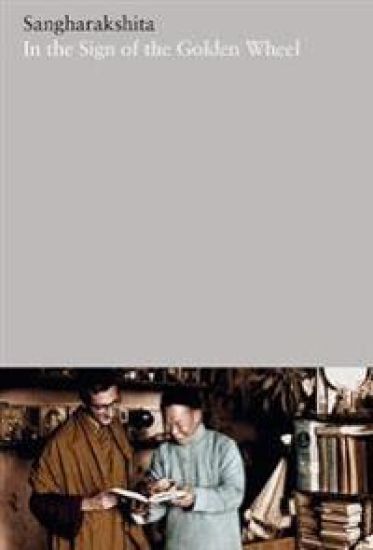
This volume includes two memoirs. In the Sign of the Golden Wheel tells the story of the `middle period’ of the fourteen years Sangharakshita was based in the Indian hill station, Kalimpong. It is a crucial time for Buddhism as the whole Asian world is preparing to celebrate 2,500 years of Buddhism, and Sangharakshita’s abundant energies are brought into play in diverse ways. His commitment to spreading the Dharma as widely as he can and to serving the (few) existing Buddhists in India takes him far afield: from tea estates in Assam to a film studio in Bombay, from the Maha Bodhi Society in Calcutta – he becomes the inspired editor of the internationally read Maha Bodhi Journal – to Kasturchand Park in Nagpur where he speaks to hundreds of thousands of bereaved followers of the great Dr Ambedkar. Whether describing great events of international import or those of more local significance, such as the funeral of Miss Barclay’s cat, the flowing prose descriptions of people, places and events bring it all vividly to life. And through it all the enlightening, inspiring and moving reflections on life, the Dharma, poetry, friendship – and himself. Precious Teachers covers the last period of Sangharakshita’s time in Kalimpong. Here too are vivid encounters with people – a damsel in distress, a dakini, a transsexual and many others. At the forefront, though, are Sangharakshita’s Buddhist teachers: the Tibetans Jamyang Khyentse Rimpoche, Dilgo Khyentse Rimpoche, Dudjom Rimpoche, Kachu Rimpoche, Chattrul Sangye Dorje and Dhardo Rimpoche, and Chinese Yogi Chen. He recalls their meetings, his abhi?ekas or initiations, and the friendship that developed with Dhardo Rimpoche. In the background are events of international significance: the Chinese in Tibet, and the oppression of Buddhists in Vietnam. The memoir concludes with a letter from the English Sangha Trust inviting Sangharakshita back to the West....

Sangharakshita approaches communicating Buddhism in the West from two very different, but equally illuminating, angles. In the first part, he introduces the apparently exotic worlds of Tibetan Buddhism and its creative symbols, and Zen Buddhism. In the second part he examines the practice of Buddhism in the context of Western culture

One of Sangharakshita’s outstanding contributions to Buddhism has been to survey the whole range of Buddhist schools, each with its own approach, own language and so on, and to distil out what is most fundamental. You are a Buddhist because – and only because – you Go for Refuge to the Three Jewels. But how did this become clear to him and what in any case does it actually mean practically to go for Refuge to the Buddha, Dharma and Sangha? The nine texts in this volume, composed over a period of more than thirty years, show Sangharakshita's unfolding insight into the meaning, significance and centrality of Going for Refuge. It includes some of his most important communications to the Order he founded: on the ten ethical precepts, his relation to the Order, and the history of his Going for Refuge. And in reflecting on his own bhikkhu ordination there is a challenge to some of the Buddhist world's most deeply rooted assumptions. Sangharakshita writes not just as a student and scholar but with the devotion of one who himself Goes for Refuge and seeks to share the fruits of his journey with others.
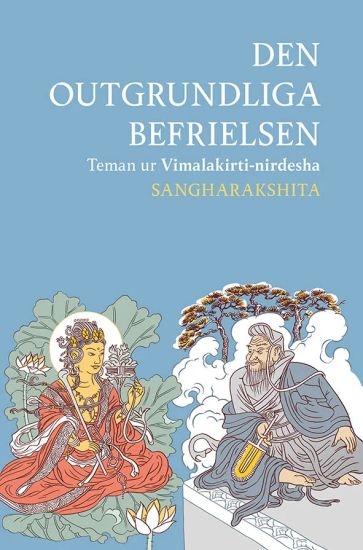
Den outgrundliga befrielsen : teman ur Vimalakirti-nirdesha
Sangharakshita
Bodhi-förlaget
2018
nidottu
Vimalakirti-nirdesha (Vimalakirtis undervisning) är troligtvis en av de tidigaste mahayanasutrorna. Även om den haft ett stort inflytande på buddhismen i Fjärran Östern är den fortfarande relativt okänd i väst. Vem är då Vimalakirti? Jo, han är en stor bodhisattva, t.o.m. en buddha, som lever som en vanlig lekman; med en djup förståelse och en osedvanlig förmåga att kommunicera med alla sorters människor. Vimalakirti måste vara en av de mest dynamiska och spännande karaktärerna i buddhismens rika litteratur, och Vimalakirti-nirdesha en av dess mest fascinerande texter. Vimalakirti-nirdesha innehåller tydliga utläggningar om djupa filosofiska teman; frikostiga beskrivningar av magiska händelser; poesi; självbiografi och minnen; en stor portion humor och en hel del drama. Till exempel hur en gudinna byter kön med Sariputra så att han blir kvinna och hon själv man (!) och hur Manjushri (visdomens bodhisattva) besöker Vimalakirti och hur de lekfullt dansar runt och duellerar i visdomens djupaste domäner. Sangharakshita lockar med sig läsaren in i textens fascinerande och inspirerande värld, till att berikas och beröras och att (mjukt) låta sig omvandlas. Det här är andra delen i en trilogi där Sangharakshita introducerar och vägleder oss i tre mahayanasutror, de andra två är: ATT OMVANDLA SIG SJÄLV – ATT OMVANDLA VÄRLDEN: Teman ur Det gyllene ljusets sutra, och DRAMAT OM DEN KOSMISKA UPPLYSNINGEN – liknelser, myter och symboler i Den vita lotussutran.
This volume of Sangharakshita's Complete Works includes Facing Mount Kanchenjunga, the second in the series of his memoirs, and, in Dear Dinoo, some very personal letters. Facing Mount Kanchenjunga covers the period 1950-1953, beginning with Sangharakshita's arrival in Kalimpong as a twenty-four-year-old sramanera, and his response to his teacher's injunction to 'stay here and work for the good of Buddhism!' In the pages that follow we are drawn into a deeply committed Dharma life lived in unusual circumstances and among some very colourful characters. As he recalls the significant events of those years - the setting up of the Kalimpong Young Men's Buddhist Association; the creation of a new Buddhist journal, whose contributors included Conze, Guenther, Govinda and other leading Buddhist writers of the time; accompanying the Sacred Relics of the Buddha's chief disciples; advising on the making of a Buddhist film; giving lectures; discovering Dharmapala; meeting Dhardo Rimpoche; in fact, working in every way to spread the Dharma - Sangharakshita also affords the reader glimpses of his inner life, his struggles and disappointments, his aspirations and inspirations, his responses to the beauties of nature, and his feeling for friendship. The twenty-nine letters collected together in Dear Dinoo span the period 1955-1974, giving a sighting of Sangharakshita's life as he experienced it at the time, including what happened on the day of Dr Babasaheb Ambedkar's untimely death in 1956. We are also afforded a glimpse of the unusual friendship that sprung up between the young English monk and the Montessori teacher. Kalyanaprabha's Introduction highlights some of the significances of the correspondence, including reflections on Sangharakshita, Women, and Friendship. A friend who often appears in the letters, Dr Dinshaw Mehta, Servant of God, and one time naturopath to Gandhi, is the subject of the appendix.
This volume of Sangharakshita's Complete Works includes Facing Mount Kanchenjunga, the second in the series of his memoirs, and, in Dear Dinoo, some very personal letters. Facing Mount Kanchenjunga covers the period 1950-1953, beginning with Sangharakshita's arrival in Kalimpong as a twenty-four-year-old sramanera, and his response to his teacher's injunction to 'stay here and work for the good of Buddhism!' In the pages that follow we are drawn into a deeply committed Dharma life lived in unusual circumstances and among some very colourful characters. As he recalls the significant events of those years - the setting up of the Kalimpong Young Men's Buddhist Association; the creation of a new Buddhist journal, whose contributors included Conze, Guenther, Govinda and other leading Buddhist writers of the time; accompanying the Sacred Relics of the Buddha's chief disciples; advising on the making of a Buddhist film; giving lectures; discovering Dharmapala; meeting Dhardo Rimpoche; in fact, working in every way to spread the Dharma - Sangharakshita also affords the reader glimpses of his inner life, his struggles and disappointments, his aspirations and inspirations, his responses to the beauties of nature, and his feeling for friendship. The twenty-nine letters collected together in Dear Dinoo span the period 1955-1974, giving a sighting of Sangharakshita's life as he experienced it at the time, including what happened on the day of Dr Babasaheb Ambedkar's untimely death in 1956. We are also afforded a glimpse of the unusual friendship that sprung up between the young English monk and the Montessori teacher. Kalyanaprabha's Introduction highlights some of the significances of the correspondence, including reflections on Sangharakshita, Women, and Friendship. A friend who often appears in the letters, Dr Dinshaw Mehta, Servant of God, and one time naturopath to Gandhi, is the subject of the appendix.
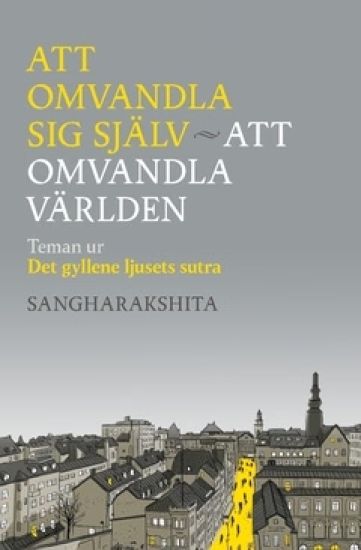
Att omvandla sig själv, att omvandla världen : Teman ur Det gyllene ljusets sutra
Sangharakshita
Bodhi förlaget
2018
nidottu
Det gyllene ljusets sutra är en mahayanasutra och visionen i mahayanabuddhismen är att alla människor kan utvecklas andligen och att hjälpa dem i detta ingår som en självklar del i det andliga livet. Mahayanabuddhismen uppmuntrar varje enskild person att samarbeta i vad som beskrivs som den stora universella omvandlingen. Mahayanasutror är i högsta grad ”imaginativa”. De förklarar inte det andliga livets praktiska sidor: mindfulness, de fem etiska föreskrifterna, hur man ska meditera. De bjuder i stället in oss till att föreställa oss livet på ett nytt sätt. Och till sin hjälp tar de historier, skildringar av fantastiska utopiska världar, den mest underbara fantasi och magi. Detta kan tyckas ligga långt borta från klassisk buddhistisk strävan ”att se saker och ting som de faktiskt är” och sökandet efter sanningen. Ändå handlar Det gyllene ljusets sutra om något väldigt konkret: om hur vi behöver omvandla oss själva och världen, och att det ytterst inte går att separera de två. En del av vår egen omvandling är att se, ta ansvar för och bekänna våra tillkortakommanden – ett mycket centralt och utmanande tema i boken. Det andra temat är hur världen behöver omvandlas, för att skapa en bättre, mer mänsklig och hjälpsam värld för alla människor, och naturen. Sangharakshita lyckas göra denna urgamla buddhistiska text och dessa teman spännande, inbjudande och mytiska – och ytterst relevanta. Det här är första delen i en trilogi där Sangharakshita introducerar och vägleder oss i tre mahayanasutror. De andra sutrorna är: Vimalakirti-nirdesa (Vimalakirtis undervisning) och Den vita lotus-sutran (Saddharma-pundarika).
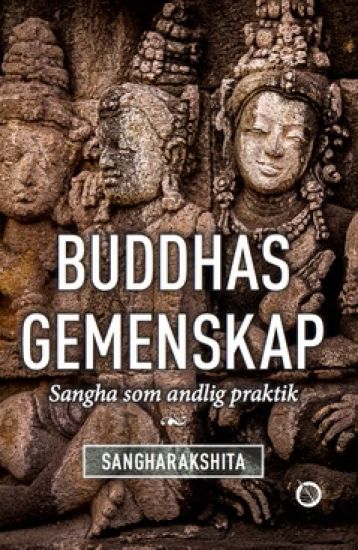
Den andliga gemenskapen – Sanghan – räknas traditionellt som en av buddhismens tre högsta ideal, tillsammans med Buddha och Dharma (hans lära). Hur kommer det sig? Många anser nog att dharmapraktik mest handlar om ett personligt åtagande, inte om att gå med i en grupp, medan andra tror att ”sanghan” endast syftar på den monastiska gemenskapen. I den här boken beskrivs sanghaidealet som en fri sammanslutning av individer som strävar mot upplysning. Vad består egentligen denna gemenskap av? Detta utforskande balanseras av reflektioner om individualitet och vad det innebär att vara en sann människa. Sista delen av boken ägnas åt individens [vår] relation till andra – till vänner, familj, medarbetare och andliga lärare, samt vilka band den buddhistiska gemenskapen har till världen i stort. I hela boken ger Sangharakshita uttryck för sitt passionerade åtagande till sangha som ideal. Hur kan vi hjälpa varandra, och världen, att leva på ett sätt som är mer upplyst och medkännande? Hur kan vi vara goda vänner med varandra? Sangharakshita visar hur sangha kan bli ett inspirerade ideal och en andlig praktik i sig, vilket gör boken levande och angelägen. Det här är sista delen i en trilogi där de andra delarna är: Vem är Buddha? och Buddhas lära – en väg till frihet.
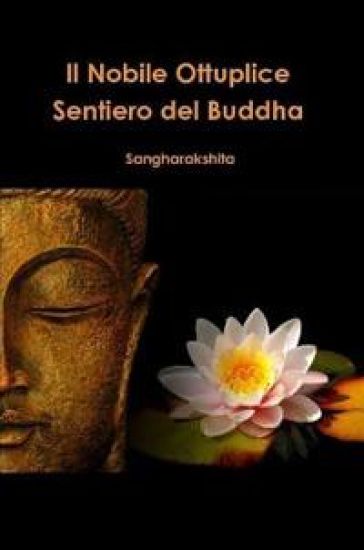
Il Nobile Ottuplice Sentiero il pi conosciuto degli insegnamenti del Buddha. antico, poichZ risale al primo discorso del Buddha, ed molto apprezzato come un tesoro unico di sapienza e guida pratica su come vivere la nostra vita. Il Nobile Ottuplice Sentiero comincia con una visione, un momento di intuizione, cui segue la trasformazione dei nostri pensieri e delle nostre azioni alla luce della verit^. Questo volume un introduzione approfondita al Nobile Ottuplice Sentiero, che pur rimane pratica, interessante e accessibile. Sangharakshita traduce gli insegnamenti antichi e li rende pertinenti al modo in cui viviamo oggi la nostra vita. Sangharakshita (Dennis Philip Edward Lingwood, nato il 26 agosto 1925) un insegnante e scrittore buddhista e fondatore della Comunit^ Buddhista Triratna.
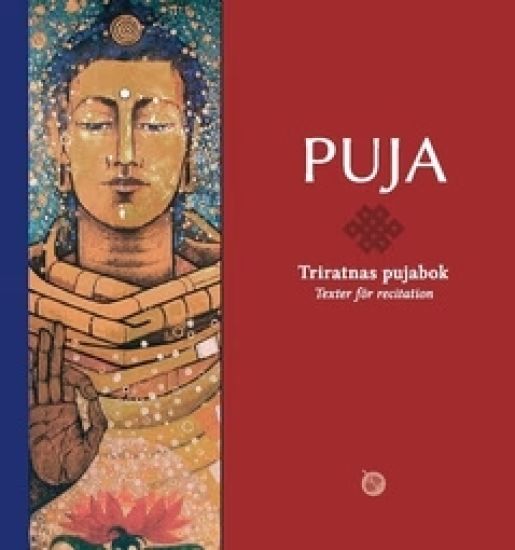
En bok med texter för recitation som används i Buddhistiska gemenskapen Triratna, med ett vackert belysande förord av Dhammadinna & Suvajra. Boken innehåller: Den sjufaldiga pujan, Hjärtsutran, Vajrasattvamantrat, flera andra mantran, Tiratana-vandana, Enkel (3-faldig) puja, Ceremoni för tillägnan, Välsignelser, Verser som skyddar sanningen, Hjärtsutran på sanskrit (Prajnaparamita hrdaya sutra), med ny översättning, och slutligen en hjälpsam uttalsguide för pali- och sanskritord, av Prasadacarin från förordet: ”Tänk dig en värld utan färg, skönhet, poesi, myter, högtider och ritualer. En sådan värld vore en mycket tråkig, trist och död värld. Sådana upplevelser betyder mycket för människan. De odlar våra känslor, förfinar sinnena och berikar föreställnings- förmågan. Poesi, symboler, myter och ritualer bär oss, som Shelley antyder i Till poesins försvar ”till världar av ljus och eld, dit den bevingade beräkningen aldrig vågar sig”. Vi kan inte leva enbart i den rationella tankens rike. För att känna oss helt och fullt levande måste vi stå i förbindelse med alla olika sidor och nivåer av oss själva. Buddhismen är en andlig tradition och talar som sådan till hela vårt väsen. Dess olika övningar kan hjälpa oss att bringa kropp, tal och sinne i harmoni med varandra. Genom tiderna har således många olika ceremonier och ritualer utvecklats. De sträcker sig från den enklaste högläsning av ett par verser till de mest komplexa och långa ritualer. Vördnadsövningar är mångfacetterade och består ofta av gemensam högläsning av verser som uttrycker vördnad, kroppsliga uttryck och ett medvetet utvecklande av positiva känslor, såväl som skapande av inre bilder och symboler. Sådana övningar kräver vår totala uppmärksamhet och tillåter inga distraktioner.”
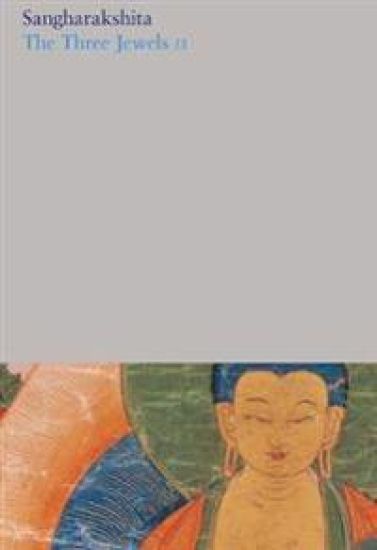
For Buddhists everywhere, the Three Jewels - the Buddha, the Dharma and the Sangha - are at the heart of daily life and practice. But how can we engage with these precious ideals in a way that makes a difference to how we live? In this, the companion volume to The Three Jewels I, in which the nature of Going for Refuge to the Three Jewels is explored, are gathered three much-loved books: Who is the Buddha?, What is the Dharma?, and What is the Sangha? In this volume, Sangharakshita tackles a great range of subjects, offering original and imaginative perspectives on all the topics one might expect an introduction to Buddhism to cover - karma and rebirth, Nirvana and the spiral path, and the nature of Buddhahood itself, as well as clear and pragmatic guidance on matters of personal concern, such as individuality, fidelity, gratitude, parenthood and seeking a spiritual teacher. The teachings are underpinned by many references to the Pali canon and other sources, to provide an authentic guide to the Dharma life in all its aspects, and much encouragement and inspiration to live that life to the full.
For Buddhists everywhere, the Three Jewels - the Buddha, the Dharma and the Sangha - are at the heart of daily life and practice. But how can we engage with these precious ideals in a way that makes a difference to how we live? In this, the companion volume to The Three Jewels I, in which the nature of Going for Refuge to the Three Jewels is explored, are gathered three much-loved books: Who is the Buddha?, What is the Dharma?, and What is the Sangha? In this volume, Sangharakshita tackles a great range of subjects, offering original and imaginative perspectives on all the topics one might expect an introduction to Buddhism to cover - karma and rebirth, Nirvana and the spiral path, and the nature of Buddhahood itself, as well as clear and pragmatic guidance on matters of personal concern, such as individuality, fidelity, gratitude, parenthood and seeking a spiritual teacher. The teachings are underpinned by many references to the Pali canon and other sources, to provide an authentic guide to the Dharma life in all its aspects, and much encouragement and inspiration to live that life to the full.
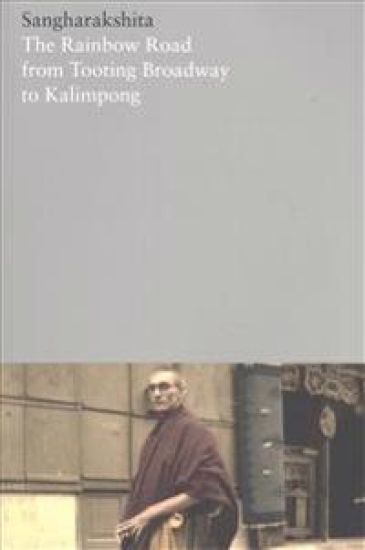
The Rainbow Road from Tooting Broadway to Kalimpong: Memoirs of an English Buddhist
Sangharakshita
Windhorse Publications
2017
nidottu
Sangharakshita read the Diamond Sutra for the first time the summer he turned seventeen. It seemed to awaken him to something whose existence he had forgotten, and he joyfully embraced those profound teachings 'with an unqualified acceptance'. This experience decided the whole future direction of his life. In this first volume of memoirs he describes how, from a working-class childhood in the London suburb of Tooting, he came, a twenty-four-year-old Buddhist novice monk, to Kalimpong in the eastern Himalayas. Sangharakshita paints a vivid picture of the people, the places and the experiences that shaped his life: his childhood, his army days, and the gurus he met during his years as a wandering ascetic staying in the caves and ashrams of India. He moves between the ordinary and the extraordinary, from the mundane to the sublime; his narrative takes in the psychological and aesthetic, the philosophical and spiritual. His experiences are both universal - love and loss, comedy and tragedy - and unique to what is an exceptional life.
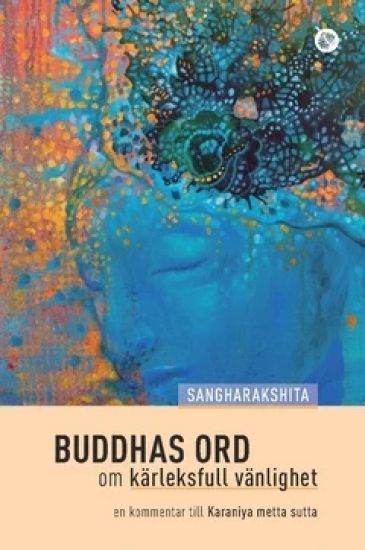
Buddhas ord om kärleksfull vänlighet : en kommentar till Karaniya metta sutta
Sangharakshita
Bodhi förlaget
2016
nidottu
En levande kommentar till källtexten för kärleksfull vänlighet: Karaniya metta sutta. Suttan sätter in metta eller kärleksfull vänlighet i sitt större sammanhang – som en del av träningen på vägen mot upplysning. Den tar upp vägens tre huvudsakliga områden: den etiska träningen, meditation och insikt i tillvarons natur eller visdom. Metta är en aktiv kärleksfull vänlighet och mycket mer än en känsla. Metta är också grunden för medkänsla, medglädje och jämnmod. Sangharakshita beskriver i boken vad metta är – en aktiv kärleksfull vänlighet – och att den också är en eldig välvilja, en extatisk energi och en förnuftig känsla. Han beskriver vilka mänskliga egenskaper – eller etiska förhållningssätt – vi behöver för att lyckas med metta, egenskaper som att vara kapabel, rak, flexibel, förnöjsam, lätt att försörja, diskret etc. Han går också in på de vise och var vi finner dem och vikten av andliga vänner, som fungerar som våra moraliska prövostenar. Sedan går Sangharakshita in på den kniviga frågan varför vi tycker illa om och t.om. hatar andra människor, och att det finns en ”fiende inom oss”. Efter detta beskriver han meditationen metta bhavana, odlandet av metta i fem stadier. Mettas relation till medkänsla, glädje och jämnmod tas också upp. Slutligen avslöjar Sangharakshita att metta kan leda oss hela vägen till insikt i tillvarons natur, där vi kan gå bortom all själv-upptagenhet och därmed kan bli vän till hela världen. Inte nog med det, han slår också fast att vår naturliga arvedel är glädje. Det här är blott en kort sammanfattning av boken innehåll. Du kommer säkert upptäcka att metta och kärleksfull vänlighet är mycket mer än en känsla och att budskapet i suttan är långt mer utmanande – och befriande – än vad många kärleksbudskap tycks antyda. Det är så lätt att säga att allt vi behöver är kärlek, men hur vi ska komma dit är sällan tydligt beskrivet. I kölvattnet av mindfulness har det kommit en ny våg av buddhistisk undervisning som kallas self-compassion, som inspirerats av Buddhas undervisning om metta eller kärleksfull vänlighet.