Kirjojen hintavertailu – 12 903 725 kirjaa ja 27 kauppaa

Kirjailija

Sanjay Subrahmanyam

Kirjat ja teokset yhdessä paikassa: 22 kirjaa, julkaisuja vuosilta 2001–2026, suosituimpiin kuuluu Mirrors of Empire. Vertaile teosten hintoja ja tarkista saatavuus suomalaisista kirjakaupoista.

22 kirjaa

Kirjojen julkaisuvuodet: 2001–2026.

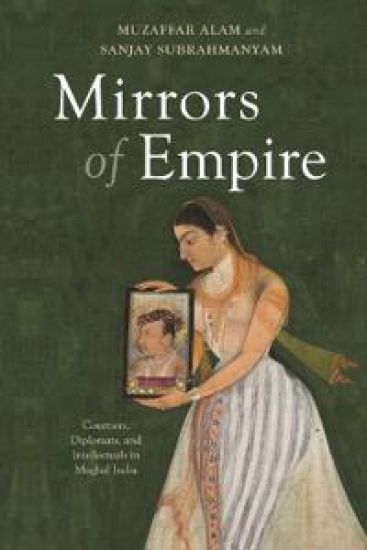
Mirrors of Empire

Mirrors of Empire

Muzaffar Alam; Sanjay Subrahmanyam

STATE UNIVERSITY OF NEW YORK PRESS
2026
pokkari
Approaches the history of the Mughal Empire at the level of human experience, through a diverse group of autobiographical narratives. Starting from 1526, the Mughals ruled over much of India for three centuries, perhaps the most important Islamic empire in the early modern world. This period saw the production of a fascinating variety of memoirs and autobiographies in which residents of the empire reflected on their own lives, on Islam in a Hindu context, and on the relationship of individual subjects to their new rulers. Those written by Mughal royalty—especially Babur and Jahangir—are well known. This book considers the less well-known writings of diverse others, from the poet laureate Faizi to those who were not part of elite society but a few notches below it, such as the lowly envoy Asad Beg and characters like Mirza Nathan and Abdul Latif, who lived dangerously on the Bengal frontier. Also considered are prolific Hindu writers, such as Bhimsen Saksena and the witty Anand Ram Mukhlis, who lived in Delhi through the turbulent 1730s and 1740s. Together, they offer an original and differently critical perspective on the empire—its religious, social, and political tensions, as well as its strategies for overcoming them. Covering over two centuries of such materials, Mirrors of Empire is a work of cultural history that is also firmly rooted in social history. It incorporates extensive translations from Persian, including materials that are little-known even to historians and specialists, and shows the transformation of the empire from its difficult emergence, to its expansive height, to its phase of disintegration in the middle of the eighteenth century. Gracefully written, the book approaches the Mughal Empire at the level of human experience, rendering it accessible and not a mere abstraction.
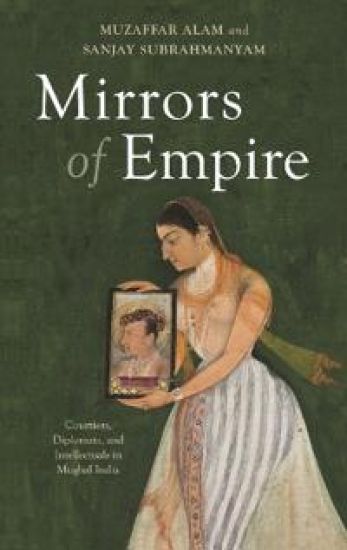
Mirrors of Empire

Mirrors of Empire

Muzaffar Alam; Sanjay Subrahmanyam

STATE UNIVERSITY OF NEW YORK PRESS
2026
sidottu
Approaches the history of the Mughal Empire at the level of human experience, through a diverse group of autobiographical narratives. Starting from 1526, the Mughals ruled over much of India for three centuries, perhaps the most important Islamic empire in the early modern world. This period saw the production of a fascinating variety of memoirs and autobiographies in which residents of the empire reflected on their own lives, on Islam in a Hindu context, and on the relationship of individual subjects to their new rulers. Those written by Mughal royalty—especially Babur and Jahangir—are well known. This book considers the less well-known writings of diverse others, from the poet laureate Faizi to those who were not part of elite society but a few notches below it, such as the lowly envoy Asad Beg and characters like Mirza Nathan and Abdul Latif, who lived dangerously on the Bengal frontier. Also considered are prolific Hindu writers, such as Bhimsen Saksena and the witty Anand Ram Mukhlis, who lived in Delhi through the turbulent 1730s and 1740s. Together, they offer an original and differently critical perspective on the empire—its religious, social, and political tensions, as well as its strategies for overcoming them. Covering over two centuries of such materials, Mirrors of Empire is a work of cultural history that is also firmly rooted in social history. It incorporates extensive translations from Persian, including materials that are little-known even to historians and specialists, and shows the transformation of the empire from its difficult emergence, to its expansive height, to its phase of disintegration in the middle of the eighteenth century. Gracefully written, the book approaches the Mughal Empire at the level of human experience, rendering it accessible and not a mere abstraction.

¿Deberíamos universalizar la historia?

¿Deberíamos universalizar la historia?

Sanjay Subrahmanyam

Ediciones Ucsh
2024
pokkari
Cuando cay el Muro de Berl n, muchos historiadores predijeron con seguridad el fin de un mundo de Estados-naci n y nacionalismos. En 1990, el historiador marxista Eric Hobsbawm escribi con confianza: Dijo Hegel que el b ho de Minerva que lleva la sabidur a levanta el vuelo en el crep sculo. Es una buena se al que en estos momentos est volando en c rculos alrededor de las naciones y el nacionalismo. Estaba muy equivocado. Muchas de las nuevas instituciones que deb an poner fin al viejo nacionalismo, como la Uni n Europea, se encuentran hoy en un estado de desorganizaci n. El mundo actual es testigo del resurgimiento de un nacionalismo que en muchos pa ses se combina con formas de autoritarismo, ya sea en Turqu a, Rusia, Brasil o India. Esto va a influir en la forma en que se escriban las historias, como podemos ver tambi n en estos pa ses. Es probable tambi n que afecte a las historias que no se escriban, porque no habr nadie que las escriba. En estas p ginas no he pretendido sugerir que exista un pa s o una cultura acad mica modelo cuyas pr cticas hist ricas deban seguir todos los dem s. Tampoco puedo defender un proyecto ilusorio de universalizar la historia, cuando la propia universalizaci n es a todos los efectos un proceso de exclusi n. Las controversias sobre qu es la historia, qu debe estudiar y c mo debe estudiarse continuar n seguramente durante mi vida y m s all . Sigo teniendo la esperanza de que las historias que se escriban se construyan con un esp ritu de conversaci n, con una apertura a otras experiencias y culturas, y no solo con un esp ritu de reivindicaci n y autocomplacencia. Pero soy lo bastante realista para saber que esto no es m s que una esperanza.
Across The Green Sea

Across The Green Sea

Sanjay Subrahmanyam

SAQI BOOKS
2024
sidottu
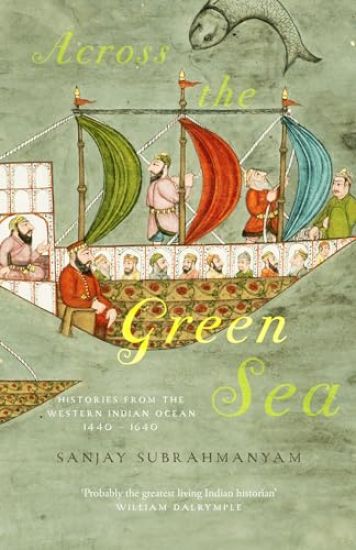
Beginning in the mid-fifteenth century, the regions bordering the western Indian Ocean – ‘the green sea,’ as it was known to Arabic speakers – underwent vast transformation. An era of commercial and cultural exchange blossomed between the Red Sea and Mecca, the Persian Gulf, East Africa, Kerala and western India. In Across the Green Sea, Sanjay Subrahmanyam recounts the history of this ocean from a variety of shifting viewpoints. He sets the scene with the withdrawal of China's Ming Dynasty and explores how the western Indian Ocean was transformed by the growth and increasing prominence of the Ottoman Empire and the continued spread of Islam into East Africa. He examines how several cities, including Mecca and the vital Indian port of Surat, grew and changed during these centuries, when various powers interacted, until famines and other disturbances upended the region in the seventeenth century. Rather than proposing an artificial model of a dominant centre and its dominated peripheries, Across the Green Sea reveals the complexity of a truly dynamic and polycentric system through the use of connected histories, a method which he has pioneered.
Across the Green Sea

Across the Green Sea

Sanjay Subrahmanyam

UNIVERSITY OF TEXAS PRESS
2024
sidottu
A history of two centuries of interactions among the areas bordering the western Indian Ocean, including India, Iran, and Africa. Beginning in the mid-fifteenth century, the regions bordering the western Indian Ocean-“the green sea,” as it was known to Arabic speakers-had increasing contact through commerce, including a slave trade, and underwent cultural exchange and transformation. Using a variety of texts and documents in multiple Asian and European languages, Across the Green Sea looks at the history of the ocean from a variety of shifting viewpoints: western India; the Red Sea and Mecca; the Persian Gulf; East Africa; and Kerala. Sanjay Subrahmanyam sets the scene for this region starting with the withdrawal of China's Ming Dynasty and explores how the western Indian Ocean was transformed by the growth and increasing prominence of the Ottoman Empire and the continued spread of Islam into East Africa. He examines how several cities, including Mecca and the vital Indian port of Surat, grew and changed during these centuries, when various powers interacted until famines and other disturbances upended the region in the seventeenth century. Rather than proposing an artificial model of a dominant center and its dominated peripheries, Across the Green Sea demonstrates the complexity of a truly dynamic and polycentric system through the use of connected histories, a method pioneered by Subrahmanyam himself.
Connected History

Connected History

Sanjay Subrahmanyam

Verso Books
2022
nidottu
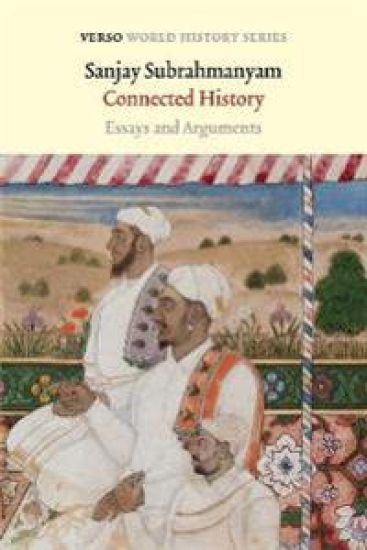
Sanjay Subrahmanyam is becoming well known for the same sort of reasons that attach to Fernand Braudel and Carlo Ginzburg, as the proponent of a new kind of history - in his case, not longue durée or micro-history, but 'connected history': connected cross-culturally, and spanning regions, subjects and archives that are conventionally treated alone. Not a research paradigm, he insists, it is more of an oppositionswissenschaft, a way of trying to constantly break the moulds of historical objects. The essays collected here, some quite polemical - as in the lead text on the notion of India-as-civilization, or another, assessing such a literary totem as V. S. Naipaul - illustrate the breadth of Subrahmanyam's concerns, as well as the quality of his writing. Connected History considers what, exactly, is an empire, the rise of 'the West' (less of a place than an idea or ideology, he insists), Churchill and the Great Man theory of history, the reception of world literature and the itinerary of subaltern studies, in addition to personal recollections of life and work in Delhi, Paris and Lisbon, and concluding remarks on the practice of early-modern history and the framing of historical enquiry.
Empires between Islam and Christianity, 1500-1800

Empires between Islam and Christianity, 1500-1800

Sanjay Subrahmanyam

State University of New York Press
2020
pokkari
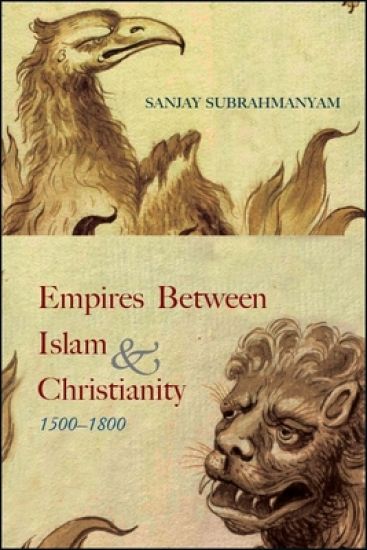
A wide-ranging consideration of early modern Muslim and Christian empires, covering the Iberian, Ottoman and Mughal worlds, including questions of political economy, images and representations, and historiography. Empires Between Islam and Christianity, 1500–1800 uses the innovative approach of "connected histories" to address a series of questions regarding the early modern world in the Indian Ocean, the Mediterranean, and the Atlantic. The period between 1500 and 1800 was one of intense inter-imperial competition involving the Iberians, the Ottomans, the Mughals, the British, and other actors. Rather than understand these imperial entities separately, Sanjay Subrahmanyam reads their archives and texts together to show unexpected connections and refractions. He further proposes, in this set of closely argued studies, that these empires often borrowed from each other, or built their projects with knowledge of other competing visions of empire. The emphasis on connections is also crucial for an understanding of how a variety of genres of imperial and global history writing developed in the early modern world. The book moves creatively between political, economic, intellectual, and cultural themes to suggest a fresh geographical conception for the epoch.
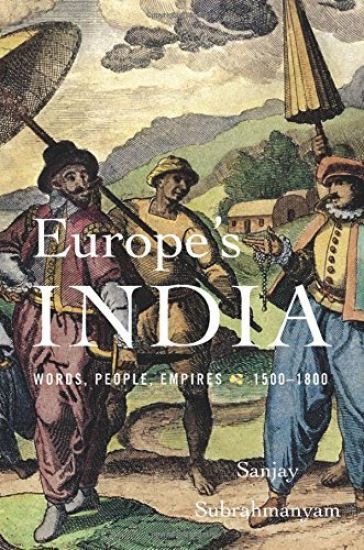
Europe’s India

Europe’s India

Sanjay Subrahmanyam

Harvard University Press
2017
sidottu
When Portuguese explorers first rounded the Cape of Good Hope and arrived in the subcontinent in the late fifteenth century, Europeans had little direct knowledge of India. The maritime passage opened new opportunities for exchange of goods as well as ideas. Traders were joined by ambassadors, missionaries, soldiers, and scholars from Portugal, England, Holland, France, Italy, and Germany, all hoping to learn about India for reasons as varied as their particular nationalities and professions. In the following centuries they produced a body of knowledge about India that significantly shaped European thought. Europe’s India tracks Europeans’ changing ideas of India over the entire early modern period. Sanjay Subrahmanyam brings his expertise and erudition to bear in exploring the connection between European representations of India and the fascination with collecting Indian texts and objects that took root in the sixteenth century. European notions of India’s history, geography, politics, and religion were strongly shaped by the manuscripts, paintings, and artifacts—both precious and prosaic—that found their way into Western hands. Subrahmanyam rejects the opposition between “true” knowledge of India and the self-serving fantasies of European Orientalists. Instead, he shows how knowledge must always be understood in relation to the concrete circumstances of its production. Europe’s India is as much about how the East came to be understood by the West as it is about how India shaped Europe’s ideas concerning art, language, religion, and commerce.
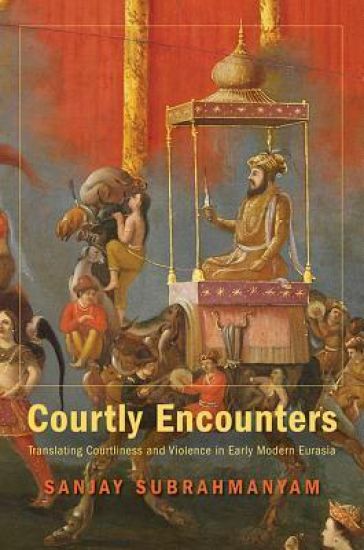
Courtly Encounters

Courtly Encounters

Sanjay Subrahmanyam

Harvard University Press
2012
sidottu
Cross-cultural encounters in Europe and Asia in the sixteenth and seventeenth centuries brought the potential for bafflement, hostility, and admiration. The court was the crucial site where expanding Eurasian states and empires met and were forced to make sense of one another. By looking at these interactions, Courtly Encounters provides a fresh cross-cultural perspective on the worlds of early modern Islam, Counter-Reformation Catholicism, Protestantism, and a newly emergent Hindu sphere. Both individual agents and objects such as texts and paintings helped mediate encounters between courts, which possessed rules and conventions that required decipherment and translation, whether in words or in pictures. Sanjay Subrahmanyam gives special attention to the depiction of South Asian empires in European visual representations, finding a complex history of cultural exchange: the Mughal paintings that influenced Rembrandt and other seventeenth-century Dutch painters had themselves been earlier influenced by Dutch naturalism. Courtly Encounters provides a rich array of images from Europe, the Islamic world, India, and Southeast Asia as aids for understanding the reciprocal nature of cross-cultural exchanges. It also looks closely at how insults and strategic use of martyrdom figured in courtly encounters. As he sifts through the historical record, Subrahmanyam finds little evidence for the cultural incommensurability many ethnohistorians have insisted on. Most often, he discovers negotiated ways of understanding one another that led to mutual improvisation, borrowing, and eventually change.
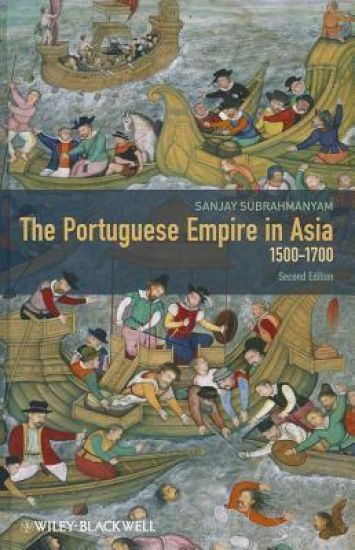
The Portuguese Empire in Asia, 1500-1700

The Portuguese Empire in Asia, 1500-1700

Sanjay Subrahmanyam

John Wiley Sons Inc
2012
sidottu
Featuring updates and revisions that reflect recent historiography, this new edition of The Portuguese Empire in Asia 1500-1700 presents a comprehensive overview of Portuguese imperial history that considers Asian and European perspectives. Features an argument-driven history with a clear chronological structureConsiders the latest developments in English, French, and Portuguese historiographyOffers a balanced view in a divisive area of historical studyIncludes updated Glossary and Guide to Further Reading
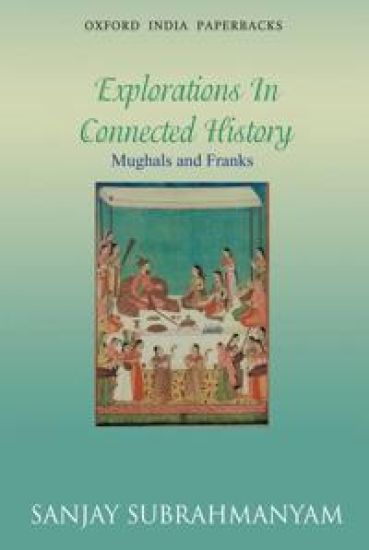
Mughals and Franks

Mughals and Franks

Sanjay Subrahmanyam

OUP India
2011
nidottu
Like its companion From Tagus to the Ganges, this book deploys the concept of 'connected histories' to shed important light on aspects of the history of early modern Eurasia. It reflects on two and a half centuries of Mughal-European relations, beginning with the early years of the Mughals in India, and ending with the eighteenth century. The volume demonstrates that the interface and balance of power between the Mughals and the Europeans are an integral part of a wider system of international political alliances. Sanjay Subrahmanyam introduces the idea of 'contained conflict', which is used as a paradigm to study political and commercial relations in the period. He also questions the lines of political and cultural division that traditional history writing has accepted. This will interest students and scholars of Indian and South Asian history, medieval history, early modern India, as well as politics.
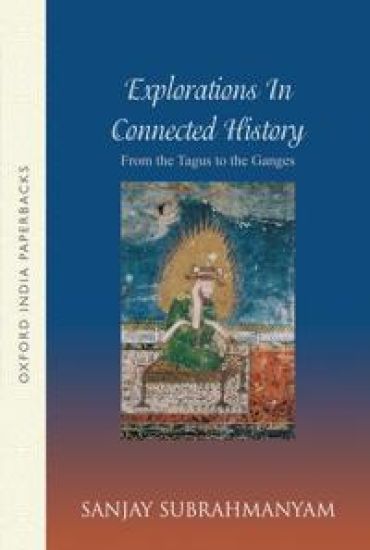
From Tagus to the Ganges

From Tagus to the Ganges

Sanjay Subrahmanyam

OUP India
2011
nidottu
Like its companion volume Mughals and Franks, this book deploys the concept of 'connected histories' to shed important light on aspects of the history of early modern Eurasia. While the main focus is on relations between Europeans and South Asia, other parts of the world have also been discussed in detail. In this volume Sanjay Subrahmanyam critically analyses the archival data to challenge certain enduring beliefs regarding temporal and geographical frontiers in the task of history writing. He questions old debates and examines hitherto neglected aspects of South and Southeast Asian history. This will interest students and scholars of Indian and South Asian history, medieval history, early modern India, as well as politics.
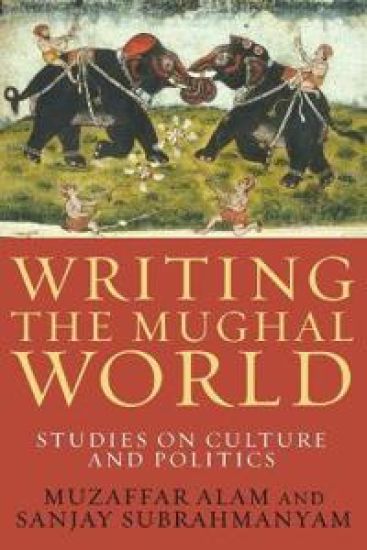
Writing the Mughal World

Writing the Mughal World

Muzaffar Alam; Sanjay Subrahmanyam

Columbia University Press
2011
pokkari
Between the mid-sixteenth and early nineteenth century, the Mughal Empire was an Indo-Islamic dynasty that ruled as far as Bengal in the east and Kabul in the west, as high as Kashmir in the north and the Kaveri basin in the south. The Mughals constructed a sophisticated, complex system of government that facilitated an era of profound artistic and architectural achievement. They promoted the place of Persian culture in Indian society and set the groundwork for South Asia's future development. In this volume, two leading historians of early modern South Asia present nine major joint essays on the Mughal Empire, framed by an essential introductory reflection. Making creative use of materials written in Persian, Indian vernacular languages, and a variety of European languages, their chapters accomplish the most significant innovations in Mughal historiography in decades, intertwining political, cultural, and commercial themes while exploring diplomacy, state-formation, history-writing, religious debate, and political thought. Muzaffar Alam and Sanjay Subrahmanyam center on confrontations between different source materials that they then reconcile, enabling readers to participate in both the debate and resolution of competing claims. Their introduction discusses the comparative and historiographical approach of their work and its place within the literature on Mughal rule. Interdisciplinary and cutting-edge, this volume richly expands research on the Mughal state, early modern South Asia, and the comparative history of the Mughal, Ottoman, Safavid, and other early modern empires.
Writing the Mughal World

Writing the Mughal World

Muzaffar Alam; Sanjay Subrahmanyam

Columbia University Press
2011
sidottu
Between the mid-sixteenth and early nineteenth century, the Mughal Empire was an Indo-Islamic dynasty that ruled as far as Bengal in the east and Kabul in the west, as high as Kashmir in the north and the Kaveri basin in the south. The Mughals constructed a sophisticated, complex system of government that facilitated an era of profound artistic and architectural achievement. They promoted the place of Persian culture in Indian society and set the groundwork for South Asia's future development. In this volume, two leading historians of early modern South Asia present nine major joint essays on the Mughal Empire, framed by an essential introductory reflection. Making creative use of materials written in Persian, Indian vernacular languages, and a variety of European languages, their chapters accomplish the most significant innovations in Mughal historiography in decades, intertwining political, cultural, and commercial themes while exploring diplomacy, state-formation, history-writing, religious debate, and political thought. Muzaffar Alam and Sanjay Subrahmanyam center on confrontations between different source materials that they then reconcile, enabling readers to participate in both the debate and resolution of competing claims. Their introduction discusses the comparative and historiographical approach of their work and its place within the literature on Mughal rule. Interdisciplinary and cutting-edge, this volume richly expands research on the Mughal state, early modern South Asia, and the comparative history of the Mughal, Ottoman, Safavid, and other early modern empires.
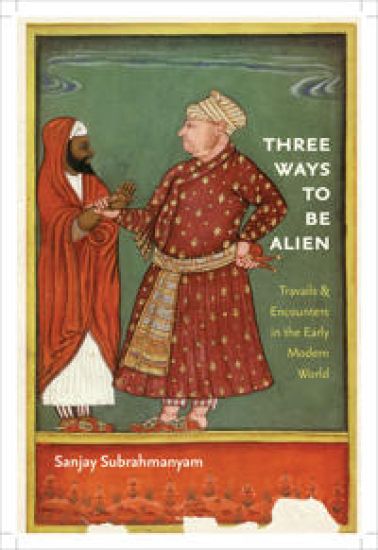
Three Ways to Be Alien

Three Ways to Be Alien

Sanjay Subrahmanyam

Brandeis University Press
2011
nidottu
Sanjay Subrahmanyam's Three Ways to Be Alien draws on the lives and writings of a trio of marginal and liminal figures cast adrift from their traditional moorings into an unknown world. The subjects include the aggrieved and lost Meale, a "Persian" prince of Bijapur (in central India, no less) held hostage by the Portuguese at Goa; English traveler and global schemer Anthony Sherley, whose writings reveal a surprisingly nimble understanding of realpolitik in the emerging world of the early seventeenth century; and Nicolò Manuzzi, an insightful Venetian chronicler of the Mughal Empire in the later seventeenth century who drifted between jobs with the Mughals and various foreign entrepôts, observing all but remaining the eternal outsider. In telling the fascinating story of floating identities in a changing world, Subrahmanyam also succeeds in injecting humanity into global history and proves that biography still plays an important role in contemporary historiography.
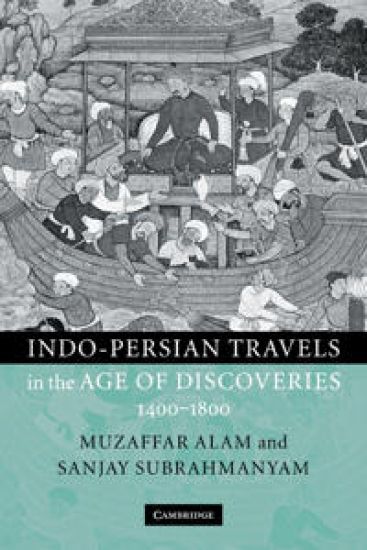
Indo-Persian Travels in the Age of Discoveries, 1400–1800

Indo-Persian Travels in the Age of Discoveries, 1400–1800

Muzaffar Alam; Sanjay Subrahmanyam

Cambridge University Press
2010
pokkari
Originally published in 2007, this fascinating work is based on detailed and sensitive readings of travel accounts in Persian, dealing with India, Iran and Central Asia between around 1400 and 1800. The first comprehensive treatment of this neglected genre of literature (safar nama), it links the Mughals, Safavids and Central Asia in a crucial period of transformation and cultural contact. The authors' close reading of these travel accounts help us enter the mental and moral worlds of the Muslim and non-Muslim literati who produced these valuable narratives. These accounts are presented in a comparative framework, which sets them side by side with other Asian accounts, as well as early modern European travel narratives, and opens up a rich and unsuspected vista of cultural and material history. This book can be read for a better understanding of the nature of early modern encounters, but also for the sheer pleasure of entering a new world.
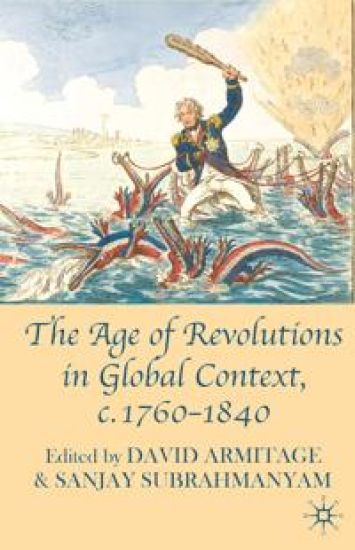
The Age of Revolutions in Global Context, c. 1760-1840

The Age of Revolutions in Global Context, c. 1760-1840

David Armitage; Sanjay Subrahmanyam

Red Globe Press
2009
nidottu
A distinguished international team of historians examines the dynamics of global and regional change in the late eighteenth and nineteenth centuries. Providing uniquely broad coverage, encompassing North and South America, the Caribbean, Europe, Africa, the Middle East, South and Southeast Asia, and China, the chapters shed new light on this pivotal period of world history. Offering fresh perspectives on:• the American, French, and Haitian Revolutions• the break-up of the Iberian empires• the Napoleonic Wars. The volume also presents ground-breaking treatments of world history from an African perspective, of South Asia's age of revolutions, and of stability and instability in China. The first truly global account of the causes and consequences of the transformative 'Age of Revolutions', this collection presents a strikingly novel and comprehensive view of the revolutionary era as well as rich examples of global history in practice.
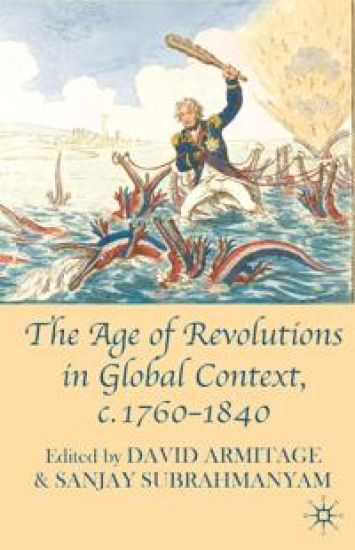
The Age of Revolutions in Global Context, c. 1760-1840

The Age of Revolutions in Global Context, c. 1760-1840

David Armitage; Sanjay Subrahmanyam

Red Globe Press
2009
sidottu
A distinguished international team of historians examines the dynamics of global and regional change in the late eighteenth and nineteenth centuries. Providing uniquely broad coverage, encompassing North and South America, the Caribbean, Europe, Africa, the Middle East, South and Southeast Asia, and China, the chapters shed new light on this pivotal period of world history. Offering fresh perspectives on:• the American, French, and Haitian Revolutions• the break-up of the Iberian empires• the Napoleonic Wars. The volume also presents ground-breaking treatments of world history from an African perspective, of South Asia's age of revolutions, and of stability and instability in China. The first truly global account of the causes and consequences of the transformative 'Age of Revolutions', this collection presents a strikingly novel and comprehensive view of the revolutionary era as well as rich examples of global history in practice.
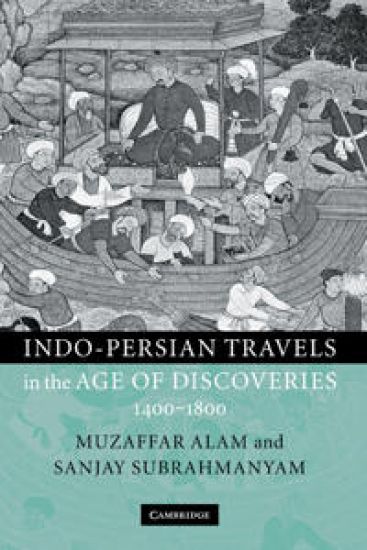
Indo-Persian Travels in the Age of Discoveries, 1400–1800

Indo-Persian Travels in the Age of Discoveries, 1400–1800

Muzaffar Alam; Sanjay Subrahmanyam

Cambridge University Press
2007
sidottu
Originally published in 2007, this fascinating work is based on detailed and sensitive readings of travel accounts in Persian, dealing with India, Iran and Central Asia between around 1400 and 1800. The first comprehensive treatment of this neglected genre of literature (safar nama), it links the Mughals, Safavids and Central Asia in a crucial period of transformation and cultural contact. The authors' close reading of these travel accounts help us enter the mental and moral worlds of the Muslim and non-Muslim literati who produced these valuable narratives. These accounts are presented in a comparative framework, which sets them side by side with other Asian accounts, as well as early modern European travel narratives, and opens up a rich and unsuspected vista of cultural and material history. This book can be read for a better understanding of the nature of early modern encounters, but also for the sheer pleasure of entering a new world.