
Kirjojen hintavertailu – 12 903 725 kirjaa ja 27 kauppaa

Kirjailija

Sanjay Subrahmanyam

Kirjat ja teokset yhdessä paikassa: 22 kirjaa, julkaisuja vuosilta 2001–2026, suosituimpiin kuuluu Mirrors of Empire. Vertaile teosten hintoja ja tarkista saatavuus suomalaisista kirjakaupoista.

22 kirjaa

Kirjojen julkaisuvuodet: 2001–2026.

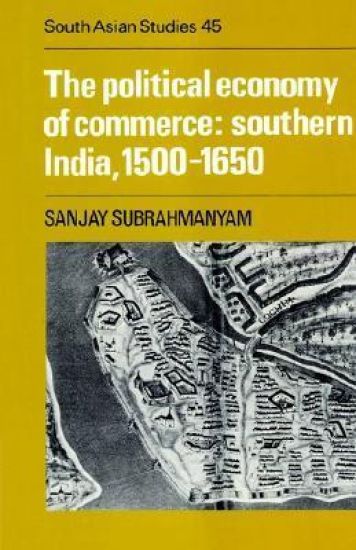
The Political Economy of Commerce: Southern India 1500–1650

The Political Economy of Commerce: Southern India 1500–1650

Sanjay Subrahmanyam

Cambridge University Press
2002
pokkari
In The Political Economy of Commerce: Southern India 1500–1650 Sanjay Subrahmanyam explores the relationship between long-distance trade and the economic and political structure of southern India in the sixteenth and early seventeenth centuries. He questions the more traditional views that external demand was the force behind pre-colonial Indian economic growth or that external trade was insignificant in quantitative and qualitative terms compared with the vastness of the internal economy. Instead, Dr Subrahmanyam authoritatively demonstrates the interaction between south Indian developments and larger international processes within certain economic institutions - most notably the network of marketing villages, great coastal emporia and operations of revenue-farmers and ‘portfolio’ capitalists. This book is based on extensive and previously unused Portuguese and Dutch archival sources. Its secondary theme is to explore the relationship between the documentation used and the context within which it was generated, thus illuminating how Europeans and Asians reacted to one another.
Penumbral Visions

Penumbral Visions

Sanjay Subrahmanyam

The University of Michigan Press
2001
sidottu
Penumbral Visions explores how the political structure and political culture of the states of south India were transformed between 1500 and 1800. In Asia this period was characterized by a contest between European influence and indigenous political and economic processes. The book highlights the dynamism and resilience of indigenous societies and characterizes them as early modern. At the same time, it challenges the myth that India experienced an ideal social equilibrium, or Golden Age, that was ruptured by colonial rule. Sanjay Subrahmanyam draws upon sources in Portuguese, Dutch, English, Spanish, and a variety of Indian languages and archives to enter into the lives of states like Mysore, Tanjavur, and Arcot that have been neglected by historians of the seventeenth and eighteenth centuries. He has also drawn upon literature dealing with the experience of colonialism in areas as far-flung as Latin America and the Ottoman Empire. The book therefore constitutes an important intervention in the interpretation of South Asian history in particular and--more broadly--in the history of Eurasian societies in the early modern epoch. Sanjay Subrahmanyam is Director of Studies, Ecole des Hautes Etudes en Sciences Sociales, Paris.