

Kirjailija
Sarah Kay
Kirjat ja teokset yhdessä paikassa: 23 kirjaa, julkaisuja vuosilta 1990–2027, suosituimpiin kuuluu Astronomy Among the Arts. Vertaile teosten hintoja ja tarkista saatavuus suomalaisista kirjakaupoista.
23 kirjaa
Kirjojen julkaisuvuodet: 1990–2027.

Blending lyrical text with non-fiction, this book celebrates every aspect of New York City from the crowded streets to sprawling Central Park and the bagel stands to the Statue of Liberty. Written by New York poet Sarah Kay and illustrated with warmth and detail by award-winning artist Ryan Johnson, this vibrant book captures the heart of the big city.
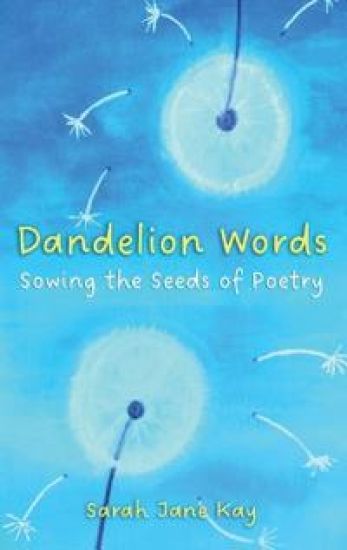
Imagine a world without poems or rhyme, Imagine only darkness, and no daytime. It would be like seeing in only black and white, No sunsets, no rainbows, no colour in sight. Like fireworks, our words can light up the mind, Let's leave black and white vision behind. So join me in colour and open the page, Poems are for everyone, no matter your age.

A vulnerable, searching collection about facing the beautiful & difficult parts of our humanness with compassion & wonder "This is a book that will make you feel simultaneously alive and less alone."--Hanif Abdurraqib, New York Timesbestselling author of There's Always This Year from somewhere down a hallway of locked doors, a voice asks / What if you aren't as bad as you suspect you are? / What if you'll never be as good as you ache? Lauded poet Sarah Kay brings us her long-awaited second full-length collection, a decade after her acclaimed debut No Matter the Wreckage. In A Little Daylight Left, Kay explores life's most vulnerable moments of transition with courage, curiosity, joy & humor. Each poem invites readers to consider what it might look like to boldly face the hard things we so often run from--a heartbreak, an ailing loved one, the fear that comes with new beginnings & uncertain futures--& to celebrate what we hold dear. The result is a blueprint for discovering beauty in all that makes us human. With her signature wit & wisdom, Kay shows us how to navigate life bravely, with every single part of ourselves.
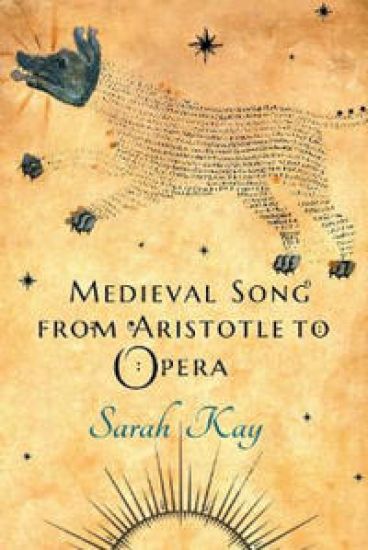
Focusing on songs by the troubadours and trouvères from the twelfth to the fourteenth centuries, Medieval Song from Aristotle to Opera contends that song is not best analyzed as "words plus music" but rather as a distinctive way of sounding words. Rather than situating them in their immediate period, Sarah Kay fruitfully listens for and traces crosscurrents between medieval French and Occitan songs and both earlier poetry and much later opera. Reflecting on a song's songlike quality—as, for example, the sound of light in the dawn sky, as breathed by beasts, as sirenlike in its perils—Kay reimagines the diversity of songs from this period, which include inset lyrics in medieval French narratives and the works of Guillaume de Machaut, as works that are as much desired and imagined as they are actually sung and heard. Kay understands song in terms of breath, the constellations, the animal soul, and life itself. Her method also draws inspiration from opera, especially those that inventively recreate medieval song, arguing for a perspective on the manuscripts that transmit medieval song as instances of multimedia, quasi-operatic performances. Medieval Song from Aristotle to Opera features a companion website (cornellpress.manifoldapp.org/projects/medieval-song) hosting twenty-four audio or video recordings, realized by professional musicians specializing in early music, of pieces discussed in the book, together with performance scores, performance reflections, and translations of all recorded texts. These audiovisual materials represent an extension in practice of the research aims of the book—to better understand the sung dimension of medieval song.
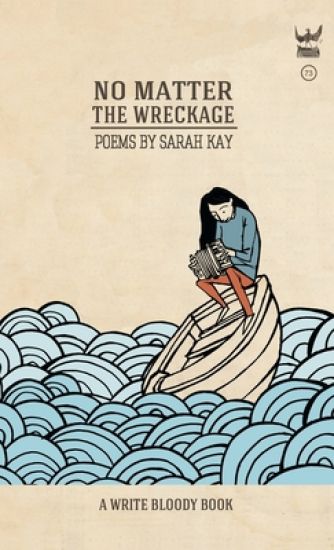
Following the success of her breakout poem, "B," Sarah Kay releases her debut collection of poetry featuring work from the first decade of her career. No Matter the Wreckage presents readers with new and beloved work that showcases Kay's knack for celebrating family, love, travel, history, and unlikely love affairs between inanimate objects ("Toothbrush to the Bicycle Tire"), among other curious topics. Both fresh and wise, Kay's poetry allows readers to join in on her journey of discovering herself and the world around her. It's an honest and powerful collection.
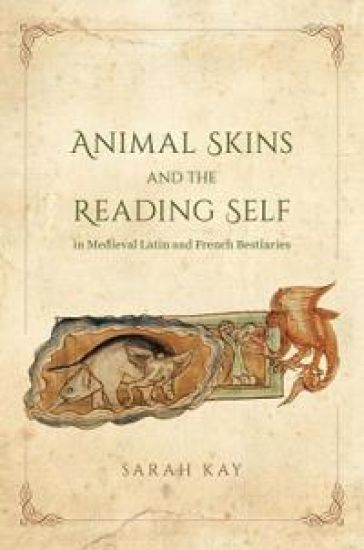
Animal Skins and the Reading Self in Medieval Latin and French Bestiaries
Sarah Kay
University of Chicago Press
2017
sidottu
Just like we do today, people in medieval times struggled with the concept of human exceptionalism and the significance of other creatures. Nowhere is this more apparent than in the medieval bestiary. Sarah Kay's exploration of French and Latin bestiaries offers fresh insight into how this prominent genre challenged the boundary between its human readers and other animals. Bestiaries present accounts of animals whose fantastic behaviors should be imitated or avoided, depending on the given trait. In a highly original argument, Kay suggests that the association of beasts with books is here both literal and material, as nearly all surviving bestiaries are copied on parchment made of animal skin, which also resembles human skin. Using a rich array of examples, she shows how the content and materiality of bestiaries are linked due to the continual references in the texts to the skins of other animals, as well as the ways in which the pages themselves repeatedly and at times, it would seem, deliberately intervene in the reading process. A vital contribution to animal studies and medieval manuscript studies, this book sheds new light on the European bestiary and its profound power to shape readers' own identities.
An aspiring yet disenchanted Northern Irish journalist finds himself in New York where he discovers the interdependency of creation, craft and audience. Through a reflective narrative circling his daily life, a lost relationship with his beloved Mary, and an assignment of interviews with a rock'n'roll band, he learns that the key to understanding himself is realising where he really wants to be.
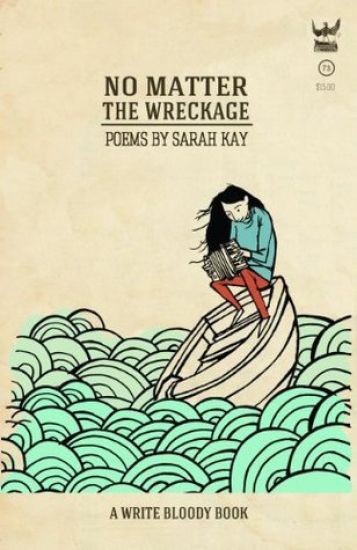
Top-selling poet Sarah Kay releases her debut collection of work from the first decade of her career. Following the success of her breakout poem, "B", No Matter the Wreckage presents readers with new and beloved work that showcases Kay's skill for celebrating family, love, travel, history, and unlikely love affairs between inanimate objects ("Toothbrush to the Bicycle Tire"). Both fresh and wise, Kay's poetry allows readers to join in on her journey of discovering herself and the world around her. - 2011 TED speaker (recording has been viewed 3 million times online) - First book, "B" was ranked #1 Bestselling Poetry Book on Amazon - Featured on HBO, American Public Radio, Huffington Post, CNN.com, etc. - Founder and Co-Director of Project VOICE
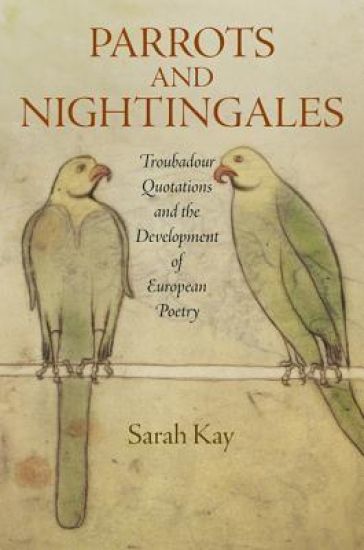
The love songs of Occitan troubadours inspired a rich body of courtly lyric by poets working in neighboring languages. For Sarah Kay, these poets were nightingales, composing verse that is recognizable yet original. But troubadour poetry also circulated across Europe in a form that is less well known but was more transformative. Writers outside Occitania quoted troubadour songs word for word in their original language, then commented upon these excerpts as linguistic or poetic examples, as guides to conduct, and even as sources of theological insight. If troubadours and their poetic imitators were nightingales, these quotation artists were parrots, and their practices of excerption and repetition brought about changes in poetic subjectivity that would deeply affect the European canon. The first sustained study of the medieval tradition of troubadour quotation, Parrots and Nightingales examines texts produced along the arc of the northern Mediterranean-from Catalonia through southern France to northern Italy-through the thirteenth century and the first half of the fourteenth. Featuring extensive appendices of over a thousand troubadour passages that have been quoted or anthologized, Parrots and Nightingales traces how quotations influenced the works of grammarians, short story writers, biographers, encyclopedists, and not least, other poets including Dante and Petrarch. Kay explores the instability and fluidity of medieval textuality, revealing how the art of quotation affected the transmission of knowledge and transformed perceptions of desire from the "courtly love" of the Middle Ages to the more learned formulations that emerged in the Renaissance. Parrots and Nightingales deftly restores the medieval tradition of lyric quotation to visibility, persuasively arguing for its originality and influence as a literary strategy.
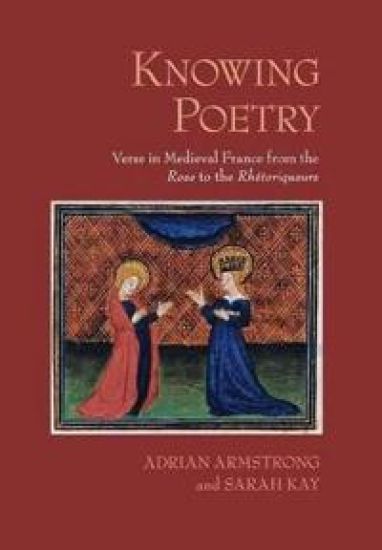
In the later Middle Ages, many writers claimed that prose is superior to verse as a vehicle of knowledge because it presents the truth in an unvarnished form, without the distortions of meter and rhyme. Beginning in the thirteenth century, works of verse narrative from the early Middle Ages were recast in prose, as if prose had become the literary norm. Instead of dying out, however, verse took on new vitality. In France verse texts were produced, in both French and Occitan, with the explicit intention of transmitting encyclopedic, political, philosophical, moral, historical, and other forms of knowledge. In Knowing Poetry, Adrian Armstrong and Sarah Kay explore why and how verse continued to be used to transmit and shape knowledge in France. They cover the period between Jean de Meun's Roman de la rose (c. 1270) and the major work of Jean Bouchet, the last of the grands rhétoriqueurs (c. 1530). The authors find that the advent of prose led to a new relationship between poetry and knowledge in which poetry serves as a medium for serious reflection and self-reflection on subjectivity, embodiment, and time. They propose that three major works—the Roman de la rose, the Ovide moralisé, and Boethius' Consolation of Philosophy—form a single influential matrix linking poetry and intellectual inquiry, metaphysical insights, and eroticized knowledge. The trio of thought-world-contingency, poetically represented by Philosophy, Nature, and Fortune, grounds poetic exploration of reality, poetry, and community.
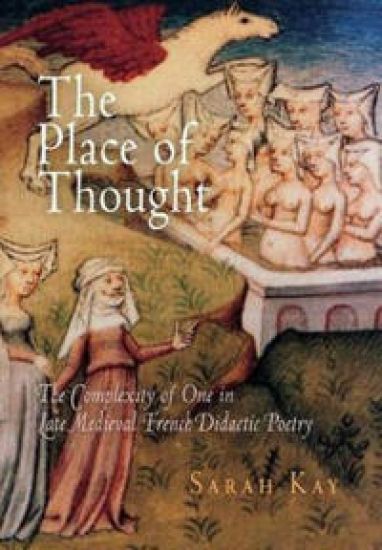
From Jean de Meun in the late thirteenth century to Christine de Pizan in the early fifteenth, medieval French poets often aimed to impart theological, philosophical, or moral ideas. To unify their thought, and to make its outline visible to readers, the poets created vivid images of place, such as gardens, paths, idyllic landscapes, cities, trees, and fountains. For Sarah Kay, these spatial images are a prop of "monologism," helping to communicate (or impose) unity of meaning and interpretation by summoning readers to occupy the same "place" in their thinking as the authors. Because of this monologism, Kay contends, didactic poetry has been ill served by a critical tradition that favors difference, plurality, and dialogism. In The Place of Thought, she seeks radically to reassess this literature and reappraise the pleasure to be derived from reading it. Kay argues that one meaning is not inherently simpler or less interesting than many meanings. Using specific works as examples, she demonstrates that this "one-ness" of thought in French didactic poems can be an excitingly complex and challenging notion, and that it strains the images in which it is placed to the point where they become difficult to visualize. Herein lies the poems' simultaneous intellectual and aesthetic appeal. Focusing on the Roman de la Rose by Jean de Meun, the Breviari d'amor by Matfre Ermengaud, the Ovide moralisé, Pèlerinage de vie humaine by Guillaume de Deguileville's, Le Jugement dou roy de Navarre by Guillaume de Machaut, Le Joli buisson de Jonece by Jean Froissart, and Le Livre du Chemin de long estude by Christine de Pizan, Kay traces the works' backgrounds in scholastic thinking, illuminating them when appropriate with modern reflections on the same ideas.
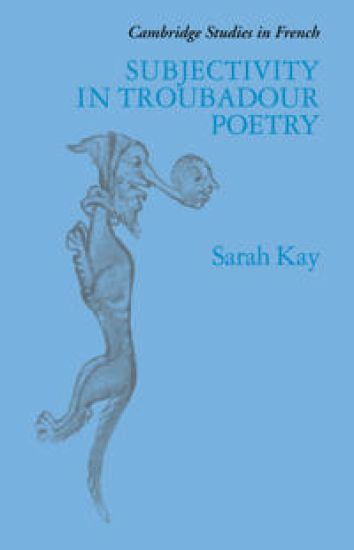
The songs of the troubadour poets of the south of France were a pervasive influence in the development of the European lyric (and indeed other genres) from the twelfth century to the Renaissance and beyond. Much troubadour poetry is on the topic of love, and is composed from a first-person position. This book is a full-length study of this first-person subject position in its relation to language and society. Using theoretical approaches where appropriate, Sarah Kay discusses to what extent this first person is a 'self' or 'character', and how far it is self-determining. Dr Kay draws on a wide range of troubadour texts, and provides close readings of many of them, as well as translating all medieval quotations into English in order to make the discussion accessible to the non-specialist. Her book will be of interest both to scholars of medieval literature, and to anybody investigating subjectivity in lyric poetry.
A Short History of French Literature
Sarah Kay; Terence Cave; Malcolm Bowie
Oxford University Press
2006
nidottu
This book traces the history of French literature from its beginnings to the present. Within its remarkably brief compass, it offers a wide-ranging, personal, and detailed account of major writers and movements. Developments in French literature are presented in an innovative way, not as an even sequence of literary events but as a series of stories told at varying pace and with different kinds of focus. Readers can thus take in the broad sweep of historical change, grasp the main characteristics of major periods, or enjoy a close appraisal of individual works and their contexts. The book is written in an accessible and non-technical style that will make it attractive to students and to all those who enjoy French Literature.
A Short History of French Literature
Sarah Kay; Terence Cave; Malcolm Bowie
Oxford University Press
2003
sidottu
In this lucid and innovative volume, three distinguished scholars trace this history of French literature from its beginnings to the present day. From the oral, unstable anonymous works of the early Middle Ages via the emergence of a print culture in the Renaissance, through to the attempted codification of genres and styles in the nineteenth century and the resourceful experimentation of the twentieth, A Short History of French Literature demonstrates the world importance of French literature, and the extraordinary richness of its range. The three main parts of the volume cover the Middle Ages, the Early Modern period, and the Modern period, and offer wide-ranging, personal, and detailed coverage of major writers and movements. Writing for the interested general reader as much as for students, the authors range expertly between authors and their works, historical events, and literary movements, offering as a whole an authoritative and innovative account of the history of French literature.
Žižek is hailed as the most significant interdisciplinary thinker of modern times. His work is a powerful, often explosive combination of Lacanian psychoanalysis and philosophy which tests key psychoanalytical concepts against the ideas of major European thinkers, especially Hegel. It has ignited enthusiasm and stimulated new approaches across a vast range of disciplines, and seems to be attracting an ever-growing readership. In part, this is because Žižek himself has a panoramic range of interests encompassing film studies, literature, cyber culture, ethics, theology and, above all, politics. It is also because he is a highly entertaining writer, having a flair for anecdote, a smutty sense of humour and the knack of capturing complex ideas in concrete form. Sarah Kay’s book provides a lucid and comprehensive introduction to Žižek’s work. His writings to date are presented and evaluated here for the first time, together with an outline of their development and explanations of his key premises, themes and terms. This book will be essential reading for students of cultural studies, literary studies, philosophy and social and political theory.
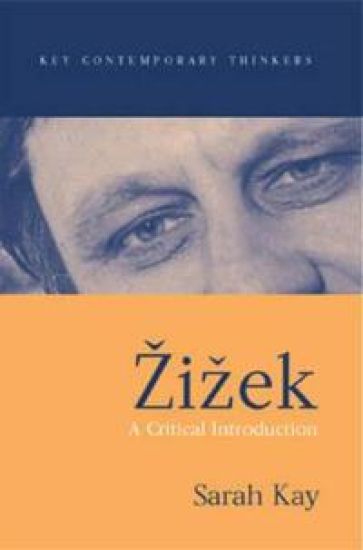
Hailed as the most significant interdisciplinary thinker of modern times, Zizek's work is a powerful combination of Lacanian psychoanalysis and philosophy. His writings to date are presented and evaluated here, together with an outline of their development, and explanations of his key themes.