Kirjojen hintavertailu – 12 859 818 kirjaa ja 27 kauppaa

Kirjailija

Sarah Kay

Kirjat ja teokset yhdessä paikassa: 23 kirjaa, julkaisuja vuosilta 1990–2027, suosituimpiin kuuluu Astronomy Among the Arts. Vertaile teosten hintoja ja tarkista saatavuus suomalaisista kirjakaupoista.

23 kirjaa

Kirjojen julkaisuvuodet: 1990–2027.

Courtly Contradictions

Courtly Contradictions

Sarah Kay

Stanford University Press
2002
sidottu
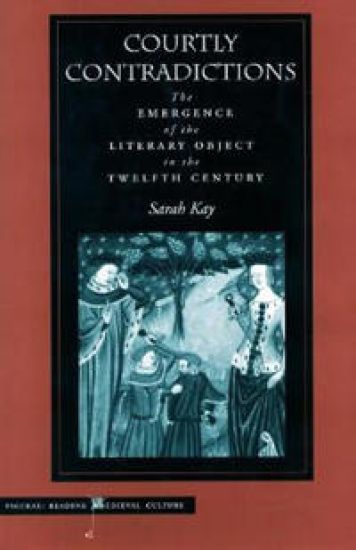
Where does courtly literature come from? What is the meaning of "courtly love"? What is the relation between religious and secular culture in the Middle Ages, and why does it matter? This book addresses these questions, as its title indicates, by way of contradiction. Contradiction is central both to medieval logic and to most modern protocols of reading; it therefore informs both the production and the reception of medieval texts. Yet contradiction itself is rarely analyzed, serving more often as a spur to interpretation than as its object. This book works between the complex philosophical culture of the twelfth century (principally the traditions of Aristotle and of philosophical Neoplatonism, which diverge significantly in their treatment of contradiction) and the no less complex thought of Lacan (which is just as bound up with contradictoriness). Situating twelfth-century Anglo-Norman, French, and Occitan literature within this philosophical embrace, the author studies the interaction of three major literary genres—hagiography, troubadour lyric, and romance—an interaction that, in the course of the century, generates what we now call "courtly literature." She shows how preferences for different ways of dealing with contradiction migrate from one genre to another during the twelfth century. She also shows how this movement resulted, by about 1170, in different traditions converging to produce the complex artifacts that canonized literary "courtliness," not only for the Middle Ages but for us as well. Coinciding with this convergence, there is a shift in the locus of contradiction from subject to object. This crucial development not only privileges the object within texts, it also cements the value of texts themselves as object. In a series of comparisons between religious and courtly texts that draws on the writings of Lacan and Kristeva, the author explores how these objects can be variously described in terms of the psychoanalytical concepts of abjection, sublimation, or perversion. The book concludes by suggesting that the historical importance of courtly literature lies in its capacity to mediate, through the centrality accorded to the contradictory object, this transfer from medieval to modern structures of thought and thereby to shape modern forms of enjoyment.
The Chansons de Geste in the Age of Romance
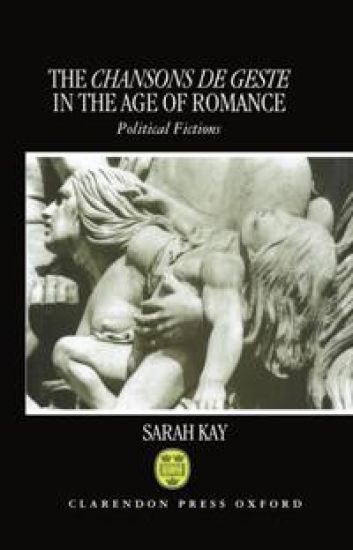
This is a major reassessment of the relation between the medieval French chansons de geste and the romance genre. Critics have traditionally seen romance as a superior development of the chanson de geste. The chanson de geste are seen as 'formulaic', composed from a public fund of pre-existant and primarily oral narratives and motifs; romance on the other hand, is seen as a more sophisticated product of a newly 'literary' story-telling, line with the more complex social and political conditions of the time. Sarah Kay rejects this 'developmental' model of literary history and, through detailed readings of large numbers of texts - from the well-known Renaut de Montauban or Raoul de Cambrai to the unjustly neglected Doon de la Roche or Orson de Beauvais - reveals the simultaneity of the chansons de geste and romance in medieval culture. Drawing tellingly on recent literary and feminist theory, Kay argues that the chanson de geste and romance are engaged in a productive and telling dialogue; moreover, each genre illuminates the 'political unconscious' of the other: those political conflicts and contradictions that the text attempts to evade and disguise. In particular, Kay contends that romance brings with it new forms of sexism and patriarchy - forms much closer to those of the present - and that these need to be read against the politics of sexual difference inscribed in chansons de geste.
Subjectivity in Troubadour Poetry

Subjectivity in Troubadour Poetry

Sarah Kay

Cambridge University Press
1990
sidottu
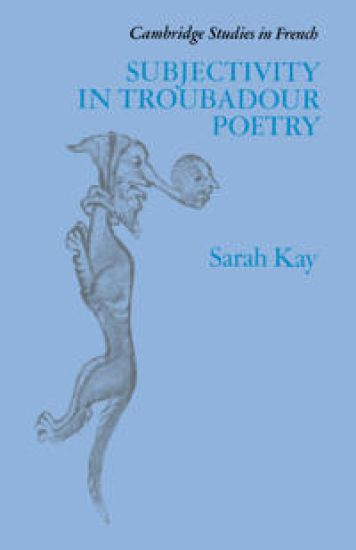
The songs of the troubadour poets of the South of France were a pervasive influence in the development of the European lyric (and indeed other genres) from the twelfth century to the Renaissance and beyond. Much troubadour poetry is on the topic of love, and is composed from a first-person position. This book is the first full-length study of this first-person subject position in its relation to language and society. Using modern theoretical approaches where appropriate, Sarah Kay discusses to what extent this first person is a ‘self’ or ‘character’, and how far it is self-determining. Dr Kay draws on a wide range of troubadour texts, and provides close readings of many of them, as well as translating all medieval quotations into English in order to make the discussion accessible to the non-specialist. Her book will be of interest both to scholars of medieval literature, and to anybody investigating subjectivity in lyric poetry.