Kirjojen hintavertailu – 12 903 725 kirjaa ja 27 kauppaa
Kirjailija
Sean McLachlan
Kirjat ja teokset yhdessä paikassa: 42 kirjaa, julkaisuja vuosilta 2009–2026, suosituimpiin kuuluu We Had Flags. Vertaile teosten hintoja ja tarkista saatavuus suomalaisista kirjakaupoista.
A law doesn't work if everyone breaks it. For forty years, New City has been a bastion of order in a fallen world. One crucial law has maintained the peace--it is illegal to place responsibility for the collapse of civilization on any one group. Anyone found guilty of Blaming is branded and stripped of citizenship. But when some unwelcome visitors arrive from across the sea, old wounds break open, and no one is safe from Blame.
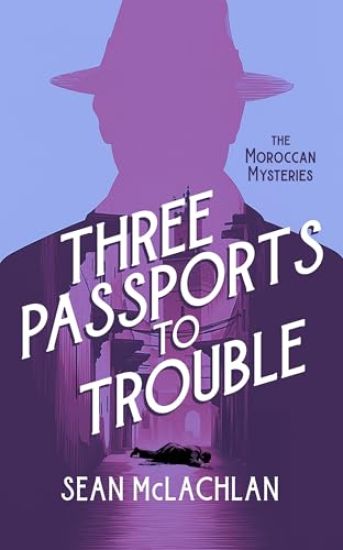
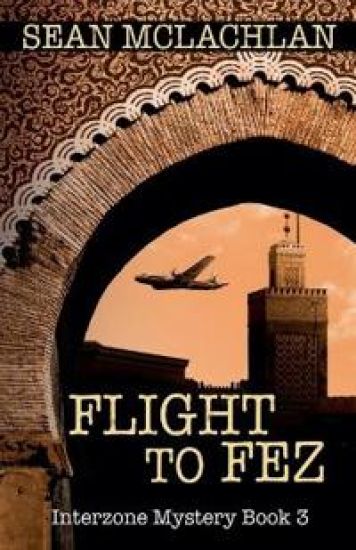
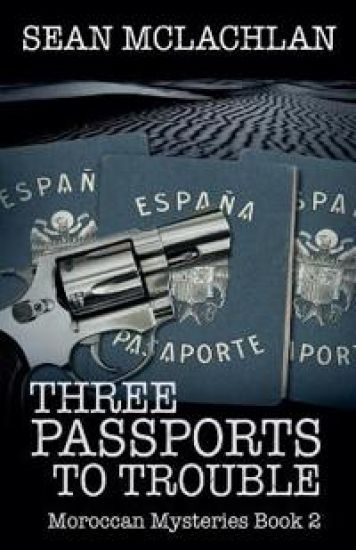
Back in the days when Tangier was an International Zone, the city was full of refugees. People fleeing Stalin. People fleeing Franco. People fleeing the Nuremberg Trials. Tangier offered a safe haven from the chaos of Europe. The International Council had to keep a delicate balance, tolerating everything from anti-capitalist agitators to Germans with murky pasts. It was the only way to keep the peace, and it worked. Until an anarchist was found dead with a fascist dagger in his chest. And I got stuck with the case just when I had to smuggle a couple of Party operatives out of town.
In a world shattered by war, pollution and disease. . . A gunslinging mother longs to find a safe refuge for her son. A frustrated revolutionary delivers water to villagers living on a toxic waste dump. The assistant mayor of humanity's last city hopes he will never have to take command. One thing gives them the promise of a better future--Radio Hope, a mysterious station that broadcasts vital information about surviving in a blighted world. But when a mad prophet and his army of fanatics march out of the wildlands on a crusade to purify the land with blood and fire, all three will find their lives intertwining, and changing forever.
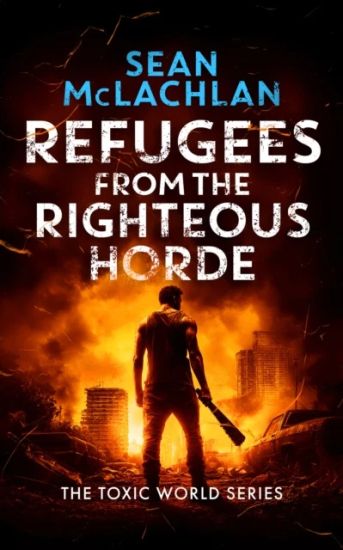
When you only have one shot, you better aim true. In a ravaged world, civilization’s last outpost is reeling after fighting off the fanatical warriors of the Righteous Horde. Sheriff Annette Cruz becomes New City’s long arm of vengeance as she sets off across the wildlands to take out the cult’s leader. All she has is a sniper’s rifle with one bullet and a former cultist with his own agenda. Meanwhile, one of the cult’s escaped slaves makes a discovery that could tear New City apart. . . Refugees from the Righteous Horde continues the Toxic World series started in Radio Hope, an ongoing narrative of humanity’s struggle to rebuild the world it ruined.
Trust is the only thing that can save the world. The problem is, everyone has their own agenda. When an offshore platform starts emitting toxic fumes that threaten to destroy the last outposts of civilization, the residents of New City have to team up with a foreign freighter to fix it. But a lingering mistrust remains, and neither side has the resources to stop the leak. That is, until help comes from the least reliable source. Can old enemies finally set aside their differences for the greater good?
Only in Tangier could a literary event turn into a murder scene. I'm "Shorty" MacAllister, private detective. I've investigated all sorts of crazy cases in this lawless town, tracking down con men and Nazi fugitives, anarchists and bank robbers, all the while running my own secret angle. But I never thought that when I went to hear my friend Jane Bowles read her latest story I'd end with a murdered man in my lap, and an old war buddy getting pinned with the crime. After that, things got a whole lot more complicated.
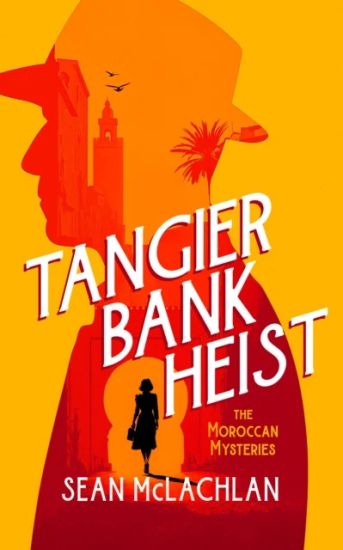
Right after the war, Tangier was the craziest town in North Africa. Everything was for sale and the price was cheap. The perverts came for the flesh. The addicts came for the drugs. A whole army of hustlers and grifters came for the loose laws and free flow of cash and contraband. So why was I here? Because it was the only place that would have me. Besides, it was a great place to be a detective. You got cases like in no other place I'd ever been, and I'd been all over. Cases you couldn't believe ever happened. Like when I had to track down the guy who stole the bank. No, he didn't rob the bank, he stole it. Here's how it happened . . .
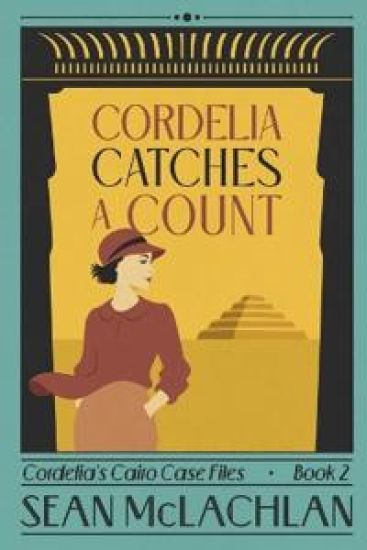
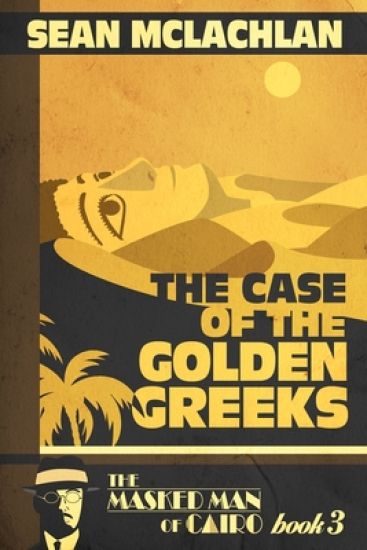
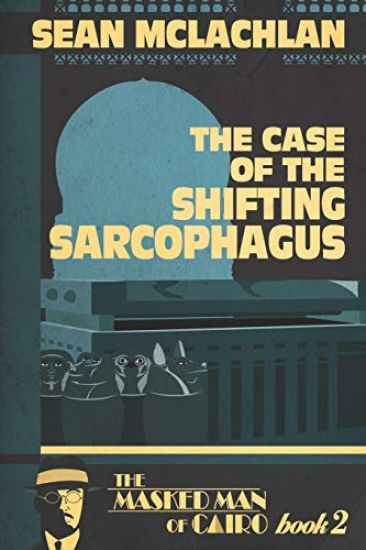
An Old Kingdom coffin. A body from yesterday. Sir Augustus Wall had seen a lot of death. From the fields of Flanders to the alleys of Cairo, he's solved several murders and sent many men to their grave. But he's never had a body delivered to his antiquities shop encased in a 5,000 year-old coffin. Soon he finds himself fighting a vicious street gang bent on causing national mayhem while his assistant, Moustafa Ghani, faces his own enemies in the form of colonial powers determined to ruin him. Throughout all this runs the street urchin Faisal. Ignored as usual, dismissed as usual, he has the most important fight of all.
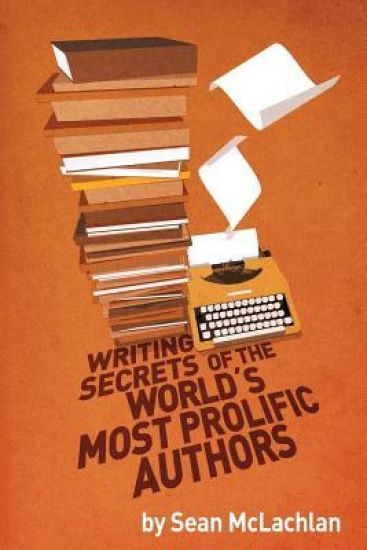
What does it take to write 100 books? What about 500? Or 1,000? That may sound like an impossibly high number, but it isn't. Some of the world's most successful authors wrote hundreds of books over the course of highly lucrative careers. Isaac Asimov wrote more than 300 books. Enid Blyton wrote more than 800. Legendary Western writer Lauren Bosworth Paine wrote close to 1,000. Some wrote even more. This book examines the techniques and daily habits of more than a dozen of these remarkable writers to show how anyone with the right mindset can massively increase their word count without sacrificing quality. Learn the secrets of working on several projects simultaneously, of reducing the time needed for each book, and how to build the work ethic you need to become more prolific than you ever thought possible.
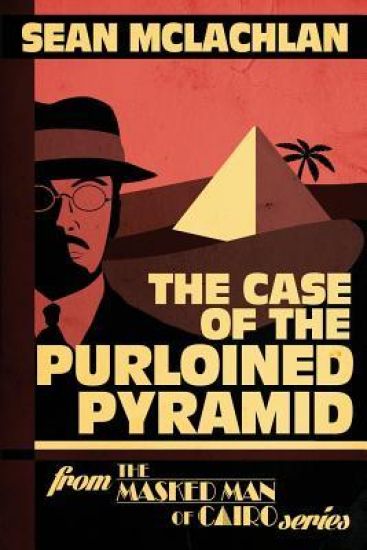
An ancient mystery. A modern murder. Sir Augustus Wall, a horribly mutilated veteran of the Great War, has left Europe behind to open an antiquities shop in Cairo. But Europe's troubles follow him as a priceless inscription is stolen and those who know its secrets start turning up dead. Teaming up with Egyptology expert Moustafa Ghani, and Faisal, an irritating street urchin he just can't shake, Sir Wall must unravel an ancient secret and face his own dark past.
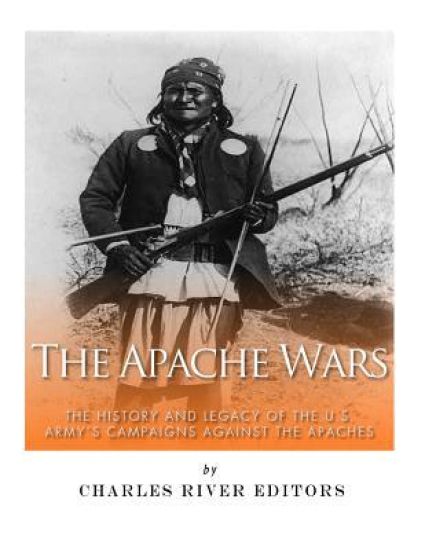
*Includes pictures *Includes accounts of the fighting described by American soldiers *Includes online resources and a bibliography for further reading *Includes a table of contents "Even if we should be able to dislodge them from the rough mountain ridges and impenetrable woods which cover the immense territories of these frontiers, they would seek better asylum in the vastness of the Sierra Madre. . . They] know how to surprise and destroy our troops in the mountains and on the plains. They are not ignorant of the use and power of our arms; they manage their own with dexterity; and they are as good or better horsemen than the Spaniards, and having no towns, castles, or temples to defend they may only be attacked in their dispersed and movable rancherias." - Bernardo de Galvez, Instructions for Governing the Interior Provinces of New Spain, 1787 (The Quivera Society, Berkeley) The Apache of the American Southwest have achieved almost legendary status for their fierceness and their tenacity in fighting the U. S. Army. Names like Nana, Cochise, and Geronimo are synonymous with bravery and daring, and the tribe had that reputation long before the Americans arrived. Indeed, among all the Native American tribes, the Spanish, Mexicans, and Americans learned the hard way that the warriors of the Apache were perhaps the fiercest in North America. Based in the Southwest, the Apache fought all three in Mexico and the American Southwest, engaging in seasonal raids for so many centuries that the Apache struck fear into the hearts of all their neighbors. Given the group's reputation, it's fitting that they are inextricably associated with one of their most famous leaders, Geronimo. Descendants of people killed by "hostile" Apache certainly considered warriors like Geronimo to be murderers and thieves whose cultures and societies held no redeeming values, and even today, many Americans associate the name Geronimo with a war cry. The name Geronimo actually came about because of a battle he fought against the Mexicans. Over time, however, the historical perception of the relationship between America and Native tribes changed drastically. With that, Geronimo was viewed in a far different light, as one of a number of Native American leaders who resisted the U. S. and Mexican governments when settlers began to push onto their traditional homelands. Like the majority of Native American groups, the Apache were eventually vanquished and displaced by America's westward push, and Geronimo became an icon for eluding capture for so long. The Apache Wars: The History and Legacy of the U. S. Army's Campaigns against the Apaches analyzes the history of the campaigns that stretched over decades. Along with pictures of important people, places, and events, you will learn about the Apache Wars like never before, in no time at all.
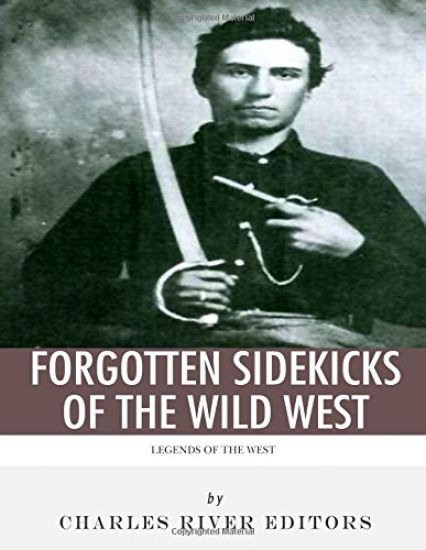
*Includes pictures *Profiles the forgotten sidekicks of icons like Wyatt Earp, Doc Holliday, and Billy the Kid *Includes online resources and a bibliography for further reading *Includes a table of contents Space may be the final frontier, but no frontier has ever captured the American imagination like the "Wild West", which still evokes images of dusty cowboys, outlaws, gunfights, gamblers, and barroom brawls over 100 years after the West was settled. A constant fixture in American pop culture, the 19th century American West continues to be vividly and colorful portrayed not just as a place but as a state of mind. In Charles River Editors' Legends of the West series, readers can get caught up to speed on the lives of America's most famous frontier figures in the time it takes to finish a commute, while learning interesting facts long forgotten or never known. The Wild West has made legends out of many men, and some of them, like Wild Bill Hickok and Jesse James, were celebrities during their lives. Indeed, the history of the West is often taught as though it was a history of larger-than-life figures like Annie Oakley, Calamity Jane, Billy the Kid, Wyatt Earp, Doc Holliday, and several other men and women, some good, some bad, and many in between. Their actions have helped forge America's common heritage. While these figures are still popular today, they didn't live, fight, and die in isolation; they all had networks of friends and part-time associates, people who helped them escape from jail or capture wanted felons. Of course, these people also stood in their shadow. Western lore has given them the dismissive name of "sidekicks", but a closer look reveals that these lesser-known figures lived colorful lives of their own. This book profiles 4 of the most important but forgotten sidekicks of the West, from Sherman McMaster, who participated in Wyatt Earp's Vendetta Ride in the wake of the Gunfight at the O. K. Corral, to Doc Scurlock, who was an outlaw alongside Billy the Kid. Legends of the West: Forgotten Sidekicks of the Wild West traces the history of some of the important figures in the West and the roles they played in some of history's seminal moments. Along with pictures of important people, places, and events, you will learn about some of the West's forgotten sidekicks like never before, in no time at all.
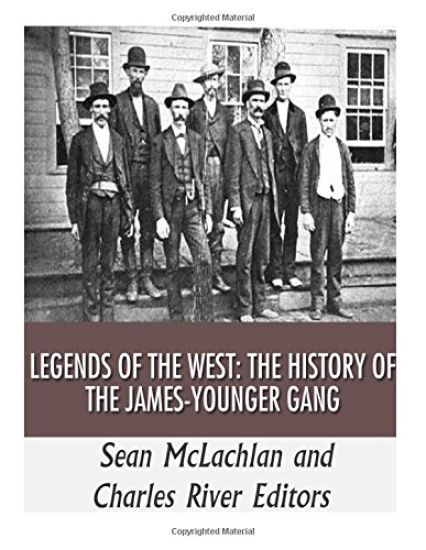
*Includes pictures *Includes accounts of the gang's most famous robberies written by Cole Younger *Includes online resources and a bibliography for further reading *Includes a table of contents Space may be the final frontier, but no frontier has ever captured the American imagination like the "Wild West", which still evokes images of dusty cowboys, outlaws, gunfights, gamblers, and barroom brawls over 100 years after the West was settled. A constant fixture in American pop culture, the 19th century American West continues to be vividly and colorful portrayed not just as a place but as a state of mind. In Charles River Editors' Legends of the West series, readers can get caught up to speed on the lives of America's most famous frontier figures in the time it takes to finish a commute, while learning interesting facts long forgotten or never known. The Wild West has made legends out of many men after their deaths, but like Wild Bill Hickok, Jesse James was a celebrity during his life. However, while Hickok was (mostly) a lawman, Jesse James was and remains the most famous outlaw of the Wild West, with both his life of crime and his death remaining pop culture fixtures. James and his notorious older brother Frank were Confederate bushwhackers in the lawless region of Missouri during the Civil War. Despite being a teenager, James was severely wounded twice during the war, including being shot in the chest, but that would hardly slow him down after the war ended. Eventually James, his brother and their infamous gang became the most hunted outlaws in the country, but Jesse would famously be done in by the brother of his most trusted gang members. After Jesse moved in with the Ford brothers, Bob Ford began secretly negotiating turning in the famous outlaw to Missouri Governor Thomas Crittenden. On April 3, 1882, as the gang prepared for another robber, Jesse was famously shot in the back of the head by Bob Ford as he stood on a chair fixing a painting. While conspiracy theories have continued to linger that somehow James was not killed on that day, the Ford brothers would celebrate their participation in his murder, Bob himself would be murdered a few years later, and Jesse James's legacy had been ensured. Meanwhile, Jesse's most famous associates, the Younger brothers - Cole, Jim, John, and Bob - were also some of the most feared bandits in the country. Rivaled only by Frank and Jesse James, with whom they often rode, they captured the imaginations of a not entirely unsympathetic public. Newspapers gave breathless accounts of their exploits and dime novels made up adventures they never had. In Cole Younger's self-serving and often unreliable autobiography, written shortly after being released from prison, Cole complained, "On the eve of sixty, I come out into the world to find a hundred or more of books, of greater or less pretensions, purporting to be a history of 'The Lives of the Younger Brothers, ' but which are all nothing more nor less than a lot of sensational recitals, with which the Younger brothers never had the least association. One publishing house alone is selling sixty varieties of these books, and I venture to say that in the whole lot there could not be found six pages of truth. The stage, too, has its lurid dramas in which we are painted in devilish blackness." Of course, the very nature of their business makes the Younger brothers hard to trace. Historians disagree on what robberies they participated in. One good estimate is that one or more of the Younger brothers, principally the eldest brother Cole, participated in a total of 12 bank robberies, seven train robberies, and four stagecoach robberies. Most of these robberies were done in league with the James brothers and many led to bloodshed, with at least 11 civilians being killed. Legends of the West: The History of the James-Younger Gang traces the history of the outlaws.
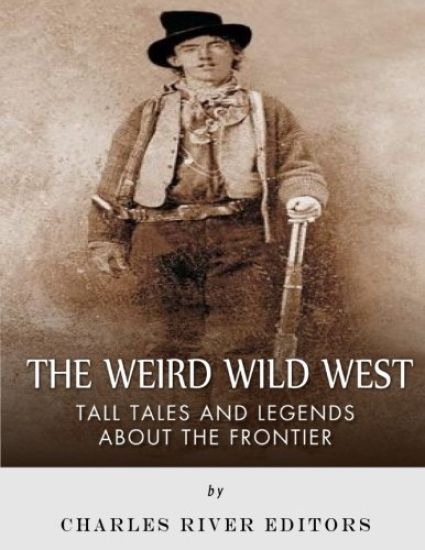
*Includes pictures *Includes contemporary accounts of the legends *Includes a bibliography for further reading *Includes a table of contents Space may be the final frontier, but no frontier has ever captured the American imagination like the "Wild West", which still evokes images of dusty cowboys, outlaws, gunfights, gamblers, and barroom brawls over 100 years after the West was settled. A constant fixture in American pop culture, the 19th century American West continues to be vividly and colorful portrayed not just as a place but as a state of mind. Even for those who travel through the West today, there are plenty of traces of the old times. Ghost towns still stand in remote parts of the desert and prairie, Native American rock art still tell their mute legends, and old prospectors' mines still dot the hillsides. Even some of the places' names, such as Bloody Basin, Arizona and Soldier's Hill, New Mexico, have their stories to tell. In November 2014, one lucky archaeologist at Nevada's Great Basin National Park spotted an old rifle leaning against a pine tree; the sun and wind had weathered the wooden stock until it was as gray as the tree trunk, making it almost invisible to passersby. When the gun was examined, it turned out to be a Winchester rifle. The serial number was still legible and records showed that it had been manufactured and shipped in 1882. Some prospector or hunter had set the rifle against a tree more than a century ago and never came back for it. It had been leaning there ever since. As popular as works about the West remain today, the Wild West captured the imagination of people all the way back to the days when it really was wild. Even in the 19th century, its fame spread thanks to dime novels, travelogues, Wild West shows, and theater plays, and people were thrilled by tales of exploration and gunfights. Naturally, in the process of settling the frontier, the adventures contained countless numbers of strange stories, ranging from tales of monsters and lost mines to those about hidden cities and men coming back from the dead. It was a vast, unexplored country, and many mysteries could hide in the unmapped mountain ranges and seemingly endless plains. The Weird Wild West: Tall Tales and Legends about the Frontier is a collection of tales about America's frontier that range from the possible to the downright ridiculous. Some are adaptations of old folk tales immigrants brought with them or creations of overly eager newspaper reporters, but many have their basis in fact. Along with pictures and a bibliography, you will learn about the Weird Wild West like never before, in no time at all.