Kirjojen hintavertailu – 12 903 725 kirjaa ja 27 kauppaa

Kirjailija

Sean McLachlan

Kirjat ja teokset yhdessä paikassa: 42 kirjaa, julkaisuja vuosilta 2009–2026, suosituimpiin kuuluu We Had Flags. Vertaile teosten hintoja ja tarkista saatavuus suomalaisista kirjakaupoista.

42 kirjaa

Kirjojen julkaisuvuodet: 2009–2026.

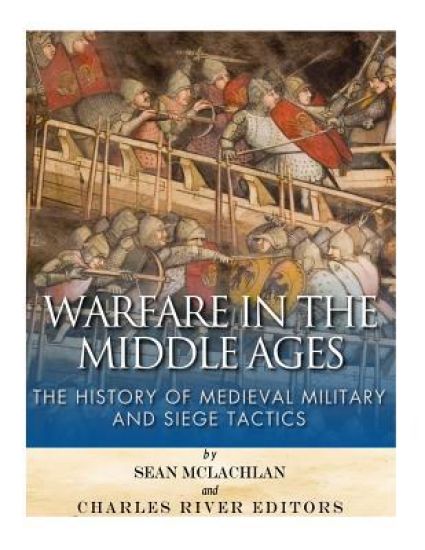
Warfare in the Middle Ages: The History of Medieval Military and Siege Tactics

Warfare in the Middle Ages: The History of Medieval Military and Siege Tactics

Sean McLachlan; Charles River

Createspace Independent Publishing Platform
2017
nidottu
*Includes pictures *Includes chronicle accounts of some of the battles *Includes online resources and a bibliography for further reading *Includes a table of contents In the time period between the fall of Rome and the spread of the Renaissance across the European continent, many of today's European nations were formed, the Catholic Church rose to great prominence, some of history's most famous wars occurred, and a social class system was instituted that lasted over 1,000 years. A lot of activity took place during a period frequently labeled derogatively as the "Dark Ages," and while that period of time is mostly referred to as the "Middle Ages" instead of the Dark Ages today, it has still retained the stigma of being a sort of lost period of time in which Western civilization made no worthwhile progress after the advances of the ancient civilizations of Greece and Rome. In reality, this oversimplification of the Middle Ages overlooks the progress made in the studies of sciences and philosophy, especially during the High Middle Ages. It also ignores the fact that one of the most important inventions of the last millennium was created in Germany during the Late Middle Ages, the printing press, which allowed the Renaissance to move across the continent and help position Western Europe as the wealthiest region in the world. If anything, the one aspect of the Middle Ages that has been romanticized is medieval warfare. Indeed, the Middle Ages have long sparked people's imaginations thanks to imagery of armored knights battling on horseback and armies of men trying to breach the walls of formidable castles. What is generally forgotten is that medieval warfare was constantly adapting to the times as leaders adopted new techniques and technology, and common infantry became increasingly important throughout the period. Starting around 1000 CE, there was a gradual consolidation of power in the region after the fragmentation of the Early Middle Ages, and it brought about the rise of more centralized states that could field large armies. The Normans, one of the first groups to do this, were notable for their discipline and organization, and it's little surprise that they were the last foreigners to successfully invade Britain under William the Conqueror in the mid-11th century. Meanwhile, political and technological progress led to continuous change of tactics and equipment. Cavalry became ascendant, only to be later replaced by infantry as their weapons improved. By the end of the period, warfare was radically changing thanks to the rise of gunpowder weapons such as the handgonne and the bombard. Warfare in the Middle Ages: The History of Medieval Military and Siege Tactics looks at how the armies of that era fought each other. Along with pictures and a bibliography, you will learn about medieval tactics like never before, in no time at all.
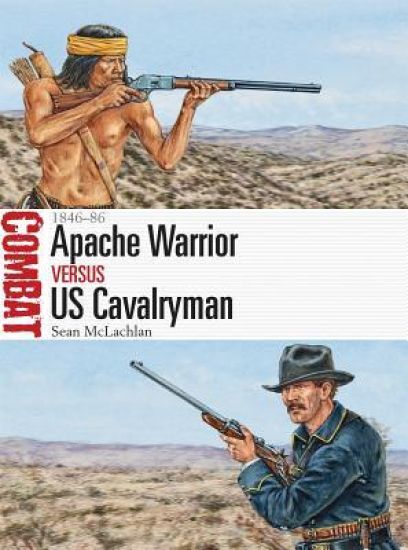
Apache Warrior vs US Cavalryman

Apache Warrior vs US Cavalryman

Sean McLachlan

Osprey Publishing
2016
nidottu
From the 1840s onward, United States military forces clashed with the Apache, a group of Native American peoples associated with the southwestern part of North America. US territorial expansion and conflict – first with Mexico and then during the Civil War – led to an escalation of hostilities that culminated in the defeat of the Apache leader Geronimo in 1886, although fighting continued into the 20th century. In this study the clashes at Cieneguilla (1854), First Adobe Walls (1864), and Cibecue Creek (1881) are assessed in detail. Fully illustrated and featuring contemporary accounts and specially commissioned artwork, this history examines exactly how the Apache were able to pose such a grave threat to US forces and how their initial advantages were gradually negated by the cavalry. Examining the tactics, equipment and training available to each side over four decades of evolving conflict, this is an eye-opening combatant's eye view of one of history's most intriguing campaigns.
Legends of the West: Forgotten Sidekicks of the Wild West

Legends of the West: Forgotten Sidekicks of the Wild West

Sean McLachlan; Charles River

Createspace Independent Publishing Platform
2015
nidottu
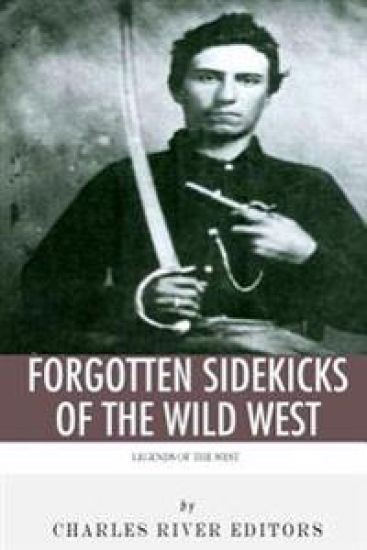
*Includes pictures *Profiles the forgotten sidekicks of icons like Wyatt Earp, Doc Holliday, and Billy the Kid *Includes online resources and a bibliography for further reading *Includes a table of contents Space may be the final frontier, but no frontier has ever captured the American imagination like the "Wild West", which still evokes images of dusty cowboys, outlaws, gunfights, gamblers, and barroom brawls over 100 years after the West was settled. A constant fixture in American pop culture, the 19th century American West continues to be vividly and colorful portrayed not just as a place but as a state of mind. In Charles River Editors' Legends of the West series, readers can get caught up to speed on the lives of America's most famous frontier figures in the time it takes to finish a commute, while learning interesting facts long forgotten or never known. The Wild West has made legends out of many men, and some of them, like Wild Bill Hickok and Jesse James, were celebrities during their lives. Indeed, the history of the West is often taught as though it was a history of larger-than-life figures like Annie Oakley, Calamity Jane, Billy the Kid, Wyatt Earp, Doc Holliday, and several other men and women, some good, some bad, and many in between. Their actions have helped forge America's common heritage. While these figures are still popular today, they didn't live, fight, and die in isolation; they all had networks of friends and part-time associates, people who helped them escape from jail or capture wanted felons. Of course, these people also stood in their shadow. Western lore has given them the dismissive name of "sidekicks", but a closer look reveals that these lesser-known figures lived colorful lives of their own. This book profiles 4 of the most important but forgotten sidekicks of the West, from Sherman McMaster, who participated in Wyatt Earp's Vendetta Ride in the wake of the Gunfight at the O. K. Corral, to Doc Scurlock, who was an outlaw alongside Billy the Kid. Legends of the West: Forgotten Sidekicks of the Wild West traces the history of some of the important figures in the West and the roles they played in some of history's seminal moments. Along with pictures of important people, places, and events, you will learn about some of the West's forgotten sidekicks like never before, in no time at all.
Frank and Jesse James in the Civil War: The History of the Bushwhackers Who Became Outlaws of the Wild West

Frank and Jesse James in the Civil War: The History of the Bushwhackers Who Became Outlaws of the Wild West

Sean McLachlan; Charles River

Createspace Independent Publishing Platform
2015
nidottu
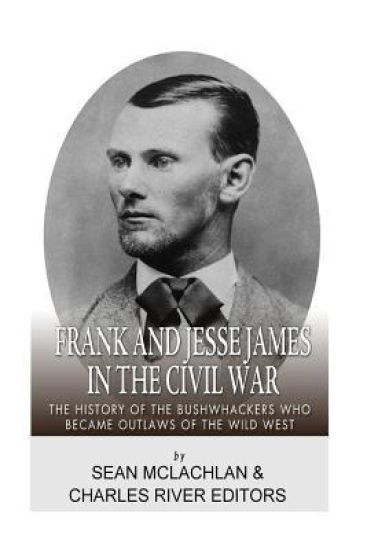
*Includes pictures *Includes accounts of the bushwhacking committed by the James brothers written by participants *Includes online resources and a bibliography for further reading *Includes a table of contents The Civil War is best remembered for the big battles and the legendary generals who fought on both sides, like Robert E. Lee facing off against Ulysses S. Grant in 1864. In kind, the Eastern theater has always drawn more interest and attention than the West. However, while massive armies marched around the country fighting each other, there were other small guerrilla groups that engaged in irregular warfare on the margins. Among these partisan bushwhackers, none are as infamous as William Quantrill and Quantrill's Raiders. Quantrill's Raiders operated along the border between Missouri and Kansas, which had been the scene of partisan fighting over a decade earlier during the debate over whether Kansas and Nebraska would enter the Union as free states or slave states. In "Bleeding Kansas", zealous pro-slavery and anti-slavery forces fought each other, most notably John Brown, and the region became a breeding ground for Unionists and pro-slavery factions who shifted right back into similar fighting once the Civil War started. Rather than target military infrastructure or enemy soldiers, the bushwhackers rode in smaller numbers and targeted civilians on the other side of the conflict, making legends out of men like Bloody Bill Anderson and John Mosby. Though Quantrill's Raiders were named after their famous leader William Clark Quantrill, the most notorious of the Raiders was none other than Jesse James. Frank and Jesse James have become American legends for their daring robberies and narrow escapes from the law, and many people, especially in the South, see them as folk heroes, unreconstructed rebels fighting for the Lost Cause against rich Northern bankers and capitalists. While that last bit is a matter for debate, the James brothers did indeed consider themselves Southern rebels at heart. The Wild West has made legends out of many men after their deaths, but like Wild Bill Hickok, Jesse James was a celebrity during his life. However, while Hickok was (mostly) a lawman, Jesse James was and remains the most famous outlaw of the Wild West, with both his life of crime and his death remaining pop culture fixtures. James and his notorious older brother Frank were Confederate bushwhackers in the lawless region of Missouri during the Civil War. Despite being a teenager, Jesse James was severely wounded twice during the war, including being shot in the chest, but that would hardly slow him down after the war ended. Eventually, Quantrill's Raiders headed south, and they eventually split off into several groups. Quantrill himself was killed while fighting in June 1865, nearly two months after Lee surrendered to Grant at Appomattox, but his name was kept alive by the notorious deeds of his Raiders during the war and the criminal exploits of former Raiders like Jesse and Frank James, as well as the Younger brothers. These men became some of America's most famous outlaws, and they used guerrilla tactics to rob banks and trains while eluding capture. While their robberies were conducted more to enrich themselves than to strike back against the North, their rebel credentials were impeccable. The brothers came from a secessionist, slaveholding family and both fought for the Confederacy in the bitterest guerrilla war the nation has ever seen. To understand their outlaw careers, and their enduring legacy, one must understand how Frank and Jesse James fought during the Civil War. Frank and Jesse James in the Civil War: The History of the Bushwhackers Who Became Outlaws of the Wild West chronicles the history and events that involved the James brothers during the Civil War, and how the Civil War affected their lives as outlaws.
Legends of the West: The History of the James-Younger Gang

Legends of the West: The History of the James-Younger Gang

Charles River; Sean McLachlan

Createspace Independent Publishing Platform
2015
nidottu
*Includes pictures *Includes accounts of the gang's most famous robberies written by Cole Younger *Includes online resources and a bibliography for further reading *Includes a table of contents Space may be the final frontier, but no frontier has ever captured the American imagination like the "Wild West", which still evokes images of dusty cowboys, outlaws, gunfights, gamblers, and barroom brawls over 100 years after the West was settled. A constant fixture in American pop culture, the 19th century American West continues to be vividly and colorful portrayed not just as a place but as a state of mind. In Charles River Editors' Legends of the West series, readers can get caught up to speed on the lives of America's most famous frontier figures in the time it takes to finish a commute, while learning interesting facts long forgotten or never known. The Wild West has made legends out of many men after their deaths, but like Wild Bill Hickok, Jesse James was a celebrity during his life. However, while Hickok was (mostly) a lawman, Jesse James was and remains the most famous outlaw of the Wild West, with both his life of crime and his death remaining pop culture fixtures. James and his notorious older brother Frank were Confederate bushwhackers in the lawless region of Missouri during the Civil War. Despite being a teenager, James was severely wounded twice during the war, including being shot in the chest, but that would hardly slow him down after the war ended. Eventually James, his brother and their infamous gang became the most hunted outlaws in the country, but Jesse would famously be done in by the brother of his most trusted gang members. After Jesse moved in with the Ford brothers, Bob Ford began secretly negotiating turning in the famous outlaw to Missouri Governor Thomas Crittenden. On April 3, 1882, as the gang prepared for another robber, Jesse was famously shot in the back of the head by Bob Ford as he stood on a chair fixing a painting. While conspiracy theories have continued to linger that somehow James was not killed on that day, the Ford brothers would celebrate their participation in his murder, Bob himself would be murdered a few years later, and Jesse James's legacy had been ensured. Meanwhile, Jesse's most famous associates, the Younger brothers - Cole, Jim, John, and Bob - were also some of the most feared bandits in the country. Rivaled only by Frank and Jesse James, with whom they often rode, they captured the imaginations of a not entirely unsympathetic public. Newspapers gave breathless accounts of their exploits and dime novels made up adventures they never had. In Cole Younger's self-serving and often unreliable autobiography, written shortly after being released from prison, Cole complained, "On the eve of sixty, I come out into the world to find a hundred or more of books, of greater or less pretensions, purporting to be a history of 'The Lives of the Younger Brothers, ' but which are all nothing more nor less than a lot of sensational recitals, with which the Younger brothers never had the least association. One publishing house alone is selling sixty varieties of these books, and I venture to say that in the whole lot there could not be found six pages of truth. The stage, too, has its lurid dramas in which we are painted in devilish blackness." Of course, the very nature of their business makes the Younger brothers hard to trace. Historians disagree on what robberies they participated in. One good estimate is that one or more of the Younger brothers, principally the eldest brother Cole, participated in a total of 12 bank robberies, seven train robberies, and four stagecoach robberies. Most of these robberies were done in league with the James brothers and many led to bloodshed, with at least 11 civilians being killed. Legends of the West: The History of the James-Younger Gang traces the history of the outlaws.
The Weird Wild West: Tall Tales and Legends about the Frontier

The Weird Wild West: Tall Tales and Legends about the Frontier

Charles River; Sean McLachlan

Createspace Independent Publishing Platform
2015
nidottu
*Includes pictures *Includes contemporary accounts of the legends *Includes a bibliography for further reading *Includes a table of contents Space may be the final frontier, but no frontier has ever captured the American imagination like the "Wild West", which still evokes images of dusty cowboys, outlaws, gunfights, gamblers, and barroom brawls over 100 years after the West was settled. A constant fixture in American pop culture, the 19th century American West continues to be vividly and colorful portrayed not just as a place but as a state of mind. Even for those who travel through the West today, there are plenty of traces of the old times. Ghost towns still stand in remote parts of the desert and prairie, Native American rock art still tell their mute legends, and old prospectors' mines still dot the hillsides. Even some of the places' names, such as Bloody Basin, Arizona and Soldier's Hill, New Mexico, have their stories to tell. In November 2014, one lucky archaeologist at Nevada's Great Basin National Park spotted an old rifle leaning against a pine tree; the sun and wind had weathered the wooden stock until it was as gray as the tree trunk, making it almost invisible to passersby. When the gun was examined, it turned out to be a Winchester rifle. The serial number was still legible and records showed that it had been manufactured and shipped in 1882. Some prospector or hunter had set the rifle against a tree more than a century ago and never came back for it. It had been leaning there ever since. As popular as works about the West remain today, the Wild West captured the imagination of people all the way back to the days when it really was wild. Even in the 19th century, its fame spread thanks to dime novels, travelogues, Wild West shows, and theater plays, and people were thrilled by tales of exploration and gunfights. Naturally, in the process of settling the frontier, the adventures contained countless numbers of strange stories, ranging from tales of monsters and lost mines to those about hidden cities and men coming back from the dead. It was a vast, unexplored country, and many mysteries could hide in the unmapped mountain ranges and seemingly endless plains. The Weird Wild West: Tall Tales and Legends about the Frontier is a collection of tales about America's frontier that range from the possible to the downright ridiculous. Some are adaptations of old folk tales immigrants brought with them or creations of overly eager newspaper reporters, but many have their basis in fact. Along with pictures and a bibliography, you will learn about the Weird Wild West like never before, in no time at all.
Radio Hope

Radio Hope

Sean McLachlan

Createspace Independent Publishing Platform
2014
pokkari
In a world shattered by war, pollution and disease. . . A gunslinging mother longs to find a safe refuge for her son. A frustrated revolutionary delivers water to villagers living on a toxic waste dump. The assistant mayor of humanity's last city hopes he will never have to take command. One thing gives them the promise of a better future--Radio Hope, a mysterious station that broadcasts vital information about surviving in a blighted world. But when a mad prophet and his army of fanatics march out of the wildlands on a crusade to purify the land with blood and fire, all three will find their lives intertwining, and changing forever.
It Happened in Missouri

It Happened in Missouri

Sean McLachlan

Globe Pequot Press
2013
pokkari
From Dred Scott’s tireless bid for freedom to the Cardinals’ first World Series win, It Happened in Missouri takes readers on a rollicking, behind-the-scenes look at some of the characters and episodes from the Show Me State's storied past. Find out how a fourteen-year-old boy coordinated the settling of St. Louis. Discover how a steam engine helped save the inaugural ride of the Pony Express through Missouri. And read all about Harry Truman’s come-from-behind victory over Thomas Dewey in the 1948 presidential election. These thirty stories include both famous tales, and famous names--and little-known heroes, heroines, and happenings.
Tombstone

Tombstone

Sean McLachlan

Osprey Publishing
2013
nidottu
The Gunfight at the OK Corral on 26 October 1881 is one of the most enduring stories of the Old West. It led to a series of violent incidents that culminated in the Vendetta Ride, in which Wyatt Earp, Doc Holliday, and several other gunslingers went after their rivals the Cowboys. Like most tales of the Wild West, the facts are buried under layers of myth, and the line between good guys and bad guys is blurry. Wyatt Earp, leader of the so-called “good guys”, was charged with stealing horses in the Indian Territory in 1870 and jumped bail. Becoming a buffalo hunter and gambler, he got into several scrapes and earned a reputation as a gunfighter. Several times he helped lawmen arrest outlaws, but usually his assistance came more because of a personal grudge against the criminal than any real respect for law and order. He even got fired from a police job in Wichita for beating up a political rival.
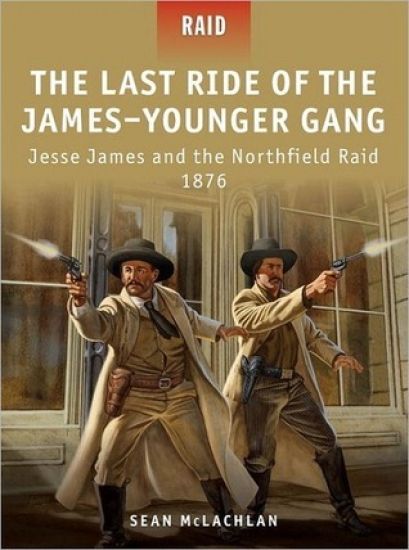
The Last Ride of the James–Younger Gang

The Last Ride of the James–Younger Gang

Sean McLachlan

Osprey Publishing
2012
nidottu
It was the beginning of the end for the James gang. In the past ten years Frank and Jesse James had gone from unknown ex-Confederate guerrillas to the most famous outlaws in the world. A string of daring robberies of banks, trains, and stagecoaches had brought them fame, admiration, hatred, and a surprisingly small amount of wealth. In 1876 they planned their most daring raid yet—to ride hundreds of miles from their home state of Missouri to rob the First National Bank at Northfield, Minnesota. This book will tell the story of one of the most daring bank jobs in American history. With most of the gang being former bushwhackers, they used many guerrilla tactics in the planning and execution of the raid, yet failed because of poor discipline and their own fame, which meant that every town in the Midwest had their guns loaded waiting to fight off bandits.
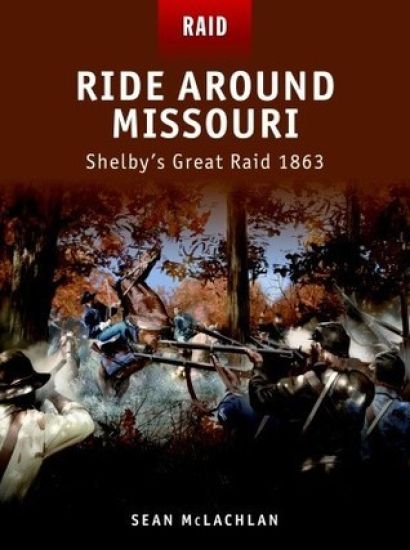
Ride Around Missouri

Ride Around Missouri

Sean McLachlan

Osprey Publishing
2011
nidottu
In July 1863, with the Confederacy still reeling from the defeats at Vicksburg and Gettysburg, Union forces pushed deep into Arkansas, capturing the capital of Little Rock. In response, Colonel Joseph O. Shelby launched a daring raid to disrupt the advance. Taking 600 men and a section of light artillery, he slipped behind enemy lines. Moving by night to confuse the enemy, Shelby captured a series of small outposts, collecting weapons and recruits as he went. As they continued their ride, the rebels tore up railroad tracks, burned bridges, and cut telegraph lines. Despite these successes, the Union troops slowly closed in on the raiders. Shelby fought a series of bitter skirmishes, until he found himself surrounded. Unwilling to surrender, Shelby led a charge through the Federal lines, bursting out into the open country and onto the road back to the Confederacy. While the results of this raid are still debated by historians, no one has ever doubted its boldness, and west of the Mississippi it became common to boast, “You've heard of Jeb Stuart's ride around McClellan? Hell, brother, Jo Shelby rode around MISSOURI!”
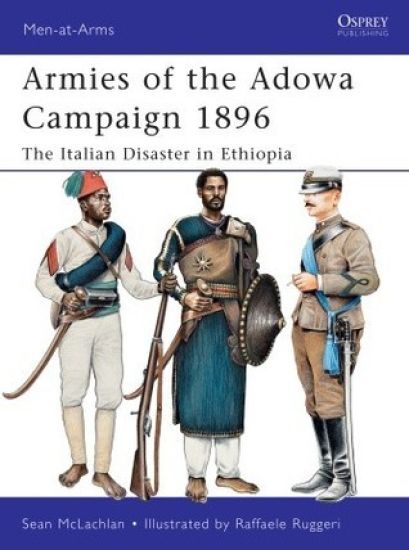
Armies of the Adowa Campaign 1896

Armies of the Adowa Campaign 1896

Sean McLachlan

Osprey Publishing
2011
nidottu
In the late 19th century, the new nation-state of Italy was eager to join her European neighbours in creating an international empire, and her eyes turned toward Africa as a source of potential colonies. Securing a foothold in Eritrea on the Red Sea coast, the Italians quickly became embroiled in a shooting war with the Ethiopians. The war proved a disaster for the Italians, who suffered three major defeats against the forces of Emperor Menelik's army, including a horrendous massacre at Adowa, the largest defeat of a colonial army prior to World War I. This book looks at the campaign with an emphasis on the colourful uniforms worn by both sides.