Kirjailija
Sherwood Anderson
Kirjat ja teokset yhdessä paikassa: 266 kirjaa, julkaisuja vuosilta 1919–2027, suosituimpiin kuuluu Winesburg, Ohio: A Group of Tales of Ohio Small Town Life. Vertaile teosten hintoja ja tarkista saatavuus suomalaisista kirjakaupoista.
266 kirjaa
Kirjojen julkaisuvuodet: 1919–2027.
Hugh McVey was born in a little hole of a town stuck on a mud bank on the western shore of the Mississippi River in the State of Missouri. It was a miserable place in which to be born. With the exception of a narrow strip of black mud along the river, the land for ten miles back from the town-called in derision by river men "Mudcat Landing"-was almost entirely worthless and unproductive. The soil, yellow, shallow and stony, was tilled, in Hugh's time, by a race of long gaunt men who seemed as exhausted and no-account as the land on which they lived. They were chronically discouraged, and the merchants and artisans of the town were in the same state. The merchants, who ran their stores-poor tumble-down ramshackle affairs-on the credit system, could not get pay for the goods they handed out over their counters and the artisans, the shoemakers, carpenters and harnessmakers, could not get pay for the work they did. Only the town's two saloons prospered. The saloon keepers sold their wares for cash and, as the men of the town and the farmers who drove into town felt that without drink life was unbearable, cash always could be found for the purpose of getting drunk.

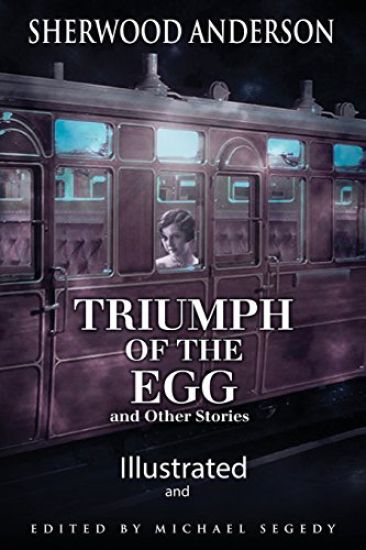
The Triumph of the Egg: Illustrated
Sherwood Anderson
Createspace Independent Publishing Platform
2016
nidottu
Windy McPherson's Son: Annotated
Sherwood Anderson
Createspace Independent Publishing Platform
2016
nidottu
It's hard to imagine any great author producing stories that do not contain autobiographical material, and surely Sherwood Anderson is no exception, if anything he proves the rule. So much of the content in Windy McPherson's Son is drawn from personal experience. Biographers have made great strides in digging up Sherwood Anderson's past and showing how his life and personal struggles unfold through the characters in his works. His writing is not only highly original and creative but therapeutic and cathartic. Sherwood had this obsession to create and explore his own psyche as he described the world about him. He would lock himself away in a small, sparsely furnished room and write away, working to get at the truth as he struggled to understand it. Once he had a vision of it, he refused to be a propagandist and espouse political or economic opinions, though as a writer he could not ignore the effects of politics, business, and industry on American life, in particular on small town middle America and middle class life. Upton Sinclair, after reading Windy McPherson's Son, wrote Sherwood a letter aiming "to make a socialist out of him." Anderson replied that he did not wish to see writers as propagandists, taking a socialist or conservative position, or any political position for that matter. Their role was to stay in life not in politics. They could not take sides, else they would only be dealing in half truths. He explains in his letter to Sinclair: "I want them to be something of a brother to the poor brute who runs the sweatshop as well as to the equally unfortunate brutes who work for him." For Anderson getting at the truth demanded avoiding stereotypes and setting forth doctrine. He wished to depict real people facing the real difficulties of their times and leave it to the reader to judge. This meant living among the people and breathing in life as they did while examining and understanding his own mood before attempting to imagine theirs. Understanding Anderson requires understanding his less apparent feelings towards the events and characters in his novels, and this can be aided by, I believe, familiarity with key events in his own life that most likely contributed to forming his various perspectives. Which brings me to the point of why I have decided to edit and add biographical footnotes to the present edition of Windy McPherson's Son. First, by editing this edition, I am intending to provide a more readable text. The edition that I'm working from contains many formatting errors, silly typos, or slips of the pen, and misspellings, which I have tried to remedy. The numerous punctuation infelicities, which I felt hesitant to address, remain. I feel that they do not get in the way of the reading. Secondly, I believe that adding biographical footnotes may help us understand and appreciate the impact that Sherwood Anderson's life might have had on his writing, while opening a small door that could shed a splinter of light on what his personal feelings might have been towards the events he depicts and the characters he fashions. The aforementioned being said, certainly, Sherwood Anderson would want us to give much more attention to his work than to his life if we wish to take from his writing any real thing of lasting literary value. However, information about his life could very well offer us a richer understanding of his personal feelings towards his subjects, the changing times he lived through, and significant personal events that inspired his writing. And for those who do not wish to read full biographies about the author, the biographical footnotes are a pleasant and helpful way of getting to know a little more about this remarkable man's life.
Triumph of the Egg, and Other Stories
Sherwood Anderson
Createspace Independent Publishing Platform
2015
nidottu
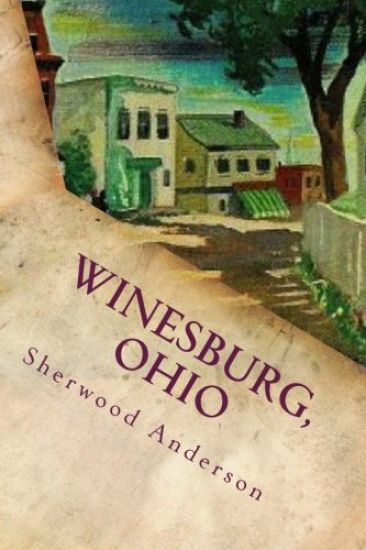
Winesburg, Ohio (full title: Winesburg, Ohio: A Group of Tales of Ohio Small-Town Life) is a 1919 short story cycle by the American author Sherwood Anderson. The work is structured around the life of protagonist George Willard, from the time he was a child to his growing independence and ultimate abandonment of Winesburg as a young man. It is set in the fictional town of Winesburg, Ohio (not to be confused with the actual Winesburg), which is based loosely on the author's childhood memories of Clyde, Ohio. Mostly written from late 1915 to early 1916, with a few stories completed closer to publication, they were "...conceived as complementary parts of a whole, centered in the background of a single community." The book consists of twenty-two stories, with the first story, "The Book of the Grotesque", serving as an introduction.
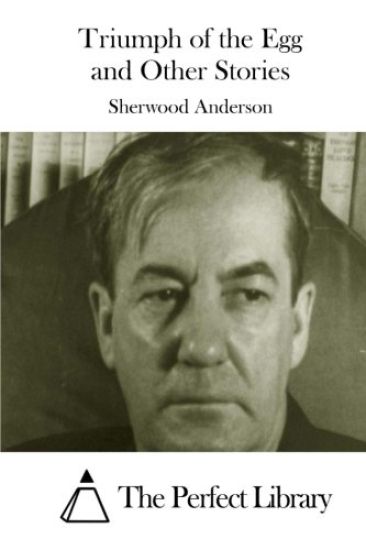
Triumph of the Egg and Other Stories
Sherwood Anderson
Createspace Independent Publishing Platform
2015
nidottu