
Kirjailija
Sherwood Anderson
Kirjat ja teokset yhdessä paikassa: 266 kirjaa, julkaisuja vuosilta 1919–2027, suosituimpiin kuuluu Winesburg, Ohio: A Group of Tales of Ohio Small Town Life. Vertaile teosten hintoja ja tarkista saatavuus suomalaisista kirjakaupoista.
266 kirjaa
Kirjojen julkaisuvuodet: 1919–2027.

This work has been selected by scholars as being culturally important, and is part of the knowledge base of civilization as we know it. This work was reproduced from the original artifact, and remains as true to the original work as possible. Therefore, you will see the original copyright references, library stamps (as most of these works have been housed in our most important libraries around the world), and other notations in the work. This work is in the public domain in the United States of America, and possibly other nations. Within the United States, you may freely copy and distribute this work, as no entity (individual or corporate) has a copyright on the body of the work. As a reproduction of a historical artifact, this work may contain missing or blurred pages, poor pictures, errant marks, etc. Scholars believe, and we concur, that this work is important enough to be preserved, reproduced, and made generally available to the public. We appreciate your support of the preservation process, and thank you for being an important part of keeping this knowledge alive and relevant.
This book is a result of an effort made by us towards making a contribution to the preservation and repair of original classic literature. In an attempt to preserve, improve and recreate the original content, we have worked towards: 1. Type-setting & Reformatting: The complete work has been re-designed via professional layout, formatting and type-setting tools to re-create the same edition with rich typography, graphics, high quality images, and table elements, giving our readers the feel of holding a 'fresh and newly' reprinted and/or revised edition, as opposed to other scanned & printed (Optical Character Recognition - OCR) reproductions. 2. Correction of imperfections: As the work was re-created from the scratch, therefore, it was vetted to rectify certain conventional norms with regard to typographical mistakes, hyphenations, punctuations, blurred images, missing content/pages, and/or other related subject matters, upon our consideration. Every attempt was made to rectify the imperfections related to omitted constructs in the original edition via other references. However, a few of such imperfections which could not be rectified due to intentional\unintentional omission of content in the original edition, were inherited and preserved from the original work to maintain the authenticity and construct, relevant to the work. We believe that this work holds historical, cultural and/or intellectual importance in the literary works community, therefore despite the oddities, we accounted the work for print as a part of our continuing effort towards preservation of literary work and our contribution towards the development of the society as a whole, driven by our beliefs. We are grateful to our readers for putting their faith in us and accepting our imperfections with regard to preservation of the historical content. HAPPY READING
Hugh McVey was born in a little hole of a town stuck on a mud bank on the western shore of the Mississippi River in the State of Missouri. It was a miserable place in which to be born. With the exception of a narrow strip of black mud along the river, the land for ten miles back from the town-called in derision by river men "Mudcat Landing"-was almost entirely worthless and unproductive. The soil, yellow, shallow and stony, was tilled, in Hugh's time, by a race of long gaunt men who seemed as exhausted and no-account as the land on which they lived.
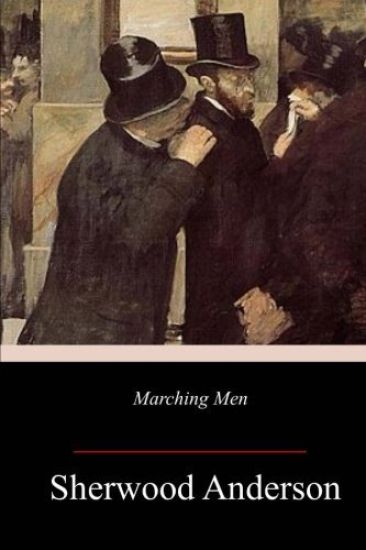
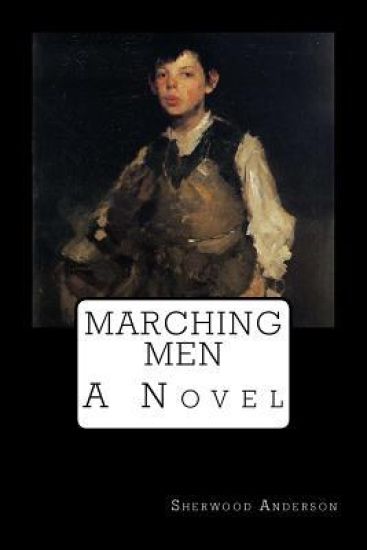
Marching Men is a 1917 novel by American author Sherwood Anderson. Published by John Lane, the novel is Anderson's second book; the first being the 1916 novel Windy McPherson's Son. Marching Men is the story of Norman "Beaut" McGregor, a young man discontented with the powerlessness and lack of personal ambition among the miners of his hometown. After moving to Chicago he discovers his purpose is to empower workers by having them march in unison. Major themes of the novel include the organization of laborers, eradication of disorder, and the role of the exceptional man in society. The latter theme led post-World War II critics to compare Anderson's militaristic approach to homosocial order and the fascists of the War's Axis powers.
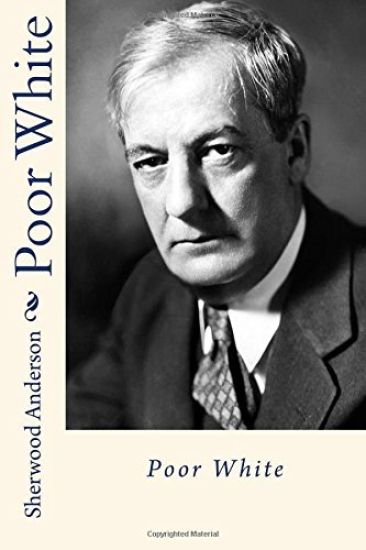
Hugh McVey moves from Missouri to the agrarian town of Bidwell, Ohio. He invents a mechanical cabbage planter to ease the burden of famers, but an investor in town exploits his product, which fails to succeed. His next invention, a corn cutter, makes him a millionaire and transforms Bidwell into a center of manufacturing. McVey, perennially lonely and ruminative, meets Clara Butterworth, who attends college at nearby Ohio State and is perennially harassed by her potential matches. Published one year after Winesburg, Ohio, in 1920, Poor White has a modernist style, an realist attention to every day life, and an eerily contemporary resonance.
The Triumph of the Egg and Other Stories
Sherwood Anderson
Createspace Independent Publishing Platform
2017
nidottu
This coveted collection of short stories by Sherwood Anderson (including the "Unlighted Lamp" and "Out of Nothing to Nowhere," contains some of the author's most celebrated works. Between the two great wars of the twentieth century, Sherwood Anderson vastly influenced and shaped the course of American fiction. His talent was recognized early in his writing career by leaders of the Chicago literary movement. Theodore Dreiser became so impressed by his writing that he helped arrange for the publication of Sherwood's first two novels. His gifted talent as a writer of fiction soon became apparent, so much so, that his colloquial style began to have a major impact on the next generation of American writers, among which included such literary giants as William Faulkner, Ernest Hemingway, John Steinbeck, and Thomas Wolfe.

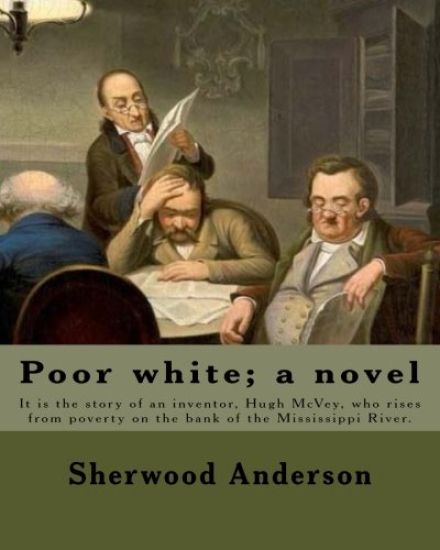
Poor white; a novel. By: Sherwood Anderson: It is the story of an inventor, Hugh McVey, who rises from poverty on the bank of the Mississippi R
Sherwood Anderson
Createspace Independent Publishing Platform
2017
nidottu
It is the story of an inventor, Hugh McVey, who rises from poverty on the bank of the Mississippi River. The novel shows the influence of industrialism on the rural heartland of America........ Sherwood Anderson (September 13, 1876 - March 8, 1941) was an American novelist and short story writer, known for subjective and self-revealing works. Self-educated, he rose to become a successful copywriter and business owner in Cleveland and Elyria, Ohio. In 1912, Anderson had a nervous breakdown that led him to abandon his business and family to become a writer. At the time, he moved to Chicago and was eventually married three more times. His most enduring work is the short-story sequence Winesburg, Ohio, which launched his career. Throughout the 1920s, Anderson published several short story collections, novels, memoirs, books of essays, and a book of poetry. Though his books sold reasonably well, Dark Laughter (1925), a novel inspired by Anderson's time in New Orleans during the 1920s, was the only bestseller of his career. Early life Sherwood Berton Anderson was born on September 13, 1876 in Camden, Ohio, a farming town with a population of around 650 (according to the 1870 census). He was the third of seven children born to Emma Jane (n e Smith) and former Union soldier and harness-maker Irwin McLain Anderson. Considered reasonably well-off financially-Anderson's father was seen as an up-and-comer by his Camden contemporaries, the family left town just before Sherwood's first birthday. Reasons for the departure are uncertain; most biographers note rumors of debts incurred by either Irwin or his brother Benjamin. The Andersons headed north to Caledonia by way of a brief stay in a village of a few hundred called Independence (now Butler). Four or five years were spent in Caledonia, years which formed Anderson's earliest memories. This period later inspired his semi-autobiographical novel Tar: A Midwest Childhood (1926). In Caledonia Anderson's father began drinking excessively, which led to financial difficulties, eventually causing the family to leave the town. With each move, Irwin Anderson's prospects dimmed; while in Camden he was the proprietor of a successful shop and could employ an assistant; by the time the Andersons finally settled down in Clyde, Ohio in 1884, a frontier town, Irwin could only get work as a hired man to harness manufacturers. That job was short-lived, and for the rest of Sherwood Anderson's childhood, his father barely supported the family as an occasional sign-painter and paperhanger, while his mother took in washing to make ends meet. Partly as a result of these misfortunes, young Sherwood became adept at finding various odd jobs to help his family, earning the nickname "Jobby." Though he was a decent student, Anderson's attendance at school declined as he began picking up work, and he finally left school for good at age 14 after about nine months of high school. From the time he began to cut school to the time he left town, Anderson worked as a "...newsboy, errand boy, waterboy, cow-driver, stable groom, and perhaps printer's devil, not to mention assistant to Irwin Anderson, Sign Painter..." in addition to assembling bicycles for the Elmore Manufacturing Company. Even in his teens, Anderson's talent for selling was evident, a talent he would later draw on it in a successful career in advertising. As a newsboy he was said to have convinced a tired farmer in a saloon to buy two copies of the same evening paper. With the exception of work, Anderson's childhood resembled that of other boys his age. In addition to participating in local events and spending time with his friends, Anderson was a voracious reader....

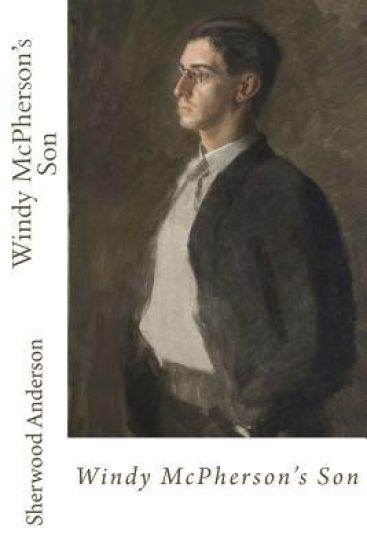
Windy McPherson's Son is a 1916 novel by American author Sherwood Anderson. It was published by John Lane as part of a three book contract. Windy McPherson's Son is Sherwood Anderson's first novel. In September 1907, the Anderson family (at that time just Sherwood, his wife Cornelia and son Robert) moved from Cleveland to Elyria, Ohio, where Anderson became head of the Anderson Manufacturing Company (name changed to American Merchants Company after 1911). As part of the family's new home, Anderson set aside an attic where he would escape the stresses of business and family life. It was during one winter between 1907 and 1912 that both this room and his office (where Frances Shute, his secretary, would sometimes stay late typing drafts of his first two novels) served as the settings in which Windy McPherson's Sons was composed. Though it is likely that most of his first novel was composed in Elyria, there is some evidence pointing to possible edits made between those early years and the novel's publication in 1916. Obvious parallels can be drawn between the plot of Anderson's own life and that of his first novel. The beginning section of the novel is inspired by his youth, the second "...combined the ways he had tried to make money in Chicago and Ohio..." and the marriage between Sam and Sue resembles the one between Sherwood and Cornelia. The characters of Mary Underwood and Janet Eberly were likely inspired by Trillena White, a high school teacher that befriended Anderson while he attended the Wittenberg Academy in Springfield, Ohio between 1899 and June 4, 1900, and stayed for a time with the Andersons in Elyria. In addition to the personal connections between Windy McPherson's Son and the author's life made by biographers and critics, the influence of other writers is also seen in the book. Anderson himself said of his early writing that he had, "come to novel writing by novel reading." In particular, William Dean Howells (whose writing Anderson disliked), Arnold Bennett, Thomas Hardy, Henry Fuller, Frank Norris, Theodore Dreiser, and George Borrow, are all mentioned by Anderson biographer Kim Townsend as authors Anderson would have been reading and discussing at the time he wrote Windy McPherson's Son. In his 1951 biography of Anderson, Irving Howe disagrees with Townsend and even Anderson's own statement, arguing that other than the "early social novels of H. G. Wells and the radical-adventure stories of Jack London... Anderson's early novels were all too much his own, reflecting in their style the natural inclination of a poorly educated writer to strain for the literary and lapse into the colloquial."
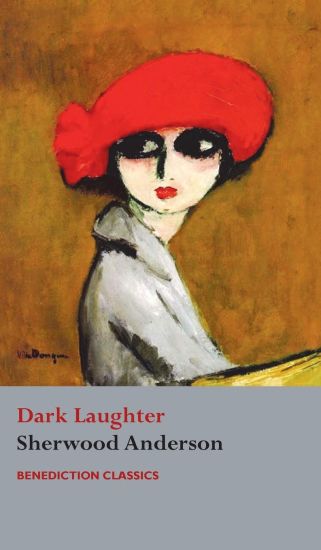
Dark Laughter, Sherwood Anderson's best selling novel, is influenced by Joyce's Ulysses. It deals with the new sexual freedom of the 1920s and provides a unique fictional window into that era.