Kirjailija
Sigmund Freud
Kirjat ja teokset yhdessä paikassa: 1 311 kirjaa, julkaisuja vuosilta 1920–2027, suosituimpiin kuuluu The Freud/Jung Letters. Vertaile teosten hintoja ja tarkista saatavuus suomalaisista kirjakaupoista.
1 311 kirjaa
Kirjojen julkaisuvuodet: 1920–2027.

Reproduktion des Originals: Massenpsychologie Und Ich-Analyse von Sigmund Freud
Reproduktion des Originals: Jenseits Des Lustprinzips von Sigmund Freud
Reproduktion des Originals: ber Psychoanalyse von Sigmund Freud
Reproduktion des Originals: Totem und Tabu von Sigmund Freud
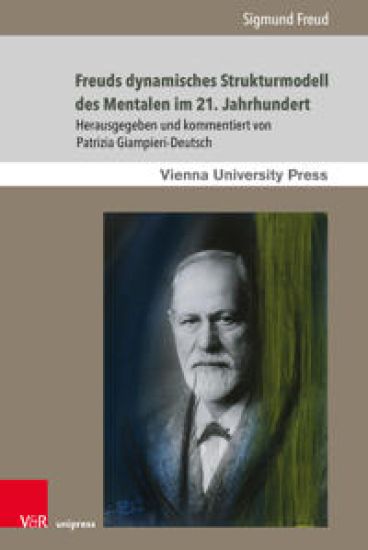
Freuds dynamisches Strukturmodell des Mentalen im 21. Jahrhundert
Sigmund Freud; Patrizia Giampieri-Deutsch

VR unipress GmbH
2020
nidottu
In 1923, Freud introduced a model of the psychic apparatus in The Ego and the Id, the structural model, which could appropriately account for a dynamic view of the mind and mental life. In the following decade, Freud further elaborated the structural model and The Dissection of the Psychical Personality, his XXXI. Lecture of the New Introductory Lectures on Psycho-Analysis, spelled out the result of this specification. The present new edition of these two texts is newly commented and provided with a systematic introduction, which presents Freud's theory of the mind from the point of view of contemporary psychoanalytic research and brings it into an interdisciplinary dialogue with current approaches in cognitive research.
Da Vinci's source of genius - Sigmund Freud examined Leonardo da Vinci. Sigmund Freud was the first to apply psychoanalysis to art. He choose for his subject the life and work of Leonardo da Vinci. Making bold claims about Leonardo's sexuality, personality and the way works of art relate to real life, his essay on this Renaissance genius is fascinating." When psychoanalytic investigation, which usually contents itself with frail human material, approaches the great personages of humanity, it is not impelled to it by motives which are often attributed to it by laymen. It does not strive "to blacken the radiant and to drag the sublime into the mire"; it finds no satisfaction in diminishing the distance between the perfection of the great and the inadequacy of the ordinary objects. But it cannot help finding that everything is worthy of understanding that can be perceived through those prototypes, and it also believes that none is so big as to be ashamed of being subject to the laws which control the normal and morbid actions with the same strictness."
First published in 1899, Sigmund Freud's groundbreaking book, The Interpretation of Dreams, explores why we dream and why dreams matter in our psychological lives. The author introduces his theory of the unconscious with respect to dream interpretation, and discusses what would later become the theory of the Oedipus complex. Though its first publication was not well received, the subsequent editions gained recognition. it continues to remain a masterpiece.
Massenpsychologie und Ich-Analyse
Sigmund Freud
Liwi Literatur- Und Wissenschaftsverlag
2020
nidottu
This book has been considered by academicians and scholars of great significance and value to literature. This forms a part of the knowledge base for future generations. So that the book is never forgotten we have represented this book in a print format as the same form as it was originally first published. Hence any marks or annotations seen are left intentionally to preserve its true nature.
Einige Charaktertypen aus der psychoanalytischen Arbeit ist ein unver nderter, hochwertiger Nachdruck der Originalausgabe. Hansebooks ist Herausgeber von Literatur zu unterschiedlichen Themengebieten wie Forschung und Wissenschaft, Reisen und Expeditionen, Kochen und Ern hrung, Medizin und weiteren Genres. Der Schwerpunkt des Verlages liegt auf dem Erhalt historischer Literatur. Viele Werke historischer Schriftsteller und Wissenschaftler sind heute nur noch als Antiquit ten erh ltlich. Hansebooks verlegt diese B cher neu und tr gt damit zum Erhalt selten gewordener Literatur und historischem Wissen auch f r die Zukunft bei.
The Interpretation of Dreams
Sigmund Freud
Flame Tree Publishing
2020
sidottu
Halvin toimitettuna 28,50 €
The Interpretation of Dreams is a seminal work of psychological and cultural heritage and probably the most important of Freud’s impressive output. Published in 1899 but revised by Freud himself many times, it outlines his theories on the unconscious and dream symbolism. Though superseded by subsequent developments and research, it retains its place as a hugely influential and significant opus. This new deluxe edition uses A. A. Brill’s 1913 translation of the third edition, with a new introduction by expert Dr Richard Stevens, who discusses the context, reception, influence, importance and merits or otherwise of Freud’s text and Brill’s translation – truly one of the most influential, if controversial, Great Works that Shape Our World. FLAME TREE's Great Works That Shape Our World is a new series of definitive books drawing on ancient, medieval and modern writing. Offering a fund of essential knowledge, and spell-binding stories it satisfies every facet of human interest: scientific, philosophical, sociological, romantic, dramatic and mysterious.
The Interpretation of Dreams
Sigmund Freud
Capstone Publishing Ltd
2020
sidottu
Halvin toimitettuna 20,90 €
Part of the bestselling Capstone Classics Series edited by Tom Butler-Bowdon, this collectible, hard-back edition of The Interpretation of Dreams provides an accessible and insightful edition of this important work of psychology Sigmund Freud's The Interpretation of Dreams introduced his ground-breaking theory of the unconscious and explored how interpreting dreams can reveal the true nature of humanity. Regarded as Freud's most significant work, this classic text helped establish the discipline of psychology and is the foundational work in the field of psychoanalysis. Highly readable and engaging, the book both provides a semi-autobiographical look into Freud’s personal life – his holidays in the Alps, spending time with his children, interacting with friends and colleagues – and delves into descriptions and analyses of the dreams themselves. Freud begins with a review of literature on dreams written by a broad range of ancient and contemporary figures – concluding that science has learned little of the nature of dreams in the past several thousand years. Although the prevailing view was that dreams were merely responses to ‘sensory excitation,’ Freud felt that the multifaceted dimensions of dreams could not be attributed solely to physical causes. By the time Freud began writing the book he had interpreted over a thousand dreams of people with psychoses and recognised the connection between the content of dreams and a person’s mental health. Among his conclusions were that a person’s dreams: Prefer using recent impressions, yet also have access to early childhood memoriesUnify different people, places, events and sensations into one storyUsually focus on small or unnoticed things rather than major eventsAre almost always ‘wish fulfilments’ which are about the selfHave many layers of meaning which are often condensed into a single image The Interpretation of Dreams: The Psychology Classic is as riveting today as it was over a century ago. Anyone with interest in the workings of the unconscious mind will find this book an invaluable source of original insights and foundational scientific concepts. This edition includes an insightful Introduction by Sarah Tomley, a psychology writer and practicing psychotherapist. Tomley considers paints a picture of Freud's life and times, reveals the place of The Interpretation of Dreams in the context of Freud's other writings, and draws out the key points of the work.
Leonardo da Vinci, A Memory of His ChildhoodSigmund Freud Leonardo da Vinci and A Memory of His Childhood (German: Eine Kindheitserinnerung des Leonardo da Vinci) is a 1910 essay by Sigmund Freud about Leonardo da Vinci. It consists of a psychoanalytic study of Leonardo's life based on his paintings. In the Codex Atlanticus Leonardo recounts being attacked as an infant in his crib by a bird. Freud cites the passage as:"It seems that it had been destined before that I should occupy myself so thoroughly with the vulture, for it comes to my mind as a very early memory, when I was still in the cradle, a vulture came down to me, he opened my mouth with his tail and struck me a few times with his tail against my
Group Psychology and the Analysis of the EGO
Sigmund Freud; James Strachey
Prabhat Prakashan Pvt Ltd
2020
nidottu
Group Psychology and the Analysis of the Ego is a 1921 book by Sigmund Freud, the founder of psychoanalysis. In this monograph, Freud describes psychological mechanisms at work within mass movements.
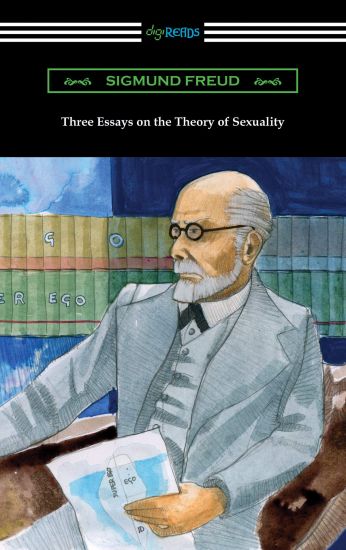
A pivotal work in the psychological theories of Sigmund Freud, "Three Essays on the Theory of Sexuality" puts forth many of the foundational ideas that make up Freud's influential theories on sexuality. Freud builds upon his theories of the unconscious that he introduced in "The Interpretation of Dreams" in 1899 and argues that the unconscious mind plays a significant role in sexual behavior and that sexual experiences are a driving force in the development of psychological neuroses and perversions. In this 1905 work, Freud contends that sexual perversion is caused by repression and its root may be found in childhood experiences and not those of adolescence. Freud examines both the abnormal disorders, such as bestiality and pedophilia, as well as the sexual perversions and repressions that can affect otherwise normal and healthy individuals. "Three Essays on the Theory of Sexuality" and its subsequent editions introduced many important ideas into the psychological study of human sexual behavior, such as penis envy, castration anxiety, and the Oedipus complex. Freud believed that sexual abnormalities were some of the most important to study as they affected nearly everyone, from the deeply disturbed to the normally behaved, and his theories have had a far-reaching impact on the field of psychology. This edition is printed on premium acid-free paper.