Kirjailija
Sigmund Freud
Kirjat ja teokset yhdessä paikassa: 1 311 kirjaa, julkaisuja vuosilta 1920–2027, suosituimpiin kuuluu The Freud/Jung Letters. Vertaile teosten hintoja ja tarkista saatavuus suomalaisista kirjakaupoista.
1 311 kirjaa
Kirjojen julkaisuvuodet: 1920–2027.
Unter dem einfachen Titel 'Briefe 1873-1939' hatten Ernst Freud und seine Frau Lucie 1960 aus der F?lle der Korrespondenz vor allem pers?nliche Dokumente ausgew?hlt und chronologisch geordnet, "um jenen (so hei?t es im Nachwort), die Sigmund Freud nur aus seinem Werk kennen, ein Bild des Menschen zu geben, des empfindenden, denkenden und k?mpfenden Mannes". Die Kritik begr??te diese Sammlung als eine vielleicht unbeabsichtigte, in ihrer Authentizit?t und unverstellten Privatheit indessen einzigartige Biographie des gro?en Psychologen, der, in der Offenbarung pers?nlicher Informationen spr?de zur?ckhaltend, doch skeptisch jeder Biographie als einer Verh?hnung der Wahrheit mi?traut hatte. Die Briefe spiegeln Not und Entbehrung des jungen Arztes, die anmutige, leidenschaftliche und z?rtliche Liebe zu seiner Braut und sp?teren Frau Martha Bernays, die ersten tastenden Schritte des Forschers in "ein St?ck wissenschaftliches Neuland". Sie zeigen die Freude ?ber gewonnene Erkenntnisse, das Weitergeben der Lehre, deren beharrliche Verteidigung und endlich das ungl?ubige Erstaunen ?ber die sp?te Anerkennung. Der Leser erh?lt Einblick in die Korrespondenz mit bedeutenden Dichtern, K?nstlern und Gelehrten, darunter Thomas Mann, Arthur Schnitzler, Romain Rolland, Stefan Zweig, H. G. Wells, Yvette Guilbert, Albert Einstein, Karl Abraham, Sßndor Ferenczi, C. G. Jung, Ludwig Binswanger und Oskar Pfister.
Group Psychology and the Analysis of the Ego
Sigmund Freud; Peter (INT) Gay; James (EDT) Strachey
WW Norton Co
1975
pokkari
The question he addresses here is, What are the emotional bonds that hold collective entities, such as an army and a church, together? It is a fruitful question, and Freud offers some interesting answers. But Group Psychology and the Analysis of the Ego stands chiefly as an invitation to further psychoanalytic exploration.
The Psychopathology of Everyday Life
Sigmund Freud; Peter (INT) Gay; James (EDT) Strachey
WW Norton Co
1971
pokkari
Halvin toimitettuna 28,80 €
Along with the "Introductory Lectures on Psycho-Analysis, " the present text remains one of Freud's most widely read. It is filled with anecdotes, many of them quite amusing, and virtually bereft of difficult technical terminology. And Freud put himself on the line: numerous acts of willful forgetting or "inexplicable" mistakes are recounted from his personal experience. None of such actions can be called truly accidental, or uncaused: that is the real lesson of the "Psychopathology."
New Introductory Lectures on Psychoanalysis
Sigmund Freud; Peter (INT) Gay; James (EDT) Strachey
WW Norton Co
1965
pokkari
Patterned on his eminently successful "Introductory Lectures on Psycho-Analysis, " Freud's "New Introductory Lectures on Psycho-Analysis" takes full account of his elaborations in, and changes of mind about, psychoanalytic theory, and discusses a variety of central and controversial themes, including anxiety, the drives, occultism, female sexuality, and the question of a "Weltanschauung." It serves as an indispensable companion to the "Introductory Lectures."
The Ego and the Id
Sigmund Freud; James Strachey; Peter (INT) Gay
WW Norton Co
1962
pokkari
Halvin toimitettuna 18,60 €
Presents Freud's psychoanalytical treatise on the divisions of the mind and their interrelations
In this controversial study Sigmund Freud (1856-1939) applies the theories and evidence of his psychoanalytic investigations to the study of aboriginal peoples and, by extension, to the earliest cultural stages of the human race before the rise of large-scale civilizations. Freud points out the striking parallels between the cultural practices of native tribal groups and the behavior patterns of neurotics. Beginning with a discussion of the incest taboo, he compares some of the elaborate taboo restrictions seen in these cultures to the scrupulous rituals of compulsion neurotics, who in a similar fashion are wrestling with the ambivalent emotions aroused by the incest taboo. He suggests that many of the rituals of culture are developed as psychological reactions to taboos, which prohibit the acting out of an infantile impulse that would be socially destructive. Freud concludes by invoking his famous Oedipal complex as the key to the development of culture. The repressed psychological urge to kill the father as a rival for the mother's affections is the underlying motive for the symbols and ceremonies of religion with its rituals of atonement and its notions of angry gods, original sin, and human guilt. Although Freud's theories are controversial today, this masterful synthesis and its undeniable influence on later scholars of religion, anthropology, and psychology make it a seminal work.
The contrast between Individual Psychology and Social or Group Psychology, which at a first glance may seem to be full of significance, loses a great deal of its sharpness when it is examined more closely. It is true that Individual Psychology is concerned with the individual man and explores the paths by which he seeks to find satisfaction for his instincts; but only rarely and under certain exceptional conditions is Individual Psychology in a position to disregard the relations of this individual to others. In the individual's mental life someone else is invariably involved, as a model, as an object, as a helper, as an opponent, and so from the very first Individual Psychology is at the same time Social Psychology as well--in this extended but entirely justifiable sense of the words. The relations of an individual to his parents and to his brothers and sisters, to the object of his love, and to his physician--in fact all the relations which have hitherto been the chief subject of psycho-analytic research--may claim to be considered as social phenomena; and in this respect they may be contrasted with certain other processes, described by us as 'narcissistic', in which the satisfaction of the instincts is partially or totally withdrawn from the influence of other people. The contrast between social and narcissistic--Bleuler would perhaps call them 'autistic'--mental acts therefore falls wholly within the domain of Individual Psychology, and is not well calculated to differentiate it from a Social or Group Psychology.
The words "dream interpretation" were and still are indeed fraught with unpleasant, unscientific associations. They remind one of all sorts of childish, superstitious notions, which make up the thread and woof of dream books, read by none but the ignorant and the primitive. The wealth of detail, the infinite care never to let anything pass unexplained, with which he presented to the public the result of his investigations, are impressing more and more serious-minded scientists, but the examination of his evidential data demands arduous work and presupposes an absolutely open mind. This is why we still encounter men, totally unfamiliar with Freud's writings, men who were not even interested enough in the subject to attempt an interpretation of their dreams or their patients' dreams, deriding Freud's theories and combatting them with the help of statements which he never made. Some of them, like Professor Boris Sidis, reach at times conclusions which are strangely similar to Freud's, but in their ignorance of psychoanalytic literature, they fail to credit Freud for observations antedating theirs.
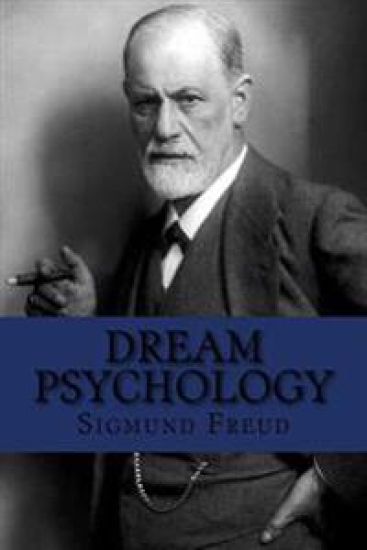
Dream Psychology: classic psychology
Sigmund Freud
Createspace Independent Publishing Platform
1920
nidottu
Sigmund Freud (born Sigismund Schlomo Freud) May 6, 1856 -September 23, 1939; was an Austrian neurologist and psychiatrist who cofounded the psychoanalytic school of psychology. Freud is best known for his theories of the unconscious mind, especially involving the mechanism of repression; his redefinition of sexual desire as mobile and directed towards awide variety of objects; and his therapeutic techniques, especially his understanding of ransference in the therapeutic relationship and thepresumed value of dreams as sources of insight into unconscious desires.