Kirjojen hintavertailu – 12 903 725 kirjaa ja 27 kauppaa

Kirjailija

Simon Goldhill

Kirjat ja teokset yhdessä paikassa: 31 kirjaa, julkaisuja vuosilta 1986–2026, suosituimpiin kuuluu A Very Queer Family Indeed. Vertaile teosten hintoja ja tarkista saatavuus suomalaisista kirjakaupoista.

31 kirjaa

Kirjojen julkaisuvuodet: 1986–2026.

A Very Queer Family Indeed

A Very Queer Family Indeed

Simon Goldhill

University of Chicago Press
2017
nidottu
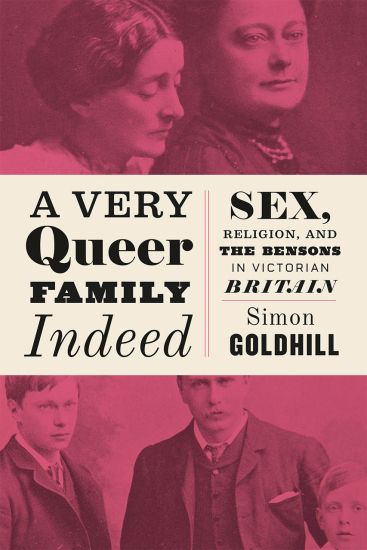
We can begin with a kiss, though this will not turn out to be a love story, at least not a love story of anything like the usual kind. So begins A Very Queer Family Indeed, which introduces us to the extraordinary Benson family. Edward White Benson became Archbishop of Canterbury at the height of Queen Victoria's reign, while his wife, Mary, was renowned for her wit and charm the prime minister once wondered whether she was "the cleverest woman in England or in Europe." The couple's six precocious children included E. F. Benson, celebrated creator of the Mapp and Lucia novels, and Margaret Benson, the first published female Egyptologist. What interests Simon Goldhill most, however, is what went on behind the scenes, which was even more unusual than anyone could imagine. Inveterate writers, the Benson family spun out novels, essays, and thousands of letters that open stunning new perspectives including what it might mean for an adult to kiss and propose marriage to a twelve-year-old girl, how religion in a family could support or destroy relationships, or how the death of a child could be celebrated. No other family has left such detailed records about their most intimate moments, and in these remarkable accounts, we see how family life and a family's understanding of itself took shape during a time when psychoanalysis, scientific and historical challenges to religion, and new ways of thinking about society were developing. This is the story of the Bensons, but it is also more than that it is the story of how society transitioned from the high Victorian period into modernity.
A Very Queer Family Indeed

A Very Queer Family Indeed

Simon Goldhill

University of Chicago Press
2016
sidottu
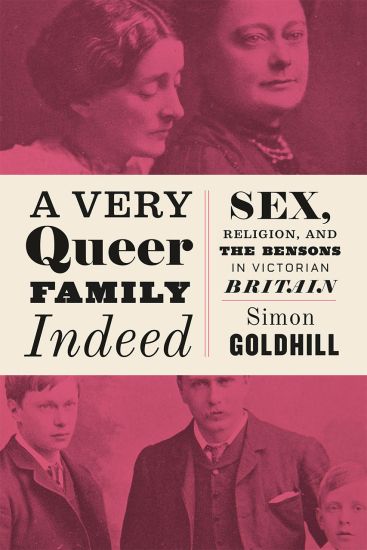
"We can begin with a kiss, though this will not turn out to be a love story, at least not a love story of anything like the usual kind." So begins A Very Queer Family Indeed, which introduces us to the extraordinary Benson family. Edward White Benson became Archbishop of Canterbury at the height of Queen Victoria's reign, while his wife, Mary, was renowned for her wit and charm the prime minister once wondered whether she was "the cleverest woman in England or in Europe." The couple's six precocious children included E. F. Benson, celebrated creator of the Mapp and Lucia novels, and Margaret Benson, the first published female Egyptologist. What interests Simon Goldhill most, however, is what went on behind the scene, which was even more unusual than anyone could imagine. Inveterate writers, the Benson family spun out novels, essays, and thousands of letters that open stunning new perspectives including what it might mean for an adult to kiss and propose marriage to a twelve-year-old girl, how religion in a family could support or destroy relationships, or how the death of a child could be celebrated. No other family has left such detailed records about their most intimate moments, and in these remarkable accounts, we see how family life and a family's understanding of itself took shape during a time when psychoanalysis, scientific and historical challenges to religion, and new ways of thinking about society were developing. This is the story of the Bensons, but it is also more than that it is the story of how society transitioned from the high Victorian period into modernity.
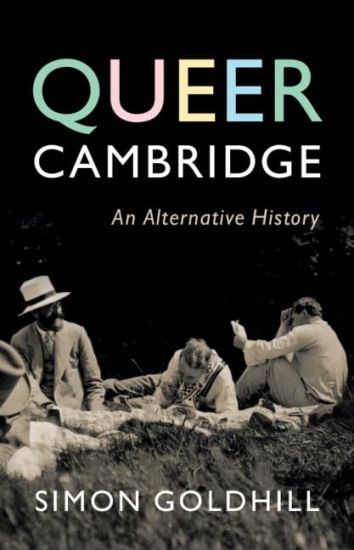
Queer Cambridge

Queer Cambridge

Simon Goldhill

Cambridge University Press
2026
nidottu
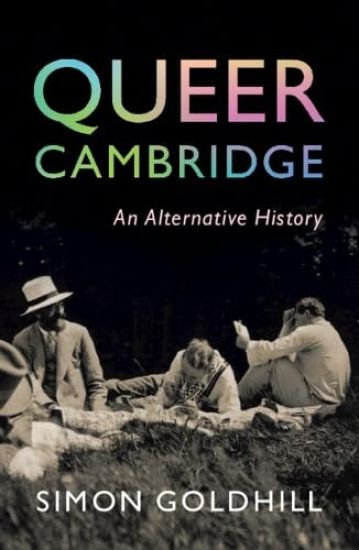
Queer Cambridge recounts the untold story of a gay community living, for many decades, at the very heart of the British Establishment. Making effective use of chiefly forgotten archival sources – including personal diaries and letters – the author reveals a network that was in equal parts tolerant and acerbic, and within which the queer Fellows of Cambridge University explored bold new forms of camaraderie and relationship. Goldhill examines too the huge influence that these individuals had on British culture, in its arts, politics, music, theatre and self-understanding. During difficult decades when homosexuality was unlawful, gay academics – who included celebrated literary and scientific figures like E. M. Forster, M. R. James, Rupert Brooke and Alan Turing – lived, loved, and grew old together, bringing new generations into their midst. Their remarkable stories add up not just to an alternative history of male homosexuality in Britain, but to an alternative history of Cambridge itself.
Queer Cambridge

Queer Cambridge

Simon Goldhill

Cambridge University Press
2025
sidottu
Queer Cambridge recounts the untold story of a gay community living, for many decades, at the very heart of the British Establishment. Making effective use of chiefly forgotten archival sources – including personal diaries and letters – the author reveals a network that was in equal parts tolerant and acerbic, and within which the queer Fellows of Cambridge University explored bold new forms of camaraderie and relationship. Goldhill examines too the huge influence that these individuals had on British culture, in its arts, politics, music, theatre and self-understanding. During difficult decades when homosexuality was unlawful, gay academics – who included celebrated literary and scientific figures like E. M. Forster, M. R. James, Rupert Brooke and Alan Turing – lived, loved, and grew old together, bringing new generations into their midst. Their remarkable stories add up not just to an alternative history of male homosexuality in Britain, but to an alternative history of Cambridge itself.
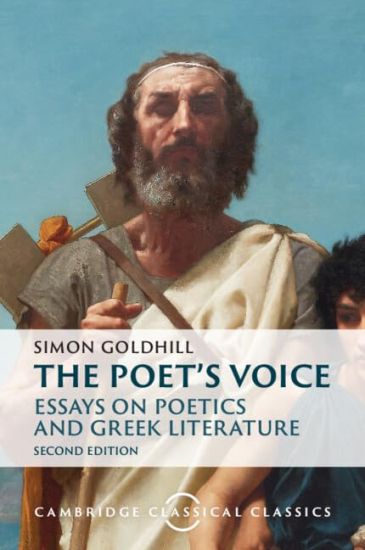
The Poet's Voice

The Poet's Voice

Simon Goldhill; Emma Greensmith

Cambridge University Press
2024
pokkari
How are poetry and the figure of the poet represented, discussed, contested within the poetry of ancient Greece? From what position does a poet speak? With what authority? With what debts to the past? With what involvement in the present? Through a series of interrelated essays on Homer, lyric poetry, Aristophanes, Theocritus and Apollonius of Rhodes, this landmark volume discusses key aspects of the history of poetics: tale-telling and the representation of man as the user of language; memorial and praise; parody, comedy and carnival; irony, masks and desire; the legacy of the past and the idea of influence. Detailed readings of major works of Greek literature and liberal use of critical writings from outside Classics help to align modern and ancient poetics in enlightening ways. This revised edition contains a substantial new Introduction which engages with critical and scholarly developments in Greek literature since the original publication.
The Poet's Voice

The Poet's Voice

Simon Goldhill; Emma Greensmith

Cambridge University Press
2024
sidottu
How are poetry and the figure of the poet represented, discussed, contested within the poetry of ancient Greece? From what position does a poet speak? With what authority? With what debts to the past? With what involvement in the present? Through a series of interrelated essays on Homer, lyric poetry, Aristophanes, Theocritus and Apollonius of Rhodes, this landmark volume discusses key aspects of the history of poetics: tale-telling and the representation of man as the user of language; memorial and praise; parody, comedy and carnival; irony, masks and desire; the legacy of the past and the idea of influence. Detailed readings of major works of Greek literature and liberal use of critical writings from outside Classics help to align modern and ancient poetics in enlightening ways. This revised edition contains a substantial new Introduction which engages with critical and scholarly developments in Greek literature since the original publication.
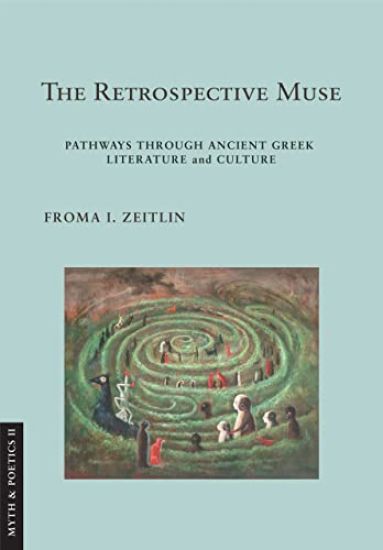
The Retrospective Muse

The Retrospective Muse

Froma I. Zeitlin; Simon Goldhill

CORNELL UNIVERSITY PRESS
2023
sidottu
The Retrospective Muse showcases the celebrated work of Froma I. Zeitlin. Over many decades, Zeitlin's innovative studies have changed the field of classics. Her instantly recognizable work brings together anthropology, gender studies, cultural studies, and an acute literary sensibility to open ancient texts and ideas to new forms of understanding. A selection of her luminous essays on topics still timely today are collected for the first time in a volume that shows the full range and flair of her remarkable intellect. Together, these illuminating analyses show why Zeitlin's work on ancient Greek culture has had an enduring impact on scholars around the world, not just in classics but across multiple fields. From Homer to the Greek novel, from religion to erotics, from myth and ritual to theatrical performance, she expounds on some of the most important works of ancient writing and some of modernity's most significant critical questions. Zeitlin's writing still sheds light on the durable aspects of classics as a discipline, and this book encapsulates her achievement.
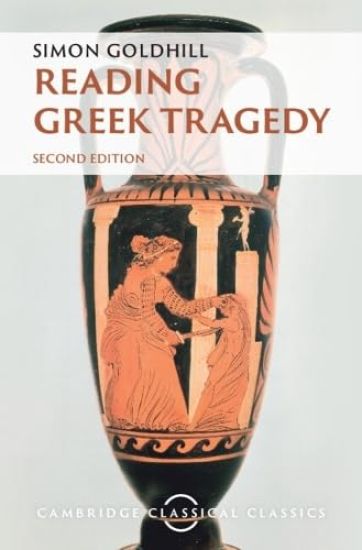
Reading Greek Tragedy

Reading Greek Tragedy

Simon Goldhill

Cambridge University Press
2023
sidottu
This book is an advanced critical introduction to Greek tragedy. It is written specifically for the reader who does not know Greek and who may be unfamiliar with the context of the Athenian drama festival but who nevertheless wants to appreciate the plays in all their complexity. Simon Goldhill aims to combine the best contemporary scholarly criticism in classics with a wide knowledge of modern literary studies in other fields. He discusses the masterpieces of Athenian drama in the light of contemporary critical controversies in such a way as to enable the student or scholar not only to understand and appreciate the texts of the most commonly read plays, but also to evaluate and utilize the range of approaches to the problems of ancient drama. This revised edition contains a substantial new Introduction which engages with critical and scholarly developments in Greek tragedy since the original publication.
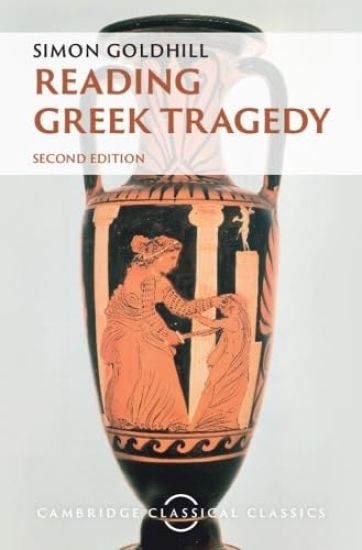
Reading Greek Tragedy

Reading Greek Tragedy

Simon Goldhill

Cambridge University Press
2023
pokkari

Halvin toimitettuna 31,70 €

This book is an advanced critical introduction to Greek tragedy. It is written specifically for the reader who does not know Greek and who may be unfamiliar with the context of the Athenian drama festival but who nevertheless wants to appreciate the plays in all their complexity. Simon Goldhill aims to combine the best contemporary scholarly criticism in classics with a wide knowledge of modern literary studies in other fields. He discusses the masterpieces of Athenian drama in the light of contemporary critical controversies in such a way as to enable the student or scholar not only to understand and appreciate the texts of the most commonly read plays, but also to evaluate and utilize the range of approaches to the problems of ancient drama. This revised edition contains a substantial new Introduction which engages with critical and scholarly developments in Greek tragedy since the original publication.
What Is a Jewish Classicist?

What Is a Jewish Classicist?

Simon Goldhill

BLOOMSBURY PUBLISHING PLC
2022
sidottu
In recent years, there has been no issue that has convulsed academia and its role in society more stridently than the personal politics of its institutions: who has access to education? How does who you are change what you study and how you engage with it? How does scholarship reflect the politics of society – how should it? These new essays from one of the best-known scholars of ancient Greece offer a refreshing and provocative contribution to these discussions. What Is a Jewish Classicist? analyses how the personal voice of a scholar plays a role in scholarship, how religion and cultural identity are acted out within an academic discipline, and how translation, the heart of any engagement with the literature of antiquity, is a transformational practice. Topical, engaging, revelatory, this book opens a sharp and personal perspective on how and why the study of antiquity has become such a battlefield in contemporary culture. The first essay looks at how academics can and should talk about themselves, and how such positionality affects a scholar’s work – can anyone can tell his or her own story with enough self-consciousness, sophistication and care? The second essay, which gives the book its title, takes a more socio-anthropological approach to the discipline, and asks how its patterns of inclusion and exclusion, its strategies of identification and recognition, have contributed to the shape of the discipline of classics. This initial enquiry opens into a fascinating history of change – how Jews were excluded from the discipline for many years but gradually after the Second World war became more easily assimilated into it. This in turn raises difficult questions for the current focus on race and colour as the defining aspects of personal identification, and about how academia reflects or contributes to the broader politics of society. The third essay takes a different historical approach and looks at the infrastructure or technology of the discipline through one of its integral and time-honoured practices, namely, translation. It discusses how translation, far from being a mere technique, is a transformational activity that helps make each classicist what they are. Indeed, each generation needs its own translations as each era redefines its relation to antiquity.
What Is a Jewish Classicist?

What Is a Jewish Classicist?

Simon Goldhill

BLOOMSBURY PUBLISHING PLC
2022
nidottu
In recent years, there has been no issue that has convulsed academia and its role in society more stridently than the personal politics of its institutions: who has access to education? How does who you are change what you study and how you engage with it? How does scholarship reflect the politics of society – how should it? These new essays from one of the best-known scholars of ancient Greece offer a refreshing and provocative contribution to these discussions. What Is a Jewish Classicist? analyses how the personal voice of a scholar plays a role in scholarship, how religion and cultural identity are acted out within an academic discipline, and how translation, the heart of any engagement with the literature of antiquity, is a transformational practice. Topical, engaging, revelatory, this book opens a sharp and personal perspective on how and why the study of antiquity has become such a battlefield in contemporary culture. The first essay looks at how academics can and should talk about themselves, and how such positionality affects a scholar’s work – can anyone can tell his or her own story with enough self-consciousness, sophistication and care? The second essay, which gives the book its title, takes a more socio-anthropological approach to the discipline, and asks how its patterns of inclusion and exclusion, its strategies of identification and recognition, have contributed to the shape of the discipline of classics. This initial enquiry opens into a fascinating history of change – how Jews were excluded from the discipline for many years but gradually after the Second World war became more easily assimilated into it. This in turn raises difficult questions for the current focus on race and colour as the defining aspects of personal identification, and about how academia reflects or contributes to the broader politics of society. The third essay takes a different historical approach and looks at the infrastructure or technology of the discipline through one of its integral and time-honoured practices, namely, translation. It discusses how translation, far from being a mere technique, is a transformational activity that helps make each classicist what they are. Indeed, each generation needs its own translations as each era redefines its relation to antiquity.
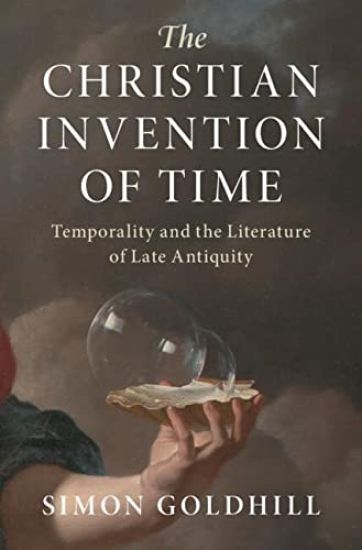
The Christian Invention of Time

The Christian Invention of Time

Simon Goldhill

Cambridge University Press
2022
sidottu

Halvin toimitettuna 53,40 €

Time is integral to human culture. Over the last two centuries people's relationship with time has been transformed through industrialisation, trade and technology. But the first such life-changing transformation – under Christianity's influence – happened in late antiquity. It was then that time began to be conceptualised in new ways, with discussion of eternity, life after death and the end of days. Individuals also began to experience time differently: from the seven-day week to the order of daily prayer and the festal calendar of Christmas and Easter. With trademark flair and versatility, world-renowned classicist Simon Goldhill uncovers this change in thinking. He explores how it took shape in the literary writing of late antiquity and how it resonates even today. His bold new cultural history will appeal to scholars and students of classics, cultural history, literary studies, and early Christianity alike.
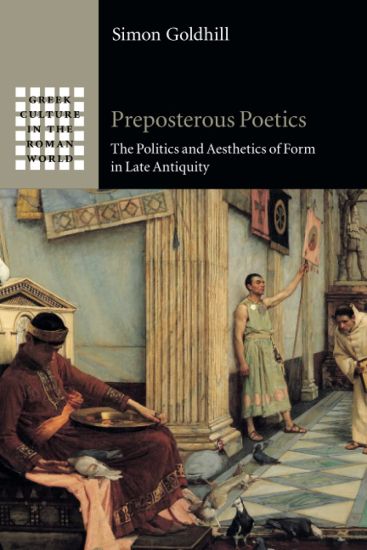
Preposterous Poetics

Preposterous Poetics

Simon Goldhill

Cambridge University Press
2021
pokkari
How does literary form change as Christianity and rabbinic Judaism take shape? What is the impact of literary tradition and the new pressures of religious thinking? Tracing a journey over the first millennium that includes works in Latin, Greek, Hebrew and Aramaic, this book changes our understanding of late antiquity and how its literary productions make a significant contribution to the cultural changes that have shaped western Europe.
Preposterous Poetics

Preposterous Poetics

Simon Goldhill

Cambridge University Press
2020
sidottu
How does literary form change as Christianity and rabbinic Judaism take shape? What is the impact of literary tradition and the new pressures of religious thinking? Tracing a journey over the first millennium that includes works in Latin, Greek, Hebrew and Aramaic, this book changes our understanding of late antiquity and how its literary productions make a significant contribution to the cultural changes that have shaped western Europe.
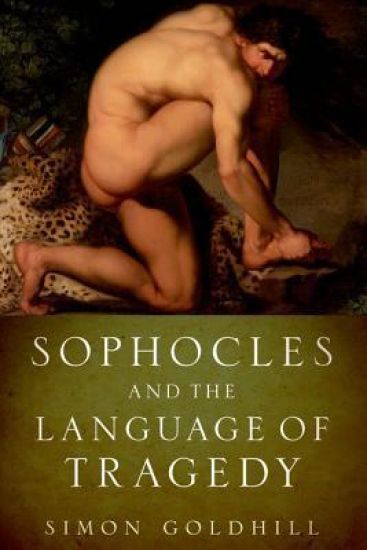
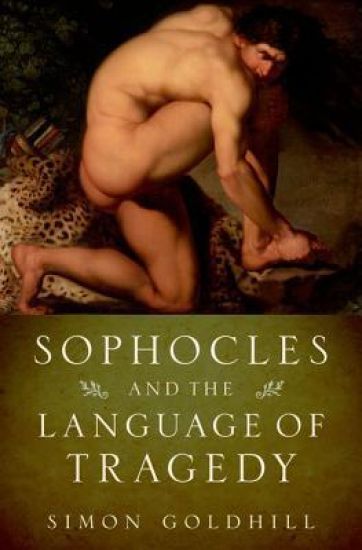
Sophocles and the Language of Tragedy

Sophocles and the Language of Tragedy

Simon Goldhill

Oxford University Press Inc
2015
nidottu

Halvin toimitettuna 47,40 €

Written by one of the best-known interpreters of classical literature today, Sophocles and the Language of Tragedy presents a revolutionary take on the work of this great classical playwright and on how our understanding of tragedy has been shaped by our literary past. Simon Goldhill sheds new light on Sophocles' distinctive brilliance as a dramatist, illuminating such aspects of his work as his manipulation of irony, his construction of dialogue, and his deployment of the actors and the chorus. Goldhill also investigates how nineteenth-century critics like Hegel, Nietzsche, and Wagner developed a specific understanding of tragedy, one that has shaped our current approach to the genre. Finally, Goldhill addresses one of the foundational questions of literary criticism: how historically self-conscious should a reading of Greek tragedy be? The result is an invigorating and exciting new interpretation of the most canonical of Western authors.
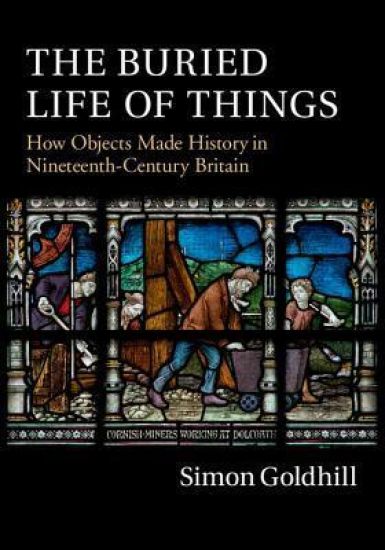
The Buried Life of Things

The Buried Life of Things

Simon Goldhill

Cambridge University Press
2014
sidottu
Simon Goldhill offers a fresh and exciting perspective on how the Victorians used material culture to express their sense of the past in an age of progress, especially the biblical past and the past of classical antiquity. From Pompeian skulls on a writer's desk, to religious paraphernalia in churches, new photographic images of the Holy Land and the remaking of the cityscape of Jerusalem and Britain, Goldhill explores the remarkable way in which the nineteenth century's sense of history was reinvented through things. The Buried Life of Things shows how new technologies changed how history was discovered and analysed, and how material objects could flare into significance in bitter controversies, and then fade into obscurity and disregard again. This book offers a new route into understanding the Victorians' complex and often bizarre attempts to use their past to express their own modernity.
Sophocles and the Language of Tragedy

Sophocles and the Language of Tragedy

Simon Goldhill

Oxford University Press Inc
2012
sidottu
Written by one of the best-known interpreters of classical literature today, Sophocles and the Language of Tragedy presents a revolutionary take on the work of this great classical playwright and on how our understanding of tragedy has been shaped by our literary past. Simon Goldhill sheds new light on Sophocles' distinctive brilliance as a dramatist, illuminating such aspects of his work as his manipulation of irony, his construction of dialogue, and his deployment of the actors and the chorus. Goldhill also investigates how nineteenth-century critics like Hegel, Nietzsche, and Wagner developed a specific understanding of tragedy, one that has shaped our current approach to the genre. Finally, Goldhill addresses one of the foundational questions of literary criticism: how historically self-conscious should a reading of Greek tragedy be? The result is an invigorating and exciting new interpretation of the most canonical of Western authors.
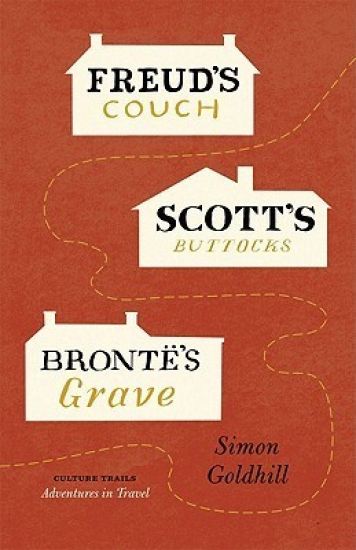
Freud's Couch, Scott's Buttocks, Brontë's Grave

Freud's Couch, Scott's Buttocks, Brontë's Grave

Simon Goldhill

University of Chicago Press
2011
sidottu
The Victorian era was the high point of literary tourism. Writers such as Charles Dickens, George Eliot, and Sir Walter Scott became celebrities, and readers trekked far and wide for a glimpse of the places where their heroes wrote and thought, walked and talked. Even Shakespeare was roped in, as Victorian entrepreneurs transformed quiet Stratford-upon-Avon into a combination shrine and tourist trap. Stratford continues to lure tourists today, as do many other sites of literary pilgrimage throughout Britain. And our modern age could have no better guide to such places than Simon Goldhill. In "Freud's Couch, Scott's Buttocks, Bronte's Grave", Goldhill makes a pilgrimage to Sir Walter Scott's baronial mansion, Wordsworth's cottage in the Lake District, the Bronte parsonage, Shakespeare's birthplace, and Freud's office in Hampstead. Traveling, as much as possible, by methods available to Victorians - and gamely negotiating distractions ranging from broken bicycles to a flock of giggling Japanese schoolgirls - he tries to discern what our forebears were looking for at these sites, as well as what they have to say to the modern mind. What does it matter that Emily Bronte's hidden passions burned in this specific room? What does it mean that Scott self-consciously built an extravagant castle suitable for Ivanhoe - and star-struck tourists visited it while he was still living there? Or that Freud's meticulous recreation of his Vienna office is now a meticulously preserved museum of itself? Or that Shakespeare's birthplace features student actors declaiming snippets of his plays...in the garden of a house where he almost certainly never wrote a single line? Goldhill brings to these inquiries his trademark wry humor and a lifetime's engagement with literature. The result is a travel book like no other, a reminder that even today, the writing life still has the power to inspire.
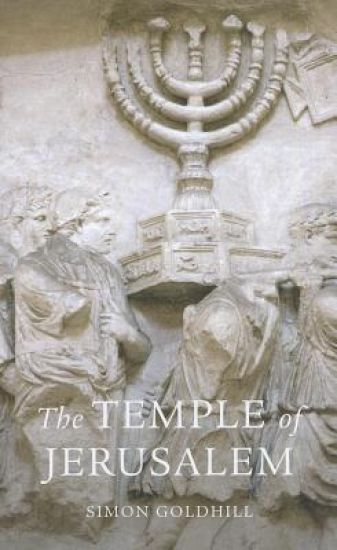
The Temple of Jerusalem

The Temple of Jerusalem

Simon Goldhill

HARVARD UNIVERSITY PRESS
2011
nidottu
It was destroyed nearly 2,000 years ago, and yet the Temple of Jerusalem--cultural memory, symbol, and site--remains one of the most powerful, and most contested, buildings in the world. This glorious structure, imagined and re-imagined, reconsidered and reinterpreted again and again over two millennia, emerges in all its historical, cultural, and religious significance in Simon Goldhill's account. Built by Herod on a scale that is still staggering--on an earth and rock platform 144,000 square meters in area and 32 meters high--and destroyed by the Roman emperor Titus 90 years later, in 70 AD, the Temple has become the world's most potent symbol of the human search for a lost ideal, an image of greatness. Goldhill travels across cultural and temporal boundaries to convey the full extent of the Temple's impact on religious, artistic, and scholarly imaginations. Through biblical stories and ancient texts, rabbinical writings, archaeological records, and modern accounts, he traces the Temple's shifting significance for Jews, Christians, and Muslims. A complex and engaging history of a singular locus of the imagination--a site of longing for the Jews; a central metaphor of Christian thought; an icon for Muslims: the Dome of the Rock--The Temple of Jerusalem also offers unique insight into where Judaism, Christianity, and Islam differ in interpreting their shared inheritance. It is a story that, from the Crusades onward, has helped form the modern political world.
Victorian Culture and Classical Antiquity

Victorian Culture and Classical Antiquity

Simon Goldhill

Princeton University Press
2011
sidottu
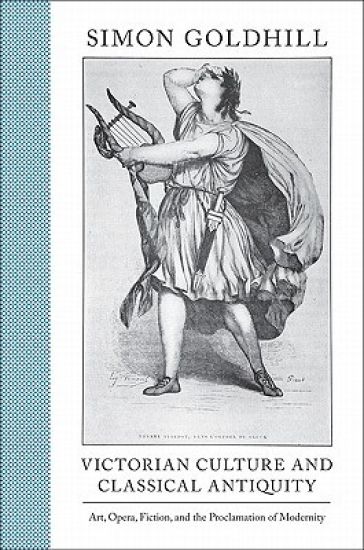
How did the Victorians engage with the ancient world? Victorian Culture and Classical Antiquity is a brilliant exploration of how the ancient worlds of Greece and Rome influenced Victorian culture. Through Victorian art, opera, and novels, Simon Goldhill examines how sexuality and desire, the politics of culture, and the role of religion in society were considered and debated through the Victorian obsession with antiquity. Looking at Victorian art, Goldhill demonstrates how desire and sexuality, particularly anxieties about male desire, were represented and communicated through classical imagery. Probing into operas of the period, Goldhill addresses ideas of citizenship, nationalism, and cultural politics. And through fiction--specifically nineteenth-century novels about the Roman Empire--he discusses religion and the fierce battles over the church as Christianity began to lose dominance over the progressive stance of Victorian science and investigation. Rediscovering some great forgotten works and reframing some more familiar ones, the book offers extraordinary insights into how the Victorian sense of antiquity and our sense of the Victorians came into being. With a wide range of examples and stories, Victorian Culture and Classical Antiquity demonstrates how interest in the classical past shaped nineteenth-century self-expression, giving antiquity a unique place in Victorian culture.