Kirjojen hintavertailu – 12 903 725 kirjaa ja 27 kauppaa

Kirjailija

Simon Goldhill

Kirjat ja teokset yhdessä paikassa: 31 kirjaa, julkaisuja vuosilta 1986–2026, suosituimpiin kuuluu A Very Queer Family Indeed. Vertaile teosten hintoja ja tarkista saatavuus suomalaisista kirjakaupoista.

31 kirjaa

Kirjojen julkaisuvuodet: 1986–2026.

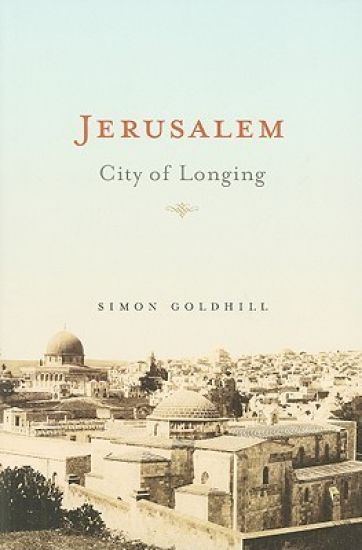
Jerusalem

Jerusalem

Simon Goldhill

The Belknap Press
2009
nidottu
Jerusalem is the site of some of the most famous religious monuments in the world, from the Dome of the Rock to the Church of the Holy Sepulchre to the Western Wall of the Temple. Since the nineteenth century, the city has been a premier tourist destination, not least because of the countless religious pilgrims from the three Abrahamic faiths. But Jerusalem is more than a tourist site—it is a city where every square mile is layered with historical significance, religious intensity, and extraordinary stories. It is a city rebuilt by each ruling Empire in its own way: the Jews, the Romans, the Christians, the Muslims, and for the past sixty years, the modern Israelis. What makes Jerusalem so unique is the heady mix, in one place, of centuries of passion and scandal, kingdom-threatening wars and petty squabbles, architectural magnificence and bizarre relics, spiritual longing and political cruelty. It is a history marked by three great forces: religion, war, and monumentality. In this book, Simon Goldhill takes on this peculiar archaeology of human imagination, hope, and disaster to provide a tour through the history of this most image-filled and ideology-laden city—from the bedrock of the Old City to the towering roofs of the Holy Sepulchre. Along the way, we discover through layers of buried and exposed memories—the long history, the forgotten stories, and the lesser-known aspects of contemporary politics that continue to make Jerusalem one of the most embattled cities in the world.
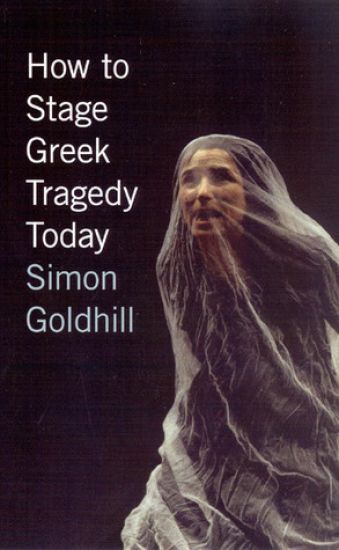
How to Stage Greek Tragedy Today

How to Stage Greek Tragedy Today

Simon Goldhill

University of Chicago Press
2007
nidottu
From the stages of Broadway and London to university campuses, Paris, and the bourgeoning theaters of Africa, Greek tragedy remains constantly in production. This global revival, in addition to delighting audiences, has highlighted both the promise and the pitfalls of staging ancient masterpieces in the modern age. Addressing the issues and challenges these performances pose, renowned classicist Simon Goldhill responds here to the growing demand for a comprehensive guide to staging Greek tragedy today. In crisp and spirited prose, Goldhill explains how Aeschylus, Euripides, and Sophocles conceived their works in performance and then summarizes everything we know about how their tragedies were actually staged. The heart of his book tackles the six major problems facing any company performing these works today: the staging space and concept of the play; the use of the chorus; the actor's role in an unfamiliar style of performance; the place of politics in tragedy; the question of translation; and the treatment of gods, monsters, and other strange characters of the ancient world. Outlining exactly what makes each of these issues such a pressing difficulty for modern companies, Goldhill provides insightful solutions drawn from his nimble analyses of some of the best recent productions in the United States, Britain, and continental Europe. One of the few experts on both Greek tragedy and contemporary performance, Goldhill uses his unique background and prodigious literary skill to illuminate what makes tragedy at once so exciting and so tricky to get right. The result will inspire and enlighten all directors and performers - not to mention the growing audiences - of ancient Greek theater.
Love, Sex & Tragedy

Love, Sex & Tragedy

Simon Goldhill

University of Chicago Press
2005
pokkari
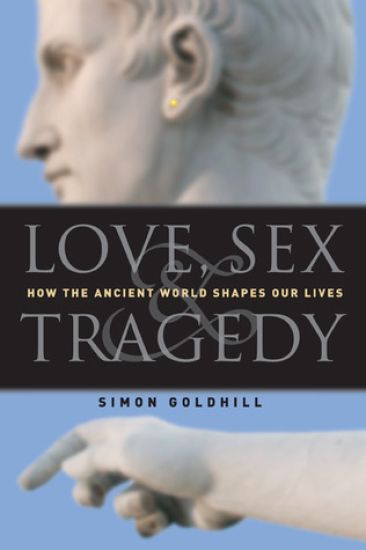
"If you do not know where you come from, you will always be a child." Cicero wasn't talking about being a child in the sense of enjoying life in a state of ignorant bliss. He was, rather, adamant that those who don't understand their origins are consigned to a life without power or authority, without the ability to act fully in the world. Love, Sex & Tragedy is acclaimed classicist Simon Goldhill's corrective to our state of ignorance. Lifting the veil on our inheritance of classical traditions, Goldhill offers a witty, engrossing survey of the Greek and Roman roots of everything from our overwhelming mania for "hard bodies" to our political systems. Marx, Clark Gable, George W. Bush, Oscar Wilde, and Freud-Goldhill's range here is enormous, and he takes great delight in tracing both follies and fundamental philosophical questions through the centuries and continents to the birthplace of Western civilization as we know it. Underlying his brisk and learned excursions through history and art is the foundational belief, following Cicero, that learning about the classics makes a critical difference to our self-understanding. Whether we are considering the role of religion in contemporary society, our expectations about the boundaries between public and private life, or even how we spend our free time, recognizing the role of the classics is integral to our comprehension of modern life and our place in it. When Goldhill asks "Who do you think you are?" he presents us with the rarest of opportunities: the chance to let him lead us, firmly but with a wink, back two thousand years to where we are.
Language, Sexuality, Narrative

Language, Sexuality, Narrative

Simon Goldhill

Cambridge University Press
2004
pokkari
This book is concerned with the complexity and difficulty of reading the Oresteia. It is not a traditional commentary, although it is often concerned with problems of interpretation and language, nor is it simply what is generally understood by a literary study, although it often discusses the wider themes of the narrative. It is a close reading of the text concentrating on the developing meanings of words within the structuring of the play. In particular, Simon Goldhill focuses on the text’s interests in language and its control, in sexuality and sexual difference, and in the progression and description of events. Dr Goldhill links a sound philological knowledge with material drawn widely from modern literary theory and anthropological studies. The result is a challenging and provocative book, which offers for the serious student of Greek drama an exciting range of insights into one of the most important texts of the ancient world.
Aeschylus: The Oresteia

Aeschylus: The Oresteia

Simon Goldhill

Cambridge University Press
2004
pokkari
This is the only general introduction in English to Aeschylus’ Oresteia, one of the most important and most influential of all Greek dramas. It discusses the Greek drama festival and the social and political background of Greek tragedy, and offers a reading of this central trilogy. Simon Goldhill focuses on the play’s themes of justice, sexual politics, violence, and the position of man within culture, and explores how Aeschylus constructs a myth for the city in which he lived. A final chapter considers the influence of the Oresteia on later theatre. Its clear structure and guide to further reading will make this an invaluable guide for students and teachers alike.
The Invention of Prose

The Invention of Prose

Simon Goldhill

Oxford University Press
2002
pokkari
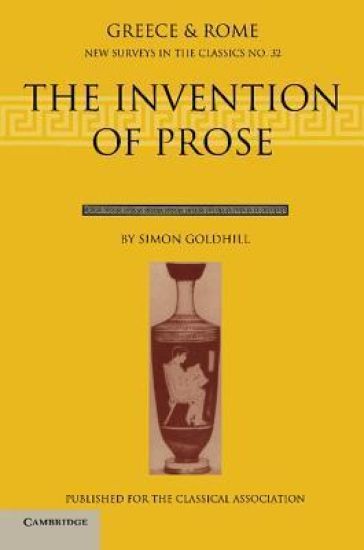
This is the first general study of the earliest writers of Greek prose for students and teachers alike. Looking at history, medicine, science, philosophy and rhetoric, it asks why and how these new genres of writing came about in the fifth and fourth centuries BCE. It is thus a study of the cultural and political revolution known as the Greek enlightenment, which has proved so influential and important for modern Western thought and society. Questions discussed include how and why rhetoric played such a role in democracy, how history written in prose changes a view of the past, and how science and philosophy construct new models of understanding what authority is. An exploration is offered of how literary history and social and political history interact. Written in a lively and clear style, the book makes a perfect introduction to the classical world of Athens.
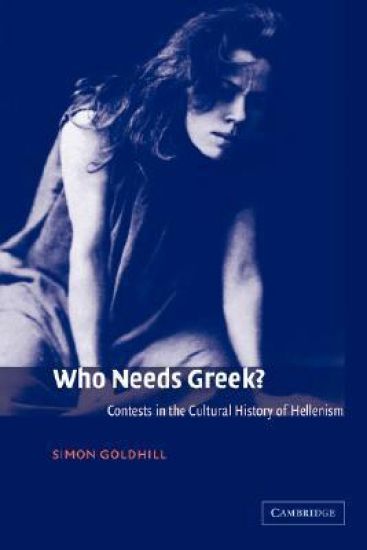
Who Needs Greek?

Who Needs Greek?

Simon Goldhill

Cambridge University Press
2002
pokkari
Does Greek matter? To whom and why? This interdisciplinary study focuses on moments when passionate conflicts about Greek and Greek-ness have erupted in both the modern and the ancient worlds. It looks at the Renaissance, when men were burned at the stake over biblical Greek, at violent Victorian rows over national culture and the schooling of a country, at the shocking performances of modernist opera - and it also examines the ancient world and its ideas of what it means to be Greek, especially in the first and second centuries CE. The book sheds fresh light on how the ancient and modern worlds interrelate, and how fantasies and deals, struggles and conflicts have come together under the name of Greece. As a contribution to theatre studies, Renaissance and Victorian cultural history, and to the understanding of ancient writing, this book takes reception studies in an exciting new direction.
Who Needs Greek?

Who Needs Greek?

Simon Goldhill

Cambridge University Press
2002
sidottu
Does Greek matter? To whom and why? This interdisciplinary study focuses on moments when passionate conflicts about Greek and Greek-ness have erupted in both the modern and the ancient worlds. It looks at the Renaissance, when men were burned at the stake over biblical Greek, at violent Victorian rows over national culture and the schooling of a country, at the shocking performances of modernist opera - and it also examines the ancient world and its ideas of what it means to be Greek, especially in the first and second centuries CE. The book sheds fresh light on how the ancient and modern worlds interrelate, and how fantasies and deals, struggles and conflicts have come together under the name of Greece. As a contribution to theatre studies, Renaissance and Victorian cultural history, and to the understanding of ancient writing, this book takes reception studies in an exciting new direction.
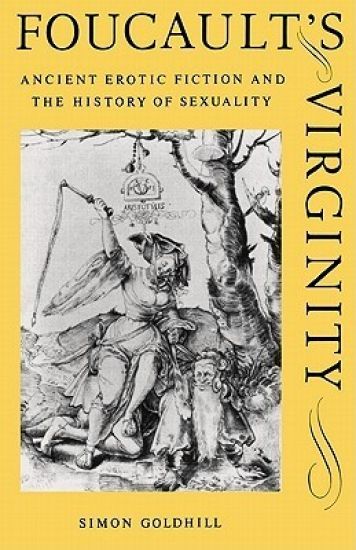
Foucault's Virginity

Foucault's Virginity

Simon Goldhill

Cambridge University Press
1995
pokkari
The sexy, witty and often bizarre novels, poetry and dialogues of the first centuries of this era (works such as Longus’ Daphnis and Chloe, Achilles Tatius’ Leukippe and Cleitophon and Plutarch’s Amatorius) were being composed at the same time as fundamental ideas about the body, gender and sexuality were being set in place with the rise of Christianity and the Church to dominate the pagan world. Modern writers on the history of sexuality have largely ignored this literature in favour of prose treatises, philosophy and Christian homilies. Simon Goldhill, writing with the same wit and verve as the ancient writers with whom he engages, sets out to put these texts back into the history of sexuality. The result is a dazzling celebration of sex and sexuality in the Greek literature of the first centuries CE.
The Poet's Voice

The Poet's Voice

Simon Goldhill

Cambridge University Press
1990
pokkari
‘The project of this book’, writes the author in his Preface, ‘is to investigate how poetry and the figure of the poet are represented, discussed, contested within the poetry of ancient Greece’. Dr Goldhill seeks to discover how ancient authors broached the questions: From what position does a poet speak? With what authority? With what debts to the past? With what involvement in the present? Through a series of interrelated essays on Homer, lyric poetry, Aristophanes, Theocritus and Apollonius of Rhodes, key aspects in the history of poetics are discussed: tale-telling and the representation of man as the user of language; memorial and praise; parody, comedy and carnival; irony, masks and desire; the legacy of the past and the idea of influence. Detailed readings of major works of Greek literature show how richly rewarding and revealing this approach can be. The author makes liberal use of critical writings from areas of study other than Classics and focuses on problems central to contemporary critical debate. His book is uniquely placed to bring together modern and ancient poetics in a way that is enlightening for both. The work is written as much for the serious scholar of literary criticism as for the Classicist, and all Greek is translated.
Reading Greek Tragedy

Reading Greek Tragedy

Simon Goldhill

Cambridge University Press
1986
pokkari
This book is an advanced critical introduction to Greek tragedy. It is written specifically for the reader who does not know Greek and who may be unfamiliar with the context of the Athenian drama festival but who nevertheless wants to appreciate the plays in all their complexity. Simon Goldhill aims to combine the best contemporary scholarly criticism in classics with a wide knowledge of modern literary studies in other fields. He discusses the masterpieces of Athenian drama in the light of contemporary critical controversies in such a way as to enable the student or scholar not only to understand and appreciate the texts of the most commonly read plays, but also to evaluate and utilize the range of approaches to the problems of ancient drama.