
Kirjailija
Sophocles
Kirjat ja teokset yhdessä paikassa: 343 kirjaa, julkaisuja vuosilta 1825–2026, suosituimpiin kuuluu Sophocles' Oedipus at Colonus. Vertaile teosten hintoja ja tarkista saatavuus suomalaisista kirjakaupoista.
343 kirjaa
Kirjojen julkaisuvuodet: 1825–2026.
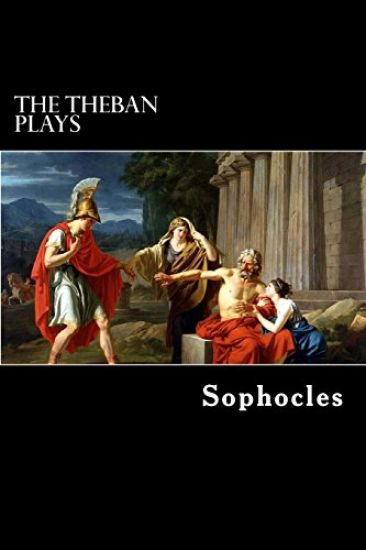
The Theban Plays: Oedipus Rex, Oedipus at Colonus and Antigone
Sophocles
Createspace Independent Publishing Platform
2012
nidottu
Spotlighting an endless cycle of bloodshed that consumes a royal family, "Elektra" masterfully explores the causes of hatred and the consequences of revenge - both for those who bear the brunt of violence and for those consumed by its influence. Orestes has returned to his homeland intent on exacting a bloody vengeance upon its rulers: his mother Klytemnestra and his step-father Aegisthus, who together murdered Orestes' father, Agamemnon. The prince's sister, Elektra, has long awaited his return, fueding constantly with Klytemnestra over her mother's moral justifications for killing Agamemnon - an act that, Klytemnestra insists, was itself a retaliation for an earlier wrong. The more they debate the validity of Agamemnon's murder, however, the more Elektra herself becomes overwhelmed by an obsession with revenge. Finally, as Orestes sets his plan into motion, the cycle of bloodshed will renew itself once more, claiming the lives of some and the very humanity of others before the drama is complete. This phenomenal translation by Robert Bagg achieves an accurate but idiomatic rendering of the Greek original that is suited for reading, teaching, or performing. Sure to strike a chord with contemporary audiences, this is Sophocles for a new generation.
Deianeira is an ordinary woman married to Herakles, the most feared and storied hero of the ancient world - and a canny and violent enforcer with a merciless temperament and legendary strength. To keep his affection and preserve her marriage, she must cope with her anxieties about his deadly labors and escapades, and must force herself to tolerate the conduct of a man whose volatile will is impossible to sway or question. But against the complex character of her husband, ultimately Deianeira's actions will lead each of them to an irredeemable downfall. In "Women of Trakhis", Sophocles challenges the very ideal of Greek manhood by giving equal notice to Herakles' valorous labors and to his savage acts of brutality and deceipt. In this phenomenal translation, Robert Bagg delivers an accurate but idiomatic, highly accessible rendering of the Greek original, suited for reading, teaching, or performing, and sure to open a new generation to the depth and power of Greek drama.
Praised by Aristotle as the pinnacle of Greek drama, "Oedipus the King" is the ancient world's most shocking and memorable play: the story of a city's beloved hero and his royal family brought to hellish ruin by fate, supernatural manipulation, and all-too-human weakness. With a plague ravishing Thebes, it falls upon Oedipus, the king, to discover its cause. Yet in consulting the blind prophet Tiresias, Oedipus uncovers not only the roots of the gods' displeasure but also a dreadful secret about his own past. Prophesied from childhood to destroy his loved ones, Oedipus long ago left his homeland. In fleeing his fate, however, he has unwittingly fulfilled his grim destiny, for, as he is to discover, Thebes was always his true homeland; the stranger he slew on the road his true father; and the queen who bore his sons and daughters, his own mother. Oedipus' shame is irredeemable-and his revelation will have terrible consequences for all involved. Sophocles masterfully invokes the Western culture's most extreme taboos to explore our deepest questions about fate and free will, in a suspenseful story that still haunts audiences after 2,500 years. This phenomenal translation by Robert Bagg achieves an accurate but idiomatic rendering of the Greek original that is suited for reading, teaching, or performing.
The final chapter of Sophocles' classic Oedipus cycle, "Antigone" epitomizes the clash between law, social obligations, familial duty, and the honor of the gods. Oedipus' sons have slain each other on the battlefield, but Kreon, their uncle and Thebes' new ruler, has decreed that only Eteokles be buried. Polyneikes will be left to rot - the greatest dishonor imaginable for a Greek warrior. When their sister Antigone, however, attempts to see Polyneikes properly honored, she garners a death sentence for breaking Kreon's edict. Neither she nor Kreon's son Haemon can convince Kreon to reconsider, forcing the blind prophet Tiresias to reveal the terrible legacy that Kreon's hubris will bring to Thebes. Yet by then it is too late - Thebes will run with the blood of its ill-fated royal family, their fate for those who would act against the will of the gods. "Antigone" is Sophocles' classic investigation of the fallout that occurs when pride overwhelms social dignity - in Kreon's case - and when passion overwhelms perseverance - in Antigone's case. This phenomenal translation by Robert Bagg achieves an accurate but idiomatic rendering of the Greek original, suited for reading, teaching, or performing, and sure to open a new generation to the depth and power of Greek drama.
The soldier Philoktetes - with a festering, god-given wound in his foot - has been abandoned on the desolate island of Lemnos by the Greeks under Odysseus. They couldn't stand the stench, nor his screams of pain. That was ten years ago. Since then, they've learned they can't take Troy without Philoktetes and the bow given to him by Herakles - nor without Neoptolemos, son of the dead hero Achilles. Yet Philoktetes would rather kill Osysseus than return to Troy. It's up to Neoptolemos, persuaded by the crafty Odysseus, to trick Philoktetes into returning. Odysseus, an opportunistic character representing the Greek army, will use any means necessary to carry out his mission. Philoktetes and Neoptolemos, however, are constantly at sea: shifting and re-shifting amidst mixed feelings, deceptions, suspicions, and qualms as they struggle with themselves and their obscurely evolving relationship. Fate, free will, and the sacredness of the social bond are all challenged and re-assessed in this tale torn from the midst of the Trojan War. Robert Bagg's phenomenal translation of Sophocles' classic "Philoktetes" achieves an accurate but idiomatic rendering of the Greek original, suited for reading, teaching, or performing, that is sure to strike a chord with contemporary audiences, this is Sophocles for a new generation.
The second chapter of Sophocles' spellbinding saga explores a fallen hero's redemption, as the aged king Oedipus surrenders himself to the will of the gods. Oedipus is an old man finally coming to terms with the terrible actions of his earlier life. Blind by his own hand and exiled from Thebes, Oedipus has been driven to Athens, where a prophesy has foretold of his death. As he struggles to accept his fate, he also questions his guilt in his past crimes - transgressions manipulated by the will of the gods. With war now raging over his succession, Oedipus must make his final decision alone - to greet his death in the grove of the Furies, bowing to destiny at last, or to flee from fate once again, rejecting the absolution of the gods.
Translated and edited by Peter D. Arnott, this classic and highly popular edition contains two essential plays in the development of Greek tragedy-Oedipus the King and Antigone-for performance and study. The editor's introduction contains a brief biography of the playwright and a description of Greek theater. Also included are a list of principal dates in the life of Sophocles and a bibliography.
Revised by Adolf Michaelis, the third edition of German philologist Otto Jahn's Greek text of Sophocles' Electra was published in 1882. Sophocles (c.496–406 BCE) wrote his great tragedy towards the end of his career; it is one of only seven of his estimated 123 works to survive. Taking place in Argos, the play portrays the revenge taken by Electra and Orestes, following the murder of their father Agamemnon, on their mother Clytemnestra and stepfather Aegisthus. Jahn (1813–69), who also produced a renowned scholarly biography of Mozart, was Professor of archaeology at Leipzig - until his removal for involvement in the 1848 uprisings - then Director of the Academic Art Museum at Bonn, and Professor of Archaeology at Berlin. This highly regarded edition, with extensive critical apparatus and commentary throughout, remains an authoritative resource for readers interested in the history of philology, textual criticism, and Classical Greek literature.
Sophocles' immortal Oedipus plays personify both the cosmic and the all-too-human forces that wreak emotional and physical mayhem upon the lives of a stricken royal family. The three plays have continued to strike a chord with audiences throughout every era of history - yet their effectiveness today depends not only upon enduring themes but upon translations that will resonate, intellectually and emotionally, with a contemporary readership. Aristotle praised Oedipus the King as the finest single example of Greek tragedy; now, award-winning translator Robert Bagg presents the entire "Oedipus Cycle" in a vivid, dynamic, and eminently readable new translation that revitalizes the ancient classics for a new generation of readers.
Oedipus Rex is the greatest of the Greek tragedies, a profound meditation on the human condition. The story of the mythological king, who is doomed to kill his father and marry his mother, has resonated in world culture for almost 2,500 years. But Sophocles’ drama as originally performed was much more than a great story—it was a superb poetic script and exciting theatrical experience. The actors spoke in pulsing rhythms with hypnotic forward momentum, making it hard for audiences to look away. Interspersed among the verbal rants and duels were energetic songs performed by the chorus. David Mulroy’s brilliant verse translation of Oedipus Rex recaptures the aesthetic power of Sophocles’ masterpiece while also achieving a highly accurate translation in clear, contemporary English. Speeches are rendered with the same kind of regular iambic rhythm that gave the Sophoclean originals their drive. The choral parts are translated as fluid rhymed songs. Mulroy also supplies an introduction, notes, and appendixes to provide helpful context for general readers and students.

When a young Electra’s father is murdered by her mother, her world changes irrevocably. Ten years on, bound by grief and unwilling to forgive, Electra surrenders to an all-consuming desire for revenge that propels her towards a bloody and terrifying conclusion. This is a haunting new version by Nick Payne of Sophocles’ tragic masterpiece, Electra.
The first in the trilogy of Theban plays by Sophocles, Oedipus Rex depicts one of the most respected Athenian tragedies of all time.