
Kirjailija
Sophocles
Kirjat ja teokset yhdessä paikassa: 343 kirjaa, julkaisuja vuosilta 1825–2026, suosituimpiin kuuluu Sophocles' Oedipus at Colonus. Vertaile teosten hintoja ja tarkista saatavuus suomalaisista kirjakaupoista.
343 kirjaa
Kirjojen julkaisuvuodet: 1825–2026.


Hegel writes in his Aesthetics The Antigone is one of the most sublime and in every respect most excellent works of art of all time. Simone Weil writes in a notebook: Great literary works: veils drawn in front of truth, but transparent veils. Electra. Antigone. Antigone also doubts Here is Sophokles sublime tragedy, unveiled in ecstatic English at once playful and serious and freshly penned in Anne Carson s rendition. Chorus: But of course there is hope look here comes hope wandering in to tickle your feet"
"Oedipe Colone" de Sophocle. Sophocle, dramaturge grec (495-405 av JC).
Murder at Jagged Rock: A Translation of Sophocles' Women of Trachis
Sophocles
Word Works
2015
nidottu
Poetry. Drama. Translation from the Greek by Keyne Cheshire. Cheshire's translation inhabits the territory of American myth--the Wild West. With its harsh landscapes and larger- than-life heroes, it is a world both familiar and distant, a world that still resonates within the American psyche. Says Kenneth J. Reckford, I was first shocked, then moved and delighted by Cheshire's translation of Sophocles' Trachinian Women into an American vernacular and Wild West setting. Poetic and rhythmical speeches propel the reader forward and deeper into Sophocles' tragedy, while the choral odes give voice to lastingly powerful feelings of hope and fear, spiritual exultation and earth-bound sadness and pain.
'It's a dreadful thing to yield...but resist now? Lay my pride bare to the blows of ruin? That's dreadful too.'The remarkable story of Greek tragedy's most intrepid heroine. Introducing Little Black Classics: 80 books for Penguin's 80th birthday. Little Black Classics celebrate the huge range and diversity of Penguin Classics, with books from around the world and across many centuries. They take us from a balloon ride over Victorian London to a garden of blossom in Japan, from Tierra del Fuego to 16th-century California and the Russian steppe. Here are stories lyrical and savage; poems epic and intimate; essays satirical and inspirational; and ideas that have shaped the lives of millions. Sophocles (496 BC-406 BC). Sophocles's works available in Penguin Classics are The Theban Plays and Electra and Other Plays.
Sophocles' Ajax describes the fall of a mighty warrior denied the honour which he believed was his due. This edition of the play presents a text and critical apparatus which take full advantage of advances in our understanding of Sophoclean manuscripts and scholarship. The introduction and commentary scrutinise all important aspects of the drama - from detailed analysis of style, language, and metre to consideration of wider issues such as ethics, rhetoric, and characterisation. Notorious dramaturgical problems, including the staging of Ajax's suicide, receive particular attention; so too do questions of literary history, such as the date of the play and Sophocles' creative interaction with previous accounts of the myth. The translation which accompanies the commentary ensures that this edition will be accessible to Hellenists of all levels of experience, as well as to readers with a general interest in the history of drama.
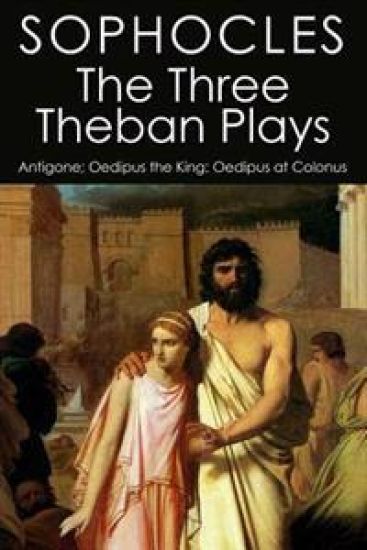
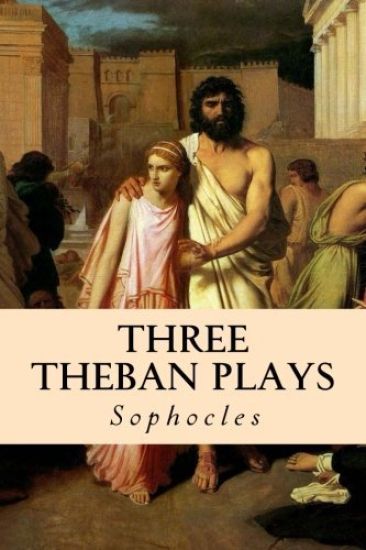
The Three Theban Plays: Antigone; Oedipus the King; Oedipus at Colonus
Sophocles
Createspace Independent Publishing Platform
2015
nidottu
Theban plays The Theban plays consist of three plays: Oedipus the King (also called Oedipus Tyrannus or by its Latin title Oedipus Rex), Oedipus at Colonus and Antigone. All three plays concern the fate of Thebes during and after the reign of King Oedipus. They have often been published under a single cover. Sophocles, however, wrote the three plays for separate festival competitions, many years apart. Not only are the Theban plays not a true trilogy (three plays presented as a continuous narrative) but they are not even an intentional series and contain some inconsistencies among them. He also wrote other plays having to do with Thebes, such as the Epigoni, of which only fragments have survived. Subjects Each of the plays relates to the tale of the mythological Oedipus, who killed his father and married his mother without knowledge that they were his parents. His family is fated to be doomed for three generations. In Oedipus the King, Oedipus is the protagonist. Oedipus' infanticide is planned by his parents, Laius and Jocasta, to avert him fulfilling a prophecy; in truth, the servant entrusted with the infanticide passes the infant on through a series of intermediaries to a childless couple, who adopt him not knowing his history. Oedipus eventually learns of the Delphic Oracle's prophecy of him, that he would kill his father and marry his mother; Oedipus attempts to flee his fate without harming his parents (at this point, he does not know that he is adopted). Oedipus meets a man at a crossroads accompanied by servants; Oedipus and the man fought, and Oedipus killed the man. (This man was his father, Laius, not that anyone apart from the gods knew this at the time). He becomes the ruler of Thebes after solving the riddle of the sphinx and in the process, marries the widowed Queen, his mother Jocasta. Thus the stage is set for horror. When the truth comes out, following from another true but confusing prophecy from Delphi, Jocasta commits suicide, Oedipus blinds himself and leaves Thebes, and the children are left to sort out the consequences themselves (which provides the grounds for the later parts of the cycle of plays). In Oedipus at Colonus, the banished Oedipus and his daughter Antigone arrive at the town of Colonus where they encounter Theseus, King of Athens. Oedipus dies and strife begins between his sons Polyneices and Eteocles. In Antigone, the protagonist is Oedipus' daughter, Antigone. She is faced with the choice of allowing her brother Polyneices' body to remain unburied, outside the city walls, exposed to the ravages of wild animals, or to bury him and face death. The king of the land, Creon, has forbidden the burial of Polyneices for he was a traitor to the city. Antigone decides to bury his body and face the consequences of her actions. Creon sentences her to death. Eventually, Creon is convinced to free Antigone from her punishment, but his decision comes too late and Antigone commits suicide. Her suicide triggers the suicide of two others close to King Creon: his son, Haemon, who was to wed Antigone, and his wife, Eurydice, who commits suicide after losing her only surviving son.
Oedipus at Colonus is the third in Sophocles' trilogy of plays about the famous king of Thebes and his unhappy family. It dramatizes the mysterious death of Oedipus, by which he is transformed into an immortal hero protecting Athens. This was Sophocles' final play, written in his mid-eighties and produced posthumously. Translator David Mulroy's introduction and notes deepen the reader's understanding of Oedipus' character and the real political tumult that was shaking Athens at the time that Sophocles wrote the play. Oedipus at Colonus is at once a complex study of a tragic character, an indictment of Athenian democracy, and a subtle endorsement of hope for personal immortality. As in his previous translations of Oedipus Rex and Antigone, Mulroy combines scrupulous scholarship and textual accuracy with a fresh poetic style. He uses iambic pentameter for spoken passages and short rhymed stanzas for choral songs, resulting in a text that is accessible and fun to read and perform.
Available here as an independent work, F. Storr's excellent translation of Oedipus the King turns Sophocles' drama into clear and poetic English for all scholars to enjoy. For centuries, the Three Theban Plays have been the first choice of millions of readers in their libraries and classrooms. This new, stand-alone edition of Sophocles' glorious tale of jealousy, rage, and revenge brings the dark drama to a new generation of scholars.
The Ajax of Sophocles, with Notes Critical and Explanatory
Sophocles
Literary Licensing, LLC
2014
nidottu
Three Theban Plays: Oedipus the King; Oedipus at Colonus; Antigone
Sophocles
Createspace Independent Publishing Platform
2014
nidottu
"The tyrant is a child of Pride Who drinks from his sickening cup Recklessness and vanity, Until from his high crest headlong He plummets to the dust of hope."