Kirjojen hintavertailu – 12 859 828 kirjaa ja 27 kauppaa

Kirjailija

Srinivasan Chandrasekaran

Kirjat ja teokset yhdessä paikassa: 30 kirjaa, julkaisuja vuosilta 2009–2026, suosituimpiin kuuluu Wave Energy Devices. Vertaile teosten hintoja ja tarkista saatavuus suomalaisista kirjakaupoista.

30 kirjaa

Kirjojen julkaisuvuodet: 2009–2026.

Wave Energy Devices

Wave Energy Devices

Srinivasan Chandrasekaran; Faisal Khan; Rouzbeh Abbassi

TAYLOR FRANCIS LTD
2024
nidottu
Designing offshore wave energy converter (WEC) devices requires a thorough understanding of many aspects of science and engineering, namely, wave hydrodynamics, wave-WEC interactions, mechanical design, analysis tools, and conducting experiments. This book provides the tools for understanding these complex systems and addresses the basic concepts of WECs through detailed analysis and design. A few devices developed and experimentally investigated are discussed in detail, some of which are considered highly novel and still in the preliminary stages of study in the existing literature. FEATURES Offers numerous detailed design methods and practical model studies Presents analysis of the dynamic response behavior of WECs based on experimental studies on scale models Covers the most recent and novel innovations in the field Includes a discussion of offshore wind farms as a green energy alternative and examines their conceptual development and designThis book serves as a useful guide for both academicians and professionals in naval architecture and offshore engineering as well as in civil and structural engineering. In addition, it helps in the understanding of structural behavior in terms of risk criteria, efficiency, service life, and reliability. Readers will gain a comprehensive knowledge of the design and development of offshore wave energy devices and the preliminary design of offshore wind turbines, which are currently largely absent in the scientific literature.

Wave Energy Devices

Wave Energy Devices

Srinivasan Chandrasekaran; Faisal Khan; Rouzbeh Abbassi

TAYLOR FRANCIS LTD
2022
sidottu
Designing offshore wave energy converter (WEC) devices requires a thorough understanding of many aspects of science and engineering, namely, wave hydrodynamics, wave-WEC interactions, mechanical design, analysis tools, and conducting experiments. This book provides the tools for understanding these complex systems and addresses the basic concepts of WECs through detailed analysis and design. A few devices developed and experimentally investigated are discussed in detail, some of which are considered highly novel and still in the preliminary stages of study in the existing literature. FEATURES Offers numerous detailed design methods and practical model studies Presents analysis of the dynamic response behavior of WECs based on experimental studies on scale models Covers the most recent and novel innovations in the field Includes a discussion of offshore wind farms as a green energy alternative and examines their conceptual development and designThis book serves as a useful guide for both academicians and professionals in naval architecture and offshore engineering as well as in civil and structural engineering. In addition, it helps in the understanding of structural behavior in terms of risk criteria, efficiency, service life, and reliability. Readers will gain a comprehensive knowledge of the design and development of offshore wave energy devices and the preliminary design of offshore wind turbines, which are currently largely absent in the scientific literature.

Earthquake Engineering and Structural Control

Earthquake Engineering and Structural Control

Srinivasan Chandrasekaran; Giorgio Serino; Mariacristina Spizzuoco

TAYLOR FRANCIS LTD
2026
nidottu
Earthquake Engineering and Structural Control: Theory and Applications examines the basics of structural dynamics with its application for earthquake engineering and structural control methods. The objective is not to explain earthquake-resistant design but rather to present different methods of analysis under earthquake and other environmental loads such as fire and physical impact. While presenting fundamental concepts in a simple manner, this book presents structural systems and offshore structures leading to form-dominant design. The response spectrum method and nonlinear time history analysis of structures under earthquake loads are discussed in detail, while the basics of earthquake-resistant design through planning guidelines, as well as introductory seismology, are also covered. Presents dynamic analysis and illustrations of single-degree-of-freedom systems with numerous examples to explain the response spectrum analysis under earthquake and impact loads. Offers detailed solutions to multi-degree-of-freedom systems through numerical methods, supported by MATLAB® examples. Explains the proper application of seismic controls for different classes of structures, including offshore.
Fundamentals of Offshore Engineering

Fundamentals of Offshore Engineering

Srinivasan Chandrasekaran; Surasak Phoemsapthawee; Shanker Krishna; Hari Sreenivasan

TAYLOR FRANCIS LTD
2026
nidottu
Fundamentals of Offshore Engineering addresses the basics of design for offshore oil and gas production systems and examines the health, safety, and environmental (HSE) aspects in the oil and gas industry with emphasis toward safety measures in design and operations. It also covers fundamental issues of crude oil and natural gas exploration and extraction and also includes coverage of seismic surveys and green energy systems. Details of offshore platforms, describing the types, historical development, basics of analysis and design, environmental loads, and potential hazards are also provided. The book serves as a useful resource for universities that teach offshore engineering to senior undergraduate and graduate students as well as a guide for practicing engineers. Includes coverage of wave loads, wind loads, ice loads, and fire loads on structures. Discusses offshore pipelines and subsea engineering to help readers understand the fundamentals of petroleum production and related pipeline installation.
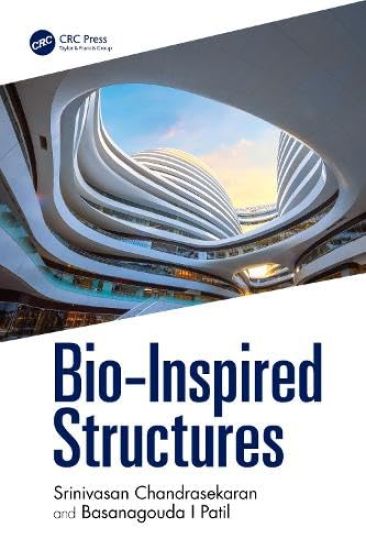
Bio-Inspired Structures

Bio-Inspired Structures

Srinivasan Chandrasekaran; Basanagouda I Patil

TAYLOR FRANCIS LTD
2025
sidottu
Bio-Inspired Structures bridges the transformative intersection of biological principles and engineering innovation, offering a comprehensive framework for translating nature's evolutionary wisdom into next-generation infrastructure solutions. Drawing from biological systems ranging from termite mounds to dolphin hydrodynamics, this scholarly work establishes a robust theoretical foundation for bioinspiration, biomimicry, and bionics while delivering practical applications across structural engineering and marine systems. The authors expertly navigate four fundamental principles—efficiency, resilience, adaptability, and self-repair—demonstrating their implementation in advanced materials, dynamic structures, and sustainable energy systems, including adaptive building envelopes and bioinspired coastal protection mechanisms. This essential reference equips graduate students, researchers, and industry professionals with both conceptual understanding and actionable design strategies, ultimately advancing the paradigm shift from resource-intensive engineering toward nature-integrated, regenerative systems that promise more sustainable and resilient infrastructure solutions for our increasingly complex world.
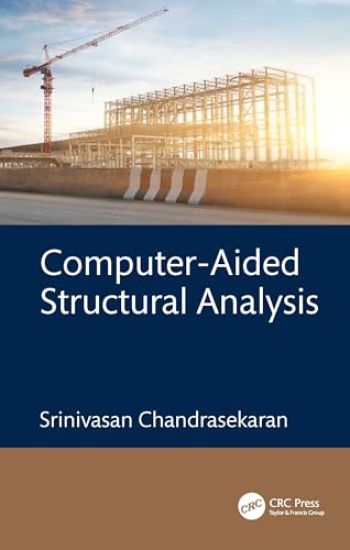
Computer-Aided Structural Analysis

Computer-Aided Structural Analysis

Srinivasan Chandrasekaran

TAYLOR FRANCIS LTD
2025
sidottu
Computer-Aided Structural Analysis offers a novel and comprehensive approach to teaching advanced structural analysis using computer programming, specifically through MATLAB®. By focusing on developing fundamental programming skills, this book encourages learners to move beyond the "black box" mentality of commercial software. The inclusion of real-world examples, clear explanations, and practical tutorials ensures students gain not only theoretical knowledge but also the confidence to design their own programs for specialized applications. Additionally, the book promotes enhanced accuracy, speed, and problem-solving ability, making it an invaluable resource for both students and practicing engineers. It equips readers with the critical skills needed to excel in the modern era of AI-driven infrastructure projects and complex engineering challenges. It serves as a textbook for courses in engineering disciplines such as Ocean Engineering, Civil Engineering, Structural Engineering, Applied Mechanics, and Aerospace Engineering, and provides students with a deep understanding of the essential principles behind structural analysis and the application of computer-aided tools. Offers clear explanations, real-world examples, tutorials, and MATLAB® code in each chapter, enabling students to apply theoretical concepts to practical scenarios. Includes an Instructors' Guide and customized MATLAB® files for adopting professors. Bridges the gap between academic learning and real-world applications, helping students develop skills that are directly applicable to current industry demands and infrastructure projects.
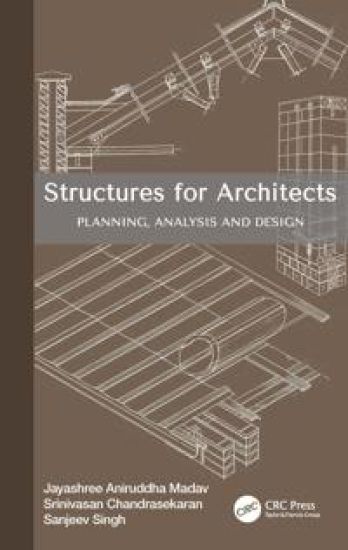
Structures for Architects

Structures for Architects

Jayashree Aniruddha Madav; Srinivasan Chandrasekaran; Sanjeev Singh

TAYLOR FRANCIS LTD
2025
sidottu
Structures for Architects: Planning, Analysis and Design explains the basics of structural systems to help architects conceive the structural form and analyze and design in a comprehensive manner. The objective is not to explain the structural analysis and design of complex systems in detail, but to explain analysis and design of structural members in a simple and elementary approach. Presenting basic concepts in a simple manner, the book deals with the presentation of structural systems used in the construction of public buildings. Architectural design, urban planning guidelines, basic rules of fire safety, and earthquake resistant design are discussed in a conceptual manner. Examples included throughout the book shall help students, faculty, and practicing architects to understand structural analysis and design in a straightforward manner, and exercise problems are presented to aid in the understanding of the contents presented. This book serves as a useful reference material for both academicians and practicing professionals. Strengthens the capacity of architects in fundamental structural analysis and design. Presents numerical examples and exercises for self-study in each chapter including Matlab® examples. Includes the basics for understanding architectural design, urban planning, fire safety, and earthquake resistant design. Examines construction planning and management through CPM and PERT methods to aid in understanding the fundamentals of project management.
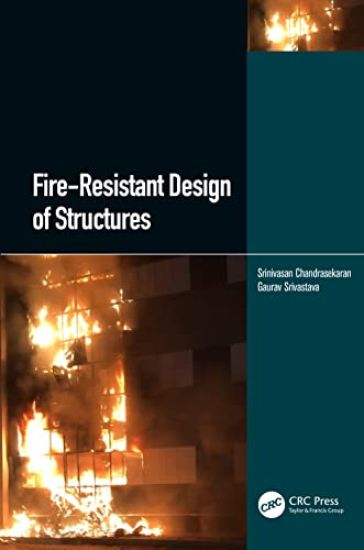
Fire-Resistant Design of Structures

Fire-Resistant Design of Structures

Srinivasan Chandrasekaran; Gaurav Srivastava

TAYLOR FRANCIS LTD
2025
nidottu
This book addresses the detailed analysis and design of structures under fire loads through the basic concepts. While fire and explosion characteristics of materials are discussed in detail, an estimate of fire load and integration to fire-resistant design is the main focus. The detailed design procedures include practical examples of various design codes from around the world. The scope of Fire-Resistant Design of Structures includes discussions related to the estimate of fire loads, analysis and design of structural members under fire, fire protection and firefighting systems, working principles, and suitability for various industrial applications. It provides comprehensive coverage regarding the analysis and design of structural systems under fire loads, in particular, and under elevated temperatures, in general. Features:Provides an understanding of fire loads, analysis, and design of various structural membersIncludes detailed design methods and model studiesCovers in detail different types of firefighting equipment and their functions and applications
Earthquake Engineering and Structural Control

Earthquake Engineering and Structural Control

Srinivasan Chandrasekaran; Giorgio Serino; Mariacristina Spizzuoco

TAYLOR FRANCIS LTD
2024
sidottu
Earthquake Engineering and Structural Control: Theory and Applications examines the basics of structural dynamics with its application for earthquake engineering and structural control methods. The objective is not to explain earthquake-resistant design but rather to present different methods of analysis under earthquake and other environmental loads such as fire and physical impact. While presenting fundamental concepts in a simple manner, this book presents structural systems and offshore structures leading to form-dominant design. The response spectrum method and nonlinear time history analysis of structures under earthquake loads are discussed in detail, while the basics of earthquake-resistant design through planning guidelines, as well as introductory seismology, are also covered. Presents dynamic analysis and illustrations of single-degree-of-freedom systems with numerous examples to explain the response spectrum analysis under earthquake and impact loads. Offers detailed solutions to multi-degree-of-freedom systems through numerical methods, supported by MATLAB® examples. Explains the proper application of seismic controls for different classes of structures, including offshore.
Fundamentals of Offshore Engineering

Fundamentals of Offshore Engineering

Srinivasan Chandrasekaran; Surasak Phoemsapthawee; Shanker Krishna; Hari Sreenivasan

TAYLOR FRANCIS LTD
2024
sidottu
Fundamentals of Offshore Engineering addresses the basics of design for offshore oil and gas production systems and examines the health, safety, and environmental (HSE) aspects in the oil and gas industry with emphasis toward safety measures in design and operations. It also covers fundamental issues of crude oil and natural gas exploration and extraction and also includes coverage of seismic surveys and green energy systems. Details of offshore platforms, describing the types, historical development, basics of analysis and design, environmental loads, and potential hazards are also provided. The book serves as a useful resource for universities that teach offshore engineering to senior undergraduate and graduate students as well as a guide for practicing engineers. Includes coverage of wave loads, wind loads, ice loads, and fire loads on structures. Discusses offshore pipelines and subsea engineering to help readers understand the fundamentals of petroleum production and related pipeline installation.
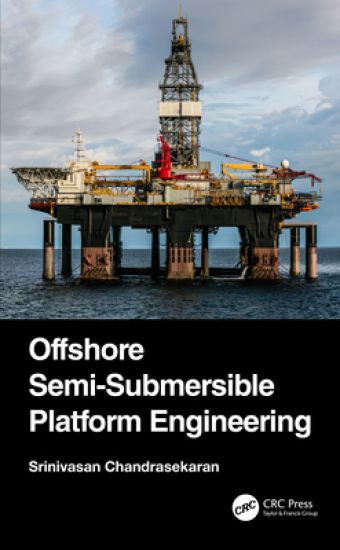
Offshore Semi-Submersible Platform Engineering

Offshore Semi-Submersible Platform Engineering

Srinivasan Chandrasekaran

TAYLOR FRANCIS LTD
2024
nidottu
Offshore Semi-Submersible Platform Engineering presents a primer on the analysis and design of semi-submersible platforms, in particular, while also covering general analysis and design guidelines of offshore compliant platforms. It introduces general structural designs and also examines the details of the various environmental impacts that act upon them, such as fatigue, fire, collisions, and water waves. Features Provides thorough coverage of the dynamic analysis and design of semi-submersible platforms Assists readers through detailed analysis methods using MATLAB® as well as other computer programs used to carry out structural analysis Explains impact loading and dynamic response through numerical analysis and examines the various factors that affect semi-submersibles Presented in a coursework teaching style, the content is explained in a step-by-step manner using color figures, photos, screen shots, and illustrations, thereby enabling students, researchers, and practicing engineers to carry out analysis with easeOffshore Semi-Submersible Platform Engineering serves as a practical guide for upper-level students and graduates of various engineering disciplines, for example, naval architecture, and structural, mechanical, pipeline, and offshore engineering. Further, it can also be used as a reference for practicing professionals, as the book covers a broad range of scholarships and applications.
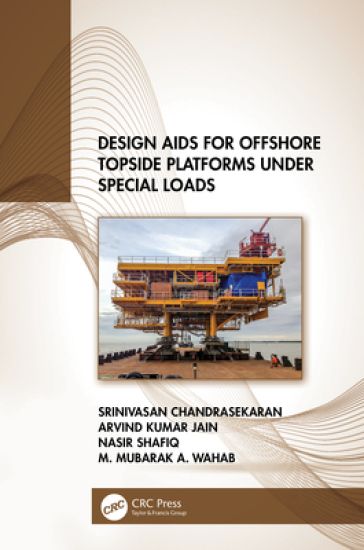
Design Aids for Offshore Topside Platforms Under Special Loads

Design Aids for Offshore Topside Platforms Under Special Loads

Srinivasan Chandrasekaran; Arvind Kumar Jain; Nasir Shafiq; M. Mubarak A. Wahab

TAYLOR FRANCIS LTD
2024
nidottu
Offshore platforms face many risks, including a hostile ocean environment, extreme temperatures, overpressure loads, fire risks, and hydrocarbon explosions, all of which pose unique challenges in designing their topside platforms. The topside design also involves the selection of appropriate materials to reduce fire risk without compromising the functional requirements. These platforms serve valuable, utility, production, and processing purposes, and can also provide living quarters for personnel. Concepts such as basic design, special design, materials selection, and risk hazards are explained in the authors' straightforward classroom style, and are based on their rich experience in both academia and industry. Features• Includes practical examples which are solved using international codes to offer a better understanding of the subjects presented • Addresses safety and risk of offshore platforms, and considers numerous topside accident scenarios • Discusses the structural and mechanical properties of various materials, such as steel and newer functionally graded materials (FGMs)Design Aids for Offshore Topside Platforms Under Special Loads serves as a design manual for multi-disciplinary engineering graduates and practicing professionals working in civil, mechanical, offshore, naval, and petroleum engineering fields. In addition, the book will serve as reference manual for practicing design engineers and risk assessors.
Fire-Resistant Design of Structures

Fire-Resistant Design of Structures

Srinivasan Chandrasekaran; Gaurav Srivastava

TAYLOR FRANCIS LTD
2022
sidottu
This book addresses the detailed analysis and design of structures under fire loads through the basic concepts. While fire and explosion characteristics of materials are discussed in detail, an estimate of fire load and integration to fire-resistant design is the main focus. The detailed design procedures include practical examples of various design codes from around the world. The scope of Fire-Resistant Design of Structures includes discussions related to the estimate of fire loads, analysis and design of structural members under fire, fire protection and firefighting systems, working principles, and suitability for various industrial applications. It provides comprehensive coverage regarding the analysis and design of structural systems under fire loads, in particular, and under elevated temperatures, in general. Features:Provides an understanding of fire loads, analysis, and design of various structural membersIncludes detailed design methods and model studiesCovers in detail different types of firefighting equipment and their functions and applications
Design Aids for Offshore Topside Platforms Under Special Loads

Design Aids for Offshore Topside Platforms Under Special Loads

Srinivasan Chandrasekaran; Arvind Kumar Jain; Nasir Shafiq; M. Mubarak A. Wahab

Taylor Francis Ltd
2021
sidottu
Offshore platforms face many risks, including a hostile ocean environment, extreme temperatures, overpressure loads, fire risks, and hydrocarbon explosions, all of which pose unique challenges in designing their topside platforms. The topside design also involves the selection of appropriate materials to reduce fire risk without compromising the functional requirements. These platforms serve valuable, utility, production, and processing purposes, and can also provide living quarters for personnel. Concepts such as basic design, special design, materials selection, and risk hazards are explained in the authors' straightforward classroom style, and are based on their rich experience in both academia and industry. Features• Includes practical examples which are solved using international codes to offer a better understanding of the subjects presented • Addresses safety and risk of offshore platforms, and considers numerous topside accident scenarios • Discusses the structural and mechanical properties of various materials, such as steel and newer functionally graded materials (FGMs)Design Aids for Offshore Topside Platforms Under Special Loads serves as a design manual for multi-disciplinary engineering graduates and practicing professionals working in civil, mechanical, offshore, naval, and petroleum engineering fields. In addition, the book will serve as reference manual for practicing design engineers and risk assessors.
Offshore Semi-Submersible Platform Engineering

Offshore Semi-Submersible Platform Engineering

Srinivasan Chandrasekaran

CRC Press
2020
sidottu
Offshore Semi-Submersible Platform Engineering presents a primer on the analysis and design of semi-submersible platforms, in particular, while also covering general analysis and design guidelines of offshore compliant platforms. It introduces general structural designs and also examines the details of the various environmental impacts that act upon them, such as fatigue, fire, collisions, and water waves. Features Provides thorough coverage of the dynamic analysis and design of semi-submersible platforms Assists readers through detailed analysis methods using MATLAB® as well as other computer programs used to carry out structural analysis Explains impact loading and dynamic response through numerical analysis and examines the various factors that affect semi-submersibles Presented in a coursework teaching style, the content is explained in a step-by-step manner using color figures, photos, screen shots, and illustrations, thereby enabling students, researchers, and practicing engineers to carry out analysis with easeOffshore Semi-Submersible Platform Engineering serves as a practical guide for upper-level students and graduates of various engineering disciplines, for example, naval architecture, and structural, mechanical, pipeline, and offshore engineering. Further, it can also be used as a reference for practicing professionals, as the book covers a broad range of scholarships and applications.
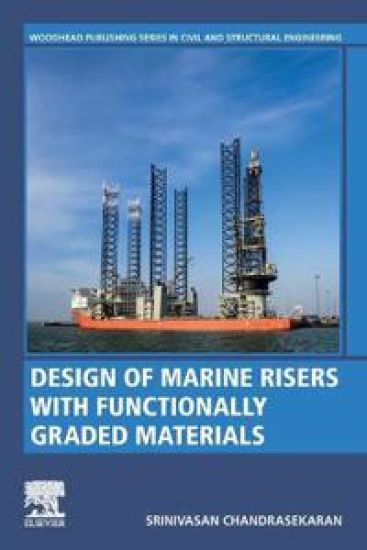
Design of Marine Risers with Functionally Graded Materials

Design of Marine Risers with Functionally Graded Materials

Srinivasan Chandrasekaran

Woodhead Publishing
2020
nidottu
Design of Marine Risers with Functionally Graded Materials focuses on the application and use of marine risers fabricated with functionally graded materials (FGM) in ocean environments. Chapters cover the various types of marine risers available, common problems (corrosion), their fabrication and manufacturing, and their application and use in marine risers. A functionally graded materials mould is then subsequently investigated by various structural and metallurgical examinations to assess its suitability as an alternate material in the marine environment. Several characteristics of the newly developed FGM are compared with other conventional materials to explicitly highlight the superiority of the newly developed FGM. Further chapters focus on novel design methods, such as VIV suppression systems for risers with detailed experimental investigations carried out on cylinders and a chapter on advanced materials, including titanium and composites and their application and use in the marine environment.
Offshore Compliant Platforms

Offshore Compliant Platforms

Srinivasan Chandrasekaran; R. Nagavinothini

Wiley-Blackwell
2020
sidottu
A guide to the analysis and design of compliant offshore structures that highlights a new generation of platforms Offshore Compliant Platforms provides an authoritative guideto the analysis and design of compliant offshore structures and puts the focus on a new generation of platforms such as: triceratops, Buoyant Leg Storage and Regasification platforms. Whilst the authors – noted experts on the topic – include basic information on the conceptual development of conventional platforms, the book presents detailed descriptions of the design and development of new deep-water platforms. The book describes the preliminary design of triceratops in ultra-deep waters and presents a detailed analysis of environmental loads that are inherent in offshore locations such as wave, wind and current. The new methodology for the dynamic analysis of triceratops under ice loads, predominantly in ice-covered regions, is also examined with detailed parametric studies. In addition, the book covers the structural geometry and the various methods of analysis for assessing the performance of any other similar offshore platform under the special loads. A discussion of the fatigue analysis and service life prediction is also included. This important book: • Includes the analysis and design of compliant offshore structures with a focus on a new generation of platforms • Examines the preliminary design of triceratops in ultra-deep waters • Covers an analysis of environmental loads that are inherent in offshore locations such as wave, wind and current • Reviews the structural geometry and various methods of analysis for assessing the performance of any other similar offshore platform under special loads • Discusses fatigue analysis and service life prediction Written for engineers and researchers across engineering including civil, mechanical, structural, offshore, ocean and naval architecture, Offshore Compliant Platforms fills the need for a guide to new offshore platforms that provides an understanding of the behaviour of these structures under different loading conditions.
Seismic Design Aids for Nonlinear Analysis of Reinforced Concrete Structures

Seismic Design Aids for Nonlinear Analysis of Reinforced Concrete Structures

Srinivasan Chandrasekaran; Luciano Nunziante; Giorgio Serino; Federico Carannante

CRC Press
2019
nidottu
Nonlinear analysis methods such as static pushover or limit analysis until collapse are globally considered reliable tools for seismic and structural assessment. But the accuracy of seismic capacity estimates—which can prevent catastrophic loss of life and astronomical damage repair costs—depends on the use of the correct basic input parameters. Tools to Safeguard New Buildings and Assess Existing OnesSeismic Design Aids for Nonlinear Analysis of Reinforced Concrete Structures simplifies the estimation of base structural parameters and enables accurate evaluation of proper bounds for the safety factor. Many design engineers make the relatively common mistake of using default properties of materials as input to nonlinear analyses without realizing that any minor variation in the nonlinear characteristics of constitutive materials, such as concrete and steel, could result in a solution error that leads to a disastrously incorrect assessment or interpretation. To achieve a more accurate pushover analysis and improve general performance-based design, this book: Reviews relevant literature to help engineers conduct structural seismic assessment Includes design curves, alleviating the need for complex mathematicsOffers supplementary online tools to aid in computing any parameterProvides complete computer coding used to obtain building collapse multipliers Reassessing key inputs, this book analyzes boundaries using a detailed mathematical model based on international codes. It proposes design curves and tables derived from the authors’ studies, detailing modeling numerical procedures step by step. The authors include analytical bounds of the structural safety factor for some typical frames, making this work a sound and valuable tool for assessment or desi
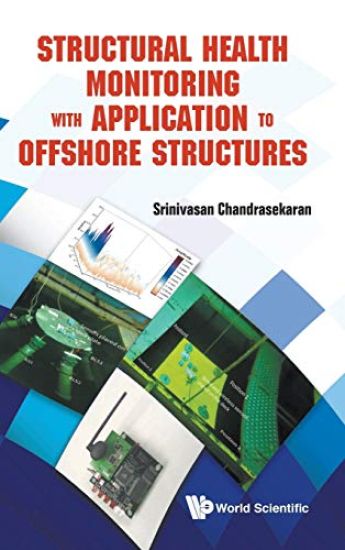
Structural Health Monitoring With Application To Offshore Structures

Structural Health Monitoring With Application To Offshore Structures

Srinivasan Chandrasekaran

World Scientific Publishing Co Pte Ltd
2019
sidottu
Structural Health Monitoring (SHM) deals with assessment, evaluation and technical diagnosis of different structural systems of strategic importance. Extensive knowledge of SHM shall lead to a clear understanding of risk and reliability assessment of structures, which is currently mandatory for structures of strategic importance like bridges, offshore structures, etc. This comprehensive compendium features explanations and salient illustrations of SHM with applications to civil engineering structures, in general and offshore structures, in particular. The book is unique with respect to its contents, experimental case studies in lab scale and text presentation style. A detailed subject matter of this nature is currently scarce in the literature market. The must-have volume is a useful reference text for senior undergraduate and postgraduate students, professionals, academics and researchers in civil engineering, ocean engineering, mechanical engineering, and structural engineering.
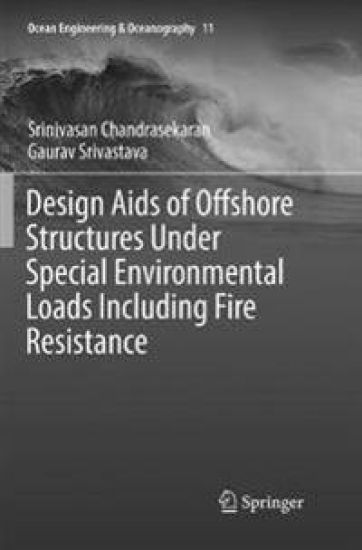
Design Aids of Offshore Structures Under Special Environmental Loads including Fire Resistance

Design Aids of Offshore Structures Under Special Environmental Loads including Fire Resistance

Srinivasan Chandrasekaran; Gaurav Srivastava

Springer Verlag, Singapore
2019
nidottu
This book provides detailed analysis methods and design guidelines for fire resistance, a vital consideration for offshore processing and production platforms. Recent advancements in the selection of various geometric structural forms for deep-water oil exploration and production require a detailed understanding of the design of offshore structures under special loads. Focusing on a relatively new aspect of offshore engineering, the book offers essential teaching material, illustrating and explaining the concepts discussed through many tutorials. It creates a basis for designing new courses for students of ocean engineering and naval architecture, civil engineering, and applied mechanics at both undergraduate and graduate levels. As such, its content can be used for self-study or as a text in structured courses and professional development programs.